Introduction: Catholic Prayer for the Recently Departed
In the Catholic Church, prayer for those who have died is a living part of the faith’s
rhythm of comfort and remembrance. The belief in the Communion of Saints teaches that the faithful on earth, those in heaven, and those in purgatory are united in Christ. Through prayer, the living can assist the departed by offering Masses, prayers, and acts of mercy. This article explores practical and meaningful Catholic prayers for the recently departed, while also emphasizing how these prayers bring solace to the bereaved and help maintain a lasting memory of loved ones.
The time after a death is a delicate season in which families seek both comfort and a way to honor the life that has passed. Catholic prayers for the dead are not merely formalities; they are expressions of faith in God’s mercy, a request for the souls’ relief from their purification, and a witness to the love that remains even after death. In the sections that follow, you will find practical guides, variations of well-known prayers, and ideas for how to incorporate prayer into daily life after a loss.
Why Catholic Prayer for the Recently Departed Matters
Prayer for the dead is rooted in Scripture and tradition. The Church teaches that death is a passage, not merely an end, and that prayer helps souls in purgatory toward God’s light and mercy. For the bereaved, prayer provides a structured way to process grief, to honor a loved one, and to participate in the Church’s salvific work on behalf of the dead. The practice also fosters a sense of continuity—a belief that love endures beyond the grave and that the living can remain connected to those who have died through acts of intercession.
There are several practical dimensions to this ministry of prayer:
Mass offerings for the deceased, which unite the faithful with the sacred mysteries and apply grace to the soul.
Rosaries and devotions offered for the Holy Souls, with a focus on mercy and purification.
Novenas and litanies that name the Holy Souls and request God’s mercy.
Grief support through communal prayer, which can accompany practical acts of care for the bereaved (home visits, meals, and spiritual counsel).
Core Prayers for Comfort and Remembrance
The following selections are intended to be practical, accessible, and adaptable to home prayer, funeral rites, or parish life. They include canonical elements (like the Our Father and the Hail Mary) and devotional forms (such as novenas and litanies) that are commonly used in Catholic practice.
Eternal rest grant unto them, O Lord, and let perpetual light shine upon them. May they rest in peace. Amen.
Most merciful Jesus, grant them eternal rest, and may perpetual light shine upon them. Amen.
O God, Creator of all the living and the dead, grant to your servant(s) the share of your eternal life. Through Christ our Lord. Amen.
Variations of the same prayer (language and emphasis)
Eternal rest grant unto them, O Lord, and let thy perpetual light shine upon them. May they rest in peace.
Eternal rest grant unto them, O Lord, and may your heavenly light forever illuminate their soul. Amen.
Grant them, O Lord, eternal rest, and may your mercy be their portion in the life to come. Amen.
Prayers for the dying and for the souls in purgatory
Most Sacred Heart of Jesus, have mercy on the dying and on all the Holy Souls in purgatory. Grant them eternal rest and release them from purgation according to your divine mercy. Amen.
Prayer to the Holy Souls in Purgatory (short form): Most merciful Jesus, grant them eternal rest in thy mercy. Amen.
Prayer to St. Joseph for the Dead: St. Joseph, patron of a peaceful passing, protect and comfort the departed and lead them to the Father. Amen.
God of all consolation, you are close to the brokenhearted. Console us in our sorrow and grant us the grace to trust in your promise of eternal life through Jesus Christ our Lord. Amen.
Comfortable and hopeful words can accompany prayers: “You are not alone; we remember and we pray.” Use such phrases to accompany the traditional prayers, especially in family gatherings and memorial events.
Prayers and Devotions Surrounding the Dead: Mass, Rosary, and Novenas
Catholic practice for the recently departed often centers on the Holy Mass, the Rosary, and devotional novenas. Each of these paths offers distinct ways to intercede for the dead while fostering spiritual consolation for the living.
The Requiem Mass and Mass for the Dead
A Requiem Mass (Mass for the Dead) is a celebration of the Resurrection and a plea for the mercy of God for the deceased. During the Mass, prayers such as the Our Father, the Apostles’ Creed, the Glory Be, and the Communion are offered for the soul of the departed. A Requiem often includes:
Prayers of the faithful for the deceased and for all who mourn.
Eucharistic prayer for the dead; a rite that emphasizes the hope of the Resurrection.
Mass intentions expressed for the soul of the deceased, often requested by family and friends.
If visiting a church is possible, attending a Mass for a loved one is a meaningful way to participate in the Church’s awareness that prayer continues beyond death and that the faithful on earth remain connected to those who have died.
Rosary and Marian devotions for the departed
The Rosary is a powerful way to unite with the heavenly prayers on behalf of the dead. A common practice is to recite a full Rosary for the Dead, possibly during a family gathering, a walk through a cemetery, or at home. Many find solace in combining the mysteries with intentions for the deceased and for those who mourn.
You can structure a Rosary for the dead as follows:
Begin with the Sign of the Cross and a brief invocation to the Blessed Virgin Mary.
Announce the Mysteries corresponding to the day (Joyful, Sorrowful, Glorious, Luminous).
Pray the Our Father, Hail Mary (10 times per decade), and Glory Be on each decade.
Offer a prayer for the dead at the end, such as the Eternal Rest prayer or another prayer to the Holy Souls.
Novenas and litanies for the Holy Souls
Novenas are commonly prayed for the Holy Souls, asking for mercy and purification. A Novena to the Holy Souls is a devotional sequence that repeats specific prayers for nine consecutive days or in a nine-week pattern. A simple example sequence includes:
Invocation to the Holy Souls and to the Sacred Heart of Jesus.
Prayers of contrition and petition for mercy.
Closing prayers asking for God’s mercy on all the departed and for comfort to the living.
Litanies, such as the Litany of the Saints or a Litany of the Holy Souls, can accompany these devotions. A litany is a call-and-response prayer that petitions God’s mercy through the intercession of the saints and angels.
Developing a regular rhythm of prayer after a death helps both the family and the parish community. Here are practical, respectful ways to integrate prayer into daily life, whether at home, at a parish, or in a small faith group.
Home prayer routines for the departed
Daily remembrance brief prayers—begin with a moment of silence, then offer a short blessing for the deceased and a few lines of prayer or a favorite Bible verse.
Name-by-name prayers for the deceased, recited aloud or whispered during family prayer time or before meals.
Spiritual bouquet of works of mercy—volunteer, donate, or perform acts of charity in memory of the departed, and offer a prayer as you begin or complete each act.
Group and parish practices
Organize a repose of the dead service, a small remembrance, or a prayer circle to support the bereaved and to pray for the departed.
Offer Mass intentions for a loved one’s repose; invite family and friends to sponsor a Mass or a Rosary for the deceased.
Provide a memorial album or a dedicated space in the church or home with photos, prayers, and favorite quotes of the departed as a tangible sign of remembrance.
St. Monica and other patron prayers for consolation
Invoking saints who are known for patience, perseverance, and consolation can offer spiritual nourishment. For example, St. Monica is ★renowned for perseverance in prayer for her son’s conversion and well-being in the face of sorrow; families turn to her intercession for guidance during periods of grief. Prayers to other saints such as St. Joseph or St. Michael can also be part of a broader devotional practice, asking for courage, protection, and mercy.
Indulgences and Remembrance: What to Know
The Catholic Church teaches that indulgences—partial or plenary—are available for the Holy Souls under certain conditions. An indulgence is not a sale of grace but a remission before God of the temporal punishment due to sin, achieved through acts of devotion, charity, and prayer in union with the Church’s intention and the pope.
Typical possibilities include:
Visiting a church or an adoration chapel and praying for the pope’s intentions with contrition and Eucharistic communion within a prescribed period.
Reciting a Our Father and Apostles’ Creed for the pope’s intentions, along with a genuine intention to obtain the indulgence.
Offering one’s prayers and acts of mercy in a state of grace, without attachment to sin.
If you are exploring indulgences for a departed loved one, speak with your parish priest or a diocesan office for guidance about the current rules, conditions, and any time-sensitive requirements. Indulgences are gifts of grace that the Church encourages with humility and reverence, and they are most effectively pursued within the context of ongoing conversion, repentance, and prayer.
For the Bereaved: Comfort and Grief-Informed Prayer
Grief is a journey with stages, emotions, and questions. Prayer can be a gentle companion along the way, offering not only appeal for the deceased but also solace for those who remain. The following guidance emphasizes practical spiritual support, healthy rituals, and the integration of faith into the healing process.
Let the Church’s prayers echo in daily life—“I will keep you in my prayers” becomes concrete acts of intercession and presence.
Priestly counsel and parish resources can provide spiritual guidance, whether through confession, spiritual direction, or bereavement ministry.
Remember and celebrate by honoring a loved one’s memory—lighting a candle, sharing stories, or contributing to a charity that mattered to them.
Scripture passages that often bring comfort
“The Lord is near to the brokenhearted and saves those who are crushed in spirit.” (Psalm 34:18)
“I am the resurrection and the life. Whoever believes in me will live, even though they die.” (John 11:25)
“Blessed are those who mourn, for they shall be comforted.” (Matthew 5:4)
Encouraging families to read, reflect, and pray with these passages helps integrate faith into healing. It also highlights the Church’s understanding that grief is not a sign of spiritual weakness but a pathway toward greater trust in God’s mercy.
Commemorations and Memorials: All Souls, Anniversaries, and Personal Remembrance
The Catholic calendar contains dedicated times to remember the dead, with All Souls’ Day in focus as a collective reminder of the deceased and the Church’s ongoing prayers for them.
All Saints’ Day (November 1) and All Souls’ Day (November 2) invite a communal, liturgical remembrance of the faithful departed and their place in the communion of saints.
Anniversaries of death are natural moments to pray, light candles, or offer Mass intentions, especially during the month of November.
Families may create personal memorials—spiritual notes, favorite prayers, or cherished photographs—to keep the departed in daily memory.
Creating a rhythm of remembrance helps keep the departed present in the hearts of the living and provides a steady reminder of the hope that Christ conquers death.
Suggested memorial practices
Pray a Rosary for the Dead at a scheduled time, with a shared intention for the deceased and for those grieving.
Offer a Mass intention and invite others to join in prayer for the departed’s eternal reward.
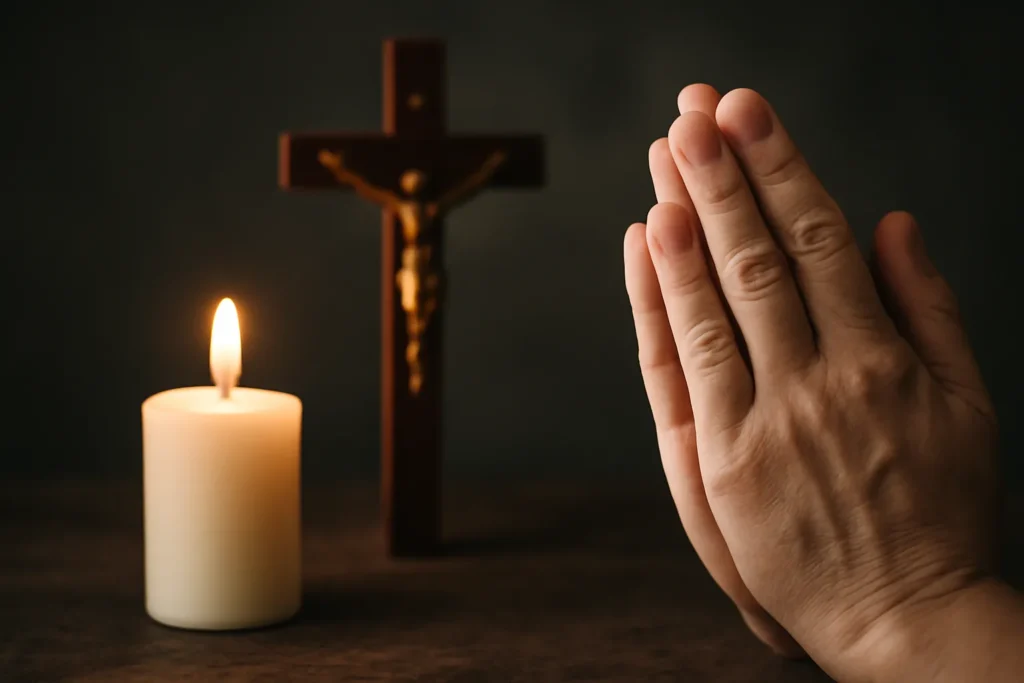
Set aside a dedicated space at home for the departed—photos, a small candle, and a written prayer or scripture passage.
Conclusion: Keeping the Recently Departed in Prayer and Memory
Catholic prayer for the recently departed is both a sacred duty and a source of deep comfort for the living. It affirms the reality of life after death, the soul’s purification if needed, and the ongoing unity of all the faithful in Christ. By embracing classic prayers, devotions, and communal rites—Mass, Rosary, novenas, and litanies—you can cultivate a robust spiritual practice that honors the dead and sustains the living.
Whether you are planning a family prayer routine, informing friends and parishioners about Mass intentions, or exploring how indulgences relate to your circumstances, this guide offers practical avenues for prayer, remembrance, and consolation. The Church invites all of us to continue loving, praying, and giving, so that the departed may share in the fullness of God’s mercy, and the living may receive the grace to endure with hope, faith, and charity.






Leave a Reply