Catholic Healing Prayers for Cancer: Comfort, Hope, and Strength
Cancer is a journey that tests body and spirit alike. In the Catholic tradition, prayer is not a
magic formula but a way to invite God's grace into the daily realities of illness, fear, and
uncertainty. This article offers a broad, devotional guide to healing prayers for cancer that focus on
three essential themes: comfort, hope, and strength.
You will find variations of prayers drawn from Catholic spirituality—prayers to Jesus, to Mary, to saintly
intercessors, and prayers shaped by common Catholic devotional forms such as novenas, litanies, and
short intercessions. Alongside the prayers, there is guidance on how to use them in daily life and
how the Sacraments—especially the Anointing of the Sick and the Eucharist—fit into a healing journey.
Understanding Catholic Healing and Suffering
Catholic teaching speaks of healing as more than physical cure. Healing encompasses the transformation of the
whole person—body, mind, and spirit—through God’s grace. Suffering, when united to Christ’s own passion,
can become a source of growth, hope, and deeper union with the mystery of love. Prayer can help shift the heart
toward trust, foster patience in the face of pain, and open space for grace to work in the midst of illness.
This section outlines how to approach prayers for cancer with reverence and realism:
Prayer as accompaniment: praying with someone who is sick is a form of solidarity that helps the ill person feel less alone.
Prayer and medicine: faith does not replace medical treatment; it invites grace to accompany the patient through treatment, side effects, and recovery.
Healing and discernment: sometimes healing means acceptance and courage, not a physical cure. The patient’s path may include trials that God can redeem in unexpected ways.
Sacramental life: the Sacraments—especially the Anointing of the Sick and the Eucharist—are powerful channels of grace that sustain faith during illness.
Below are carefully crafted prayers organized into three core themes—comfort, hope, and strength—followed by sections that draw on saints, Marian devotion, and practical guidance for daily life.
Each prayer is presented with variations so you can choose or adapt words that best fit your circumstances and devotion.
Prayers for Comfort During Cancer
In times of illness, many find consolation in prayers that invite Christ’s soothing presence and Mary's tender care.
Variation 1: Short Comfort Prayer (to Jesus)
Prayer for Comfort in Illness — A concise, spoken prayer to Jesus: Jesus, you know my body and my fear. In this moment of illness, grant me your peace.
Let your comfort calm my mind, let your presence steady my heart, and let your grace sustain me
through every treatment and dawn. Help me to rest in your love and to trust in your plan, even when the road is hard.
Amen.
In this variation, the emphasis is on a direct, intimate address to Christ, acknowledging fear while
inviting the gift of peace. The repetition of comfort and peace helps the mind settle.
Variation 2: Marian Comfort Prayer
Prayer to Mary, Comfort of the Afflicted — A prayer that seeks the maternal tenderness of the Blessed Virgin: O Mary, Mother of Compassion, you understand the ache of a sickness that touches the body and the soul.
Wrap me in your mantle of care. May your gentleness ease my discomfort, may your maternal mercy quiet my fears,
and may I feel, through your intercession, the nearness of your Son who shares in my suffering. guide my doctors,
support my family, and grant me deep inner peace while I endure treatment. Amen.
This variation centers on Mary’s role as a loving mother who intercedes for those who suffer. The phrases gentleness, mercy, and peace are highlighted to emphasize the
gentle, comforting aspect of Marian devotion.
Variation 3: St. Peregrine-Inspired Comfort Prayer
Comfort Prayer with St. Peregrine’s Spirit — In memory of the patron of cancer patients: St. Peregrine, you carried your cross with steadfast faith. Intercede for me now so that I may
receive comfort in trial, patience in pain, and the grace to persevere in hope.
If it is God’s will, grant a healing that matches his will; if not, grant me the grace to bear this cross with love and to stay close to Jesus.
Amen.
St. Peregrine’s intercession is commonly invoked for cancers and chronic illnesses. This variation frames suffering
through his example of faith and perseverance, inviting patience and trust in God’s plan.
Hope is the anchor of the soul in times of uncertainty. These variations aim to deepen confidence in God’s promises and the
eternal perspective that faith offers.
Variation 1: Hopeful Trust in God’s Plan
Prayer for Hope in God’s Plan — A hopeful appeal to trust in God’s salvific plan: Heavenly Father, I place my life, my illness, and my fears into your hands. Help me to cling to the hope
that you work all things for good. May your love be a light that guides me through every day of this trial, and may I
always remember your promise to be with me. Let my heart be steadfast in faith, my lips speak words of trust, and my hands
continue to act with patient courage. Hope in you is my strength.
This variation emphasizes trust and the possibility of sanctification through trial, with all caps emphasis on Hope and the personal relationship with the Father.
Variation 2: Prayer to the Sacred Heart for Hope
Prayer to the Sacred Heart for Hope — Devotional petition to Jesus’ love made visible in his heart: Lord Jesus Christ, open my eyes to your steadfast love and fill me with the hope that
comes from knowing you are with me. When fear returns, help me to breathe in your mercy and to respond with love for you and for others.
Let the sacrifice of the cross become the source of my courage, and let your grace renew my strength day by day.
Amen.
This variation centers on the imagery of the Sacred Heart—an enduring emblem of Jesus’ love and mercy—and
invites the heart’s renovation as a source of hope.
Variation 3: Hopeful Rosary Reflection
Brief Rosary Reflection for Hope — A compact reflection suitable for quiet moments:
In the Mystery of light or sorrow, contemplate the promise that God remembers you. Pray for the grace to endure with hope, to forgive, and to love. As the beads move, let each Hail Mary renew your trust: God is with me; I am his child;
I am never alone. May this daily practice deepen your hope, strengthen your faith, and renew your courage.
Short devotional moments like this can be integrated with a daily rosary or a few moments of quiet prayer before
sleep or after treatment sessions. The repeated emphasis on hope helps center the heart on God’s
faithfulness.
Prayers for Strength During Cancer
Strength in the face of illness is not merely physical power but a courageous, persevering spirit rooted in faith. These
variations are crafted to invite divine assistance for the body, the mind, and the will.
Variation 1: Strength to Carry the Cross
Prayer for Strength to Carry the Cross — An appeal for fortitude: Lord Jesus Christ, you bore the cross with perfect obedience. Give me the strength to bear this disease with patience
and courage. When fatigue presses in, renew my energy; when despair threatens, renew my hope; when pain seems endless, renew my faith.
Let your grace sustain me, your love uphold me, and your light guide me through each day. May I be a living witness of your strength at work in weakness.
Key themes include patience, courage, and endurance, with explicit calls for strength, hope, and faith.
Prayer to the Father for Strength — A simple petition to God the Father: Father of mercy, you know my frame and you know my need. Strengthen me by your grace to persevere in
this trial. May I rise above fear, persevere through treatment, and respond with love to those who walk this path with me.
Let your will be done in me and through me, for I believe you can bring good even from pain. Amen.
This variation frames strength as a gift from the Father, inviting submission to divine will and the grace to persevere.
Variation 3: Spirit-Strength Prayer
Prayer to the Holy Spirit for Strength — Invoking the Spirit who sustains: Holy Spirit, Spirit of courage, descend upon me in the hours of weakness. Fill me with your gifts—wisdom, understanding, counsel, and fortitude—so that I may meet every test with quiet confidence. Give me the grace to rely on prayer,
to lean on the community of faith, and to experience your strength in the quiet moments of daily life.
Amen.
This version emphasizes the gifts of the Holy Spirit and the inner fortitude that they bring, especially during
difficult treatments or fatigue.
Saints, Marian Devotion, and Prayers for Intercession
Throughout Catholic history, the intercession of saints and the tenderness of Mary have offered spiritual support to those who
suffer. The following sections present occasional prayers and reflections that people often use when seeking comfort, hope,
and strength through intercession.
St. Peregrine, Patron of Cancer Patients
Intercessory Request (Paraphrase) — A concise prayer to St. Peregrine: St. Peregrine, you bore your cross with unwavering faith. I ask for your intercession now: may I receive comfort in illness, patience in pain, and the graces to persevere in hope. If it is God’s will,
grant healing; if not, grant the grace to accept his will with trust and to grow in love for Jesus through this trial. Amen.
Our Lady, Help of Christians and Mother of Consolation
Marian Intercession — A prayer invoking Mary’s maternal care: Mary, Mother of Consolation, be near to me in this time of illness. Shelter me with your mantle of love. Help me to
receive your Son’s healing presence with gratitude, to endure with patience, and to find peace in your gentle mercy.
May I turn to you in prayer when I am weak, and may your Son’s grace work through doctors, nurses, and family to sustain me. Amen.
St. Jude and Other Intercessors
Brief Intercession — A simple invocation to St. Jude (often invoked for desperate or difficult situations) and to other
saints known for mercy and healing.: St. Jude Thaddeus, faithful servant and friend of Jesus, pray for me in this trial, that I may
encounter healing and courage, and that I may be opened to God’s mercy in profound ways. May all the saints
intercede for me that I may never lose faith in God’s love. Amen.
These intercessions express the Catholic conviction that the communion of saints sustains the faithful with heavenly aid.
The Sacramental Path: Anointing of the Sick and Communion
The Catholic Church teaches that illness is not a punishment but a reality that can become a source of grace through the Sacraments.
Two central sacraments in the journey of illness are the Anointing of the Sick and the Eucharist. Here is an overview of how
they relate to healing and consolation:
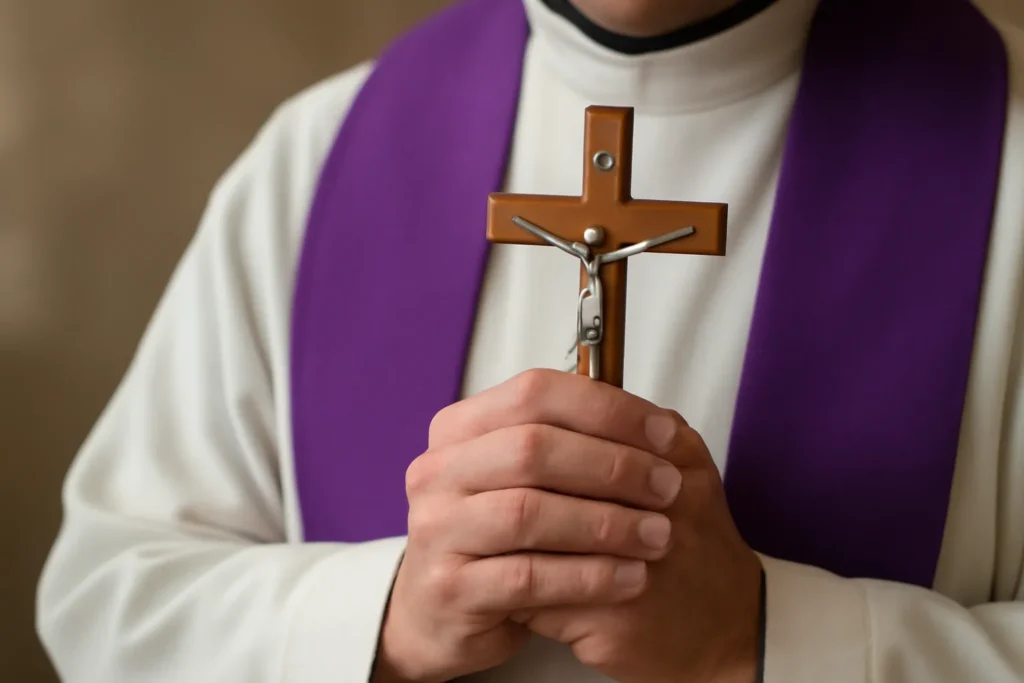
Anointing of the Sick: a sacrament administered by a priest, offering spiritual healing, grace to endure suffering,
forgiveness of sin if needed, and union with the passion of Christ. It is appropriate for those facing serious illness,
during a crisis, or before surgery.
Eucharist: the reception of the Body and Blood of Christ nourishes the soul, strengthens faith, fosters unity with Christ,
and deepens the sense that we are part of the communion of the Church in good times and bad.
Practical note: families may request information from their parish or diocese about sacramental availability, and a priest can visit for anointing or Holy Communion
when medically possible. Spiritual direction can help tailor prayer plans alongside medical treatment.
While prayers are essential, they are most effective when accompanied by appropriate medical care, supportive presence from family and friends,
and a steady spiritual life. This holistic approach honors the dignity of the person and invites grace to work through both science and faith.
Incorporating prayers into daily routines can provide ongoing comfort, hope, and strength.
Here are practical ways to weave prayer into everyday life during cancer treatment or recovery:
Daily prayer ritual: set aside 10–15 minutes for quiet prayer, breathing, and reflecting on the prayers you choose.
Novenas (nine days of focused prayer) to a saint, Mary, or the Holy Spirit with attention to healing intentions.
Rosary or Divine Mercy Devotions: even a few decades of the rosary or a short Divine Mercy reflection can anchor faith in daily life.
Prayer journal: write a few lines about fears, hopes, gratitude, and the ways you sense God’s presence during treatment.
Prayer with others: invite a family member, friend, or caregiver to pray with you; shared prayer strengthens bonds and reduces loneliness.
Consistency over intensity: small, regular prayers over time can be more transformative than long occasional prayers.
How to Craft Your Own Prayers: A Practical Guide
Many people find it helpful to write or adapt prayers to reflect personal experiences, family circumstances, and daily joys or fears. Here are simple steps to create meaningful, Catholic-style prayers for cancer:
Begin with God: address God, Jesus, Mary, or a saint in a way that matches your devotion.
Acknowledge reality: name your illness, fears, or pain, while inviting grace and mercy.
Ask for specific gifts: comfort, hope, strength, peace, patience, wisdom for doctors, or healing if it is God’s will.
Affirm trust: rest in God’s love and mercy, even when outcomes are uncertain.
Close with surrender: end with an act of faith, such as the Lord’s Prayer, the Hail Mary, or a personal statement of trust.
Guidelines for crafting new wording:
Keep the language you use simple and sincere; authenticity matters more than ornate phrasing.
Balance requests for healing with requests for grace to endure and to grow in love.
Include gratitude—thank God for small mercies, progress, and the presence of loved ones.
Optionally, weave in a short scripture verse or a remembered line from a favorite hymn.
If you are composing a prayer for someone else, consider including their name, mentioning their treatment plan if appropriate,
and inviting the Holy Spirit to guide decisions and care. Personalization can make prayer feel more tangible and sustaining.
Additional Considerations for Family and Caregivers
Prayerful care for someone with cancer is often a shared journey. Family members and caregivers can play a key role in
the spiritual life of a loved one by offering a calm, compassionate presence, listening, and praying together. Some practical
tips include:
Schedule regular, brief prayer times, even if only for a few minutes each day.
Attend Mass or parish events when possible; the assembly of the faithful can strengthen hope and community.
Respect the patient’s wishes about prayer, reading material, or devotional practices—some days may require gentler approaches.
Share prayers and prayers lists with the patient’s consent to avoid overwhelming them with requests or expectations.
Remember the power of presence: your presence at the bedside, a touch, a whispered prayer, and a listening ear can be a powerful form of ministry.
Final Reflections: Comfort, Hope, and Strength in Christ
Cancer challenges every dimension of life, but in the Catholic faith, it can also be a doorway to deeper communion with
Christ. Through comfort in suffering, hope in God’s promises, and strength to endure with dignity,
the faithful can experience a holy resilience that does not neglect the heart’s fragility. The prayers shared above are offered not as
a guarantee of physical healing, but as a supplication that invites grace to transform fear into trust, confusion into peace, and
pain into a witness of love.
If you would like to explore more prayers, many parish libraries and Catholic prayer books contain collections tailored to healing,
suffering, and intercession. Always feel free to talk with a priest or spiritual director about the best ways to pray for yourself
or a loved one. In the end, the Catholic tradition invites us to lean into the mercy of God—toward comfort, hope,
and strength in the presence of a loving Father who never leaves us alone.








Leave a Reply