Introduction: Comfort and faith in Catholic prayer for the sick and dying
In the Catholic tradition, prayer for the sick and dying is one of the most intimate ways to accompany a person through vulnerability, fear, and the deepest questions of life. It is not merely a set of words but a lived expression of trust in God’s mercy, a way to seek grace through times of illness, aging, and approaching death. This article offers an expansive overview of Catholic prayers for the sick and dying, explaining their purpose, how they are lived out in practice, and how families and communities can participate with reverence and love. Whether you are a caregiver, a family member, a friend, or a Catholic who wants to deepen your own prayer life, this guide provides practical insight, historic context, and a variety of texts that reflect the breadth of Catholic devotion to healing, comfort, and faith.
Understanding the scope: what makes Catholic prayer for the sick and dying distinctive
The Catholic approach to prayer for the sick and the dying is grounded in the Sacred Mysteries of the Church. It emphasizes the Sacraments as channels of grace, the liturgical life of the Church, and the communal support that surrounds a person facing illness or death. This tradition holds that suffering can be united with Christ’s own passion, offering hope not only for earthly peace but for eternal life. The care of body and soul—through medicine and prayer—remains interwoven, and the Church invites the faithful to seek healing in God’s will, while also asking for comfort, courage, and courage for those who risk losing hope.
Throughout this article, you will encounter various terms that describe the Catholic practice around illness and death. To begin, it is helpful to know several key concepts:
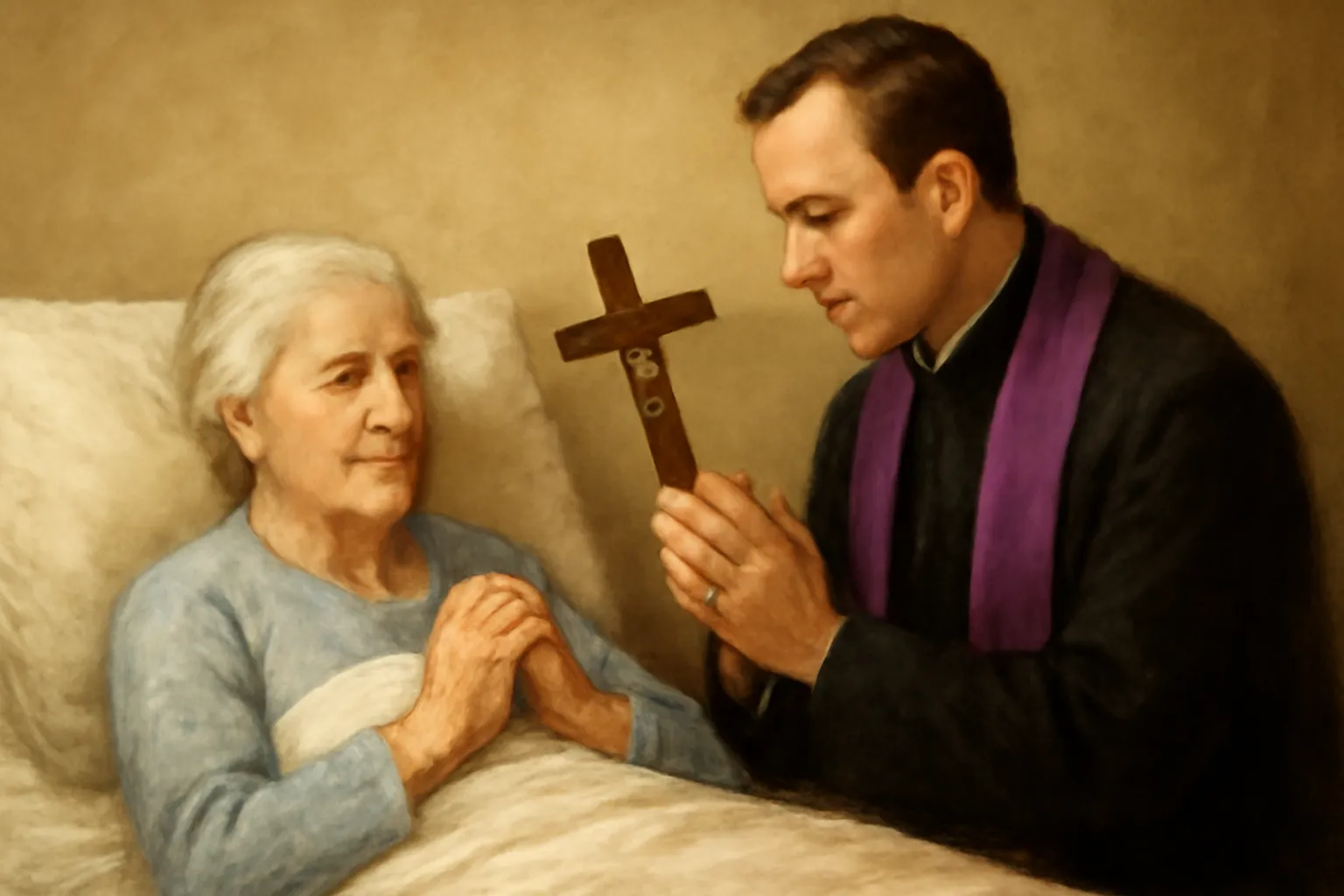
Anointing of the Sick — a sacramental rite that gives grace, strength, and spiritual peace to those who are seriously ill, old, or undergoing major surgery. It may include the laying on of hands and the anointing with the oil of the sick.
Reconciliation (Confession) — a sacrament of forgiveness that can prepare a dying person’s soul for union with God in the face of illness or death.
Eucharist — especially in its form as Viaticum, the Holy Communion given to a dying person as food for the final journey toward eternal life.
Rosary and other Marian devotions — offered as a source of consolation and focus for prayerful presence with the sick.
The central rites and prayers: sacraments and the sacred texts
Catholic Christians understand that the sacraments themselves carry the power of God’s grace. In times of illness and impending death, certain rites take on particular significance. Below are the principal components of a Catholic approach to prayer for the sick and dying.
Anointing of the Sick: grace for the journey
Anointing of the Sick (formerly called the “Last Rites” in popular usage) is a sacrament that can be received more than once if the person grows ill again or experiences a new illness or operation. Its purpose is not to guarantee physical healing but to confer grace, strength, peace, and the forgiveness of sins, if the person is able to confess. The oil used in the rite is symbolically tied to healing and God’s merciful touch.
In practical terms, this sacrament often involves clergy or a priest visiting the home or hospital, anointing the person’s forehead and hands with the oil of the sick, praying over them, and offering a prayer for healing and perseverance. It can be combined with Reconciliation and Eucharist when appropriate, forming a full circle of pastoral care.
Viaticum and the Eucharist: nourishment for the final journey
For Catholics, Viaticum refers to the reception of the Eucharist as food for the journey to eternal life. In Catholic teaching, receiving the body and blood of Christ at the point of death is a powerful sign of union with Christ and the Church. When a person cannot physically receive the Eucharist, spiritual communion and other prayers can accompany them.
Reconciliation and the grace of forgiveness
The practice of Reconciliation invites the dying person to confess sins and receive absolution if possible. This sacrament offers peace of conscience and reconciles the sinner with God and the community. It is often sought early in the illness or before a medical procedure when possible, but it can also be requested at any time during the illness if the person expresses a desire.
Prayers and devotional practices: a spectrum of Catholic texts and formats
The Catholic tradition offers a rich treasury of prayers for the sick and dying. These prayers can be used individually, prayed aloud with a loved one, or integrated into a family rosary or prayer service. The following sections highlight several forms that are commonly used and can be shared or adapted according to the situation.
Prayers for the sick: simple, enduring requests for God’s mercy
A Catholic prayer for the sick often centers on petitions for comfort, courage, and healing if it is God’s will. Public and private prayers alike may include:
Our Father (the Lord’s Prayer) — a universal orientation toward God the Father, asking for daily bread, mercy, and protection from temptation.
Hail Mary — seeking the intercession of the Blessed Virgin Mary for strength, comfort, and care in suffering.
Glory Be — a short doxology praising the Trinity, often used to conclude a sequence of prayers.
Act of Contrition — a concise expression of remorse and desire for God’s mercy and forgiveness.
Beyond these traditional prayers, many families use Catholic prayers for the sick and dying that focus specifically on healing and perseverance. A commonly used form is a brief, personalized petition that acknowledges the person’s illness, asks for grace, and expresses faith in God’s care.
Marian prayers and devotions: solace through the Mother of Christ
The Church often invites the faithful to entrust their suffering to Mary, the Mother of Jesus. Prayers such as the Hail Mary and devotional practices like the Rosary offer steady, contemplative support. In times of distress, many find comfort in focusing on the sorrowful mysteries and the belief that Mary shares in the pain of her Son while guiding believers toward compassion and renewal.
Spiritual communion and prayers of longing for union with Christ
When receiving the Eucharist is not possible, Catholics are encouraged to make a spiritual communion — a heartfelt desire to unite with Jesus Christ in the absence of the sacramental reception. A common form of spiritual communion is a short prayer such as:
My Jesus, I believe that You are present in the Most Holy Sacrament. I love You above all things, and I desire to receive You into my soul. Since I cannot at this moment receive You sacramentally, come at least spiritually into my heart. I embrace You as if You were already there and unite myself wholly to You. Never permit me to be separated from You. Amen.
This kind of act centers the person’s heart on Christ and helps maintain a sense of active participation in the life of faith even when the body is weak.
Practical guidance: how to pray for the sick and dying in daily life
Praying for the sick and dying is not limited to formal rites alone. It can be woven into everyday life, making spiritual courage and hope accessible to those who are suffering. Here are practical ideas to enrich Catholic prayer for the sick and dying in homes, hospitals, and care facilities.
Set a quiet space for prayer with gentle lighting, a cross or image of Mary, and comfortable seating. Silence can be a powerful instrument for grace, allowing words to be said slowly and with care.
Invite Scripture reading — short passages from the Gospels or the Psalms can anchor the moment in God’s word and provide a sense of timeless presence.
Include family and friends — the presence of others who are praying or simply staying with the person can be a powerful sign of community and love.
Offer simple gestures — a rosary held gently, a small crucifix, or a cherished photograph can be focal points for prayerful reflection.
Respect the person’s wishes — if the sick person desires formal liturgical prayer, offer it gently; if they prefer quiet companionship, honor that preference as a form of care.
Coordinate with clergy — for anointing, viaticum, or confession, communicate with the local parish or hospital chaplain to arrange sacramental moments at times that respect medical schedules and the person’s energy levels.
Variations of Catholic prayer for the sick and dying: breadth and breadth of expression
The phrase catholic prayer for the sick and dying can refer to many forms. To reflect semantic breadth, here are some common variations you may encounter or wish to use:
Prayers for the sick
Prayers for the dying
Prayer for the sick person
Prayers during illness
Catholic petitions for comfort and healing
Requests for grace in suffering
Visitation prayers for the dying
Each variation emphasizes a different facet—whether seeking healing, asking for peace, or preparing for death—while remaining rooted in Catholic faith and pastoral care.
Common prayers and ritual texts: ready-to-use samples
The following texts are intended as practical resources that can be used in family prayer, parish services, or bedside moments. They are designed to be adaptable to the person’s condition and the available time.
Sample Catholic prayer for the sick and dying (short form)
God of mercy and compassion, comfort this beloved child who bears illness. If it be Your holy will, grant healing; if not, grant peace and strength for the days to come. May Your grace sustain us, and may we always trust in Your love. Through Christ our Lord. Amen.
Prayers for the dying: a brief, faithful request for peace
Saint Joseph, patron of a happy death, pray for us. Intercede for this soul and grant a peaceful dying. May the comfort of God’s grace reassure the heart, and may the light of Christ banish all fear. Amen.
Prayer for the sick: a request for healing, courage, and hope
Jesus, Healer of souls, we entrust this person to Your care. If it be Your will, grant healing; if not, grant patience for the journey, courage for the days ahead, and peace that surpasses all understanding. We place our trust in You, now and always. Amen.
Prayer to Mary for the sick
Mary, Health of the Sick, be with us in moments of pain and fatigue. Help us to persevere in faith, hope, and charity. Wrap this child in your mantle of mercy, and guide us toward Your Son, Jesus. Amen.
Spiritual formation and catechesis: understanding suffering, hope, and eternal life
Catholic catechesis emphasizes that suffering can be united with the Cross of Christ to bring about spiritual growth, greater reliance on God, and a deeper love for neighbor. This is not to minimize pain, but to offer a framework in which illness becomes part of the journey toward the ultimate good God intends for each person. In this sense, the sick and dying are not merely objects of care but participants in the mystery of faith, a community united in prayer and love.
Pastoral care: the church’s ongoing support for the sick and dying
The Church teaches that the faithful have a right to pastoral care that accompanies them in time of illness and at the end of life. This includes access to the sacraments, to catechesis about mortality and eternal life, and to compassionate presence from priests, deacons, pastoral ministers, and lay volunteers. A parish community can organize prayer services for the sick, vigil prayers for the dying, and home visits that bring the comfort of Christ’s love to patients and families alike.
Guidance for families: supporting a loved one through illness and end-of-life care
Families often carry spiritual and emotional burdens in addition to the medical ones. A few practical recommendations can help in maintaining dignity, reverence, and spiritual focus during the illness journey.
Communicate openly about religious wishes, preferred prayers, and the timing of sacramental moments, such as Anointing of the Sick or Viaticum.
Honor the person’s voice in matters of prayer. Some may wish formal liturgy; others may prefer spontaneous prayers or quiet presence.
Create moments of calm—soft music, a lit candle, a sacred image, or a prayer corner—that invite peace and contemplation.
Include children gently in the prayer life of the family, explaining what is happening in age-appropriate terms and inviting them to participate in simple prayers.
Coordinate with healthcare providers to ensure that spiritual care aligns with medical treatment and comfort-focused approaches like palliative care when appropriate.
Frequently asked questions about Catholic prayer for the sick and dying
This section addresses common questions people ask when navigating illness and end-of-life care within a Catholic framework.
What is the difference between Anointing of the Sick and Last Rites? Anointing of the Sick is a sacrament that provides grace and strength for the seriously ill or elderly, and it can be received multiple times. Last Rites is an older term often used for the combination of Anointing of the Sick, Reconciliation, and the Eucharist when death is imminent; the current meaning emphasizes the individual sacraments and their distinct gifts of grace.
When should a priest be called? If someone is seriously ill, approaching surgery, or near the end of life, contact the parish or hospital chaplain. Timely visitation allows the sacraments to be celebrated with dignity.
Can one pray for a person who cannot respond? Yes. Prayer for the sick and dying can be offered privately or aloud, with the person’s name mentioned or recalled in prayer, acknowledging God’s presence and mercy.
Is medical care compatible with Catholic prayer? Absolutely. Catholic teaching upholds the sanctity of life and encourages the prudent pursuit of medical treatment while also offering spiritual care, comfort, and grace through prayer.
Conclusion: sustaining faith, hope, and charity through Catholic prayer for the sick and dying
In the end, prayer for the sick and dying is a service of love that unites a community with the person who is suffering and with God. It honors the sacred dignity of every human life, acknowledges the reality of illness and mortality, and invites trust in God’s merciful plan. Through the sacraments, through personal and communal prayer, and through compassionate presence, Catholics seek to bring comfort, courage, and spiritual peace to those who bore illness and approach death. As you engage with these prayers and practices, remember that you are participating in a ancient tradition that has carried countless souls toward peace and toward the embrace of eternal life in Christ.
If you would like to explore more resources, consider contacting a local parish, a hospital chaplaincy program, or a Catholic prayer group. The Catholic Church has always valued the dignity of the sick and the dying, and its pastoral ministry continues to offer practical guidance, communal prayer, and sacramental grace to all who seek it.

 Por Laura Jara