Catholic Seminary Formation: A Practical Guide to Priesthood Education
In many Catholic communities, the journey toward priestly service begins long before the first public liturgy. Catholic seminary formation encompasses a deliberate, holistic program designed to shape a candidate’s character, intellect, spiritual life, and pastoral capabilities. This guide offers a practical overview of how priestly education unfolds, the core components that make up the formation process, and the everyday realities that aspiring priests and their communities should understand. By examining the stages, the four pillars, and the daily rhythms of life in formation, readers gain a clearer sense of what it means to pursue a vocation within the Catholic Church.
The aims and scope of priestly formation
The ultimate goal of formation for the priesthood is to prepare men who are ready to serve as competent, compassionate ministers of the Gospel. This preparation combines human formation, spiritual formation, intellectual formation, and pastoral formation, each reinforcing the others. While the specifics may vary by diocese or religious institute, the underlying objectives remain consistent: a priest who is credible in faith, learned in doctrine, grounded in prayer, and capable of shepherding diverse communities.
Across the global Church, the language of formation emphasizes not only what a candidate learns but how a candidate grows. The educational path is both a catechetical journey toward doctrinal soundness and a vocational apprenticeship in service, leadership, and pastoral presence. Understanding this dual purpose helps laypeople and candidates appreciate why seminary life looks, sounds, and feels different from secular higher education.
Phases of priestly education: the path from inquiry to ordination
The road to ordination typically unfolds through distinct yet overlapping phases. Each phase focuses on a specific set of objectives while maintaining an integrated vision of priestly life.
Aspirancy and discernment — A time of personal reflection, spiritual direction, and vocational exploration. Aspirants examine their motives, health, and readiness, while mentors help them test their commitment to celibacy (in the Latin Church and many rites) and to sacramental ministry.
Philosophy and foundational studies — In many seminaries, there is a dedicated period of philosophical formation that provides a robust undergirding for theology. The emphasis is on critical thinking, logic, ethics, and the history of ideas, with attention to how philosophy informs Christian anthropology and epistemology.
Pre-Theology and personal formation — As students move toward more rigorous studies, human formation and spiritual formation become central. Students cultivate healthy communal living, time management, and interpersonal skills, which are essential for future pastoral work.
Theology and academic studies — This phase centers on systematic theology, sacred Scripture, moral theology, and Church history. Latin and possibly Greek or other languages support scholarly work and liturgical life.
Pastoral formation and field education — Practical ministry experiences—parish assignments, youth ministry, hospital visits, and other forms of field education—allow students to apply theory to service.
Deaconate and ordination — After sufficient formation and within the canonical timeline, candidates are ordained as transitional deacons, serving in ministries that precede the priestly ordination.
The framework of priests-in-training rests on four interrelated pillars. Each pillar addresses a dimension of formation, and together they create a well-rounded candidate prepared for priestly ministry.
Human formation: Development of character, emotional maturity, responsible leadership, healthy boundaries, and interpersonal competence. This pillar emphasizes self-awareness, reliability, and the capacity to work within a diverse community.
Spiritual formation: Deepening prayer life, devotion, sacramental life, and a robust interior relationship with God. Practices include daily personal prayer, communal liturgy, retreats, and spiritual direction.
Intellectual formation: Solid grounding in philosophy and theology, ability to engage Scripture and doctrine critically, and readiness to teach and defend the faith. Research, writing, and study skills are developed to an appropriate academic standard.
Pastoral formation: Readiness for ministry embodies the ability to accompany people in joys and struggles, preach the Gospel effectively, celebrate sacraments with reverence, and exercise pastoral leadership in parish or mission settings.
Intellectual formation: building a durable intellectual core
The intellectual dimension of seminary education ensures that a future priest can thoughtfully articulate Catholic teachings and engage with contemporary questions. A typical curriculum includes:
Philosophy: Metaphysics, logic, ethics, and the philosophy of human personhood establish the foundation for theological reflection.
Scripture: Sanskrit? No, biblical languages such as Hebrew and Greek are often emphasized to read the original texts; Scripture study includes exegesis and historical-critical methods aligned with Catholic interpretation.
Theology: Systematic theology, moral theology, and canonical teachings explain how the Church believes, prays, and acts in the world.
Liturgy and sacred music: Knowledge of liturgical norms, the rubrics of the Mass, and the music that enable authentic worship.
Church history: Understanding the development of doctrine and practice across centuries helps a priest appreciate continuity and reform within the tradition.
Languages: Latin remains a traditional scholarly and liturgical language; some programs also teach Greek or modern languages to support research and pastoral outreach.
To translate theory into practice, seminaries emphasize academic rigor paired with pastoral capability. Students are encouraged to publish, participate in research seminars, and present theological reflections that connect classroom learning to parish life.
Human formation: shaping character for reliable ministry
Human formation focuses on the whole person as they mature toward priestly service. It often involves individualized coaching, mentorship, and community-based accountability. Key components include:
Healthy interpersonal relationships and boundaries within a communal living setting
Leadership skills that emphasize service, humility, and responsibility
Resilience and stress management to sustain long periods of study and pastoral work
Career discernment and discernment of spirits in collaboration with spiritual directors
Well-being, discernment, and ethics in human formation
The human formation program often includes psychological assessment and ethics training to help candidates navigate personal challenges without compromising safety or integrity. The goal is not mere compliance but the cultivation of virtuous leadership grounded in Catholic anthropology.
Spiritual formation: cultivating prayer, discernment, and sacramental life
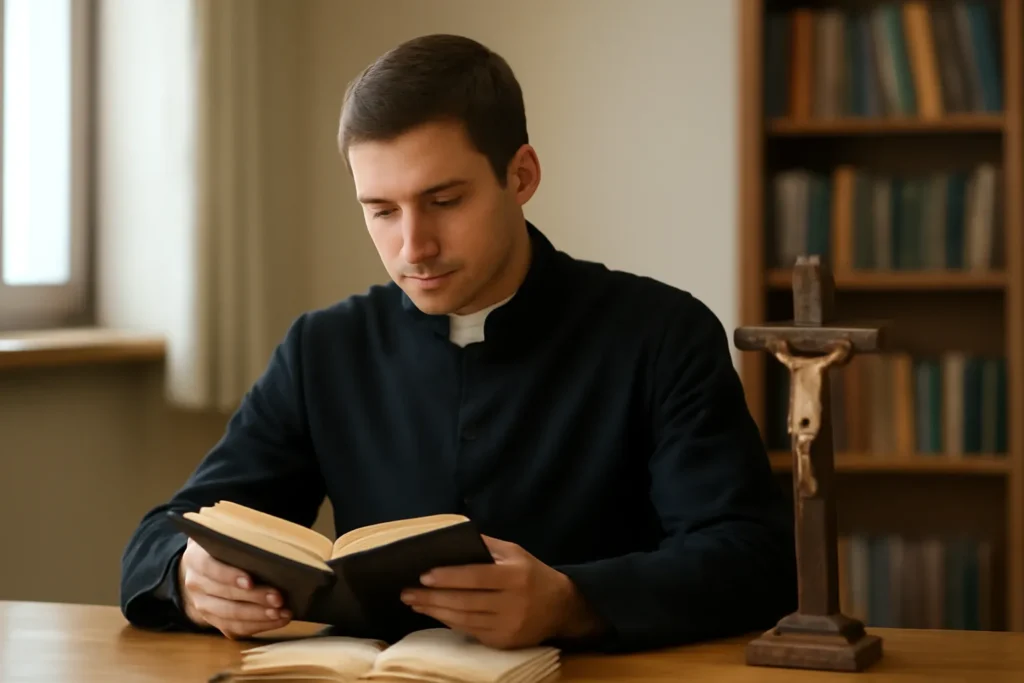
The spiritual life is at the center of seminary education. A well-structured program helps men grow into a priest who can guide others in prayer and devotion. Core elements include:
Daily prayer routines (including the Liturgy of the Hours, personal meditation, and attentive reflection)
Mass participation and reverent celebration of the sacraments
Retreats and spiritual direction to deepen intimate dialogue with God
Formation in spiritual discernment that helps candidates interpret signs of vocation
A typical day in the seminary includes set times for prayer, communal meals, study, and rest. The routine is designed to foster a sense of rhythm and steadiness, helping students integrate faith with daily tasks. Spiritual formation is not merely personal piety; it is a communal discipline that models priestly leadership and pastoral availability.
Pastoral formation: learning to shepherd through real-world ministry
Pastoral formation is the hands-on component of seminary education, bridging theory and practice. It develops the candidate’s ability to preach, administer sacraments, and accompany people in times of need. Key settings include:
Parish immersion: observation, assistance, and eventual leadership under supervision
Hospital and hospital chaplaincy experiences: compassionate presence in times of illness and crisis
Youth ministry, campus ministry, and social outreach programs
Mission experiences and service in under-resourced communities
In practice, pastoral formation aims to produce priests who can adapt to evolving pastoral contexts while remaining faithful to the Church’s liturgical and doctrinal norms. Evaluation often involves feedback from supervisors, peers, and parish communities, ensuring a robust readiness for ordination.
Discerning the priestly vocation: admissions, suitability, and readiness
The path to priestly education begins with careful discernment on the part of the individual and thoughtful discernment by the Church. Applicants typically undergo a multi-step process designed to verify readiness, health, and alignment with Church teaching.
Application and interviewing with diocesan personnel or religious order leadership
Comprehensive background checks and references from spiritual directors, religious leaders, or mentors
Psychological evaluation to assess emotional maturity and suitability for long-term ministry
Medical exams to ensure physical fitness for the demands of formation and ministry
Pre-theology or philosophy courses to establish a solid academic grounding, when appropriate
The discernment process values honesty and transparency. Candidates are encouraged to participate in spiritual direction and to discuss their desires for service, their personal history, and their readiness to commit to a life of celibacy (where applicable), obedience, and poverty within their particular vocation.
Seminary life has distinctive rhythms, governance, and responsibilities. Although every institution has its own norms, several common features recur across Catholic seminary programs.
Formation staff include a rector or superior, a spiritual director, and a team responsible for human and pastoral formation
Community life emphasizes fraternity, shared meals, and accountability within a structured schedule
Academic requirements combine coursework, examinations, and sometimes language or research projects
Movement through the phases of formation is monitored by formators who coordinate objective assessments
Relational and cultural aspects: building a supportive formation environment
The environment inside a seminary can significantly influence the experience of formation for the priesthood. A healthy culture fosters trust, mutual respect, and constructive feedback. Leaders strive to balance rigorous academic demands with compassionate mentorship. Communities are encouraged to create inclusive spaces where concerns about mental health, burnout, or spiritual dryness can be discussed openly and addressed with care.
Specializations and pathways within Catholic seminary formation
While the core curriculum remains consistent, some programs offer opportunities to tailor the formation journey to particular ministerial settings or missionary aims. These options may include:
Parish-focused formation with emphasis on preaching, sacramental life, and parish administration
Academic specialization in areas such as biblical theology, Thomistic studies, or moral theology
Pastoral-psychological integration for chaplaincy or clinical pastoral education
Mission and intercultural ministry for cross-cultural or international contexts
Variations of seminary formation reflect the needs of dioceses and religious communities, while maintaining fidelity to the Church’s teachings and canonical norms.
Post-ordination formation: ongoing growth after priestly ordination
The journey does not end with ordination. Continued formation for priests is a canonical expectation in many contexts, ensuring Catholic clergy remain effective, ethically grounded, and spiritually nourished throughout ministry. Ongoing formation may include:
Continual theological study and catechetical enrichment
Pastoral supervision and reflective practice in parishes
Pastoral care for diverse congregations, including youth, families, and the elderly
Pastoral leadership development and administrative competencies
Global and cultural variations in Catholic seminary education
Across the Catholic world, the format of seminary formation adapts to local cultures, ecclesial traditions, and canonical structures. In some regions, college-based or seminary-college models shape the philosophical and theological formation path, while in others, high school or university-level religious studies feed directly into a more integrated formation program. Regardless of model, the aim remains the same: to produce priests who are credible witnesses of the Gospel and capable servants of their communities.
Practical guidance for aspiring priests and those who accompany them
For men considering priestly service or for parents, mentors, and parish leaders who seek to support candidates, several practical considerations help ensure a robust and constructive formation experience.
Engage in early discernment conversations with a parish priest, spiritual director, or vocations director
Prepare academically through strong fundamentals in philosophy and religious studies
Develop a daily spiritual regimen that includes prayer, Bible study, and participation in the liturgy
Cultivate healthy habits around sleep, nutrition, exercise, and mental health
Seek opportunities for pastoral exposure in parishes, schools, or community organizations
For those who support candidates, it is essential to recognize the substantial investment involved in cathedral and seminary formation. Seminaries require financial resources, time, and a supportive spiritual climate. Communities can contribute by offering mentorship, hosting discernment events, providing financial aid, and ensuring a welcoming environment for candidates and their families.
Frequently asked questions about Catholic seminary formation
Below are concise answers to common questions about the journey into priestly service and the structure of formation programs.
What is the primary purpose of seminary formation? To prepare men to serve the Church as priests by cultivating virtue, knowledge, and pastoral ability in a communal and spiritual setting.
How long does formation take? It varies by rite, diocese, and individual path, but a typical timeline spans several years of philosophical and theological study, culminating in ordination after a deaconate period.
Do lay people attend seminary programs? Some seminaries offer programs open to lay students or those pursuing graduate-level theology or spirituality; the core formation for ordained ministry remains targeted toward candidates for priesthood or religious life.
What role does the bishop or rector play? The bishop or superior relies on formators, spiritual directors, and faculty to guide candidates through the process, ensuring doctrinal fidelity and pastoral readiness.
Challenges and opportunities in Catholic seminary formation
Any comprehensive training program encounters challenges, and seminary formation is no exception. Time management, balancing academic demands with spiritual life, and navigating emotional or spiritual dryness can be part of the journey. However, these challenges also offer opportunities for growth. A well-structured formation program provides mentoring, clear milestones, and supportive communities to help candidates persevere. The process ultimately aims to produce priests who are not only knowledgeable but deeply rooted in the love of God and the service of others.
A practical summary: what every participant should know
Whether you are a candidate, a parish sponsor, or a member of a diocese’s vocations team, understanding the practical contours of catholic seminary formation helps everyone participate more effectively in the journey. The key takeaways are:
The formation path blends human, spiritual, intellectual, and pastoral development toward a coherent vocational goal.
Learning is not confined to classroom work; it is a lived experience in community, worship, and service.
The process includes careful discernment, rigorous academic study, and substantial pastoral practice.
Post-ordination formation remains a normal expectation, ensuring ongoing growth and competence in ministry.
Embracing the journey: final reflections on priestly education
Catholic seminary formation is a unique amalgam of study, prayer, and service. It invites candidates to become people of faith who think deeply about the mysteries of salvation, who love the Church, and who are willing to walk with others through life’s joys and trials. It is a communal enterprise that requires support from families, parishes, and dioceses alike. For many, the path is challenging but profoundly rewarding, producing clergy who are trusted guides, teachers, and witnesses of Christ’s love in the world.
If you are exploring this path, reach out to a vocations director or a priest mentor to begin a conversation about discernment, timelines, and what a specific formation program entails in your region. Each seminary adapts to its own pastoral context while preserving the core aim: to form holy and capable servants of the Gospel prepared to shepherd God’s people with wisdom, humility, and joy.







Leave a Reply