Chaplain vs Priest: Key Differences in Roles and Responsibilities
Chaplain vs Priest: Key Differences in Roles and Responsibilities
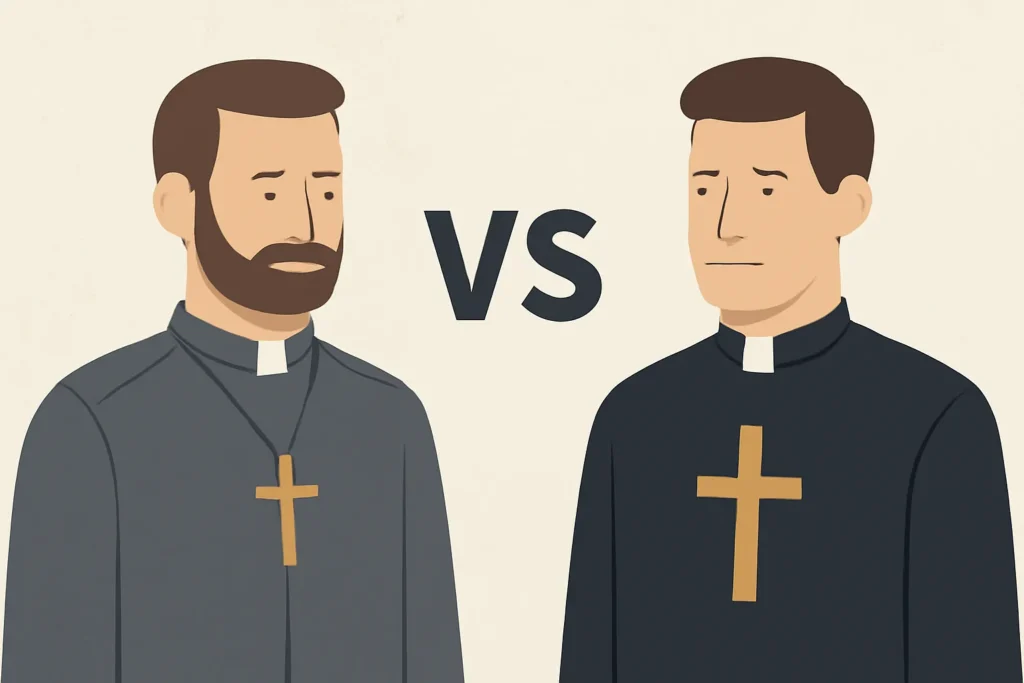
In many religious landscapes, the terms chaplain and priest evoke similar images of spiritual care, leadership, and religious service, yet they describe distinct roles with different responsibilities, training, and settings. This article provides a comprehensive comparison of chaplaincy and priestly ministry, focusing on the key differences in roles and responsibilities. Whether you are exploring career paths, studying for seminary, or simply seeking to understand how faith leadership works in contemporary institutions, the information here helps illuminate how these two vocations serve communities in distinct but sometimes overlapping ways.
The word chaplain originated in Christian contexts but has broadened to describe a professional who provides spiritual care and religious support within secular or ecumenical settings. A chaplain is often attached to an institution such as a hospital, military unit, university, prison, or corporate environment. The primary focus is pastoral care and spiritual support for people of diverse beliefs, including those who identify with no faith tradition. Chaplains may come from various religious backgrounds and may have different forms of credentialing depending on their tradition and employer.
In contrast, a priest is commonly understood as an ordained minister within a specific religious tradition who performs leadership functions, sacraments, and teaching within a parish, cathedral, monastery, or another community setting. The priestly vocation is often anchored in a particular theological framework, a lineage of ordination, and an established ecclesial hierarchy. While priests also provide pastoral care, their responsibilities typically include sacramental leadership, preaching, liturgy, and governance in worshiping communities.
Chaplain emphasizes service in institutions and inclusive spiritual care across belief systems.
Priest emphasizes ordained sacramental ministry, liturgical leadership, and a defined ecclesial role.
Because both roles involve care for the spiritual well-being of people, there is natural overlap. Some chaplains are ordained as clergy within their own faith tradition, while others are commissioned or certified professionals who provide spiritual care without necessarily serving as priests. Similarly, some priests work in contexts outside traditional parish life, including educational institutions or hospitals, where they fulfill roles akin to chaplains in certain respects.
Throughout the article, the terms chaplain and priest will be used to reflect how these roles function in everyday settings, while noting variations by tradition—such as Catholic, Orthodox, Anglican, Lutheran, Jewish, Muslim, and secular institutional chaplaincy models.
Training, accreditation, and pathways
The paths into chaplaincy and priestly ministry differ in structure, emphasis, and credentialing. Understanding these differences helps clarify what is required to practice in each role and what the preparation enables a person to do.
Chaplaincy preparation
Most chaplains pursue specialized training in spiritual care, chaplaincy, or pastoral counseling. Common elements include:
Formal education in theology, religion, counseling, or a related field (often at the master’s level).
Clinical pastoral education (CPE) or supervised fieldwork to develop practical skills in listening, crisis intervention, and interfaith communication.
Credentialing from a professional chaplaincy association or a hospital or institutional board, which might include board certification as a professional chaplain or “board-certified chaplain” status.
Institution-specific requirements, such as background checks, security clearances (particularly in military or prison contexts), and continuous education.
Flexibility to work with people from a spectrum of beliefs, including non-religious spiritual seekers.
Because chaplains serve in settings where multiple faiths and worldviews intersect, training often emphasizes interfaith literacy, cultural humility, and ethical practice in diverse environments.
Priestly formation
For those pursuing priestly ministry, the typical path centers on ordained formation within a specific church tradition. Common components include:
A foundational degree in theology or philosophy, followed by graduate or seminary studies in the priest’s tradition.
Spiritual direction, moral theology, and academic study of sacred texts relevant to the tradition.
Pastoral internships or placements in parishes, schools, or other church settings to develop liturgical leadership and preaching skills.
Credentialing through the church’s hierarchy, which may lead to ordination (e.g., priestly ordination in Catholic, Orthodox, Anglican, Lutheran, or other churches).
Commitment to the sacramental and ecclesial life of the church, including governance responsibilities within the diocese or synod.
In many traditions, ordination is a key moment that confers the authority to perform sacraments, lead worship, and assume canonical responsibilities. This is distinct from chaplaincy accreditation, which is often institutionally grounded rather than ecclesiastically conferring sacramental authority.
Core responsibilities: pastoral care, leadership, and beyond
Both chaplains and priests engage in care, guidance, and spiritual leadership, but the scope and context of their responsibilities vary. The following contrasts highlight where their daily work diverges and where it converges.
Pastoral care and counseling
Chaplains provide holistic pastoral care, crisis response, and emotional support to people in hospitals, prisons, military units, universities, and other institutions. They often practice active listening, empathetic presence, spiritual assessment, and referral to religious or secular resources. The goal is to meet people where they are and support their personal belief systems or lack thereof.
Priests offer pastoral care within the parish and often broader sacramental ministry to individuals and families who share the priest’s tradition. This includes ongoing spiritual guidance, marriage preparation, funerals, and counseling within the parameters of their ecclesial teaching.
In practice, many chaplains work with people who come from dozens of faith backgrounds, and they adapt their approach to honor diverse needs. Priests frequently work with a more bounded community bound by the church's doctrine, liturgy, and sacramental framework.
Chaplains may lead or participate in prayers, blessings, memorial services, and rituals, but their role in sacramental life is typically limited by their tradition and the institution’s guidelines. In some contexts, chaplains from certain faiths can administer specific rites outside mainstream sacraments, especially when authorized by their faith community.
Priests are often the primary ministers of sacraments within their tradition. In Catholic, Orthodox, and many Anglican contexts, priests administer the Eucharist, celebrate the Mass or Divine Liturgy, hear confessions, anoint the sick, and officiate at weddings and funerals as a standard aspect of their duties.
Because chaplains engage with people who may not share the same beliefs, they typically emphasize inclusive, non-discriminatory care that respects pluralism. Priests, while also offering care to all in their communities, operate within a sacramental framework that shapes how rites are celebrated and taught.
Education, teaching, and catechesis
Chaplains may provide spiritual education or devotional resources tailored to the institutional setting. They might create interfaith programming, lead group reflections, or guide individuals in personal faith exploration, often collaborating with chaplains of other faiths.
Priests commonly deliver homilies, catechesis, and religious instruction aligned with their church’s catechetical programs. They may oversee religious education, confirmands, and youth ministries within their parish.
Both roles value education and lifelong learning, but the audience and doctrinal boundaries differ. Chaplains emphasize accessibility across beliefs, while priests emphasize doctrinal consistency within a tradition.
Administrative and governance duties
Chaplains often serve under administrative structures within their employing institution. They coordinate with chaplains of other faiths, manage volunteer teams, schedule services, and document patient or client needs in confidential records. They may be involved in ethics committees and interdisciplinary teams, especially in healthcare or end-of-life settings.
Priests have governance roles within their diocese or parish. They may oversee parish finances, hire staff, manage property, and contribute to the strategic planning of their church community. They are often part of a broader clerical hierarchy and are accountable to bishops or equivalents.
These administrative duties reflect the distinct institutional ecosystems in which chaplains and priests operate. A hospital chaplain interacts primarily with the medical team and patients, while a parish priest collaborates with lay leaders, council members, and diocesan authorities.
Ritual practice and liturgical life
Ritual life and liturgical leadership distinguish priestly ministry more distinctly in many traditions, though chaplains also participate in ritual acts designed to honor meaning, solace, and spiritual expression.
Chaplaincy often includes prayer services, blessings, scripture readings, memorial rites, and interfaith ceremonies. The rituals performed by a chaplain are designed to be inclusive and adaptable to diverse beliefs and personal needs, which may mean reconfiguring traditional liturgies or composing secular-aligned elements for a given context.
Priestly ministry centers on liturgical leadership—celebrating the Eucharist or Holy Communion, presiding at baptisms and weddings, offering the sacrament of reconciliation where applicable, and conducting liturgical seasons with a strong sense of tradition and doctrine.
In practice, chaplains can be deeply liturgical when working within their own faith tradition, but their primary aim remains to serve every individual within the institution, not just members of their church. Priests, by contrast, often carry the spiritual and liturgical life of a defined religious community, anchored by the church’s sacramental life.
Interfaith and ecumenical dimensions
Because chaplains are frequently called to serve people from multiple faith backgrounds, they develop skills in interfaith dialogue and respectful engagement with diverse beliefs. This often includes facilitating chaplaincy teams that span religions, coordinating with hospital chaplains of other faiths, and designing services that honor many traditions without privileging one over another.
Priests also participate in ecumenical and interfaith contexts, especially in diocesan or archdiocesan programs. However, their primary mission remains rooted in a specific tradition, and their interfaith work tends to be contextual and collaborative rather than foundational to their primary function.
Setting and environment: where chaplains and priests serve
The environments in which chaplains and priests operate reveal practical distinctions in their daily responsibilities, challenges, and opportunities for service.
—chaplains often fill essential roles in patient care teams, offering spiritual and emotional support to patients, families, and staff across religious backgrounds.
Military—military chaplains provide counseling, worship services, and ethical guidance to service members in a discipline where spiritual resilience is part of readiness and welfare. In many armed forces, chaplains are commissioned officers who coordinate with others and serve in units rather than in a parish.
Universities and colleges—campus chaplains arrange religious life programs, mentorship, and crisis support for students, faculty, and staff from diverse faith traditions.
Prisons—chaplaincy in correctional facilities focuses on rehabilitation, moral reflection, and humane care, often requiring close collaboration with security and rehabilitation staff.
Parishes and church ministries—priests primarily lead worship, administer sacraments, and guide the spiritual life of congregants, while also engaging in community service and education.
Schools and religious houses—priests and other clergy may serve as chaplains or instructors, depending on the institution and tradition.
In secular institutions, the chaplain is typically hired as a professional staff member with cross-faith responsibilities. In traditional faith communities, the priest’s work is anchored in the life of the church and its sacraments.
Authority, accountability, and governance
Authority structures help explain why chaplains and priests act differently within organizations and communities.
Chaplains usually answer to the administration of the institution they serve (e.g., hospital chaplaincy program director, chaplaincy department head). Their accountability often centers on ethical service, patient or client welfare, and adherence to institutional policies, as well as professional chaplaincy standards.
Priests operate within a religious hierarchy. In Catholic, Orthodox, and Anglican traditions, they respond to bishops, archbishops, or other ecclesial authorities. Their accountability includes fidelity to doctrinal teachings, liturgical norms, and church discipline, alongside parish leadership duties.
Thus, chaplains tend to function in a more secularly governed framework with cross-faith obligations, whereas priests operate within a spiritually governed framework tied to their church’s canon law, liturgical rules, and doctrinal boundaries.
Interfaith work is a cornerstone of modern chaplaincy. Professionals in this field routinely interact with people across faiths and with those who identify as spiritual but not religious. The emphasis is on human beings’ needs—comfort, hope, meaning—rather than on forcing a single doctrinal view. This fosters a practice characterized by:
Respect for a broad spectrum of beliefs
Collaborative care planning with multi-faith teams
Careful navigation of religious language so that it is inclusive rather than exclusive
Support for patients and clients during rites of passage, regardless of affiliation
Priests, while often engaged in ecumenical or interfaith outreach as part of their broader church mission, typically center their work within the boundaries of a specific tradition, its rites, and its ethical systems. The interfaith element appears, when it does, as a secondary but essential facet of public ministry rather than the primary aim.
Ethical considerations and professional boundaries
Both chaplains and priests must navigate complex ethical landscapes, but the nature of boundary work can differ due to setting and role expectations.
Confidentiality is central to both roles. Chaplains adhere to confidentiality policies appropriate to their institution and the laws of the land, while priests follow sacramental and pastoral confidentiality norms in line with church teachings and canon law.
Autonomy and consent are crucial in providing care that respects the person’s beliefs, culture, and personal wishes. Chaplains often work to honor the client’s worldview even when it differs from the chaplain’s own beliefs.
Scope of practice determines what constitutes spiritual care versus doctrinal instruction. Chaplains focus on compassionate presence and support; priests may provide doctrinal teaching and sacramental leadership within the bounds of their tradition.
End-of-life care presents unique ethical considerations in both paths—chaplains may coordinate with medical staff and families across faiths, while priests may provide sacramental rites and rituals aligned with their tradition, sometimes in collaboration with chaplains.
Career trajectories and vocational considerations
People choose these paths for a variety of reasons: spiritual calling, desire to serve communities, or interest in how care and belief intersect in human life. Here are some practical differences to consider when exploring future work.
often offers opportunities in secular or multifaith environments, with the chance to serve a broad population, mentor other caregivers, and work in dynamic, sometimes crisis-driven settings.
typically leads to long-term commitments within a particular church tradition, with the potential for parish leadership, diocesan service, education, and mission work, along with a role in sustaining the spiritual life of a community.
Job stability and advancement may differ by tradition and location. Institutions such as hospitals or universities may hire chaplains with diverse backgrounds, whereas churches often promote within a defined ecclesial framework.
Financial models differ: chaplains may be salaried by institutions, and priests may be supported through church stipends, tithes, or diocesan funding, with associated expectations for fundraising or community leadership.
Prospective students and candidates should consider where they see themselves making impact: in the care setting of a hospital or army unit, or in the parish life of a local church, temple, or mosque, where rituals, congregational leadership, and doctrinal education are central.
Common misconceptions and clarifications
Several myths circulate about chaplains and priests. Clearing these up helps in choosing a path that aligns with one’s gifts and convictions.
Myth: All chaplains are non-ordained professionals. Fact: Many chaplains are clergy from their own faith, and they may also be ordained or credentialed through professional associations depending on the setting.
Myth: A priest is always associated with a parish. Fact: Priests can serve in education, hospital settings, mission work, monasteries, and diocesan leadership beyond parish duties.
Myth: Chaplaincy is only for Christians. Fact: Chaplains serve people of all faiths and beliefs, including non-religious spiritual perspectives, and must be proficient in interfaith care.
Myth: Priests cannot engage in secular professional life. Fact: Priests often balance sacred duties with public service, teaching, counseling, and community leadership, depending on tradition and assignment.
Practical guidance for choosing a path
For individuals weighing chaplaincy versus priesthood, several practical questions can help clarify fit and aspiration.
If you are drawn to diverse, cross-faith care contexts, chaplaincy may be appealing. If you want to lead a particular faith community and perform sacraments, priestly ministry could be a better match.
Do you envision crisis counseling in fast-paced environments (hospitals, military) or steady liturgical leadership and parish governance?
Am I prepared for long formation? Priesthood often involves lengthy canonical training and ordination processes, while chaplaincy can have varied educational tracks and professional certifications.
How important is sacramental authority to me? If administering rites like the Eucharist or confession is central, priestly ministry in a tradition that emphasizes sacraments may be essential. If your emphasis is pastoral presence without sacramental authority, chaplaincy could be more suitable.
Exploring internships, mentorships, and conversations with professionals in both fields can provide firsthand insight. Attending chaplaincy rounds, parish councils, or seminary open houses can help you gain experiential understanding before committing.
Historical evolution and contemporary trends
The roles of chaplains and priests have evolved with changing social expectations, secular institutions, and ecumenical movements. A brief look at history and current trends reveals how each vocation adapts to new realities.
The chaplaincy tradition expanded significantly in the 20th century as hospitals, universities, and the military recognized the need for professional spiritual care that could serve pluralistic populations. Innovations in clinical pastoral care and interfaith training became standard components of professional chaplaincy.
The priestly ministry has deep roots in ecclesial life, with reforms and reforms in different denominations shaping how priests function within parishes, educational settings, and missions. In recent decades, there has been renewed emphasis on pastoral leadership, social justice, and community engagement alongside traditional liturgical and sacramental duties.
Contemporary trends emphasize collaboration. Chaplains and priests often work together in multi-faith teams, ethics discussions, and community outreach initiatives to address the whole person—spiritual, emotional, physical, and social needs.
As societies become more diverse, the professional chaplain’s toolkit—interfaith literacy, crisis intervention, cultural sensitivity—grows in importance. Simultaneously, priests continue to shape local communities through preaching, liturgical formation, and service that embodies a tradition’s values.
Case studies: scenarios illustrating chaplaincy versus priestly work
Concrete examples illuminate how these roles operate in real life. The following fictionalized scenarios reflect typical situations in modern settings while highlighting core distinctions.
A patient facing a complex medical decision may seek comfort and clarity from a chaplain who can honor the patient’s spiritual needs and diverse beliefs. The hospital chaplain might:
Offer empathic listening and facilitate discussions about values and preferences.
Coordinate with the medical team to ensure spiritual considerations are part of the care plan.
Provide or arrange for multi-faith or secular services, respecting the patient’s worldview.
If the patient’s family shares a particular faith, a priest from that tradition could be involved to administer appropriate rites or perform rituals consistent with that faith, provided the patient desires such sacramental or liturgical engagement.
Scenario 2: Military unit
A military chaplain serves as a spiritual resource for soldiers, offering counseling, worship opportunities, and moral guidance under the constraints of military life. The chaplain's duties may include:
Conducting services for service members of various beliefs, including non-religious personnel.
Providing emergency spiritual care during deployment or crisis events.
Advocating for ethical decision-making in difficult military operations in consultation with commanders and chaplains of other faiths.
A priest may also be part of such a setting if the tradition maintains a strong presence in the armed forces, though the scope of authority would be shaped by the church structure and the appointment’s nature.
Scenario 3: University campus
A campus chaplain might design programs that address student concerns across spiritual lines, including meditation groups, interfaith dialogues, and counseling services. The goals include fostering belonging, resilience, and ethical reflection among students and staff.
A parish priest who teaches at a religiously affiliated university might focus on classroom instruction, campus ministry, and mentoring students within a specific faith tradition, while also engaging with the broader campus community through service projects and public lectures.
Scenario 4: Parochial school or religious education setting
In a school with a Catholic identity, a priest may serve as the principal or spiritual leader, overseeing sacraments, liturgical life, and curricular alignment with church teaching.
In secular schools with a broad campus chaplaincy program, a chaplain might lead assemblies, provide confidential counseling, and work with students from many religious backgrounds, ensuring inclusivity and safety for all.
Key takeaways: chaplain vs priest in one glance
To summarize the essential differences and overlaps, here are concise takeaways you can reference:
: Chaplains serve in institutions and aim to meet diverse spiritual needs; priests serve within a specific religious community and lead its sacramental life.
Authority: Chaplains are accountable to their employing institution and professional chaplaincy standards; priests are accountable to church hierarchy and canon law.
Ritual life: Chaplains may perform inclusive rituals suited to a multi-faith audience; priests perform canonical rites and sacraments within their tradition.
Setting: Chaplains are common in hospitals, prisons, universities, and the military; priests are commonly found in parishes, dioceses, monasteries, or mission settings but can work in various roles.
Interfaith engagement: A hallmark of chaplaincy; priests engage in ecumenical or interfaith partnerships but within the context of their tradition.
Pathways: Chaplaincy emphasizes education, CPE, and credentialing; priestly pathways emphasize ordained formation and canonical ordination.
Understanding these distinctions helps individuals choose a path aligned with their calling, and it helps communities recognize how different forms of religious care contribute to the well-being of people across life’s varied contexts.
Whether you are drawn to the universal care ethos of chaplaincy or to the sacramental and liturgical leadership of priestly ministry, both roles play integral parts in how faith communities and secular institutions support human flourishing. In our increasingly diverse world, the ability to provide compassionate spiritual care—whether as a chaplain, a priest, or in related roles—remains a vital service to people during moments of joy, doubt, illness, celebration, and transition. By appreciating the key differences in roles and responsibilities, institutions and individuals can better match vocations to needs, values, and long-term aims for spiritual care and community life.






Leave a Reply