Catholic Thanksgiving Prayers: Gratitude Prayers for Faith, Family, and Blessings
Catholic Thanksgiving Prayers: Gratitude Prayers for Faith, Family, and Blessings
In the Catholic tradition, gratitude is not merely an emotion but a spiritual practice rooted in the Eucharist, the "thanksgiving" at the heart of the faith. Catholic thanksgiving prayers invite believers to acknowledge God as the source of every blessing—from the gift of life to the grace of faith, from daily bread to the companionship of family and the mercy shown during trials. This article surveys a broad range of gratitude prayers, offering traditional forms, modern adaptations, and practical guidance for prayer at home, at meals, in moments of need, and during the liturgical year. Whether you are seeking a brief moment of thanks before a family meal or a more sustained practice of thanksgiving in daily life, these prayers can enrich your devotion, deepen your trust in God, and nourish a spirit of generosity toward others.
Understanding Catholic Thanksgiving: The Theology of Gratitude
In Catholic teaching, gratitude is not simply a feeling but a responsive virtue that flows from recognizing God as the Creator, Redeemer, and Sanctifier. The word Eucharist itself means thanksgiving, reminding the faithful that every celebration of the Mass is a way of giving thanks to God for the mysteries of salvation. Thanksgiving prayers help believers orient their lives toward God by naming specific gifts—faith, family, health, work, daily provision—and by asking for the grace to share those gifts with others. The practice of saying grace grows into a habit of contemplation: noticing small mercies, remembering large blessings, and responding with generosity to those in need. Catholic thanksgiving is deeply communal as well as personal; it gathers family, friends, and the parish to praise God and to commit themselves to acts of love and service.
Three themes are especially central in Catholic thanksgiving prayers:
Acknowledging God as the source of all gifts—every blessing comes from a loving Creator.
Giving thanks through Christ—the Church teaches that all grace comes through Jesus, and prayers of gratitude often invoke Him as mediator and friend.
Responding with generosity—thanksgiving naturally leads to thankfulness expressed in deeds: care for family, charity toward the poor, and stewardship of creation.
As you read and recite these prayers, consider a simple rule of life: begin with gratitude for specific gifts, offer a prayer for others, and close with a concrete act of charity or a resolve to imitate Christ in mercy. This structure helps integrate prayer into daily living, turning words into action and faith into lived witness.
Traditional Catholic Thanksgiving Prayers
The following entries present classic prayers and widely used variants. They reflect the Catholic instinct to sanctify ordinary moments with praise and petition, turning meals, family times, and daily routines into occasions of thanksgiving.
Grace Before Meals (Traditional)
Bless us, O Lord, and these Thy gifts which we are about to receive from Thy bounty, through Christ our Lord. Amen.
Variant forms commonly used in parishes or families include:
Bless us, O Lord, and these Thy gifts, which we are about to receive from Thy bounty, through Christ our Lord. Amen.
Bless us, O Lord, and bless these Thy gifts to us, through Christ our Lord. Amen.
Notes for practice:
Traditionally said before meals in households, schools, and monasteries.
Involve children by having them echo the prayer or offer intentions for others who need support and healing.
Consider adding a brief personal intention after the Amen, such as praying for someone who is ill or for peace in the family.
Grace After Meals (Traditional)
We give Thee thanks, Almighty God, for all Thy benefits, who livest and reignest forever. Amen.
Variations often used in family settings:
We give Thee thanks, O Lord, for Thy many blessings, now and always. Amen.
We thank Thee, O God, for this meal and for all the favors Thou hast granted us this day. Amen.
Consider using this time to reflect on specific mercies received that day—work accomplished, a kind word shared, a challenge overcome—and to pray for those who are hungry or lacking shelter.
Act of Thanksgiving (Simple Modern Adaptation)
O God, our Father, we thank Thee for every blessing, for family and friends, for faith that sustains us, and for the gift of life. May we use Thy gifts to show love to others, and may our gratitude grow into generosity. Through Christ our Lord. Amen.
This form is designed for family prayer and would be suitable for gatherings outside the home, such as youth group meals, catechetical classes, or parish gatherings after Mass.
The Te Deum: A Hymn of Praise and Thanksgiving
The Te Deum is one of the oldest and most venerable hymns of praise in the Catholic tradition. It is traditionally used on great feast days and at the conclusion of solemn ceremonies. An abbreviated English version often used in contemporary devotion goes as follows:
We praise Thee, O God: we acknowledge Thee to be the Lord. All the earth doth worship Thee, the Father everlasting. To Thee all the saints cry out in joy; to Thee commend our perseverance, that we may be saved. Therefore with angels and archangels, and with all the company of heaven, we laud and hymn Thy glorious name. Hosanna in the highest. Blessed is He who comes in the name of the Lord.
Note: The full Te Deum is lengthy, but even a brief recitation or a sung stanza can powerfully accompany a moment of communal gratitude, especially on feast days or the end of liturgical celebrations.
The Magnificat (Canticle of Mary) as a Thanksgiving Prayer
The Magnificat—Mary’s Song of praise—belongs to the Liturgy of the Hours and is often used as a prayer of thanksgiving in evening prayer. A common English rendering begins with the opening line, which is a timeless expression of gratitude to God:
My soul magnifies the Lord, and my spirit rejoices in God my Savior; for He has looked with favor on His lowly servant.
From the biblical perspective, the Magnificat articulates a radical gratitude that recognizes God’s mercy across generations. Catholics may incorporate this canticle into personal evening prayers or during contemplative moments after meals as a way of linking daily thanksgiving to God’s larger saving work in history.
Prayer for Thanksgiving in the Eucharist
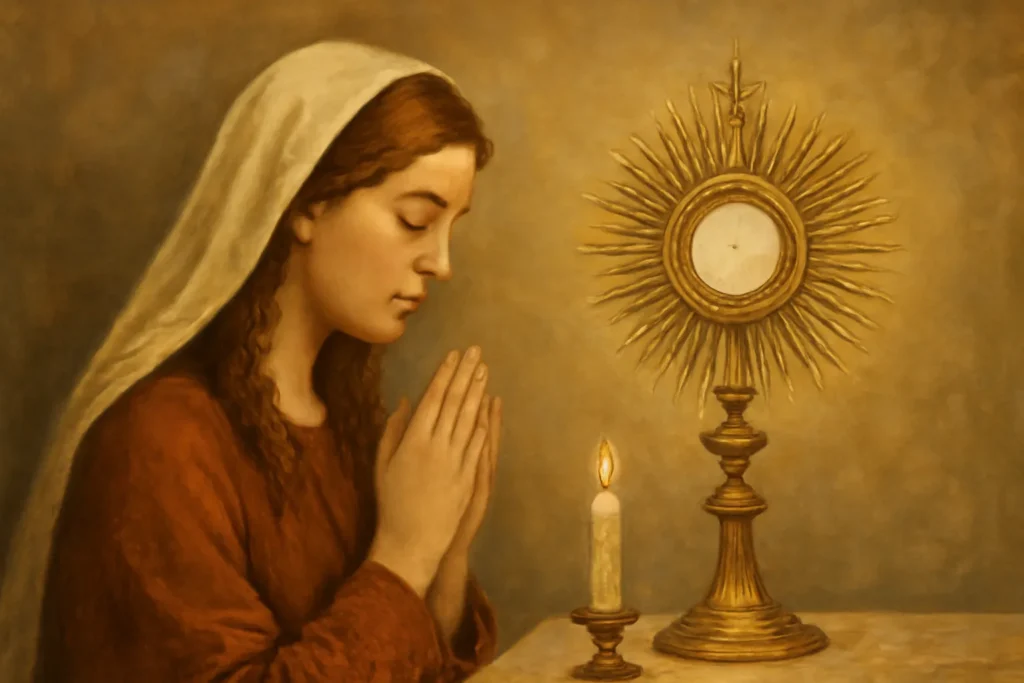
Given that the Mass itself is the principal thanksgiving of the Church, many Catholics find it meaningful to reflect on the mysteries of the Eucharist as a perpetual form of gratitude. A simple, prayerful note used before or after Mass might be:
We give thanks, Holy Father, through Christ our Lord, for the gift of the Eucharist, for the grace of faith, and for the fellowship of Your people. May our lives be a living sacrifice of praise. Amen.
Prayers for Daily Life: Morning, Evening, and Special Moments
Beyond meals and Mass, Catholics often cultivate thanksgiving as a daily practice—beginning the day with gratitude, renewing it in the evening, and offering prayers of thanks in times of joy or sorrow. The following are accessible forms that can be adapted for personal devotion, family routines, or quiet moments in the church year.
Morning Thanksgiving Prayer
O Lord, thank You for a new day and for the gift of life. Help me to use this day to seek after Your will, to love those around me, and to serve Your Kingdom with courage and humility. Let Your grace guide my thoughts, words, and deeds. Amen.
Evening Thanksgiving Prayer
Gracious God, I thank You for Your faithfulness through this day. If I have fallen short, forgive me; if I have done good, strengthen me to do more. May I rest in Your peace and wake renewed to do Your will again. Amen.
Prayer of Thanksgiving for Family and Friends
Heavenly Father, I thank You for the family and friends who enrich my life. May our relationships be sources of encouragement, truth, and love. Help us to bear one another’s burdens and to rejoice with each other in every blessing. Through Christ our Lord. Amen.
God of abundance, I thank You for the work of my hands, for the protection of Your providence, and for the steadfast love that never fails. Help me to steward well the gifts You have given and to share them with those in need. Amen.
Seasonal and Liturgical Contexts for Thanksgiving Prayers
Catholic life is shaped by the liturgical calendar, which provides seasons of gratitude that deepen prayer and charity. While Thanksgiving is not a fixed feast in the universal calendar (outside regions that celebrate harvest feasts or national days of thanksgiving), the Church’s rhythm invites gratitude throughout the Church year, especially around feasts of Mary, the saints, and the Eucharist itself. Below are some contexts in which thanksgiving prayers are particularly meaningful.
Harvest and Seasonal Gratitude
Regions with agricultural traditions often celebrate harvests with prayers of thanksgiving, invoking God’s bounty and asking for ongoing provision for those who labor in the land. These prayers emphasize the dignity of work, the dependence of humanity on creation, and the responsibility to share abundance with the poor.
Feasts of Mary and the Saints
Many Catholic communities honor Mary and the saints with prayers of gratitude for their example and intercession. The Magnificat, the Canticles of Zechariah, and other scriptural canticles are frequently prayed on Marian feasts or during the Liturgy of the Hours, providing a rich vocabulary of praise and thanksgiving.
Thanksgiving within the Eucharistic Prayer
The core of Catholic Thanksgiving is, of course, the Eucharistic Prayer itself, wherein priests and people give thanks to God through Christ in the Holy Spirit. The words of consecration, the memorial acclamation, and the doxology at the end of the Eucharistic prayer all carry forward the Church’s mission of offering praise and petition to the Father through the Son.
Liturgical Seasons and Special Masses
Advent and Christmas, Lent and Easter, and ordinary time each offer opportunities to recall and renew gratitude. Through readings, prayers, and songs, the Church invites believers to give thanks for God’s plan of salvation, for the gift of grace in the sacraments, and for the steadfast love that sustains them through good times and challenges.
Practical Guidance: How to Practice Thanksgiving Prayers in Daily Life
Practical, everyday approaches help turn abstract gratitude into tangible devotion. The following suggestions can be adapted to individual life, family traditions, or parish activities.
Make Prayer Concrete and Personal
Rather than a generic “thanks for everything,” name specific gifts—food on the table, health, work, the beauty of creation, and the presence of loved ones. Then add intentions for others in need: those who are lonely, hungry, or suffering. A concrete focus keeps prayer alive and meaningful.
Integrate Prayer into Family Life
Consider a regular family practice, such as a brief grace before meals, a sticky-note journal of daily blessings, or a weekly family prayer time where each member offers an intention of gratitude. Even a few moments can build a culture of thanksgiving that strengthens faith across generations.
Incorporate Scripture and Tradition
Use a scriptural canticle (like the Magnificat) or a short excerpt from the Te Deum or other liturgical texts to deepen the connection between daily gratitude and the Church’s living tradition. Rotating prayers can keep the practice fresh while preserving continuity with the Church’s inheritance.
Practice Gratitude as a Habit
Attach thanksgiving to different times of the day—morning, mealtime, evening—or to specific moments of the week. Some people find it helpful to keep a small gratitude journal, noting blessings and naming ways to respond with love and service. Over time, this habit reshapes attitude, fosters optimism, and nurtures peace.
Link Thanksgiving and Charity
Many Catholic prayers of thanksgiving naturally lead to action. After a time of prayer, consider volunteering, donating to those in need, or offering practical help to a neighbor. When gratitude translates into generosity, prayer becomes a living testament to faith in action.
Prayer should speak to the heart in a way that is authentic for you. There is value in both traditional, formal language and contemporary, accessible speech. A family might alternate between the two styles, teaching younger members to appreciate the memory of tradition while also expressing personal faith in relatable terms.
Crafting Your Own Thanksgiving Prayers: A Practical Guide
Creating personalized prayers of gratitude can be a meaningful way to deepen devotion. Use the following steps as a template to craft prayers for meals, days of celebration, or moments of need, keeping in mind the core Catholic elements of praise, petition, and thanks.
Begin with praise and acknowledge God as the Source of all blessings.
Name specific gifts—family, health, work, friends, opportunities to serve others.
Offer petition—ask for strength, grace, or guidance to use your blessings well and to help the poor and the vulnerable.
Conclude with commitment—resolve to live more generously, to forgive, or to share what you have with others.
Templates You Can Customize
Grace Before Meals:Lord God, we thank You for this food and for all Your gifts. Teach us to share them with others and to honor You in all that we do. Through Christ our Lord. Amen.
Evening Thanksgiving:Heavenly Father, I praise You for Your faithfulness this day. If I have failed, forgive me; if I have helped, strengthen my resolve to do more. Grant me a peaceful night and a hopeful tomorrow. Amen.
Family Thanksgiving Prayer:God of love, thank You for my family, for friendships that sustain us, and for the faith that unites us. May our home be a sign of Your kingdom and may we always be quick to forgive and ready to serve. Through Jesus Christ our Lord. Amen.
Frequently Asked Questions About Catholic Thanksgiving Prayers
Below are answers to common questions people have when they begin exploring Catholic thanksgiving prayers. If you have different questions, feel free to ask for clarification or examples tailored to your situation.
What is the main purpose of a Catholic thanksgiving prayer?
The primary purpose is to acknowledge God as the giver of all good, to express gratitude for specific blessings, to cultivate a spirit of humility and dependence on God, and to align one’s life with the call to love and service. Thanksgiving prayers can also prepare the heart to receive God’s grace more fully in the Eucharist and in daily life.
Can I use non-Catholic prayers for gratitude?
Practically, you can draw from universal expressions of gratitude, but Catholic practice emphasizes offering thanks within the Catholic faith and, when possible, through the Church’s liturgical forms. You can adapt phrases to reflect Catholic beliefs about the Trinity, the Eucharist, and the communion of saints, while still keeping the sense of gratitude that resonates across Christian traditions.
Is it appropriate to write personal prayers of thanksgiving?
Absolutely. Personal prayers are a meaningful way to express gratitude to God in a way that is authentic to you. A hand-written note, a short spoken prayer, or a quiet reflection can be powerful avenues for prayer, especially when they incorporate your own experiences, needs, and hopes.
How can I involve children in thanksgiving prayers?
Engage children by giving them simple, age-appropriate prayers to recite, inviting them to name things for which they are thankful, and encouraging acts of service that express thanksgiving. Visual aids, family prayer journals, and parish activities can help children connect gratitude to real-life acts of kindness and charity.
Conclusion: Making Thanksgiving Prayer a Living Practice
In Catholic life, thanksgiving prayers are more than ritual words—they are a way of aligning the heart with God’s grace, shaping the way believers see the world, and guiding them toward acts of love and mercy. The different forms—grace before and after meals, little daily prayers, Marian canticles like the Magnificat, the Te Deum, and the liturgical memory of the Eucharist—offer a rich treasury to draw from. By weaving these prayers into family life, workplace moments, school routines, and parish events, Catholics can cultivate a culture of gratitude that honors God, strengthens faith, and serves the needs of others. May your practice of thanksgiving grow with you, illuminating the day with hope and drawing others toward the light of Christ.








Leave a Reply