Communion Prayers for the Bread and Wine: Meaning, Blessings, and How to Pray
Communion Prayers for the Bread and Wine: Meaning, Blessings, and How to Pray
Communion prayers are a ancient and enduring practice in many Christian communities. They accompany the rites of sharing bread and wine, and they frame the moment as a time of thanksgiving, remembrance, and renewed fellowship. These prayers are not mere words; they express core beliefs about Jesus Christ, the meaning of the Lord’s Supper, and the call to live in unity with one another and with God. In this article, we explore the meaning, the blessings, and practical guidance for how to pray during the bread and wine portion of the service, along with a variety of prayer formulations to enrich personal and communal practice.
In many Christian traditions, the act of sharing bread and wine is more than a ritual meal; it is a symbolic reenactment of the Last Supper and a participation in the death and resurrection of Christ. The prayers that accompany the bread and wine often have several overlapping aims:
Thanksgiving for God’s grace in Jesus Christ and for the gift of salvation.
Remembrance of Christ’s sacrifice and of the community’s past, present, and future fellowship in him.
Blessing that the bread may become a meaningful sign of Christ’s Body, and the wine a sign of his Blood, for nourishment of faith and life.
Petition for spiritual nourishment, forgiveness, unity, and strength to live as disciples in daily life.
Commital of the community’s life to God, committing it to be a testimony of Christ to the world.
The language of blessing: what these prayers seek to do
The heart of communion prayers is blessing. The language often speaks of transforming ordinary elements—bread and wine—into signs that point to spiritual realities. Depending on tradition, you may encounter phrases such as:
Concerning the Body of Christ and the Blood of Christ becoming nourishment for faith and life.
A language of grace poured out, renewal granted, and sanctification offered through the meal.
Calls to repentance and a renewed covenant with God.
Petitions that the Holy Spirit would unite the church, heal divisions, and empower mission.
How to pray during the bread and wine: a practical guide
Prayer during the bread and wine can be approached in a number of ways, from formal liturgical invocations to more spontaneous, Spirit-led expressions. The following guide can help individuals and congregations approach this sacred moment with intention and reverence:
Prepare your heart before the moment begins. Take a quiet breath, confess any distractions, and center your thoughts on gratitude for God’s grace.
Read or reflect on Scripture related to communion, such as passages about the Last Supper, the Bread of Life, and the New Covenant.
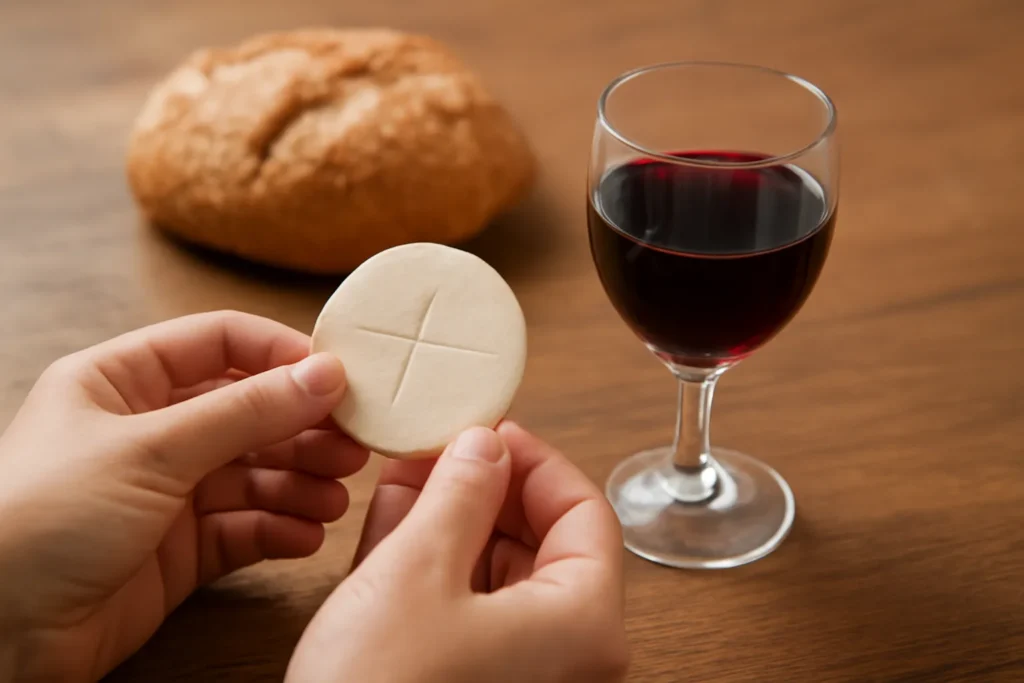
Acknowledge the meaning of the elements. Remember that the bread symbolizes Christ’s body, and the wine symbolizes his blood.
Ask for the Holy Spirit’s work in transforming your understanding and your life so that the meal bears fruit in action—lifting up the vulnerable, seeking justice, and growing in love.
Speak or listen to prayers that fit your tradition—whether you speak the words aloud as a congregation, or you offer a personal moment of prayer in silence.
Variations of prayers for the Bread (the Body of Christ)
Below are varied formulations intended to fit different worship styles, from traditional to contemporary. Each variation aims to name the meaning of the bread and to invite God’s blessing on the community.
Traditional prayers for the Bread
Prayer A
“Blessed be God, who gives us the bread of life; as we break this bread, may we be broken in love for others, and may this sign feed our faith as we are fed by your grace. In the body of Christ we are one; let us be one in service to the world. Amen.”
“Heavenly Father, we thank you for this bread and for the gift of your Son, whose Body was broken for us. May this meal nourish our hearts, strengthen our resolve to follow Jesus, and unite us in your peace. We remember and proclaim your name, now and forever. Amen.”
Contemporary prayers for the Bread
Prayer C
“Lord Jesus, you are the bread of life. We thank you for this loaf that points to your life given for us. May this bite remind us to live in mercy, to feed the hungry, and to love one another as you have loved us. Bless this bread to be a symbol of your presence with us today.”
Prayer D
“God of grace, we bless this bread as a sign of your care for our daily needs. As we receive it, may our hearts be opened to your voice and our hands ready to serve. Let this meal knit us together in faith and send us out in peace.”
Prayers for children or family-friendly language
Prayer E
“God, thank you for this bread. Help us to remember how Jesus loves us and to share what we have with others. May this bread make our church a warm, welcoming home for all.”
Ecumenical and inclusive bread prayers
Prayer F
“Gracious God, we bless this bread as a gift from your hands. In this moment of shared meal, may we be reminded of your care for every person and may we live as children of your grace, offering love, justice, and hope to our neighbors.”
Variations of prayers for the Wine (the Blood of Christ)
Similarly, prayers for the wine focus on the Blood of Christ, shed for the forgiveness of sins and the renewal of life. The following examples range from formal to fresh language.
“Most merciful God, we bless this cup and the Blood of Christ poured out for us. May it sanctify our souls, cleanse our consciences, and renew our spirits, that we may live in the grace of your covenant until Christ returns.”
Prayer H
“O Lord, you gave your Son for the world; pour out your blessing on this cup, that it may become a sign of the wine of salvation. May we drink with reverence, remember your sacrifice, and proclaim your death until you come again.”
Contemporary prayers for the Wine
Prayer I
“God, we thank you for this cup as a sign of your grace. May the Blood of Christ be a source of new life in us—washing away fear, renewing hope, and binding us together in love. Help us to live with courage and compassion.”
Prayer J
“Jesus, you poured out your life for us. As we drink this cup, may your blood seal our promise to love you and to love our neighbors. May this moment make us more generous, more just, and more faithful to your gospel.”
Prayers for children or family-friendly language
Prayer K
“God of love, thank you for sharing this cup with us. Help us to remember how Jesus forgives and how he teaches us to care for each other. May this drink remind us that we are all part of your family.”
“Bless this cup, Lord, as a sign of your life-giving grace. May it unite your people across differences, heal the hurts of our world, and send us forth in your peace to be agents of your healing presence.”
In many services, the bread and wine prayers are part of a seamless sequence rather than separate moments. The following patterns can help a congregation structure the offertory, blessing, and distribution in a cohesive way:
Seasonal variations: adapt language to the liturgical season (e.g., Advent, Lent, Easter) to highlight themes of anticipation, repentance, or celebration.
Response and participation: invite the assembly to join with short refrains or doxologies after each blessing.
Continual prayer: use a continuous chant or refrain that ties together the bread and wine prayers, reinforcing the unity of the signs.
Guidelines for personalizing prayers while honoring tradition
Personalizing communion prayers can deepen meaning while preserving reverence and doctrinal clarity. Here are practical tips for individuals, families, and worship teams:
Honor the core symbols: bread as Body and wine as Blood, and the concept of remembrance.
Keep a balance: combine personal language with established liturgical phrases so the congregation can recognize the core messages.
Be purposeful: name specific blessings you seek—conviction, compassion, healing, unity, or courage for mission.
Be inclusive: use language that invites all present—people of different backgrounds, ages, and journeys—into the mystery of grace.
Pray with scripture: anchor your prayer in biblical passages related to the Last Supper and Christ’s saving work.
Common themes across communion prayers
Across traditions and language, several themes recur. Recognizing these can help in writing or selecting prayers that feel authentic and theologically sound:
Gratitude for God’s grace in sending Jesus.
Remembrance of Christ’s sacrificial act and his promise to be with his people.
Transformation of the elements into meaningful signs for faith and life.
Unity of the church and the call to love neighbors near and far.
Proclamation of salvation and the ongoing work of the Spirit in the world.
Historical and theological context
Understanding communion prayers benefits from a look at history and doctrine. In early Christianity, the meal known as the Eucharist or Lord’s Supper was both a rite of thanksgiving and a community act of worship. Over centuries, theologians and liturgists developed language to articulate the mysteries involved: the real presence of Christ in the elements, the new covenant in his blood, and the communal call to live out the gospel. While the details of belief vary among traditions, the essential sense of blessing, remembrance, unity, and mission remains central. Modern prayers often seek to be accessible without diluting the profundity of the rite, inviting believers to enter the mystery with reverence and hope.
If you are responsible for preparing communion prayers in a church service, consider these actionable steps:
Consult your tradition’s guidance to ensure the wording aligns with doctrinal teaching and liturgical norms.
Prepare a short list of options for bread and wine prayers so you can mix and match across seasons or occasions.
Practice pronunciation and pacing to maintain a contemplative tempo during the moment of distribution.
Invite congregational participation through refrains, responses, or printed prayers that people can read aloud.
Encourage personalization by allowing brief, quiet prayers from individuals during a designated time, if your liturgy permits.
Conclusion: embracing reverence, meaning, and mission
Whether you gravitate toward traditional formulations or prefer contemporary language, communion prayers are an invitation to encounter the gospel in a tangible way. They remind us that the bread is given in love and that the wine is poured out for the life of the world. They call us to gratitude, to recall the covenant, and to commit ourselves to living as witnesses to grace. By exploring varied formulations for both bread and wine, communities can preserve reverence while also expressing the living reality of faith in today’s world. May these prayers strengthen your worship, deepen your remembrance, and empower you to embody the love of Christ in your daily life.
Note: The prayers included above are original formulations intended to illustrate a range of stylistic approaches. If you are integrating these prayers into a worship service, consider adapting the language to fit your congregation’s voice, theological emphasis, and cultural context. The most meaningful prayers are often those that arise from the faith community itself, guided by scripture, tradition, and discernment in the Spirit.









Leave a Reply