Chess Verse: A Guide to Strategy, Poetry, and Chess Culture
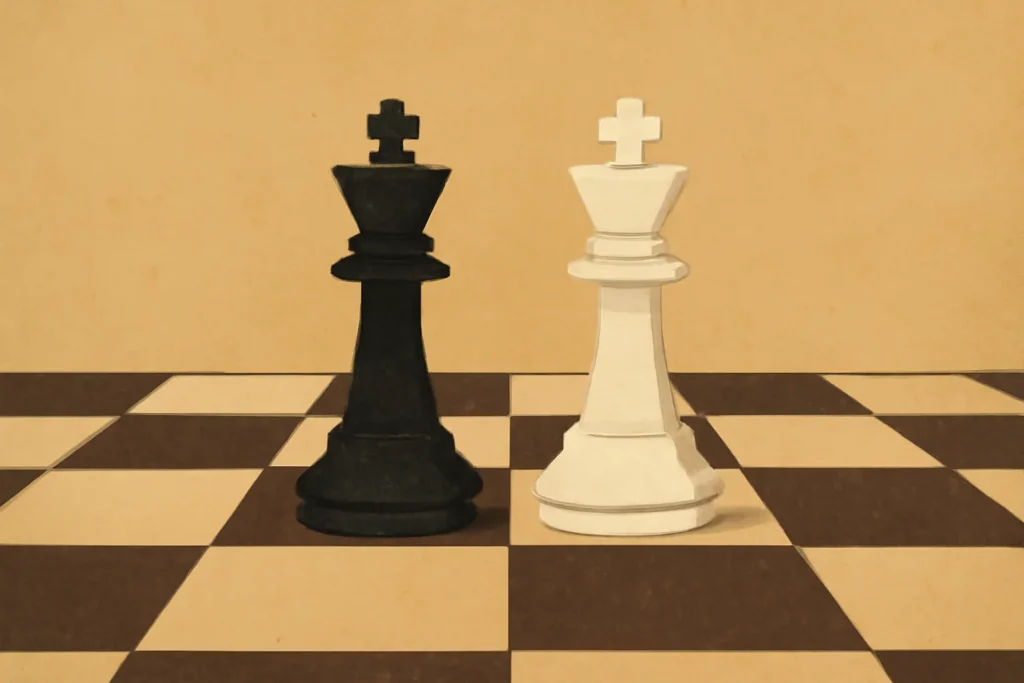
The art of Chess Verse sits at a singular crossroads where the disciplined logic of the chessboard meets the expressive cadence of poetry. This article explores how the language of moves, tempos, and structures can illuminate both strategy and culture. Whether you approach from a love of the game, a passion for verse, or a curiosity about how two seemingly different forms of expression can inform one another, you will find a wealth of ideas, examples, and practical guidance here. In the broadest sense, chess verse is any writing that uses chess imagery, situations, or mechanics to illuminate human experience, or any poetic form that borrows the board’s logic to build its music and meaning.
What is Chess Verse?
To say what chess verse is, we begin with what it does. It fuses strategy with poetics, translating the language of pawns, knights, and castling into verse that can be read aloud, studied, or sung. There are several recognizable modes and variations within chess verse:
Verse about chess—poems that center on a game, a match, or a player as their primary subject.
Verse using chess imagery—poems that use the board’s pieces and moves as metaphor for life, conflict, love, or decision-making.
Formally structured chess verse—poems that experiment with meter and rhyme to evoke the rhythm of a chess game.
Ballads and elegies of the endgame—poems that linger on endgames, sacrifices, and the quiet arithmetic of resignation and resolve.
Within this spectrum, you’ll meet several recurring motifs and linguistic strategies. Some poets imitate the tempo of a game by pacing stanzas to reflect openings, middlegames, and endgames. Others treat a tournament as a theater of characters—the king, the queen, the daring knight, and the stubborn rook—whose roles parallel real human dramas. Still others deploy chess metaphors for memory, fate, and cunning, turning gambits into statements about risk and choice. In all these forms, the board is a map for the human psyche, and the poem is a move in its own right.
A Brief History of Chess Verse
Chess verse does not belong to any single era; rather, it emerges wherever boards travel and speakers linger with a readiness to articulate the tension of competing ideas. Its history is a patchwork of cross-cultural traditions, translations, and modern experiments. Here is a concise guide to how chess verse has evolved across time.
Antiquity and Early Epics
Early explorations of chess-inspired language often appear in moralistic or instructive poems where the game stands for human choice and fate. In some ancient and medieval traditions, board games served as allegories for governance, strategy, and destiny. Poets used brief, vivid figures to give life to abstract concepts—anticipating how later poets would stretch these ideas into full-fledged chess verse narratives.
Medieval and Persian-Arabic Traditions
In the medieval world, chess was a global conversation. The Persian and Arabic cultures contributed richly to chess literature, blending technical description with poetic praise for clever play and clever minds. The imagery of the king and the vizier (the piece later known as the queen) often carried symbolic weight, offering a vocabulary for political power and moral choice. This lineage informs modern chess verse, especially in the way it treats strategy as a kind of language you must learn to speak well.
Renaissance to Romantic Eras
With the rise of printed books and a robust appetite for art and science, chess verse began to diversify in form. The gambit as a cultural figure—something offered up for advantage and risk—became a powerful metaphor for artistic risk, personal risk, and social risk. Poets experimented with formal techniques, such as sonnets, odes, and ballads, drawing on chess to explore themes of choice, fate, and ingenuity. The cultural aura of the romantic era, with its emphasis on individual genius and the sublime, found a natural ally in the way a single bold move can alter a game’s entire trajectory.
Modern and Contemporary Chess Poetry
Today, chess verse thrives in diverse ranges—from scholarly essays that analyze the game’s aesthetics to open-mic performances that treat the board as a stage. Contemporary poets experiment with form—free verse, concrete poems shaped like a chessboard, or digital poems that respond to live games in real time. Chess culture has also broadened to include multilingual and cross-cultural works, illustrating how the same game can be translated into many poetic voices while preserving the bite and beauty of the board’s logic.
Key Concepts in Chess Verse
Several core concepts recur in chess verse, regardless of period or style. Understanding these helps both readers and writers appreciate the craft and deepen their own practice.
The board is more than a grid; it is a stage, a map, and a grammar. Poets treat squares as places of memory, tension, or possibility. The arrangement of pieces becomes a description of relationships—power dynamics, alliances, and conflicts that mirror human life. Good chess verse invites readers to see the ordinary world with the same alertness with which a player notices a potential discovered attack or a suddenly open file.
Tempos, Meter, and Temporal Shape
Chest-level rhythm—the pacing of a poem—often echoes the timing of a game. A poem may mirror a brisk opening, a tense middlegame, and a quiet, contemplative endgame. Poets use meter and line length as a sonic equivalent of the game’s tempo. In variations of chess verse, you might see a move described in a single line, followed by a longer stanza that reflects the slow, methodical grind of several exchanges.
Sacrifice and Significance
Sacrifice in chess is a powerful theme for poetry because it foregrounds risk, trust, and payoff. Poems that treat a sacrifice—whether a pawn or a piece—as a turning point often emphasize moral or existential stakes. The poem, like the game, looks to what is gained in the long arc even as something precious is laid on the board’s edge in the short term.
Endgame Poetry
The endgame is a fertile metaphor for clarity after complexity. In chess verse, the closing phase can reveal the poem’s thesis: how a life, a decision, or a dream resolves under pressure. Endgame poetry often uses spare language, precise imagery, and heightened focus to convey inevitability, resignation, or triumph in a single, compact movement.
Structuring Chess Verse: Techniques for Writers
Whether you are a poet who loves chess or a chess player who loves writing, you can employ a set of practical techniques to craft
chess verse that feels intentional and alive. The following strategies provide a toolkit rather than a rulebook.
Form and Freedom: Choosing a Frame
Begin with a frame. Do you want sonnet-like precision, a haiku-inspired economy, or a free-verse narrative that follows the game’s flow? Your frame affects diction, imagery, and pace. A formal frame can create musical resonance; a free-form frame can capture spontaneity or the improvisational nature of a live game.
Imagery Drawn from the Board
Concrete images help readers visualize the game as they read. You can describe the pawn structure as a family of apprentices under a strict matron (the king), or liken a fork to a fork in a life’s path. Sensory detail—sound of pieces tapping a wooden board, the weight of a bishop’s reach, the sight of a gleaming rook along an open file—grounds abstraction in tangible experience.
Sound devices—assonance, alliteration, consonance—can evoke the echo and cadence of moves. For example, line endings with hard consonants can mimic decisive captures, while flowing vowels can imitate the smooth glide of a queen’s diagonal. Repetition and refrain can imitate the compounding pressure of a long siege on a vulnerable king.
Dramatic Arc: Opening, Tension, Resolution
Like a well-played game, a chess poem often benefits from a narrative arc. Set up a position (opening), escalate through tactics (middlegame), and arrive at a conclusion (endgame). This arc helps readers feel both intellectual engagement and emotional satisfaction.
Notable Themes and Forms in Chess Verse
Across traditions, a handful of themes recur with remarkable vitality. Here are some common motifs and the forms they most often inhabit.
Gambit poetry—poems that dramatize offering something of value to gain a strategic edge, and then reflecting on the costs and consequences of that risk.
Pawn poetry—the humble pawn as a vehicle for transformation, persistence, and quiet revolution; often used to tell a story of progress and potential.
Rook and fortress imagery—stateliness, protection, and the architecture of defense; poems that dwell on structure, barriers, and room to maneuver.
Knight’s curve—the knight’s unusual movement as metaphor for nonlinear thinking, unexpected turns, and creative problem-solving.
Endgame elegies—reflective writings that find meaning in the closing moments, where victory, loss, and memory converge.
Multicultural chess poetry—translations and cross-cultural adaptations that reveal shared preoccupations with risk, discipline, and strategy across languages.
Practical Examples of Chess Verse Techniques (Ideas to Try)
If you are a reader or writer seeking to engage with chess verse, consider the following prompts and explorations. These are designed to spark ideas rather than prescribe a single correct approach.
Write a short piece that begins with a famous chess opening (e.g., the Queen’s Gambit or the Italian Game) and explores what happens when a life decision unfolds like a line of moves.
Compose a poem in which each stanza corresponds to a phase of a game: opening, middlegame, and endgame. Let the tempo of the stanza reflect the mood of that phase.
Experiment with a sonnet whose volta reframes a reckless gambit as a moral choice, linking tactical risk to personal risk.
Craft a concrete poem shaped like a chessboard, with each square containing a word or image evocative of a move or position.
Translate a famous chess game into verse form. Preserve the critical moves in the poem while offering commentary in the margins or a parallel stanza.
Notable Works and Figures in Chess Verse
Chess verse has inspired classics and contemporary experiments alike. While the canon continues to grow, several categories consistently yield impactful reads:
Anthologies of chess poetry that gather board imagery and tactical language from multiple voices.
Translations of chess poetry from Persian, Arabic, Sanskrit, and East Asian traditions that reveal a shared fascination with strategy as moral and intellectual art.
Contemporary performances and slam poetry that treat live games as dynamic theater, blending live commentary with poetic performance.
Academic essays that analyze the aesthetics of chess moves and their analogy to problem-solving, leadership, and decision-making.
As a reader, you may encounter poems that explicitly address legendary games, or you may notice chess as an undercurrent—where the tension of a position becomes the tension of a life moment. Writers often foreground concepts such as tempo, calculation, and discipline, inviting readers to practice analogous skills in their own thinking and writing.
Chess Verse as Culture and Education
Beyond poetry for poetry’s sake, chess verse has practical cultural and educational value. It serves as a bridge between analytical thinking and creative language, offering a rich terrain for schools, clubs, and online communities. Here are some ways chess verse participates in broader culture and learning.
Literary enrichment—students study chess verse to sharpen close reading, metaphor, and imagery, then produce their own board-inspired poems as a culmination of a unit on narrative voice or figurative language.
Strategic literacy—players and enthusiasts explore how exact language can describe strategy and planning, improving mental models for game play and writing alike.
Cross-cultural dialogue—translations and world-wide traditions reveal how different linguistic communities interpret the same strategic ideas, enriching linguistic and cultural awareness.
Public engagement—poetry slams, chess festivals, and community readings that pair live chess demonstrations with literary performances create inclusive spaces where both disciplines shine.
Reading and Writing Chess Verse: Practical Guidance
Whether you’re a reader seeking to appreciate the craft or a writer ready to contribute to the growing field, here are practical steps to engage deeply with chess verse.
Reading Tips
Pay attention to how the board’s geometry informs the poem’s structure—do lines bend toward a key square or align with a decisive tactic?
Note how the author uses piece imagery to personify motives or to delineate character. How does a knight’s leap become a metaphor for ingenuity?
Watch for rhythm and tempo. Are the lines brisk and clipped, echoing a fast-paced attack, or are they stretched and contemplative, mirroring a patient endgame?
Consider the poem’s broader argument. Is it about risk, patience, strategy, or something more personal? How does the chess frame illuminate that argument?
Writing Tips
Choose a clear frame for your poem (sonnet, villanelle, free verse, etc.), then let the moves of the game unfold within that frame.
Use concrete chess terms (pawn, rook, bishop, knight, gambit, pin, fork, castle) as building blocks for imagery, not just as vocabulary to sprinkle in.
Pair precise, linear lines with one or two lines of heightened cadence to emulate the “pulse” of a move or a tactical sequence.
Experiment with a “game-in-a-poem” approach: start with a real or imagined game, recount key moves, and end with a reflection that reframes the opening’s intention.
Balance metaphor and meaning. A strong chess verse poem uses the board for resonance without losing clarity of purpose for readers who may not be chess experts.
Collaborative and Educational Projects in Chess Verse
Several educational and community-oriented projects blend chess and poetry to foster collaboration and critical thinking. Here are some ideas you can try in classroom, club, or library settings:
Chess Verse Nights—host an event where players perform or read chess-themed poems between rounds, with a live chessboard as a backdrop.
Open-mic Salons—invite poets and players to present short pieces, followed by a discussion of how the poem reframes a position or idea.
Crossword and Puzzle Workshops—create puzzles that integrate chess terms with poetic clues to encourage linguistic and strategic thinking.
Piece-by-Piece Anthologies—a community anthology in which contributors submit poems inspired by a single piece (e.g., “the knight’s journey” or “the queen’s gambit”).
Resources and Further Reading
If you want to dive deeper into chess verse, these categories of resources will help you explore both theory and practice. While the field is broad, starting points in these categories will give you a solid foundation.
Anthologies of chess poetry and poetry about games often gather pieces from diverse cultures and periods, offering a broad survey of what board poetry can be.
Translations of traditional chess poetry from Persian, Arabic, Chinese, Japanese, and other linguistic traditions show how different cultural lenses interpret the game’s logic and beauty.
Scholarly articles that analyze the rhetoric of chess moves, demonstrating how poets encode strategy and ethics into verse.
Contemporary journals and online magazines that publish new chess verse—a living record of how poets experiment with form and theme in response to modern games and global tournaments.
Educational guides on writing with game imagery, which can be adapted to include chess-specific vocabulary and motifs.
Challenges and Opportunities in Chess Verse
Like any hybrid field, chess verse faces challenges and offers opportunities for growth. Understanding these can help writers and readers engage more deeply with the material.
Accessibility—not all readers are fluent in chess terminology, and not all chess players read poetry. Writers should strive for a balance: use precise terms where they illuminate, but also translate or explain where needed.
Authenticity—the best chess verse respects the game’s logic and culture. Overly flashy diction or clichés about “epic battles” can feel inauthentic if they don’t align with the game’s real arithmetic and nuance.
Innovation—the field rewards fresh metaphors, new forms, and interdisciplinary approaches. Writers who bring in music, visual art, or digital media can expand what constitutes a chess poem in meaningful ways.
Education—teaching chess verse in classrooms or clubs invites collaboration across disciplines: literature, history, philosophy, and mathematics. This interdisciplinarity is a core strength rather than a burden.
Conclusion: The Living Dialogue Between Move and Word
Chess verse is more than a niche interest—it is a living dialogue between two modes of human intellect: the disciplined, anticipatory logic of chess and the expansive, resonant craft of poetry. By reading and writing in this mode, we learn to see the board as a mirror of life and language as a map of possibility. Whether you are a seasoned player, a devoted poet, or someone curious about how disparate forms of expression can enrich one another, you can contribute to and benefit from this field. The strategies, images, and rhythms you encounter in chess verse offer not only aesthetic pleasure but practical lenses for thinking clearly, communicating effectively, and engaging with culture in creative, meaningful ways.
As you continue your exploration, keep these guiding ideas in mind:
Let the board determine the texture of your language: your imagery, your cadence, your line breaks.
Use chess as a metaphor for universal human experiences—risk, patience, strategy, memory, and resilience.
Experiment with form and translation: translate a game into verse, translate a poem into a game-like structure, or co-create with others across languages.
Balance specificity and universality: you can celebrate the particularities of a position while revealing the broader truths it suggests.
Ultimately, Chess Verse invites a dialogue—between readers and players, between the board’s geometry and the poem’s music, between culture’s history and its future. The most enduring works are those that persuade us to see a chessboard not merely as a table for competition but as a stage for meaning, a vessel for metaphor, and a source of shared wonder.










Leave a Reply