Christ Hell Explained: A Comprehensive Guide to Hell in Christian Theology
Across the centuries, Christian thinkers have wrestled with the reality and purpose of hell, especially in relation to Christ and his salvific work. This guide aims to present a thorough, balanced overview of the main questions surrounding Christ’s descent into hell, the nature of hell itself, and how these ideas have shaped Christian theology and pastoral practice. We will trace the biblical bases, examine historical formulations, explore competing modern interpretations, and consider what all of this means for faith, hope, and ministry today.
Understanding the Terminology: Hell, Hades, Sheol, Gehenna, and Related Concepts
What Christians mean by hell is not always the same across times and traditions. The language used in the Bible includes several terms, each carrying its own nuance:
Gehenna — A Greek term often used in the New Testament to denote the final, eschatological punishment. It evokes the Valley of Hinnom outside Jerusalem, historically associated with burning and refuse, and hearkens to judgment that culminates in perpetual punishment.
Hades (often translated as “hell” in older English Bibles) — The realm of the dead, a provisional state before final judgment. In some traditions, it is seen as a place of conscious existence; in others, a temporary condition awaiting purification or restoration.
Sheol — A Hebrew concept akin to the underworld or the realm of the dead, used in the Old Testament to refer to the grave or the abode of all who have died, without explicit moral categorization in some contexts.
Tartarus — A rare term found in 2 Peter 2:4 and some intertestamental literature, describing a deep, imprisoned realm for certain rebellious beings; in Christian thought it is less central, but it appears in discussions of cosmic rebellion and judgment.
Abaddon/Apollyon — Hebrew and Greek terms (often rendered as “the Destroyer”) that appear in apocalyptic contexts, sometimes connected to the fate of evil powers at the end of time.
From a theological perspective, the most important distinction is usually between the intermediate state (Hades/Sheol) and the final state (the final judgment leading to Gehenna/eternal punishment or annihilation/restoration, depending on one’s view). Within Christian tradition, the emphasis on Christ’s descent into the unseen realms addresses the question of whether the Son of God engaged with human beings after death and what that engagement accomplished.
The Descent of Christ: Did Jesus Descend to Hell?
A persistent question in the church is whether and how Christ’s descent into hell occurred. Different traditions phrase this differently, but the core idea is that the incarnate Word did not remain untouched by the broken world, even in death. The question often touches on a single creedal clause and several scriptural passages.
Creedal affirmation — In several historic Christian creeds, there is a reference to the descent of Christ into hell. While the exact wording varies (some include the phrase “descended into hell” or “descended into the dead”), the intent is to affirm that the Son of God participated in the condition of the dead and thereby confirmed victory over sin, death, and evil.
Biblical basis — The primary scriptural touchpoints include 1 Peter 3:18-20 (Jesus preached to the spirits in prison), and the interpretation of passages such as Ephesians 4:9-10 and 1 Peter 3:19 as references to Jesus’ activity after death. Some traditions also see a reference in Luke 23:43 (the thief’s encounter with Jesus) as part of the broader doctrine of life after death.
Interpretive diversity — Within Protestant, Catholic, and Orthodox contexts, the exact nature of the descent is debated. Some view it as a literal, physical descent into the realm of the dead; others interpret it as a theological or pastoral metaphor for Christ’s victory over sin and death that reaches into all realms of existence.
In practice, the question is less about a precise chronology and more about what Christ’s descent communicates: that the incarnate Word enters the deepest places of human experience to accomplish redemption, proclamation of victory, and liberation for the trapped and the enslaved. This understanding has shaped liturgy, hymnody, and catechesis throughout Christian history.
The Harrowing of Hell: An Early, Controversial, Yet Influential Idea
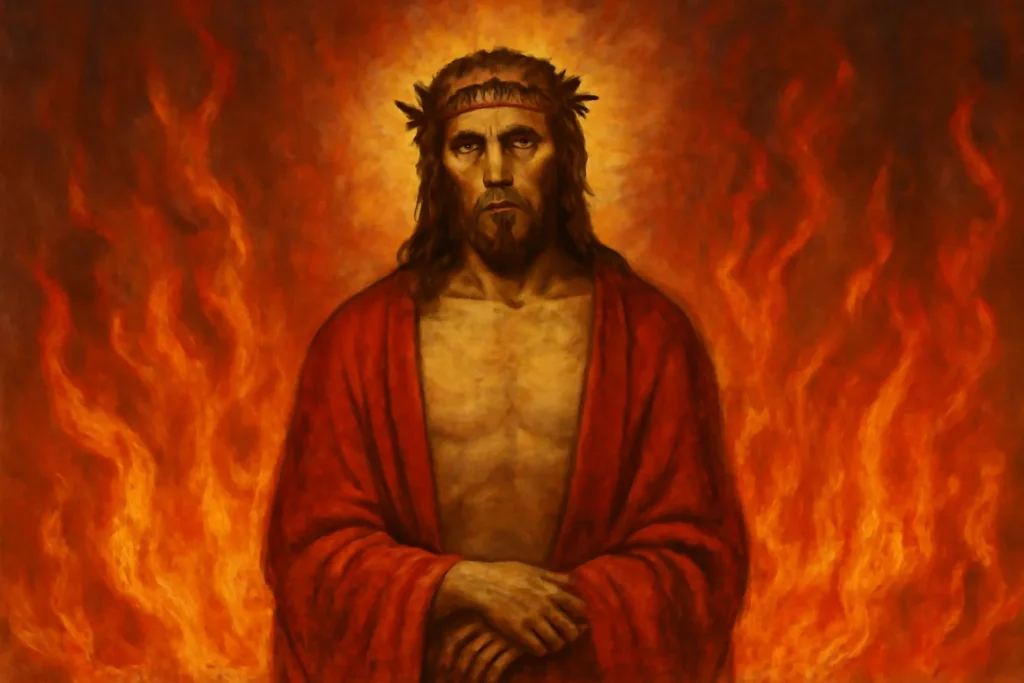
One of the most dramatic sketches of Christ’s descent is the medieval and early Christian doctrine of the Harrowing of Hell. This conception portrays the Savior as breaking the gates of hell, triumphing over sin, and rescuing the righteous who had died before the Resurrection. Later theologians sometimes distinguish between two acts: a descent into the realm of the dead to announce victory to the powers of darkness, followed by the resurrection that ushers in the final stage of redemption.
Key elements of the Harrowing of Hell include:
The proclamation of victory over death and the powers that held humanity in bondage.
The release of righteous figures from the Old Covenant era, such as patriarchs and prophets, so that they might share in the new life brought through Christ.
The demonstration that salvation does not wait for the end of time but begins to take effect in the unseen realms even before the Resurrection.
Historically, the Harrowing of Hell has been most strongly affirmed in the early Church Fathers, codified in some medieval creedal formulations, and preserved in the liturgical memory of many Christian traditions. In modern times, theologians have offered nuanced readings that avoid excessive sensationalism while preserving the core intuition: Christ’s victory over the powers of evil extends beyond the grave and into the depths of human experience.
Christ’s Work in Hell: How the Descent Contributes to Redemption
Several theological lines connect Christ’s descent with the broader mission of redemption. Although the primary salvific acts occur in Christ’s life, death, and resurrection, the descent highlights several crucial themes:
Propitiation and justice — By entering the realm of the dead, the Son of God bears the consequences of human rebellion, satisfying divine justice and offering a path from condemnation to reconciliation.
Victory over powers — The defeat of sin and death is confirmed in the darkest places, signaling that nothing can thwart God’s purpose for creation.
Preaching to the imprisoned — Some theologians interpret the descent as a moment of pastoral proclamation, where Christ makes known the achievement of salvation to those who awaited its fulfillment.
Hope for the dead — The descent serves as a source of consolation for Christians who grieve and for those who died in faith but without the full revelation that would come later.
In terms of the practical outworking of these ideas, many Christian traditions connect the descent with the hope that the gospel reaches to the farthest corners of existence and with the conviction that history moves toward a divine consummation in which all things are restored.
Orthodox, Catholic, and Protestant Perspectives on Hell and the Descent
Different Christian families have emphasized various aspects of hell, judgment, and the descent. Here is a brief survey of some of the distinctive emphases:
Eastern Orthodox — Often stress the continuity of life after death, the exposure of all things in the light of God, and the healing nature of divine judgment. The descent is respected as a real event in Christ’s salvific mission, but the specific mechanics of hell are understood within the context of theosis, purification, and eternal communion with God for the righteous, while the wicked face separation from God.
Roman Catholic — Affirms the descent as part of the Apostles’ Creed in many traditional formulations, while teaching about purgatory as a temporary purification for some before entering eternal life. The Catholic tradition emphasizes the universality of salvation in Christ but maintains a definite state of eternal punishment for the damned, understood in terms of justice and love.
Protestant — Approaches vary widely. Some traditions hold to eternal conscious torment as the consequence of unrepented sin; others advocate annihilationism (conditional immortality) or, more rarely in contemporary discourse, universalism (the ultimate restoration of all beings). The descent is sometimes treated as a doctrinally minor clause or understood symbolically as Christ’s victory over death and evil rather than a literal foray into a literal hell.
Across these traditions, the central confession remains that Christ is victorious, and that his work speaks to the deepest realities of human destiny. The exact language used to describe those realities often reveals more about a tradition’s pastoral concerns and interpretive method than about a single unvarying doctrine.
Contemporary Debates: Eternal Punishment, Annihilation, and Universal Hope
In modern theology, three broad paths are commonly discussed in relation to hell and Christ’s work:
Eternal conscious torment — The view that the damned will experience ongoing, conscious suffering forever, as a just consequence of sin against a holy God. Proponents argue for a justice-based reading of scriptures such as Matthew 25:46 (eternal punishment) and Revelation 14:11.
Annihilationism (conditional immortality) — The belief that immortality is conditional on faith, and those who persist in rebellion are eventually destroyed rather than suffer forever. Advocates cite passages that imply cessation of existence for the wicked and emphasize the finite nature of punishment in light of God’s mercy.
Universalism — The claim that ultimately all beings will be reconciled to God, with hell serving a purgatorial or corrective function in some formulations but leading to universal restoration. Proponents appeal to biblical themes of God’s love, the all-sufficiency of Christ’s atonement, and texts that suggest the ultimate victory of love over all opposition.
Scriptural study and hermeneutics shape how these options are evaluated. Some lines of evidence discussed in contemporary debates include:
Textual interpretations of Matthew 10:28 (the fear of the one who can destroy both body and soul) and Matthew 25:46 (eternal punishment vs. eternal life).
The trajectory of redemptive history in Romans 9–11 and Colossians 1 that some see as pointing toward universal reconciliation amid the defeat of every hostile power.
Historical theological reflections from the Church Fathers, the Reformers, and modern theologians that influence how one reads the data and weighs the pastoral implications.
Whatever stance one favors, most theologians agree that the doctrine of hell, and Christ’s descent into the realm of the dead, has a crucial pastoral function: it speaks to human accountability, invites repentance, and anchors Christian hope in the ultimate restoration of all things through the risen Lord.
Historical Development: From Patristic Thought to Modern Debates
The articulation of Christ’s descent into hell and the nature of hell itself developed over several centuries. Some notable moments include:
Patristic period — Early Church Fathers debated the precise nature of the afterlife and the scope of the descent, but many stressed Christ’s solidarity with the dead and the ultimate victory won through the Resurrection.
Medieval period — The Harrowing of Hell becomes a common motif in art and theology, reinforcing the idea that salvation extends into the unseen realm and that the righteous who died before Christ’s FIRST coming are included in the divine drama of salvation.
Reformation and after — Protestant reformers challenged or reinterpreted some medieval formulations, with different denominations emphasizing scriptural priority, the clarity of justification by faith, and differing views on eternal punishment and human destiny.
Modern debates — Contemporary theologians revisit ancient texts with modern hermeneutics, scientific sensibilities, and renewed interest in pastoral ethics, often distinguishing between the descriptive and the normative aspects of traditional creedal language.
Throughout these shifts, the core conviction—that Christ’s life, death, resurrection, and descent reveal the depth of divine love and the scope of salvation—has endured in various forms. The way this conviction is translated into belief about hell reflects broader theological priorities and the communities’ mission in the world.
Practical Implications: What Belief About Christ and Hell Means for Faith and Ministry
Beliefs about hell and Christ’s descent have concrete effects on Christian life. Here are several implications that theologians and pastors often emphasize:
Pastoral hope and judgment — The tension between divine mercy and justice invites Christians to preach repentance and harbor hope for the condemned, while also refusing universalistic complacency.
Evangelism and mission — A robust doctrine of Christ’s victory over death can motivate mission, as believers offer a message of liberation from sin and fear of final judgment.
Ethical living — Belief in ultimate accountability shapes personal ethics, social justice, and care for the vulnerable, recognizing that God’s justice is real and final.
Hope for the dead — The descent into the realm of the dead is often construed as an act of solidarity with those who have died without full awareness of the gospel, reinforcing the church’s hope for the prophetic and universal scope of salvation.
In preaching and catechesis, theologians stress that the mystery of hell and the descent does not invite fear alone but invites trust in God’s goodness, wisdom, and faithful Promises. The aim is to form a community that faces mortality with honesty while clinging to the confidence that Christ’s triumph is the guarantee of life beyond death.
Frequently Asked Questions
To help clarify common concerns, here are some concise answers to questions people often raise about Christ and hell:
Did Jesus really go to hell? — Many traditions affirm that Christ descended to the realm of the dead as part of his saving work, though the exact nature (literal descent, rhetorical proclamation, or symbolic victory) varies by tradition.
What is the difference between Hades and Gehenna? — Hades is more associated with the realm of the dead in a provisional sense, while Gehenna is often linked to the final, eschatological punishment. The two terms address different aspects of judgment and destiny.
Is hell eternal? — The answer depends on interpretation. Some traditions hold eternal conscious punishment; others advocate annihilation or universal restoration, each grounded in distinct readings of Scripture.
How does the Harrowing of Hell relate to the Resurrection? — The Harrowing of Hell is typically understood as an event preceding or accompanying the Resurrection, highlighting Christ’s victory that ripples backward and forward through history and into the afterlife.
Conclusion: A Rich Tapestry of Hope, Judgment, and the Descent
In sum, the topic of Christ’s descent into hell and the broader doctrine of hell sits at the intersection of dogma, piety, and pastoral care. Across theological traditions, the core claim remains that the Son of God entered the depths of human experience to confront evil, overcome death, and extend a invitation to life with God. The language and emphasis differ, but the shared hope is that God’s love is expansive enough to reach to the furthest corners of existence and powerful enough to restore what corruption has broken.
As readers reflect on this topic, it may be helpful to keep in mind a few guiding observations:
The descent of Christ is best understood as a way of articulating solidarity with the dead and the universality of salvation—not as a sensational curiosity but as a revelation of God’s ongoing redemptive work.
The nature of hell remains a debated terrain within Christian ethics and eschatology. Honest engagement with diverse viewpoints can strengthen faith and compassion for others who arrive at different conclusions.
All Christian traditions place emphasis on the victory of Christ. Whether through the language of punishment, purification, or ultimate restoration, the crucial claim is that God’s purposes prevail and that the risen Christ holds authority over life, death, and all powers.
For further study, readers may consult creedal statements such as the Apostles’ Creed, the Nicene Creed, and the Athanasian Creed for historical attestations of descent language, as well as modern systematic theologies that compare the major positions on hell, punishment, and universal restoration. The enduring question—what does all of this mean for daily faith and neighbors—invites ongoing reflection, prayer, and conversation within the Christian community.










Leave a Reply