Christ Last Seven Words: The Final Sayings of Jesus on the Cross
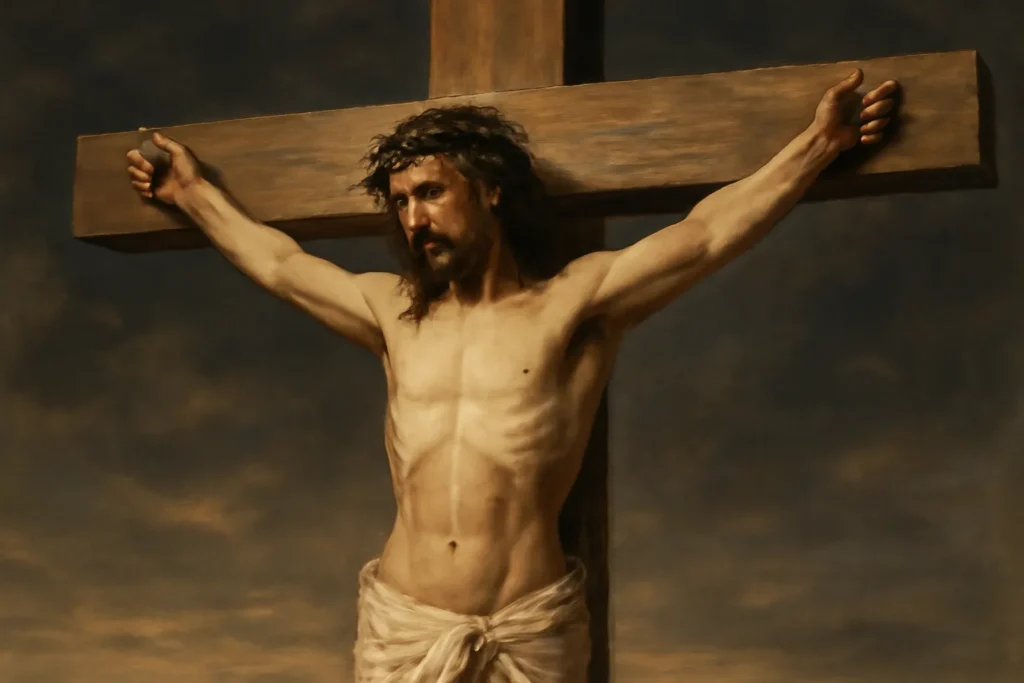
The tradition of the Seven Last Words (or the Seven Final Sayings) of Jesus on the cross has shaped Christian devotion, preaching, and art for centuries. These utterances, drawn from the four Gospels, offer a window into the range of human experience—pain, forgiveness, hope, familial responsibility, trust, longing, victory, and surrender—woven together in a single moment of extraordinary significance. While the exact order and number of statements can vary slightly among scholars and traditions, the set commonly called the Christ last seven words or the Seven Last Words of Christ captures a coherent arc: from forgiveness poured out to trust fulfilled, from earthly care to cosmic purpose. This article explores each of these famous sayings, their biblical sources, their theological meanings, and their enduring influence in liturgy, art, and everyday faith.
Understanding the scope: what counts as the final statements?
In the canonical Gospels, Jesus speaks several times during the crucifixion. The most often cited sum of these utterances is seven, though some traditions count a paired exchange as two separate sayings, especially the moments Jesus speaks to his mother and to the beloved disciple. The standard framework often used in Christian worship and teaching is:
1. Father, forgive them, for they do not know what they are doing. (Luke 23:34)
2. Truly, I say to you, today you will be with me in paradise. (Luke 23:43)
3. Woman, behold your son; behold your mother. (John 19:26–27)
4. My God, my God, why have you forsaken me? (Matthew 27:46; Mark 15:34)
5. I thirst. (John 19:28)
6. It is finished. (John 19:30)
7. Father, into your hands I commit my spirit. (Luke 23:46)
Each of these words is deeply embedded in biblical context and has been interpreted in a multitude of ways across traditions. To appreciate the full impact, it helps to view them together as a progression that spans mercy, salvation, relationship, suffering, fulfillment, and surrender. In the sections that follow, we will take each utterance in turn, noting its biblical basis, its immediate context, and its broader significance for faith communities today.
The First Saying: “Father, forgive them, for they do not know what they are doing.”
Context and significance
The opening cry from the cross is a radical statement about mercy in the midst of violence. Addressed to the Father, it frames the cross not primarily as a spectacle of divine punishment but as an arena of grace. The source is Luke 23:34, and the statement is often cited as an explicit example of how Jesus embodies compassion even when harmed by others. The setting—an act of brutal execution—renders the prayer all the more striking: forgiveness is offered before repentance is evident, before any appeal to justice is answered, and before the crowd’s response is known.
Several themes emerge in this first word:
Divine mercy extended to enemies, a pattern that inverts typical notions of justice.
Ignorance and culpability acknowledged by Jesus as a reason for forgiveness, inviting readers to reflect on spiritual blindness and the transforming power of grace.
Prayer as action at the moment of suffering—prayer not as retreat but as a form of outreach even to those who oppose him.
In church history, this line has inspired countless sermons and meditations on forgiveness, reconciliation, and the radicality of Christ’s love. Some devotional practices encourage believers to consider times they themselves have offended or harmed others, inviting a posture of repentance and mercy modeled on the crucified Christ.
The Second Saying: “Truly, I say to you, today you will be with me in paradise.”
This assertion is made to one of the criminals crucified alongside Jesus (Luke 23:43). Traditionally labeled as a moment of grace and salvation, the saying underscores the sufficiency of Christ’s mercy and the immediacy of the gift of salvation, even at the final hour of life. The criminal’s faith is acknowledged, and Jesus promises a place in the afterlife that transcends the days and hours remaining on earth.
Key reflections often drawn from this word include:
Grace is available at all times, not only to those who have long pursued righteousness but also to those who turn in repentance at the last moment.
Faith as decisive in life and afterlife, emphasizing trust in Jesus as the path to paradise, regardless of social status or past mistakes.
The moment invites believers to consider their own responses to Jesus’ invitation—whether in life or at the edge of death.
In liturgical contexts, this saying is often cited as a reminder that conversion is not limited by time, and it invites an openness to God’s generous invitation extended to all who call for mercy.
The Third Saying: “Woman, behold your son; behold your mother.”
Context and significance
John 19:26–27 records Jesus addressing his mother, Mary, and the beloved disciple, entrusting care for Mary to the disciple. Some traditions treat this as two statements—“Behold your son” and “Behold your mother”—but many understand them together as a single, unified action in which Jesus establishes a new family bond among those who follow him. The moment is less a theological abstraction than a concrete act of pastoral care in the hour of anguish.
Themes frequently highlighted here include:
Family and community in the new covenant—Jesus reorganizes kinship around faith in him.
Compassion in action—even in crucifixion, Jesus remains concerned for the vulnerable and the dependent.
Trust in divine provision—letting Mary’s needs be met through the community of believers.
Scholars note the integration of personal grief with communal responsibility, illustrating a model for Christian charity and care for widows, orphans, and the vulnerable within the church and society.
The Fourth Saying: “My God, my God, why have you forsaken me?”
Context and significance
Matthew 27:46 and Mark 15:34 record Jesus’ cry of anguish in Aramaic-inspired phrasing, echoing Psalm 22:1. This statement has generated rich theological discussion about the mystery of Jesus’ experience on the cross: the sense of abandonment, the weight of humanity’s sin, and the depth of Jesus’ solidarity with human suffering. Some readers view this as a deep cry of solidarity with all who experience loneliness in their relationship with God; others emphasize the faithful cry of trust that remains even when language falters under pain.
Important strands of interpretation include:
Affirmation of human vulnerability—the Son experiences a moment of existential crisis within the crucifixion narrative.
Fulfillment and scriptural typology—the line resonates with Psalm 22 as a whole, inviting readers to see Jesus as the righteous sufferer who embodies and reinterprets the psalms.
The paradox of divine forsakenness—while Jesus experiences forsakenness, Christians affirm that God’s ultimate plan and fidelity remain intact, culminating in resurrection.
Pastoral applications of this saying often focus on the comfort that God understands human despair and that suffering is not unredeemed but transformed within God’s purposes.
The Fifth Saying: “I thirst.”
Context and significance
John 19:28 records this succinct declaration of physical thirst, highlighting the stark reality of crucifixion’s brutal demands. The phrase also carries symbolic weight, aligning with scriptures (such as Psalm 69:21) that speak of suffering and a longing for relief. The full meaning for readers might be twofold: a literal expression of thirst and a theological sign of desiring fulfillment of God’s promises.
Human frailty on the cross—the cost of crucifixion is shown in bodily need and vulnerability.
Scriptural resonance—linking Jesus’ words to the broader psalms and prophetic expectations of suffering and salvation.
Preparation for fulfillment—the thirst is a bridge to the next revelations of the crucifixion narrative, where Jesus fulfills the scriptural plan.
In devotional practice, this moment invites believers to reflect on their own longings and the deeper longing for God’s redemptive work in the world.
The Sixth Saying: “It is finished.”
Context and significance
John 19:30 records this final proclamation before Jesus yields his spirit, signifying that the salvific work of the cross has reached its completion. The wording in Greek implies a completed aim or achievement—that the mission undertaken by Jesus, and the plan of salvation secured through his death, has been accomplished. This is not a cry of exhaustion alone; it is a victorious, certifying statement that God’s redemptive purposes have been fulfilled in the event of the cross.
Important insights connected to this utterance include:
Completion of the salvific work—not merely a defeat but a victory accomplished for humanity.
Fulfillment of Scripture—Jesus’ life, death, and the cross are presented as the culmination of God’s redemptive plan.
Hope in finality—the cross does not end in tragedy alone; it leads to new life and the promise of resurrection.
In sermons and meditations, this saying often serves as a turning point—encouraging believers to understand grace as a completed gift rather than a perpetual project, and to respond with gratitude and mission as a result of what has been accomplished.
The Seventh Saying: “Father, into your hands I commit my spirit.”
Context and significance
The final word, recorded in Luke 23:46, presents Jesus entrusting his life to the Father in a posture of surrender and trust. This last utterance completes the arc of the cross with a note of confidence, echoing Psalm 31:5 and highlighting Jesus’ unwavering faith even in death. The act of committing one’s spirit into God’s hands calls to mind trust, obedience, and ultimate dependence on the Father’s care beyond the grave.
Key dimensions of this saying include:
Trustful surrender—even at the moment of death, Jesus entrusts his life to God the Father.
Relationship over conquest—the cross is not merely a scene of struggle but a deliberate act of entrusting one’s life to divine hands.
Likelihood of resurrection hope—the act points toward the belief that life is held by God beyond the cross’s dark hour.
For worship and meditation, this word invites believers to reflect on their own approach to surrender: what does it look like to place one’s life into the hands of God, especially when circumstances feel precarious or burdensome?
Variations and nuances: how the seven words are remembered across traditions
While the outline above is widely taught, there are variations worth noting for a fuller appreciation of the topic. Some traditions treat the “Behold thy mother” and “Behold thy son” as two discrete sayings, which would yield eight distinct statements if counted separately. Others treat the two related lines as a single unit, reflecting a deliberate intention to present a single act of care and the creation of a new spiritual family. Cultural and linguistic differences also color the way these sayings are interpreted and prayed over. For example:
Language and translation—the original Greek and the Semitic imageries behind phrases like “Eloi, Eloi lama sabachthani” (which appears in some translations as “My God, my God, why have you forsaken me?”) contribute layers of meaning that scholars and devout readers wrestle with in different ways.
Liturgical emphasis—in some Christian traditions, the Seven Last Words are the centerpiece of a dedicated Good Friday service, with listening, preaching, and meditative music built around each utterance.
Artistic and musical expressions—the seven phrases have inspired painters, composers, poets, and filmmakers to reflect on themes of mercy, salvation, and surrender, enriching the broader cultural memory of the Passion narrative.
Theological reflections: what the seven final sayings reveal about Jesus and the cross
Core themes across the sayings
Read together, the seven last words invite a theology that sees the cross as a multifaceted moment where mercy meets justice, longing meets fulfillment, and flesh meets faith. Several overarching themes emerge:
Mercy and forgiveness as the opening posture of Jesus’ death, setting the tone for the entire narrative.
Salvation and grace offered to the sinner in his last hours, highlighting the universality of God’s saving initiative.
New community formed by Jesus’ care for Mary and the beloved disciple, signaling a reshaping of human relationships under the reign of God.
Sharing in suffering—Jesus’ own experience of abandonment or desolation, which resonates with believers who face hardship and doubt.
Scriptural fulfillment—each utterance is read in light of the Old Testament and the Psalms, presenting the cross as the climactic point of God’s faithful plan.
Trust unto death—the final prayer expresses unshaken trust in the Father, even in the most vulnerable moment.
These elements have shaped Christian devotion by providing a framework for reflection on forgiveness, faith, community, suffering, and ultimate hope in God’s redemptive work.
Pastoral and devotional uses
Churches have long used the Seven Last Words as a focal point for preaching, teaching, and prayer, especially during Lent and on Good Friday. Practical applications include:
Practical forgiveness—learning to forgive others as an expression of the Christlike mercy modeled in the first saying.
Hospitality and care—following the call to honor family and community in the light of Jesus’ care for Mary and the beloved disciple.
Hope amid suffering—finding meaning in pain through the arc of suffering toward redemption, as seen in the fourth and sixth words.
Faithful obedience—the call to trust, even when circumstances feel overwhelming, reflected in the seventh saying.
In educational settings, the seven sayings can anchor sermons, Bible studies, and theological essays, prompting readers to engage with questions about sin, forgiveness, divine presence, and the mystery of the cross. They can also be used in interfaith or comparative faith discussions to illuminate how different religious traditions speak about sacrifice, mercy, and trust.
Across centuries and cultures, the narrative of Jesus’ crucifixion and its seven poignant utterances continues to resonate because it speaks to universal human concerns—pain, doubt, love, responsibility, and hope. The Seven Last Words do not simply recount a historical event; they invite readers to enter into a moment where courage and compassion meet divine presence. Whether approached as a devotional practice, a scholarly inquiry, or a spiritual meditation, this corpus of sayings offers a compact, yet profound, map of the Christian understanding of the cross: a place where forgiveness is offered, grace extends to the undeserving, kinship is reimagined, suffering is transformed, thirst is acknowledged, victory is announced, and trust endures beyond the tomb.
For readers exploring the Christ last seven words, the journey is not only about memorizing phrases but about absorbing their implications for how one lives, loves, and hopes in the shadow of the cross. By studying their sources, examining their contexts, and reflecting on their message, believers can encounter afresh the grandeur and mystery of the crucifixion—an event that, in the language of these seven phrases, remains a present invitation to mercy, faith, and worship.
Further resources and notes for deeper study
Primary biblical texts—Luke 23:34, 23:43; John 19:26–27, 19:28, 19:30; Matthew 27:46; Mark 15:34; Luke 23:46.
Commentaries—theological and historical commentaries exploring linguistic nuances, cross-references, and pastoral implications.
Devotional anthologies—collections that organize reflections around each saying for Lent and Holy Week.
Liturgical use—examination of the “Seven Last Words” services and their variations across traditions (Roman Catholic, Protestant, Orthodox, and independent churches).
Whether read as a sequence of seven distinct statements or as a cohesive, singular witness to the crucified Christ, the Christ last seven words offer a powerful lens on the drama of salvation. They invite readers to consider forgiveness, faith, and the care of others in the light of the cross, and to carry those lessons into daily life with compassion, courage, and hope.
As you reflect on these final words, you may wish to note which phrase speaks most directly to your current life situation, and how the message of mercy, grace, and trust might reshape your responses to pain, conflict, and loss. In that sense, the last seven words remain a live, ongoing invitation—a timeless echo of the cross that continues to shape hearts and communities around the world.





Leave a Reply