The phrase Christ’s seven last words (also referred to as the seven final sayings or the seven phrases spoken on the cross) is a traditional christological and devotional framework used in Christian communities to reflect on the final moments of Jesus' life. Across the Gospel accounts, these utterances occur as Jesus endures crucifixion, a form of execution that carried both political weight and profound spiritual symbolism in the ancient world. While the exact wording and placement vary slightly among the four Gospels, the overall pattern invites believers to meditate on faith, salvation, and the character of God in the most extreme circumstances.
The significance of these seven words rests not only in the individual phrases but also in their arrangement within the Gospel narratives. Luke’s Gospel highlights mercy, forgiveness, and the promise of paradise, while John’s narrative emphasizes community formation, care for Mary, and the fulfillment of Scripture through Jesus’ actions. Together, they illuminate a portrait of Jesus as Savior who speaks into human pain with grace, justice, and trust. This article will explore each of the seven sayings, their historical context, theological meaning, and practical reflections for readers today.
Throughout church history, these utterances have been a focal point for preaching, prayer, and art. They have inspired composers, poets, painters, and liturgists to contemplate what it means for Christ to suffer, to forgive, to entrust, and to triumph. In exploring the seven sayings, readers encounter a bridge between the crucifixion’s physical agony and its spiritual significance as the decisive moment in salvation history.
For purposes of study, this article treats the set as a coherent canon of seven expressions that scholars and devotional writers have commonly identified. In some traditions, the combination of John 19:26–27 (the care of Mary) is read as a single moment with two complementary statements, whereas other traditions separate them as two distinct utterances. Regardless of how one divides them, the themes remain interwoven: forgiveness, grace, care for others, suffering, longing, completion, and surrender.
The Seven Sayings of Christ: A Theological Tour
First Saying: “Father, forgive them, for they know not what they do.” (Luke 23:34)
In the inaugural cry from the cross, Jesus speaks a word that reframes the crowd’s action. The verb forgive here is not a casual pardon but a radical declaration of mercy at the moment of injustice. Luke’s Gospel places forgiveness at the center of Jesus’ mission; in this opening saying, the cross becomes the arena where grace confronts sin—not by moral calculus but by divine love.
“Father, forgive them, for they know not what they do.”
Key themes: mercy toward enemies, radical love, divine initiative in forgiveness, ignorance before judgment.
Pastoral reflections: How can communities cultivate a culture of forgiveness even in the face of injustice or anger? This saying invites believers to model mercy as a core habit, rather than withholding mercy until offenses are fully understood.
Liturgical resonance: In many worship traditions, this line is a touchstone for prayers of intercession and for exercises in personal reconciliation.
Second Saying: “Truly, I say to you, today you will be with me in paradise.” (Luke 23:43)
The second saying unfolds on the edge of a barren landscape and a crucifixion that is also a courtroom scene of judgment and grace. Jesus responds to the penitent thief with assurance that faith, even at the last hour, opens a doorway to God’s presence. This moment emphasizes the gracious nature of salvation—it is not earned by works or the length of time one has believed, but received by trust in Christ.
“Today you will be with me in paradise.” The pronouncement is not a promise of wealth or ease, but of intimate fellowship with God."
Key themes: grace, assurance, immediacy of salvation, inclusion of one who repents late in life.
Questions for reflection: What does it mean to trust in God’s grace in a moment of crisis? How does this saying shape our understanding of hope and eternity?
Contemporary relevance: This saying provides comfort to those who feel they have arrived late to faith or who fear they have failed beyond repair.
Third Saying: “Woman, behold your son”; “Behold your mother.” (John 19:26–27)
The third saying (often read as two phrases spoken in succession) occurs at the intersection of Jesus’ care for his mother and his creation of a new family in the sacramental body of Christ. Standing beneath the cross, Jesus entrusts Mary to the beloved disciple and, conversely, entrusts the disciple with Mary as a motherly figure. The two actions together enact a shift in kinship—from bloodline to covenant—where the church becomes a new household bound not by blood but by faith and love.
“Behold your mother” and in response, “Behold your son.” These words inaugurate a new community rooted in mutual care and shared responsibility.
Key themes: care for vulnerable persons, the formation of the church as family, interdependence among believers.
Practical implications: A reminder to accompany and support aging parents, to foster hospitable communities, and to recognize that spiritual kinship often transcends biological ties.
Historical note: The disciple’s taking Mary into his home is often cited as the symbolic birth of the church’s stewardship of Mary and the church’s maternal care for those who suffer.
Fourth Saying: “My God, my God, why have you forsaken me?” (Matthew 27:46; Mark 15:34)
The fourth utterance is the most mysterious and theologically rich. It echoes Psalm 22, a lament that transitions into trust and, ultimately, hope. Jesus’ cry expresses the mystery of the cross: the Son experiences a profound sense of abandonment, a participation in human anguish that theologians have wrestled with for centuries. The cry does not signal a loss of faith so much as the depth of Jesus’ solidarity with humanity in suffering. It is a moment that invites readers to acknowledge the reality of pain while remaining anchored in trust.
“My God, my God, why have you forsaken me?”—a phrase that invites biblical memory of lament and petitions for mercy.
Pastoral takeaway: In times of spiritual dryness, Christ’s experience invites believers to bring their own laments to God while holding to hope in God’s faithful plan.
Educational note: Psalm 22’s trajectory helps readers see this cry as part of a larger biblical chorus rather than an isolated moment of despair.
Fifth Saying: “I thirst.” (John 19:28)
The fifth saying foregrounds Jesus’ humanity in the crucifixion. It is not simply a thirst for water but a cry that makes visible the physical cost of the crucifixion and the vulnerability of the innocent one who bears the weight of sin. In John’s Gospel, this brief expression also has a scriptural echo—fulfilling prophecies and psalms that connect Jesus’ suffering to a longstanding biblical pattern.
“I thirst”—a physiologic statement that becomes a vehicle for meaning: the fulfillment of prophecy, the embodiment of suffering, and the intimacy of human need acknowledged in the divine plan.
Key themes: physical pain, human need, prophetic fulfillment, solidarity with human frailty.
Reflection prompt: How does recognizing Jesus’ humanity shape our own approach to vulnerability and care for others?
Artistic echoes: The image of thirst has inspired musical and visual meditations on longing, sustenance, and the desire for God.
Sixth Saying: “It is finished.” (John 19:30)
The sixth utterance marks the consummation of Jesus’ salvific mission. The Greek term telelōta (often translated as “it is finished” or “completed”) communicates not merely an end to pain but a completion of work: the fulfillment of God’s redemptive plan, the defeat of sin, and the opening of reconciliation with God. In theological terms, this is the moment of accomplishment and victory, when Jesus completes the work entrusted to him and brings about a new covenant relationship with humanity.
“It is finished” signals that God’s plan for salvation has reached its purpose in the cross; the atonement accomplished, the gospel proclaimed, the kingdom inaugurated.
Key themes: completion, victory of atonement, fulfillment of Scripture, the transition from old to new covenant.
Reflection: Contemplate what it means for a person to complete a mission so decisively—what does it invite followers to finish or begin in their own lives?
Historical note: The phrase has been central to Christian preaching about the sufficiency and sufficiency of Christ’s sacrifice.
Seventh Saying: “Father, into your hands I commit my spirit.” (Luke 23:46)
In the climactic moment, Jesus turns from the pain of the crucifixion to a posture of trust. The final words express unreserved surrender and dependence on God the Father, even as life drains away. This final cry closes the loop of Jesus’ earthly ministry with a model of faith that culminates in trust. It is a statement that echoes the cadence of prayers offered in life—turned now into the last act of entrusting all to God.
“Father, into your hands I commit my spirit.”
Key themes: trust, surrender, divine guardianship, the completion of Jesus’ mission within God’s care.
Questions for contemplation: How do we practice surrender in our daily lives? What does it look like to entrust our own spirits to God in times of uncertainty?
Practical application: This saying invites believers to examine areas of life where they resist surrender and to cultivate ongoing reliance on God’s gracious leadership.
Reflections and Practical Applications
The seven last words of Jesus offer more than historical or literary interest; they invite ongoing reflection for prayer, preaching, and personal devotion. While each utterance emphasizes a distinct facet of Jesus’ identity and mission, together they map a coherent arc from forgiveness to rescue, from care for others to trust-filled surrender.
Mercy toward enemies as a central ethic: The first saying challenges readers to imitate divine mercy in personal and communal life.
Grace as the means of salvation: The second saying underscores the immediacy and accessibility of God’s grace, offering assurance even in moments of failure.
Church as family: The third saying reframes relationships, highlighting the church as a spiritual kinship that cares for its members and those in need.
Presence in suffering: The fourth and fifth sayings invite honest engagement with pain while remaining anchored in God’s purposes.
Salvation accomplished: The sixth saying proclaims the decisive work of Christ on the cross and invites believers to trust in the finished work of atonement.
Trustful surrender: The final utterance models a life oriented toward God’s will, culminating in a faithful entrustment of one’s life to the Father.
For readers seeking spiritual practice, several approaches can deepen engagement with these sayings:
Lectio divina on the seven phrases: slowly read each saying, meditate on a key word, and reflect on its personal implications.
Corporate liturgy: use the seven sayings as a pattern for prayer services, incorporating silence, confession, intercession, and thanksgiving.
Pastoral catechesis: teach the cross-centered themes of forgiveness, grace, and trust to different age groups using age-appropriate explanations and questions.
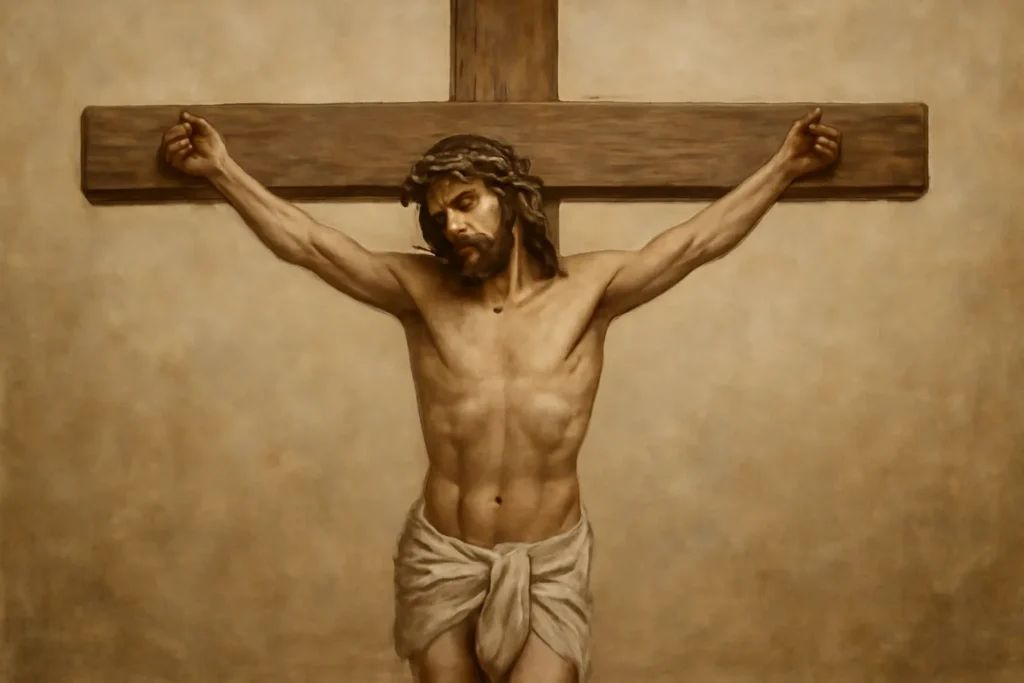
In addition to personal devotion, the language of the seven sayings has shaped Christian art, music, and preaching. Composers such as Joseph Haydn and others have drawn inspiration from this framework to craft works that engage the heart as well as the intellect. Visual artists have depicted scenes of the crucifixion in ways that foreground mercy, care, and trust, inviting viewers to see the cross as both a historical event and a living invitation to respond to God’s grace.
Historical and Ecumenical Context
Across the Christian traditions, the seven last words have served as a bridge between biblical text and lived faith. In Catholic devotion, they have undergirded reflections during Holy Week and the Stations of the Cross; in Protestant preaching, they have become windows into the character of God and the meaning of salvation; in Orthodox practice, they contribute to the broader meditation on the passion, death, and resurrection of Christ. The diversity of interpretations across denominations underscores the central claim that the cross stands at the heart of Christian hope.
The sources of these sayings lie in canonical gospel accounts, including Luke’s careful portrayal of mercy and forgiveness, John’s emphasis on community, and Matthew and Mark’s vivid depiction of abandonment and fulfillment. While the arrangement and enumeration of the seven sayings may vary in some traditions, the large-scale themes endure: forgiveness, grace, care for others, human vulnerability, the work of salvation, and ultimate trust.
For scholars, one practical takeaway is to recognize how each saying functions within its literary context. The cross narrative is not a collection of isolated quotes but a unified testimony about who Jesus is and what his life, death, and resurrection mean for the cosmos and for personal life. For believers, the seven sayings offer a comprehensive vocabulary for prayer: mercy for enemies, hope for the condemned, care for the vulnerable, solidarity with human pain, fulfillment of God’s promises, and surrender to God’s will.
Conclusion: The Living Legacy of the Seven Utterances
The Christic cross is a single moment charged with multiple meanings. The seven last words present a spectrum of divine action—mercy, grace, family, suffering, sustenance, completion, and trust—that together point toward the redemptive purpose of God in Jesus Christ. Whether approached as a devotional sequence, a theological summary, or a historical-literary study, this collection of sayings invites readers to engage with the mystery and hope at the center of the Christian faith.
As you meditate on the cross and its seven utterances, may you encounter God’s mercy made tangible, witness the grace that opens paradise, witness the church’s call to care and community, acknowledge the depth of human pain and the supremacy of God’s plan, and ultimately rest in the trustful surrender that closes with the Father’s hands embracing your life.




Leave a Reply