Foundations of Faith: Belief That Shapes Daily Life
In the Christian tradition, beliefs and practices are inseparable. What a person believes about God, Jesus Christ, the Holy Spirit, and the authority of Scripture informs how they live, worship, and relate to others. The central message is the gospel: that God loves the world, that humanity is invited into a reconciled relationship with God, and that life is shaped by following Jesus in the power of the Spirit. Across the global church, these core convictions are expressed in varied traditions, yet they share a common aim: translation of faith into everyday action, character, and service.
Within this broad landscape, several foundational ideas recur. The first is the belief in one God, who exists as the Father, the Son, and the Holy Spirit—the doctrine Christians call the Trinity. The second is the conviction that Scripture is the authoritative revelation about who God is, who we are, and how to live. The third is the conviction that humans are invited to respond to this revelation through grace and faith, resulting in a transformed life marked by love, justice, and peace.
This guide will explore practical expressions of Christian belief and life, including how communities gather, how individuals pray, how Scripture is read, how ethical concerns are understood, and how Christians imagine hope for the world to come. The aim is not to prescribe a single way of being a Christian, but to map out a practical, theologically grounded path that helps believers cultivate faith in action.
Worship and Prayer: Communal Life and Private Devotion
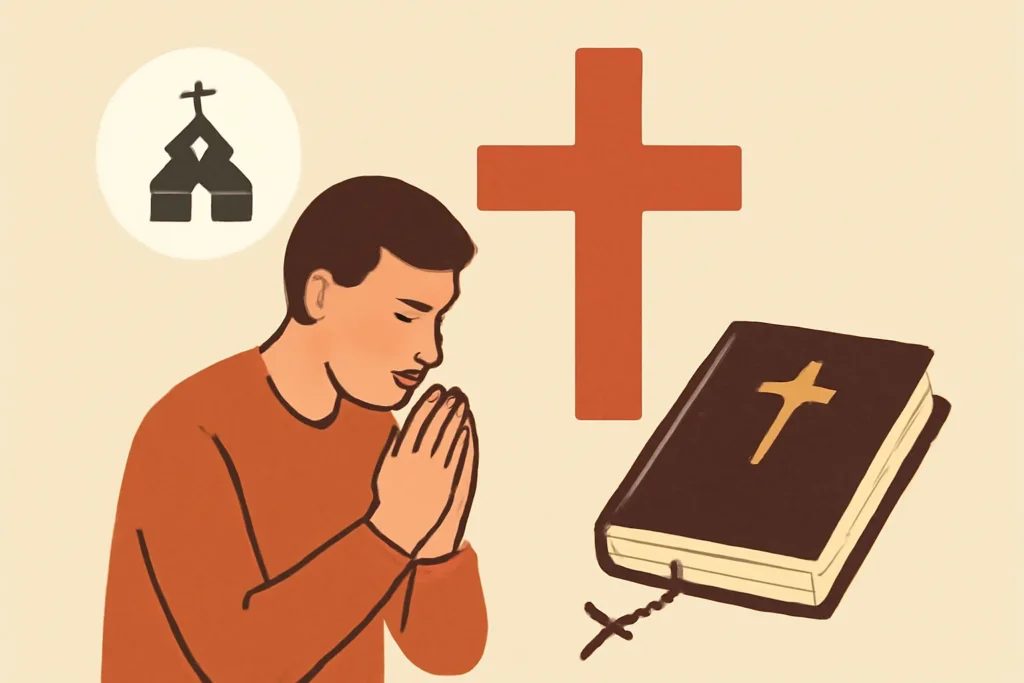
Worship and prayer are central to Christian life. They are not merely activities for Sundays, but rhythms through which a believer’s heart is shaped toward love of God and neighbor. Worship can be public, liturgical, spontaneous, or a blend of practices, and prayer ranges from whispered supplication to sustained contemplation.
Public Worship: Forms and Fabrics
In many Christian communities, public worship includes three core elements: proclamation, prayer, and response. Proclamation centers on the Scripture reading and the preached word, inviting listeners to hear God’s message and respond in faith. Prayer is offered for the church, the world, and individuals, often framed by prayers of confession and intercession. The response frequently takes the form of songs, hymns, or spiritual songs that reaffirm the faith, celebrate the gospel, and commission the people for service.
Different traditions emphasize distinct liturgical colors, seasons, and rhythms—such as Advent, Christmas, Lent, Holy Week, and Easter—each shaping what Christians expect God to do in a given season. Yet across these variations, there is a shared aim: to orient the heart toward God and to live out the gospel in concrete ways.
Private Prayer and Personal Devotion
Establishing a regular time for devotion—whether daily or several times a week—helps cultivate intimacy with God.
Using a simple framework, such as Adoration (praising God for who God is), Confession (owning shortcomings), Supplication (bringing needs to God), and thanksgiving (expressing gratitude).
Reading and meditating on Scripture, often with a brief prayer or a guiding question to help apply the text to daily life.
Incorporating spiritual practices such as scripture memorization, journaling, or contemplative silence to hear God more clearly.
Reading and Understanding Scripture: Authority, Context, and Application
The Bible is a diverse collection of writings that Christians read as inspired and authoritative for faith and life. Different traditions interpret the Bible through various lenses—historical, literary, theological—yet all seek to listen for God’s voice through its pages. A practical approach to Scripture emphasizes clear reading, responsible interpretation, and faithful living.
How to Read the Bible Well
Start with a plan: Decide whether to read systematically (one book after another), thematically, or through the Gospels and the Epistles.
Observe the text: Notice who is speaking, who the audience is, and what problem or promise is being addressed.
Interpret in context: Consider historical, cultural, and literary contexts to avoid misreading.
Apply with wisdom: Translate biblical truth into actions that reflect love of God and neighbor.
Engage with community: Discussion, study guides, and commentary can deepen understanding and humility.
The Role of Tradition and Interpretation
While Scripture is central, Christians also recognize the value of tradition and the insights of theological thinkers across generations. Tradition helps communities remember what Christians have believed in the past and how those beliefs have been tested in life and culture. At the same time, interpretation is not static; it evolves as new contexts raise fresh questions about ethics, justice, science, and human flourishing. A healthy approach balances fidelity to the gospel with openness to discernment guided by love, mercy, and humility.
Sacraments and Symbols: Signposts of Grace
Many Christian communities understand two primary rituals, sometimes referred to as ordinances or sacraments, that visibly symbolize divine grace and nurture faith. While terminology and practice vary, these rites function as tangible means by which believers partake in God’s promises and are strengthened for mission.
Baptism is a public sign of faith that identifies a person with the death and resurrection of Christ. Practices differ:
Infant baptism (pedobaptism) is commonly practiced in many traditions as a sign of covenant inclusion and blessing for the child, with immersion or sprinkling depending on tradition.
Believer’s baptism (credobaptism) is performed upon profession of personal faith, emphasizing conscious commitment and discipleship.
In all forms, baptism represents incorporation into the Body of Christ and a commitment to live as a new creation, following Jesus in daily life.
Communion: The Lord’s Supper or Eucharist
Communion (also called the Eucharist or Lord’s Supper) is a shared meal that commemorates Jesus’ Last Supper with his disciples. It embodies fellowship with Christ and with one another. Variations include the interpretation of the elements (bread and wine or juice) as symbol, memorial, or real presence, depending on tradition.
Regular participation in communion strengthens communal identity, gratitude, and a sense of mission to proclaim the gospel to the world.
Ethics and Moral Vision: Love in Action
Christian ethics flow from the conviction that God’s character is at work in the world and that believers are called to embody the values of the kingdom. Central themes include love, justice, mercy, integrity, and the dignity of every person. While Christians may differ on specific applications, the aim is consistent: to honor God by loving others in tangible ways.
Love of God and Neighbor
The moral life begins with love for God and extends to neighbors near and far. Practically, this means prioritizing acts of kindness, truth-telling, and fidelity in relationships, as well as pursuing peace and reconciliation where there is conflict.
Justice, Mercy, and Social Transformation
Christians are often called to address injustice, poverty, and oppression. This may involve advocacy, generosity, and service that elevates human dignity. While political lines may differ across communities, the shared commitment is to work toward a more just and compassionate society in light of the gospel.
Forgiveness and Repentance
A core spiritual practice is confession and seeking forgiveness—both from God and from others when harm has been done. The path of repentance involves turning away from destructive patterns and embracing new ways of living that honor God and bless others.
Creed, Covenant, and Christian Identity
A coherent sense of Christian identity rests on shared creeds and covenants that summarize essential beliefs while allowing diversity in practice. Creeds articulate core convictions about God, Jesus, the Holy Spirit, the church, and the hope of transformation in the world. Covenants outline commitments to worship, community, and mission.
Key Doctrines at a Glance
Creation and human dignity, reflecting God’s purpose for the world.
Fall and the need for redemption through Jesus Christ.
Justification by faith—not by works alone, but through trust in Christ’s atonement.
Sanctification as a lifelong process of growth in holiness, empowered by the Spirit.
Hope in redemption and the promise of eternal life with God.
The Christian Story of Salvation: Through Grace to Transformation
The narrative of salvation weaves together creation, fall, redemption, and restoration. God’s gracious initiative calls humans into an ongoing relationship shaped by faith, hope, and love. Christians are invited to participate in God’s work in the world—sharing good news, embodying mercy, and seeking the renewal of all things.
Different Christian traditions describe the work of Christ using several related terms:
Justification by faith highlights being declared righteous before God based on Christ’s redemptive work, not on human merit.
Sanctification refers to the ongoing growth in character and obedience—becoming more like Christ over time.
Atonement encompasses the reconciliation between God and humanity achieved through Jesus’ life, death, and resurrection. Various theories emphasize different facets, including penal substitution, Christus Victor, or moral influence, but all point to the same reality: God’s forgiveness and victory over sin and evil in Christ.
Spiritual Disciplines for Growth
Spiritual disciplines are practices that help believers cultivate greater dependence on God, discernment, and love for others. These disciplines are not mere rituals; they are conduits through which God’s grace works in everyday life.
Prayer and Contemplation
Structured prayer times, including intercession for others, gratitude, and confession.
Contemplative practices such as silent listening, breath prayers, or contemplative walking to sense God’s presence.
Fasting and Simplicity
Fasting is a voluntary self-denial aimed at turning attention toward God and dependence on divine provision. It can accompany prayer for guidance, mercy, or spiritual breakthrough.
Scripture Memorization and Meditation
Memorizing verses can anchor thinking in biblical truth, while meditation involves resting in God’s promises and allowing Scripture to shape choices and attitudes.
Sabbath and Rest
A Sabbath rhythm invites regular rest from ordinary labors to acknowledge God’s sovereignty and to reorient life toward worship, family, service, and renewal.
Church Life and Community: The People of God on Mission
Christians are formed within communities that gather for worship, teaching, service, and mutual support. The church is understood as the Body of Christ, a diverse fellowship united by faith and called to be a blessing to the world.
Local Congregations: Diversity and Unity
Some communities emphasize evangelism and outreach as central, seeking to share the gospel with neighbors and cultures through creative means.
Others emphasize catechesis and deep doctrinal formation, helping members understand core beliefs and how to live them out.
Many churches practice discipleship pathways—intentional programs or relationships that guide new believers toward maturity.
Service, Stewardship, and Mission
Living out the gospel often includes acts of service, generosity, and careful attention to how resources are used. Stewardship encompasses finances, time, talents, and the planet’s resources, inviting sustainable living and ethical decisions that honor creation and support those in need.
Practical Pathways for Everyday Life
Integrating belief and practice into daily routines helps Christians witness to the gospel in the workplace, family, and public life. Below are practical pathways to consider.
Family and Household Faith
Family worship moments that include a brief Bible reading, prayer, and discussion of a practical takeaway.
Teaching children through storytelling, shared meals, and service opportunities that model generosity and care for others.
Work, Education, and Vocational Calls
Believers are called to integrity, diligence, and compassion in their vocations. This might include ethical decision-making at work, mentoring younger colleagues, or leveraging professional skills to serve communities in need.
Participating in local service projects, food drives, or humanitarian initiatives that address real-world needs.
Engaging with neighbors across cultural differences to build bridges of trust and mutual respect.
Interfaith Dialogue and Ecumenical Engagement
Christians inhabit a pluralistic world where dialogue with people of other faiths and traditions can promote understanding, peace, and shared mercy. Ecumenical engagement seeks unity among different Christian communities while preserving legitimate diversity in worship styles and doctrinal emphasis.
Principles for Healthy Dialogue
Approach others with humility, curiosity, and a willingness to listen before speaking.
Seek common ground in shared commitments such as human dignity, charity, and moral integrity.
Recognize differences respectfully, distinguishing essential doctrines from nonessential preferences.
A robust Christian worldview looks toward the future with hope. Eschatology—the study of last things—helps believers understand how present suffering, longing for justice, and calls to mission fit into God’s larger plan for restoration. Different traditions articulate this hope with various imagery, such as the renewal of all things, the return of Christ, and the establishment of a just and peaceful new creation.
Heaven, Hell, and Final Judgment
Debates about heaven and hell feature among Christians, but most traditions affirm a personal destiny after death and a final reckoning that vindicates God’s justice and mercy. The emphasis is not only on a distant future but on how the present life reflects anticipations of God’s kingdom: love, justice, mercy, and reconciliation now.
Variations Across Traditions: How Belief Shapes Practice
Across Christianity, there are many traditions—Catholic, Orthodox, Protestant, Pentecostal, and more—that express beliefs and practices differently. These variations reflect historical developments, cultural contexts, and theological emphases. What remains constant is the call to love God, love neighbor, and live out the gospel with integrity.
Common Grounds Across Traditions
Acknowledging the primacy of Jesus as Savior and Lord.
Respecting the authority of Scripture as a guide for faith and life.
Maintaining a sense of mission to the world—sharing hope and serving those in need.
Practical Distinctions in Practice
Rituals such as baptism and communion may be received differently, with diverse theological meanings attached.
Worship styles range from traditional hymns and organ-led singing to contemporary bands and multimedia experiences.
Discipleship pathways can emphasize doctrinal teaching, charismatic giftings, or contemplative practices, depending on tradition.
Building a Personal and Communal Practice Plan
If you wish to cultivate a practical path that integrates belief and behavior, consider the following steps:
Clarify core beliefs: Spend time exploring the basic statements about God, Jesus, the Spirit, salvation, and Scripture that shape your church’s tradition.
Establish daily rhythms: Create a sustainable routine for Bible reading, prayer, and gratitude that fits your schedule and responsibilities.
Engage in regular worship: Participate in a local church community or a faith-centered gathering to experience shared faith, accountability, and encouragement.
Practice baptism and communion mindfully: If you have not yet participated in these rites, learn their meaning and explore their significance for your life of faith.
Serve and give: Identify needs in your community and use your gifts to contribute, alongside intentional generosity that reflects grace received.
Seek ongoing learning: Read sound theology, engage with mentors, and participate in study groups that deepen understanding and nurture Christlike character.
Throughout this journey, it is helpful to recall the two guiding aims of Christian life: to love God with heart, soul, mind, and strength, and to love neighbors as oneself. When belief becomes action—when doctrine translates into mercy, truth, and service—the Christian life becomes a practical guide for daily living, aligned with the mission of God in the world.







Leave a Reply