Christmas Bible Text: Inspiring Bible Verses and Readings for Christmas and Advent
Christmas Bible Text: Inspiring Bible Verses and Readings for Christmas and Advent
Christmas Bible Text is more than a collection of verses; it is a living pattern of storytelling, prophecy, and awe that invites readers to pause, reflect, and anticipate the coming of the Messiah. In the season of Advent, Christians around the world turn to Scripture to remember the promises of old and to anticipate the joy of birth, incarnation, and mission. This article offers an extensive, educational guide to inspiring Bible verses and readings for Christmas—with variations on popular passages, practical suggestions for personal devotion, family study, and church liturgy, and a clear sense of how each text speaks to faith, hope, peace, and love during Advent and Christmas.
The story of Christmas is not a single event but a tapestry woven from prophecy, revelation, and witness. The biblical Christmas text anchors our celebrations in a longer narrative about God’s initiative to redeem humanity. It helps us:
Center the incarnation — the belief that God became flesh in Jesus Christ.
Trace the fulfilled prophecies that point forward to a Savior who would come from Nazareth and be a light to the nations.
Celebrate joyful revelation— angels singing, shepherds hearing good news, and wise seekers recognizing the signs of God’s arrival.
Guide personal devotion— verses that shape prayer, sermon themes, and family traditions during the season.
This guide uses canonical verses from widely used translations, with attention to both literary beauty and theological depth. While individual readers may prefer certain Bible versions, the central message remains the same: God’s love enters the world in a vulnerable, transformative way.
Foundational Biblical Texts for Christmas
Prophecy and Expectation
Advent begins with anticipation: the expectation that God will fulfill promises made long ago. Readings from the Old Testament illuminate this longing and point forward to the New Testament revelation.
Isaiah 7:14 (prophetic sign of Im manual): “Behold, a virgin shall conceive, and bear a son, and shall call his name Immanuel.” This verse is often read to emphasize that God takes human form to dwell with his people.
Isaiah 9:6-7 (a son who will reign with justice and peace): “For unto us a child is born, unto us a son is given: and the government shall be upon his shoulder: and his name shall be called Wonderful, Counselor, The mighty God, The everlasting Father, The Prince of Peace.”
Micah 5:2 (Bethlehem as the birthplace of a ruler): “But thou, Bethlehem Ephratah… though thou be little among the thousands of Judah, yet out of thee shall he come forth unto me, that is to be ruler in Israel.”
Nativity Narratives
The Gospels of Luke and Matthew present the birth of Jesus as a real, historical, and theologically meaningful event. They pair earthly detail with heavenly proclamation, inviting readers to witness a turning point in salvation history.
Luke 1:26-38 (The Annunciation): the Virgin Mary is visited by the angel Gabriel with the divine invitation to bear the Son of the Most High.
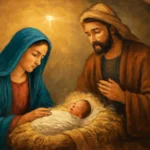
Luke 2:1-7 (Birth in Bethlehem): “And she brought forth her firstborn son … and laid him in a manger.” A humble scene becomes the stage for divine revelation.
Luke 2:8-14 (The shepherds and the heavenly chorus): “Glory to God in the highest, and on earth peace, good will toward men.”
Matthew 1:18-25 (Joseph’s dream and the birth of Jesus): the emphasis on obedience, protection, and the divine plan through Emmanuel—“God with us.”
The Word Made Flesh
The prologue of the Gospel of John makes a bold, cosmic statement about Christmas—that the eternal Word became flesh and dwelt among us.
John 1:1-14 (The Word and creation, the incarnation): “In the beginning was the Word, and the Word was with God, and the Word was God … And the Word became flesh, and dwelt among us.”
John 3:16 (God’s love in sending the Son): “For God so loved the world, that he gave his only begotten Son, that whosoever believeth in him should not perish, but have everlasting life.”
Advent Readings: Preparing with Scripture
Advent is a season of preparation. It invites a rhythm of reading, reflection, and response that moves from longing to gratitude. Below are practical paths for listening to Christmas Bible texts over four weeks, aligned with the traditional themes of hope, peace, joy, and love.
Week 1 — Hope: Focus on the prophecies and the expectation of a coming Savior.
Read: Isaiah 7:14, Isaiah 9:2-7, and Luke 1:26-38.
Reflection: Consider how hope sustains you in difficult seasons and how God’s promises anchor your faith.
Week 2 — Peace: The announcement of good news and the gift of reconciliation.
Read: Luke 2:8-14, Micah 5:2, and John 14:27.
Reflection: Where do you need God’s peace to rule in your life and in your relationships?
Week 3 — Joy: The shepherds’ glad tidings and the gladness of Christmas morning.
Read: Luke 2:10-11, Luke 2:15-20, and Matthew 2:1-12.
Reflection: What novelties of grace invite you to rejoice in the good news today?
Week 4 — Love: God’s love displayed in the gift of Jesus and in our response.
Read: John 3:16, 1 John 4:9-11, and 1 John 4:17-21.
Reflection: How can your love be a tangible sign of Christ’s presence in your daily life?
Seasonal Readings for Christmas Eve and Christmas Day
The transition from Advent to Christmas calls for readings that honor both the expectation and the celebration of Jesus’ birth. Below is a suggested arrangement for Christmas Eve and Christmas Day devotion or service.
Christmas Eve readings emphasize the incarnation’s wonder and the hush before the dawn.
Liturgical idea: light a candle for hope, peace, and the coming light, inviting participants to reflect on the mystery of God-with-us.
Christmas Day readings celebrate the birth and the witness of the incarnate Son.
Read: Luke 2:8-20, Matthew 1:18-25, and John 1:14.
Liturgical idea: offer a short prayer of gratitude for the gift of Christ and a commissioning to share the good news with boldness and mercy.
Thematic Readings: Bible Verses for Different Christmas Moments
Some readers like to pair themes with specific verses to match different moods, gatherings, or worship settings. Here are suggested pairings that keep the stream of salvation history coherent from prophecy to apostolic witness.
Awe and worship: “Glory to God in the highest, and on earth peace, good will toward men.” (Luke 2:14, KJV) and “Worthy is the Lamb who was slain.” (Revelation, for meditation across seasons).
Humility and obedience: “Behold, the virgin shall conceive… and they shall call his name Emmanuel.” (Isaiah 7:14; Matthew 1:23).
Hope in the coming Messiah: “For unto us a child is born… Wonderful, Counselor, The mighty God.” (Isaiah 9:6-7).
Love incarnate: “For God so loved the world… that whosoever believeth in him should not perish.” (John 3:16).
Justice and mercy: “The people who walked in darkness have seen a great light.” (Isaiah 9:2) paired with Luke 2:10-11 for the birth narrative.
Reading Plans for Families and Small Groups
A practical approach to Christmas Bible text is to adopt a reading plan that fits your schedule, whether for daily personal devotions, a family Advent calendar, or a church small group study. Here are several formats you can adapt.
Daily Advent Window — Read one brief verse or a short passage each day of Advent, ending with a Christmas Day meditation. Include a brief reflection question and a prayer.
Weekly Focus with Texts — Each week emphasizes a theme (Hope, Peace, Joy, Love) using three related passages plus a short commentary or devotional prompt.
Five-Sunday Series — A four-week Advent cycle followed by a Christmas Day meditation. Use a mix of prophecy, nativity, and John’s Prologue to connect Old Testament expectation with New Testament fulfillment.
Liturgical Cycle — Organize verses around a liturgy with responsive readings, congregational psalms, and a brief homily or reflection after each reading.
Morning reflection: Read Luke 2:1-7; ponder the distance between divine majesty and human vulnerability.
Midday contemplation: Read John 1:1-14; reflect on the Word becoming flesh and dwelling among us, full of grace and truth.
Evening meditation: Read Isaiah 9:6-7 and Luke 2:8-14; pray for peace and the light that shines in the darkness.
Practical Ways to Use Bible Text This Season
In addition to personal devotion, consider ways to bring Christmas Bible text into family life, education settings, and church practice. The following ideas can be adapted to different ages and contexts.
Family Advent Box — Create a box with a verse card for each day, small activity ideas, and a short prayer. Rotate leadership among family members to read and lead a moment of reflection.
Verse-Cue Cards — Make small cards with memorable fragments of verses (e.g., “For unto you is born this day … a Savior, which is Christ the Lord”). Place them on a tree or altars to spark conversations during meals.
Group Bible Study — Use a four-week plan that pairs prophecies with nativity accounts and John’s prologue, inviting participants to connect ancient expectations with contemporary life.
Sermon and Essay Topics — Propose themes such as incarnation and mission, grace and forgiveness, light in darkness, or the sanctity of family and community.
Translations and Text Variants: How to Read Christmas Verses
Verses may sound different depending on the translation. A reader can gain depth by comparing a few reputable English versions and noting shifts in nuance, vocabulary, and cadence.
KJV vs. ESV — The King James Version often preserves a poetic cadence that can evoke tradition and reverence, whereas the English Standard Version emphasizes readability and precision in meaning.
NIV vs. NRSV — The New International Version aims for contemporary language, while the New Revised Standard Version retains scholarly nuance suitable for study.
Greek and Hebrew roots — For those who study languages, exploring original terms can enrich understanding (for example, the Greek logos in John 1:1-14 or the Hebrew imagery in Isaiah’s prophecies).
Regardless of the translation, the message remains: God acts in love, enters human history in the person of Jesus, and invites us to respond with faith, witness, and worship.
Inspiration for Sermons, Devotions, and Cards
If you are preparing a Christmas sermon, devotional booklet, or card messages, use these guiding ideas and strong phrases to craft meaningful content that resonates with a diverse audience.
Sermon themes— Incarnation as emancipation, Deliverer as Emmanuel, and Mission as response to grace.
Devotional focuses— Gratitude for God’s presence, trust in divine timing, and acts of mercy in ordinary life.
Card messages— Short, biblically grounded phrases such as “O come, let us adore him” or “The Word became flesh and dwelt among us.”
In crafting content, you might weave together the following textual threads:
The human setting of Bethlehem and the humble circumstances of Jesus’ birth juxtaposed with the cosmic breadth of John 1.
The shepherds’ witness and the Magi’s pilgrimage as models of humble reception and earnest seeking.
Listening to angels and hearing the gospel proclaimed to the nations; a call to share the light with others.
Engaging younger readers with Christmas Bible text can be both fun and meaningful. Here are some approachable ideas:
Picture Bible readings — Pair simple text with child-friendly illustrations to reinforce the narrative of Luke 2 and Matthew 1-2.
Read-aloud dramatizations — A short, peaceful retelling of the nativity story, with roles for family members (angel, shepherd, Mary, Joseph).
Verse memory games — Use a matching game that pairs a verse with a simple image that represents its theme (hope, peace, joy, love).
Bible study during Christmas should value both the literal sense of the text and its broader theological message. Here are guidelines to keep readings honest and edifying:
Context matters — Look at the historical, cultural, and literary context of each passage.
Connection to the Gospel — Trace how prophecies find their fulfilment in the life of Jesus and how John’s Gospel presents the incarnate Word.
Christ-centered reading — Make Jesus the interpretive center for all the readings, especially when moving from prophecy to fulfillment.
The following compact notes offer a quick lens on some familiar Christmas verses, useful for devotions, teaching, or card messages.
Luke 2:11 — “For unto you is born this day in the city of David a Saviour, which is Christ the Lord.” This verse centers the personal address of God’s gift to ordinary people, bringing salvation into daily life.
Luke 2:14 — “Glory to God in the highest, and on earth peace, good will toward men.” A reminder that true peace begins with God’s gracious self-revelation and invites human responses of mercy and reconciliation.
John 1:14 — “And the Word was made flesh, and dwelt among us.” The decisive claim of the incarnation: divinity takes on humanity to heal and redeem, not from a distance but in the tangible world.
Isaiah 9:6-7 — The If-you-saw-one-as-a-birth-king message: a child will bear authority, bringing wisdom, justice, and everlasting peace.
The Christmas Bible text invites communities and individuals to live with ears attentive to prophecy fulfilled, eyes opened to the mystery of the Incarnation, and hearts ready to respond with faith and action. It is a living tradition that connects ancient longing to contemporary gratitude—an invitation to worship, to reflect, and to witness to the transformative power of God’s love in Jesus Christ.
Whether you are preparing a sermon, guiding a family devotional, or crafting a seasonal reflection for a group of readers, the verses and readings discussed here provide a broad, biblically grounded menu. They enable you to explore themes of prophecy, birth, light, and love, while also weaving practical suggestions for daily life during Advent and Christmas. May your study of these inspiring Bible verses draw you closer to God, strengthen your faith, and kindle a generous response to the world’s needs in the name of Jesus.











Leave a Reply