Christmas Scripture Verses: Top Bible Verses About Jesus' Birth
Christmas Scripture Verses: Top Bible Verses About Jesus' Birth
Christmas Scripture Verses offer a rich tapestry of biblical insight into the birth of Jesus and the remarkable truth of the incarnation. From ancient prophecies that hint at a coming Messiah to the heart-stirring narratives of Mary’s annunciation, the angelic chorus in the fields, and the humble scene in Bethlehem, these verses become anchor points for Christmas worship, personal devotion, and family tradition. In this article we survey the top Bible verses about Jesus’ birth, highlighting their historical context, theological meaning, and practical application for believers today. We will move through prophecies, annunciations, nativity narratives, angelic proclamations, and the profound declaration that the Word became flesh—God with us.
The birth of Jesus sits on a foundation laid centuries earlier in the Old Testament. These passages did not merely tell a story; they announced a plan, prepared a people, and prepared the world to recognize the long-awaited Messiah. In the gospel accounts, these prophecies illuminate how Jesus’ birth fulfills God’s redemptive promises and reveals the character of God as both transcendent and present with his people.
Isaiah 7:14 — “Behold, a virgin shall conceive, and bear a son, and shall call his name Immanuel.” This verse is frequently cited as the clearest Old Testament pointer to a virgin birth and to the divine presence with God’s people. It anchors the idea that the birth of the promised Immanuel will be extraordinary and noteworthy for all nations. Note: The name Immanuel translates to “God with us,” underscoring that Jesus’ birth is not simply the arrival of a remarkable child but a divine coming near to humanity.
Isaiah 9:6-7 — “For unto us a child is born, unto us a son is given: and the government shall be upon his shoulder: and his name shall be called Wonderful, Counsellor, The mighty God, The everlasting Father, The Prince of Peace.” This celebrated passage names the child and speaks of his divine attributes and universal rule. It invites readers to see Jesus as not only born in history but as the eternal King who brings peace.
Micah 5:2 — “But thou, Bethlehem Ephrathah, though thou be little among the thousands of Judah, yet out of thee shall he come forth unto me that is to be ruler in Israel.” The prophecy locates the birthplace and points to a ruler whose arrival carries cosmic significance. The Bethlehem miracle is a key piece of the nativity narrative because it confirms Jesus as the expected heir to David’s throne.
Genesis 3:15 — The protoevangelium, where God declares enmity between the serpent and the woman, and between her seed and the serpent, with the promise that the serpent’s head will be bruised by the seed. While not a birth prophecy in the exact sense, this verse frames the expectation of a coming offspring who will bring about ultimate victory and reconciliation. It helps readers understand that from the very beginning, God’s plan for humanity involved a living Savior whose birth would mark the turning point in salvation history.
Why these prophecies matter
For readers today, these prophetic verses reveal a continuity between the Old Covenant promises and the New Covenant reality revealed in Jesus. They remind us that Christmas is not merely about a historical event, but about the fulfillment of God’s redemptive plan. They also invite contemplation on the character of God—sovereign, faithful, and personal—who enters history in the most humble form to fulfill impossible promises.
The Annunciation Narratives: God’s Messenger Announces the Birth
Across the Gospels, two pivotal annunciations set the stage for the Christmas narrative: the angelic announcements to Mary in Luke of Nazareth and to Joseph in Matthew’s account. These passages highlight faith, obedience, and the divine initiative that makes the birth of Jesus possible. They also reveal how the living God works through ordinary people to accomplish extraordinary purposes.
Luke 1:26-38 (The Annunciation to Mary) — The angel Gabriel comes to Mary with news that she will conceive and bear a son, despite her virginity, and that the child will be called the Son of the Highest. Mary’s response, “Be it unto me according to thy word,” demonstrates exemplary faith and willingness to participate in God’s plan. Key verse: “Behold the handmaid of the Lord; be it unto me according to thy word.” (Luke 1:38, KJV)
Matthew 1:18-25 (Joseph’s Conception and Naming) — Mary’s fiancé learns of her pregnancy and plans to divorce quietly, but an angel explains the divine origin of the baby. The decisive moment comes when Joseph is told to name the child Jesus, for he shall save his people from their sins. The passage emphasizes the obedience required of Joseph and the trust that Mary embodies as the mother of Jesus. Key verse: “And she shall bring forth a son, and thou shalt call his name Jesus: for he shall save his people from their sins.” (Matthew 1:21, KJV)
The announcements connect the birth to a mission: Jesus arrives not as a mere child of history but as the Savior whose identity is tied to rescue, reconciliation, and the reign of God. The annunciation scenes also invite believers to reflect on their own readiness to respond to God’s call—whether through faith like Mary’s or in the obedience modeled by Joseph.
The Nativity Narratives: The Birth in Bethlehem and the Humble Scene
The nativity narratives in Luke present the cradle, the manger, the hardship of travel, and the divine message carried first to shepherds and then to the world. These verses anchor Christmas in tangible history while inviting us to recognize the profundity of the moment: God entering human life in the most modest circumstances, so that humanity might know the fullness of God’s love.
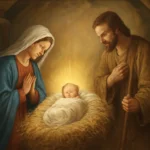
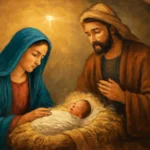
Luke 2:7 — “And she brought forth her firstborn son, and wrapped him in swaddling clothes, and laid him in a manger.” The details emphasize the humility of the birth and the accessibility of the newborn King.
Luke 2:11 — “For unto you is born this day in the city of David a Saviour, which is Christ the Lord.” This crisp proclamation identifies the baby’s identity, mission, and the accessibility of salvation for all who believe.
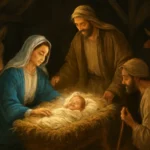
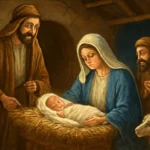
Luke 2:16-18 — The shepherds hurry to see the baby and then spread the word, marveling at what they have learned about the child. Their witness highlights the evangelistic dimension of Christmas—ordinary people carrying extraordinary news to others.
Luke 2:19 — “But Mary kept all these things, and pondered them in her heart.” Mary’s contemplation invites readers to reflect on the meanings of Christmas and how the birth of Jesus should reshape our inner life and faith journey.
The nativity accounts not only narrate events but also teach us how to encounter God in vulnerability and wonder. The imagery of a stable, a young mother, and angels nearby communicates that the divine meets humanity precisely where life is small and ordinary, inviting us to respond with worship, gratitude, and trust.
Angelic Proclamations: Glory and Peace on Earth
A central Christmas motif is the chorus of heavenly beings declaring the glory of God and the arrival of peace on earth. Angels announce and celebrate, inviting shepherds and all people to witness the mystery of God taking on human flesh. These verses capture the church’s response to the birth of Jesus and invite Christians to join in the proclamation of good news.
Luke 2:9-14 — An angel of the Lord appears to shepherds in the fields, and a multitude of heavenly hosts join him, praising God and declaring, “Glory to God in the highest, and on earth peace, good will toward men.” The scene distills the cosmic significance of Christmas: the long-awaited moment is accompanied by joy, worship, and a promise of peace that surpasses human understanding.
Luke 2:10-11 — The angel’s message to the shepherds centers on the good news: “For unto you is born this day in the city of David a Saviour, which is Christ the Lord.” The news is both personal and universal, inviting a response of faith and worship.
The angelic proclamation emphasizes not only the event itself but the ongoing mission to spread the news of Jesus’ birth. Believers are called to participate in the worshipful response—praising God, sharing the message with others, and embodying the peace that Jesus brings through acts of mercy, reconciliation, and generosity.
The Incarnation: The Word Became Flesh
Beyond the cradle, the Christmas narrative points toward the fundamental Christian doctrine of the incarnation: that the Word was made flesh and dwelt among us. This is not just a historical statement about Jesus’ birth; it is a living claim about God’s nature—present, relational, and transformative. The Gospel of John does not repeat the infancy narrative but expounds the theological significance of the birth by describing the divine nature who enters creation, sharing our humanity so that we might share in God’s life.
John 1:14 — “And the Word was made flesh, and dwelt among us, (and we beheld his glory, the glory as of the only begotten of the Father,) full of grace and truth.” This verse crystallizes the central Christmas truth: God’s self-revelation comes in human form, enabling a direct encounter with grace.
The incarnation reshapes how Christians approach Christmas devotion. If God has come near, daily life becomes a place to meet the divine and reflect the love, humility, and service demonstrated by Jesus. The verse also invites meditation on the mystery of Jesus’ two natures: fully God and fully human, a mystery central to Christian faith and salvation.
Additional Threads: Related Verses That Enrich the Christmas Message
In addition to the canonical birth narratives, other scriptural threads enrich our understanding of Christmas and deepen our devotional life around this season. These verses illuminate related themes—peace, light, salvation, and the unveiling of the salvation plan—that harmonize with the core Christmas message.
Isaiah 52:7 — “How beautiful upon the mountains are the feet of him that bringeth good tidings, that publisheth peace; that saith unto Zion, Thy God reigneth!” Though not a birth narrative by itself, this verse captures the evangelistic mission surrounding Christmas—the coming good news of a God who reigns and brings peace.
Luke 2:15-20 — The shepherds’ response turns to response: they report what they have heard, and all who hear marvel at the shepherds’ witness. Mary’s contemplative heart is also highlighted as she ponders the meaning of these events in her own life.
Romans 1:3-4 — Concerning Jesus Christ our Lord, declared to be the Son of God with power according to the Spirit of Holiness by the resurrection from the dead. This helps readers connect the birth to the entire arc of salvation history, culminating in the resurrection and exaltation of Jesus as Lord.
While some readers focus on the narrative details surrounding the birth, others are drawn to the theological implications—God’s initiative, human response, and the ramifications for worship, mission, and social hope. The Christmas scriptures, in their variety, invite a holistic reflection: the birth as a historical event, a theological revelation of God’s character, and a catalyst for life transformation among believers.
The rich collection of Christmas scripture verses can shape daily devotionals, family traditions, liturgical settings, and personal worship. Here are practical ideas to engage with these verses throughout the season and beyond:
Daily Devotional Rhythms: Select a verse each day from the sections above (prophecy, annunciation, nativity, incarnation) and write a brief reflection on its meaning for your life, focusing on how the birth of Jesus changes your attitude toward others, generosity, and worship.
Advent Readings: Create an Advent plan that visits Old Testament prophecies, the annunciations, and the nativity narrative in parallel. Pair each verse with a short prayer or a line of a carol to reinforce the thematic connection.
Family Advent Devotionals: For families, the verse lists can be used to guide 5- to 10-minute at-the-table or at-bedtime reflections. Have children memorize a short verse (e.g., Luke 2:11) and explain its significance in simple terms.
Worship and Song Selections: Use the thematic threads of these verses to curate Christmas playlists that celebrate the incarnation, the Savior’s birth, and the proclamation of peace on earth.
Artistic and Creative Responses: Invite readers to respond to these verses through poetry, journaling, or painting that captures themes such as divine humility, Emmanuel, and the joy of the shepherds’ witness.
Concluding Thoughts: The Last Word on Christmas Verses
The collection of top Bible verses about Jesus’ birth offers more than historical snapshots; it invites a living faith that sees God’s activity in history and experiences transformation through encounter with the Incarnate One. The birth narratives reveal the radical nature of God’s love—humble, personal, and redemptive. The prophecies bridge the old and new covenants, reminding readers that Christmas is the fulfillment of God’s promises. The apostolic witness to the incarnation in John’s gospel anchors the entire story in the reality that “the Word became flesh” so that humanity could know grace, truth, and life.
As you engage with these verses this Christmas season, may you be renewed in worship, be encouraged in faith, and be motivated to share the good news with others. The birth of Jesus is not merely a historic event to be remembered; it is a living message that challenges hearts, transforms lives, and invites generations to join in the timeless declaration of praise: Glory to God in the highest, and on earth peace, good will toward men.
In the end, these verses invite us to contemplate the mystery and the majesty of the Christmas miracle: God with us, God for us, God in us. The birth of Jesus is the hinge of history, and the response of faith to this truth becomes the core of Christmas devotion—praise, gratitude, and a life guided by the light of the world.








Leave a Reply