Dates and Scheduling: When Does the Fourth Advent Sunday Fall?
The Fourth Advent Sunday is the final Sunday of the Advent season in most Western Christian traditions. It is commonly described as the last of the four weeks of preparation before Christmas. In practical terms, this means that the date is determined by the day of Christmas itself: the fourth Sunday of Advent is the Sunday immediately preceding Christmas Day. Because Christmas always falls on December 25, the exact date of this fourth Sunday can vary from year to year, typically ranging between December 18 and December 24.n
Because Advent starts on the Sunday closest to November 30 (the feast of St. Andrew on November 30 marks the anchor for the season), the sequence of Sundays shifts in a way that makes each year’s fourth Advent Sunday unique. Some years have the fourth Advent Sunday land on December 24, turning the service into a vigil-like moment for many churches; in other years, Christmas Eve falls later in the day, and the fourth Sunday is celebrated a day earlier. The important point is the fourth Sunday of Advent remains the Sunday before Christmas Day in the vast majority of liturgical calendars, and it often serves as the formal bridge between Advent and Christmas celebrations.n
To help readers visualize the range, consider this simple statement: the date for the Fourth Advent Sunday is typically between December 18 and December 24, inclusive. Local parishes may phrase things slightly differently, but the core idea—an appointed Sunday of hopeful anticipation just before the Nativity—remains consistent across denominations that observe Advent. When you plan services, worship schedules, or family gatherings, checking a current ecclesiastical calendar or a local church’s announcements will give you the exact date for the year you are observing.n
Significance: Why the Fourth Advent Sunday Matters
The Fourth Advent Sunday carries a distinctive and multifaceted significance in Christian liturgy, theology, and culture. It is not merely a matter of dating; it is a moment of concrete theological and pastoral meaning—an emphasis on the culmination of waiting, the approaching Incarnation, and the call to live in hopeful readiness. In many traditions, this Sunday emphasizes three interrelated themes: anticipation, illumination, and preparation for the Incarnation.
First, the day embodies anticipation (expectation). Advent itself is a season of waiting for the coming Messiah—the one foretold by prophets and announced by angels. The readings typically remind believers to stay vigilant, to cultivate patience, and to maintain faith even as the world prepares for Christmas celebrations. The Fourth Advent Sunday, as the final Sunday before Christmas, signals an intensified sense of expectancy: the Advent season moves from hopeful longing toward the immediacy of the Nativity narrative.
Second, the day is a moment of illumination and revelation. The advent wreath’s candles are a visible sign of light growing brighter as the story of salvation nears its fulfillment. In many churches, the lighting of the final Advent candle (the one sometimes called the Christ Candle in the color-coded sequence) embodies the coming of Christ as the Light of the World. This emphasis on light has both theological and symbolic resonance: darkness gives way to divine light, fear gives way to reassurance, and expectation gives way to the reality of the Incarnation.n
Third, the Fourth Advent Sunday is a moment of preparation for the Nativity. While the Christmas Eve and Christmas Day celebrations continue, this Sunday invites the faithful to reflect on what it means for God to become flesh, to dwell among people, and to offer the gift of grace to the world. The Sunday’s prayers, readings, and hymns often foreground themes such as humility, receptivity, and the mercy of God, urging believers to make room in their lives for the divine gift. In many parish communities, there is a communal focus on acts of charity, hospitality, and service during these days as a tangible expression of living into that preparation.n
Across traditions, you’ll find variations to honor these core ideas. In some liturgical calendars the theme of love is foregrounded, in others the emphasis is on peace and justice, and in many places, the readings weave together prophecies from the Old Testament with accounts of the Annunciation and the visitation of Mary. Regardless of the exact lectionary, the overarching sense remains: the church is nearing the event it has long anticipated, and the faithful are called to readiness, generosity, and hope.
Traditions and Practices Surrounding the Fourth Advent Sunday
The fourth Advent Sunday is marked by a blend of liturgical ritual, family customs, and cultural expressions that together create a bridge from Advent to Christmas. Below are some of the most common and enduring practices, followed by notes about regional variation and how communities adapt the day for worship and for daily life.
Liturgical readings often center on the culmination of Advent and the imminent arrival of Christ. The Gospel reading may be from Luke 1 (the Annunciation to Mary) or Luke 2 (the birth of Jesus) depending on the year’s calendar; Old Testament prophecies about the Messiah (such as Isaiah passages) are frequently paired with New Testament accounts to highlight fulfillment and hope.
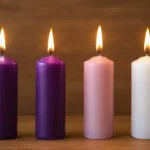
Candle lighting is a hallmark of Advent worship. On this final Sunday, many congregations arrange to light the last candle on the Advent wreath, or to light the entire wreath in the service as a visual symbol of God’s light breaking into the world. In some traditions, the Christ Candle (the white or central candle) is lit on Christmas Eve or Christmas Day, but in many churches it is introduced or completed on the Fourth Advent Sunday itself.
Hymns and anthems chosen for this Sunday often sing of hope fulfilled, light dawning, and the nearness of the Savior. Common motifs include “Watchman, Tell Us of the Night,” “O Come, O Come, Emmanuel,” “Lo, How a Rose E’er Blooming,” and other carols that blend longing with anticipation and joy.
Communal prayers on this day frequently emphasize hospitality, generosity, and the call to invite others into the season’s story—both within the church and in the broader community.
Liturgical colors vary by tradition. In many Catholic, Anglican, Lutheran, and Protestant churches, the usual Advent color remains purple, with pink (rose) for Gaudete Sunday (the third Sunday) and a possible shift or emphasis on brightness as Christmas approaches. Different denominations may mark this final Sunday with subtle color shifts or additional hints of white or gold to signal the imminent Nativity.
Home, Family, and Community Observances
Advent wreath at home often features four candles, one for each Sunday, and on the Fourth Advent Sunday families may add a moment of shared reflection, lighting the final candle and reading a short devotional about preparation and welcome.
Advent calendars and daily devotionals continue to accompany the season. Families may use the Fourth Advent Sunday as a moment to reflect on acts of kindness, forgiveness, and hospitality in the days immediately preceding Christmas.
Charitable acts frequently intensify during this week. Communities may organize food drives, visits to the sick and elderly, or donations to those in need as a way of embodying the season’s call to love and service.
Musical and cultural events such as Advent concerts, carol services, and nativity plays are commonly scheduled around this time, reinforcing the sense that “the time is near” and inviting participation from families, schools, and neighbors.
Regional and Cultural Variations
Germany and Austria often place a strong emphasis on the Adventskranz (Advent wreath) and regional choir or brass ensemble performances. Nativity scenes are common in churches and homes, and communities may host Christkindl markets that run through the weekend leading up to Christmas.
Poland and other parts of Central and Eastern Europe may observe additional devotional sessions known as Roraty masses early in December, with the fourth Advent Sunday still shaping a key moment of preparation and public worship.
United Kingdom and Ireland highlight carol services, candlelit vigils, and school and parish pageants that tell the story of the Nativity. The Fourth Advent Sunday in these contexts often involves a blend of reverence and festive anticipation, with outreach and hospitality as common components.
North America tends to reflect a mix of Catholic, Protestant, and Orthodox practices. In many churches, the Fourth Advent Sunday features a heightened sense of community outreach, a traditional sermon on readiness, and a family-friendly liturgy that invites children to participate in the lighting and readings.
Music, Art, and Liturgical Atmosphere
Carols and anthems on this Sunday often emphasize the nearness of Christmas and the light coming into the world. Songs like “O Come, O Come, Emmanuel” and “Lo, How a Rose E’er Blooming” are commonly heard alongside more contemporary arrangements that convey hope and expectation.
Visuals in churches and homes frequently feature candles, greenery, and perhaps a shepherd’s scene or nativity arrangement. The overall atmosphere tends to be contemplative but not withdrawn—an invitation to reflect deeply while also preparing for celebration.
Artistic works such as choirs, organ preludes, or string ensembles may frame the day with music that bridges the solemnity of Advent with the joy of the approaching Christmas narrative.
Practical Guidance for Observing the Fourth Advent Sunday
Plan ahead by checking your church’s calendar to confirm the date and the liturgical focus for the Fourth Advent Sunday in your tradition.
Participate in the lighting of the final candle if your home or congregation uses an Advent wreath. This is a meaningful ritual that symbolizes the light God brings into a waiting world.
Read the scriptural readings assigned for the day to connect personal reflection with the broader narrative of Advent and the coming of Christ.
Offer hospitality to neighbors and guests during the season. The Fourth Advent Sunday can be a moment to extend invitation, share meals, or host a small gathering that reflects the season’s spirit of welcome.
Support charitable giving and acts of service as expressions of Advent generosity, aligning personal devotion with practical outreach.
The Fourth Advent Sunday in the Context of the Church Year
Because Advent sits at the threshold of the Christmas season, the Fourth Advent Sunday has a unique role: it is both a culmination of the waiting and a bridge to celebration. In many calendars, the liturgical color remains purple, signaling penitence and anticipation, while the imagery and music on this day emphasize the nearness of the Word made flesh. Some traditions reserve special observances for Christmas Eve and Christmas Day, while others extend the Advent themes into a festive Christmas season that follows. Regardless of tradition, this Sunday is a turning point—one that invites believers to move from watchfulness to welcome, from longing to gratitude, and from preparation to rejoicing in the Incarnation.n
Variations in Terminology: How People Speak of the Fourth Advent Sunday
In different churches and languages, you will see a range of phrases referring to this same day. The diverse ways of saying it help capture subtle differences in emphasis and tradition. Here are some common variations you might encounter:
Fourth Sunday of Advent (the most common English-language designation)
Fourth Advent Sunday (alternative phrasing seen in some Anglican, Lutheran, and Catholic calendars)
Sunday of the Fourth Advent (a variant used in some liturgical texts)
Sunday before Christmas (a descriptive label used when the date is immediately before Christmas Day)
Fourth week of Advent (emphasizing the weekly structure of the season)
These variations are not merely stylistic; they reflect the broader goal of helping communities connect with the season’s rhythm. The exact wording may appear in worship bulletins, hymnals, calendar inserts, or parish announcements, but the essence remains: this is the last Sunday of Advent, a time of heightened anticipation, light, and readiness for the Nativity.
Several factors contribute to the distinctiveness of the Fourth Advent Sunday. First, the proximity to Christmas Day makes the day feel more intimate and immediate, which shapes both worship and home life. Second, the liturgical calendar around this time tends to be rich with music, poetry, and imagery that speak directly to the mystery of God becoming human. Third, the social life of churches and parishes often intensifies during these days: concerts, pageants, volunteer opportunities, and special meals draw communities together in shared memory and expectation. All of these elements—the tone of worship, the symbolism of light, the call to generosity, and the festive anticipation—combine to make the Fourth Advent Sunday a memorable waypoint on the Christian journey toward Christmas.n
In closing, whether you observe this day primarily through worship, family devotion, or community service, the Fourth Advent Sunday invites a posture of readiness and rejoicing. It asks us to recognize that waiting can give way to welcome, and that the greatest gift ever given—God with us—requires both reverence and action. As you prepare your own rituals, rituals in churches, or simple acts of kindness in your neighborhood, may this Sunday be a fruitful bridge between Advent’s quiet expectation and Christmas’s joyful proclamation.
Note: If you are planning an event or service, always consult your local denomination’s calendar, as the exact readings, colors, and liturgical options can vary by tradition and region. The themes outlined here reflect a broad, cross-denominational understanding of how the Fourth Advent Sunday is commonly observed and celebrated around the world.










Leave a Reply