Disciple Names: The Ultimate List of Biblical Disciples
Disciple Names: The Ultimate List of Biblical Disciples
In Christian tradition, a disciple is a learner, follower, or student who adheres to the teaching of a master. In the New Testament, the most famous circle of disciples consists of the twelve apostles chosen by Jesus, but the idea of discipleship extends far beyond that small group. This article, titled Disciple Names: The Ultimate List of Biblical Disciples, offers a comprehensive catalog of named disciples and close followers found in the Gospels and Acts. It traces the varied forms of names, the linguistic variants, and the roles these individuals played in the formation of early Christian faith. The goal is to equip readers with a thorough resource for study, reflection, and reference.
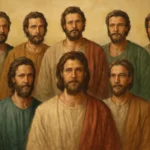
The Original Twelve form the core of the early church’s leadership and witness. Their names appear across multiple Gospel accounts, and each name carries a history of alternative forms, translations, and nicknames. Below is a canonical list of the twelve, followed by notes on common variants and what those variants reveal about language, culture, and tradition.
Peter — also known as Simon Peter and Cephas (Aramaic for “rock”). He is repeatedly presented as a lead figure among the disciples, sometimes described as the rock on which the church would be built. Peter is the most well-known form in English, while Simon Peter emphasizes his given name, and Cephas highlights the title given by Jesus.
Andrew — brother of Peter; often referred to by the Greek form Andreas. Andrew is recognized as a pioneering disciple who introduced others to Jesus, including his own brother.
James the Greater — the son of Zebedee; often called James the Greater to distinguish him from James the Less. In some traditions, he is associated with the title Iakobos ho Megas (the Great James).
John — the brother of James; the evangelist traditionally identified as Ioannes in Greek sources. John is revered as the author of the Gospel that bears his name and several other New Testament writings.
Philip — known as Philip the Apostle in many lists; a name that persists across translations as Philip.
Bartholomew — traditionally linked with Nathanael, notably in the Gospel of John where Jesus describes Nathanael as “an Israelite indeed, in whom is no deceit.” The pair is commonly associated with Bartholomew as the Latinized form of his name.
Thomas — commonly known as Didymus in Greek, meaning “twin.” Thomas is famous for his initial doubt and subsequent confession of faith upon recognizing the risen Jesus.
Matthew — the tax collector also known as Levi before his calling; he is often referred to as Matthew the Evangelist in Christian tradition.
James son of Alphaeus — often called James the Less or Jacob the Minor in some traditions, to set him apart from James the Greater.
Thaddaeus — sometimes rendered as Jude or Judas Thaddaeus, and in some manuscripts paired with the surname Lebbaeus. This name appears in the lists indicating a distinct disciple who is sometimes conflated with Judas of Iscariot depending on manuscript tradition.
Simon the Zealot — also described as Simon the Cananean or Simon the Canaanite in some translations, emphasizing a geographical or ideological descriptor attached to his name.
Judas Iscariot — the disciple who betrayed Jesus; his name is paired with a descriptor that likely derives from the region of Kerioth. Iscariot helps distinguish him from the other Judas, and his betrayal leads to the selection of a replacement apostle later in Acts.
After the betrayal and death of Judas Iscariot, the early church chose Matthias to replace him as one of the Twelve (Acts 1:26). Matthias joins the remaining eleven as the twelfth apostle in the post-resurrection narrative. The name Matthias is sometimes transliterated as Matthaios in Greek sources, and it carries its own history in early Christian writings.
Matthias was selected by the apostles through casting lots after prayer, ensuring that the Twelve remained a complete number. This careful act underscores the significance of continuity in the apostolic commission. In many Bible translations, Matthias is presented as the immediate successor to Judas Iscariot, restoring the continuity of Jesus’ closest circle in the early church. When considering Matthias, readers should note the name’s roots in the Greek Matthaios, a form related to the name Matthew, though functioning here as a distinct individual with his own place in the story.
Other Named Disciples in the Gospels and Acts
Beyond the Original Twelve, the New Testament mentions many other named disciples and close followers who contributed to the spread of Jesus’ teachings and the growth of the early church. Some are women whose devotion is highlighted in the Gospels; others are male followers who traveled with Jesus or Paul and are described as disciples or co-workers in ministry. This section highlights notable named figures and clarifies how their names appear in the text, including variants and aliases.
Mary Magdalene — often called Mary of Magdala or the Magdalene. She is repeatedly described as a devoted follower who witnesses the crucifixion and discovers the empty tomb, earning the title the Apostle to the Apostles in later tradition.
Mary of Bethany — the sister of Martha and Lazarus; sometimes simply called Mary in parallel passages. In John’s Gospel, her act of anointing Jesus is recorded as a significant expression of discipleship, and her name appears in close proximity to Jesus’ final days.
Martha — sister to Mary of Bethany, often portrayed as a practical, service-minded disciple who speaks with Jesus about belief and trust. Her conversations with Jesus illuminate the balance between faith and works in discipleship.
Salome — a devoted follower named among the women who attend Jesus’ crucifixion and burial, and who appears in the accounts of the resurrection events. Her inclusion signals the important role of women among Jesus’ supporters.
Joanna — another named follower who is mentioned among the women who ministered to Jesus and supported the mission financially and in practice. Her presence helps demonstrate the network of female disciples in the early movement.
Susanna — listed among the women who supported Jesus’ ministry; Susanna’s inclusion emphasizes the diverse community sustaining the early Christian movement.
The Samaritan Woman — not named in the canonical text, but often described as a devoted messenger after her encounter with Jesus at Jacob’s well. In some traditions she is celebrated as a model of a disciple-missionary who carries the good news back to her village.
Cleopas — one of the two disciples walking on the road to Emmaus (Luke 24). The other disciple is unnamed in Luke’s account, but this pair illustrates how authentic discipleship can emerge in ordinary conversations on the road to understanding the resurrected Jesus.
The Other Disciple on the Road to Emmaus — while unnamed in the text, this companion participates in the post-resurrection encounter and shares in the revelation of Jesus’ presence, illustrating that discipleship often involves communal recognition and shared testimony.
Barnabas — often regarded as a senior believer and a trusted companion in missionary journeys with Paul. In Acts, Barnabas earns recognition as a prominent leader and teacher, a role akin to a seasoned disciple guiding younger believers.
Luke — the author of the Gospel of Luke and the Acts of the Apostles, sometimes described as a disciple and a faithful writer who documents the church’s earliest steps. Luke’s work highlights the role of a disciple as an observer, minister, and storyteller who preserves witness for future generations.
The list above demonstrates how the New Testament frames discipleship as a broad and inclusive calling. It includes women followers who support the mission, male followers who journey with Jesus and Paul, and the apostolic circle that forms the backbone of early Christian teaching. When studying these names, readers should pay attention to the context in which each person appears, including how their acts and words contribute to the spread of the message.
Disciples in the Book of Acts and Early Church Leadership
After Jesus’ resurrection, the early church experienced rapid growth and organizational development. The term disciple appears frequently in Acts to describe believers who follow Jesus and participate in teaching, preaching, and missionary activity. While the most prominent figures are the Twelve (and Matthias, their successor), many others are named as trusted teachers, missionaries, and church leaders. Below is a concise look at notable named disciples and their roles in the early church.
Timothy — a young companion of Paul, described as a faithful disciple and trusted coworker. Timothy’s letters reveal a mentorship relationship, leadership overlaps, and pastoral guidance that helped shape early Christian communities.
Titus — another important Paul associate and disciple who carried out missions, provided instruction, and aided in organizing churches. Titus’ role illustrates how trained disciples became key stewards of the church’s mission.
Luke — in addition to his authorship, Luke is presented as a devoted disciple whose careful recordings preserve the church’s witness and early practice.
Aristarchus — a fellow worker mentioned in Paul’s letters, often described as a disciple who remained faithful during difficult circumstances.
Epaphroditus — a messenger and minister who supported the Philippian church, demonstrating how a dedicated believer could serve as a disciple in practical ways.
Onesimus — a former slave who becomes part of the Christian community; in Pauline circles, Onesimus is counted among the disciples who contribute to the spread of the gospel.
Gaius — a recognized believer noted for hospitality in the early church; as a respected member of the church, he is often considered a model of the disciple faith in action.
Priscilla and Aquila — a married couple described as disciples and skilled teachers who instructed Apollos and helped shape early Christian doctrine through practical ministry.
This section underscores an essential truth: discipleship in the New Testament is not limited to a fixed, elite group. It encompasses a wide network of believers who dedicate themselves to learning, teaching, serving, and spreading the message of Jesus. The diversity of named disciples—men and women, leaders and lay followers—reflects the communal nature of early Christian life and the way faith travels through relationships and mission partnerships.
Etymology, Meaning, and Variants of Disciple Names
Names in the biblical record arise from languages such as Hebrew, Aramaic, Greek, and Latin. The word disciple itself comes from the Greek mathētēs, meaning learner or pupil, while the term apostle comes from the Greek apostolos, meaning one who is sent. Variants of individual names often appear across translations, reflecting linguistic shifts and cultural contexts. Understanding these variants enriches study, worship, and conversations about biblical history.
Peter vs. Simon — A leading example of name variation, where Simon Peter emphasizes his given name, while Cephas presents the Aramaic title Jesus gave him, meaning “rock.”
Nathanael vs. Bartholomew — In John’s Gospel, Nathanael is identified by a first name, while Bartholomew appears in synoptic lists; many traditions connect these two names as referring to the same apostle, though scholarly consensus varies on identification.
Judas Iscariot vs. Judas Thaddaeus — Different name forms exist for Judas in various manuscripts and lists; the latter sometimes refers to a different disciple entirely depending on the source.
James the Greater vs. James the Less — In Greek, the two brothers are distinguished by descriptors that translate to “the Greater” and “the Lesser,” helping readers track which James is being referenced.
Thomas vs. Didymus — The twin-bearing surname Didymus is used in Acts-like traditions and some early writings to identify Thomas more distinctly.
Matthias — An example of a name that recurs in manuscript traditions with Matthaios in Greek, connecting him to the broader family of names like Matthew in some contexts while retaining his own identity as an apostle.
The study of name variants also reveals linguistic borrowings and cultural transmission across the Mediterranean world. It highlights how early Christians navigated languages (Hebrew, Aramaic, Greek, Latin) while preserving the meaning and memory of each disciple. For readers preparing sermons, Bible studies, or devotional guides, recognizing these variants can deepen understanding and appreciation for how early believers encountered and transmitted the message.
Practical Ways to Use This List in Study and Worship
A robust understanding of disciple names serves practical purposes in Bible study, teaching, and worship. Here are several ways to engage with this material meaningfully:
Cross-reference name variants when researching a passage. If a verse mentions “Peter” in one Gospel and “Simon Bar-Jona” in another, note the contextual equivalence and the emphasis each form conveys.
Explore roles and symbolism behind each name. For example, Cephas connotes a rock-like leadership assignment, while Bartholomew’s association with Nathanael invites exploration of how Jesus identifies loyal followers.
Chart the network of followers beyond the Twelve. Create a visual map of female disciples, male co-workers, and church leaders to understand how early Christian communities functioned as a web of witness and service.
Discuss language and culture in small groups or classrooms. Use name variants to illustrate how language changes shape memory, faith practices, and interpretive traditions across centuries.
Use as a devotional aid to reflect on the idea that discipleship is a shared calling. Contemplate what it means to be a learner, a witness, and a partner in mission, just as these named figures did in their own times.
Why Names Matter: Theological and Historical Reflections
Names carry more than labels; they carry stories, responsibilities, and identities. The disciples named in Scripture are not just historical figures; they model varied approaches to faithfulness: courage under pressure, hospitality in mission, humility in service, and steadfast witness in difficult circumstances. By studying their names, variants, and contexts, readers can gain:
For readers who want to dive deeper, here are some helpful notes to consider as you explore disciple names across New Testament texts:
The same person may appear under different names in parallel accounts. Recognize the possibility of parallel identity (for example, a disciple named by a longer formal name in one Gospel and by a shorter familiar form in another).
Translations can influence how a name appears in English. Compare several translations to observe how Greek mathētēs (disciple) and Greek proper names get rendered in English, Latin, and other languages.
Some names have more than one plausible identification across tradition. For instance, Bartholomew and Nathanael are linked in certain traditions, while others treat them as distinct individuals. Context and source-critical study are helpful here.
Remember that the term disciple in the Acts and Epistles often refers to believers in Christ generally, not exclusively to the Twelve. When you encounter the word, consider whether the passage refers to a specific disciple, a community of believers, or a traveling missionary cohort.
A Final, Extending Perspective
The Disciple Names: The Ultimate List of Biblical Disciples presented here is designed to be a living resource. As scholarship, archaeology, and manuscript studies advance, our understanding of these figures—and the terms used to describe them—may evolve. Nonetheless, the core insight remains: discipleship in the New Testament is a vibrant, communal, and mission-minded calling that extends beyond a single list of names. It spans generations, languages, and cultures, tying together the courage of those who followed Jesus with the faith of those who continue to follow today.
Whether you are preparing a Bible study, a sermon series, or a personal devotional, use these names as anchors for reflection, study, and dialogue. Consider not only who each disciple was, but how their names encapsulate roles, functions, and the shared journey of faith. The ultimate list invites readers to see the fullness of discipleship—an expansive, interconnected community whose story continues to unfold in the life of every reader.







Leave a Reply