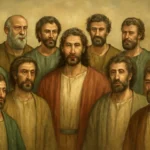
The stories of the twelve disciples occupy a central place in the Christian Gospels and in the formation of the early Church. These
men are collectively known as the Twelve, the Twelve Apostles,
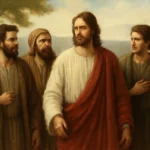
or, in some traditions, simply as the disciples who were chosen by Jesus
to accompany him, learn from him, and carry his message into the world. While each apostle
came from a different background—fishermen, tax collectors, zealots and more—their shared
calling centered on companionship with Jesus, participation in his mission, and witness to
his life, death, and resurrection.
This article offers a comprehensive guide to the 12 disciples' names, their
common variations, brief biographical notes, and the roles they played in the narrative of the
Bible. We will explore not only who they were, but also the symbolism, scriptures, and
traditions that have helped believers understand their importance across centuries. Whether you
refer to them as the apostles or as the Twelve, the stories of these
men continue to shape Christian thought, art, theology, and faith practice.
The Twelve Apostles Names List: The Twelve Apostles in Scripture
Below is a canonical list of the 12 disciples as they are commonly named in biblical
lists and in church tradition. For each entry, you will see a primary name followed by notable
alternative names or descriptors that appear in Scripture or in later tradition. The order here
follows a conventional arrangement found in many biblical resources and serves as a helpful
reference for study, liturgy, and teaching.
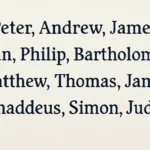
Simon Peter (also called Peter and Simon Bar‑Jona). Peter is portrayed
in the Gospels as a leading figure among the Twelve. He is celebrated as the
Church’s foundational witness and is frequently presented as the principal leader among the
apostles, especially in the Acts of the Apostles.
Andrew, Peter’s brother. A fisherman from Galilee, Andrew is notable for his
role in introducing others to Jesus, including bringing his brother Peter to the Messiah.
James (James, son of Zebedee). One of the "Sons of Thunder" with his brother
John, James is recorded as one of the first apostles martyred in the early Church era.
John (the Apostle John; the son of Zebedee). Known as the Beloved
in the Gospel tradition, John is traditionally credited with writing the Gospel of John, three
epistles, and the Book of Revelation.
Philip. A disciple who features in several narrative episodes, including his
interactions with Jesus and with Nathanael. Philip is often presented as a seeker who
facilitated others’ encounters with Christ.
Bartholomew (often identified with Nathanael in John 1:45–51). Bartholomew
is associated with candid faith and is revered in tradition for missionary work in various
regions.
Thomas (Didymus). Famously associated with the epithet “Doubting Thomas” for
his initial skepticism about Jesus’ resurrection, Thomas is later honored for his bold
confession of faith when he encounters the risen Christ.
Matthew (Levi), the tax collector. Matthew is traditionally credited with writing the
Gospel of Matthew, which emphasizes Jesus’ teachings and the fulfillment of Old Testament
prophecies in the Messiah.
James (James, son of Alphaeus). Often distinguished as James the Less or James the
son of Alphaeus to separate him from James, the son of Zebedee, this James features in the New
Testament letters and Acts in roles of the early Christian community.
Judas Thaddaeus (also called Jude or Judas, son of James). In some traditions,
this figure is identified with Judas the Apostle who later is referred to as Judas Thaddaeus
to distinguish him from Judas Iscariot.
Simon the Zealot (also called Simon Cananean or Cananaean). Simon’s label
points to his prior association with zealot political movements, and his inclusion among the Twelve
highlights the breadth of backgrounds among Jesus’ followers.
Judas Iscariot. The apostle who betrayed Jesus, Judas Iscariot’s role culminates in
the Gospel narrative with the arrest and crucifixion. In Acts 1, the early Church replaces him with
Matthias to restore the number of the Twelve.
Note: In Acts 1, the community chooses Matthias to replace Judas Iscariot after Judas’
betrayal and death, restoring the circle of the Twelve. This replacement underlines a deliberate choice by the
early Christian community to maintain the apostolic succession that the Twelve represented.
Individual Profiles: Detailed Look at Each of the Twelve
Peter sits at the heart of the Twelve in the Gospel narratives and the Book of Acts.
His life story emphasizes transformation, leadership, and the tension between strength and humility.
Role: Primary leader among the Twelve; often the first to speak for the group; a central figure in the early church.
Key texts: Matthew 16:18 (pronouncement of “rock” on which the church would be built), John 21 (restoration after denial), Acts 2 (Pentecost leadership).
Symbolic significance: He is associated with the foundations of the church and with the call to shepherd the flock; the “rock” metaphor underscores resilience and trust in God’s plan.
Peter’s journey—from fisherman to leader—offers a powerful narrative about growth, failure, forgiveness, and mission. Early
Christian tradition also emphasizes Peter’s missionary work in various regions and his enduring legacy in ecclesial leadership.
Andrew is frequently described as the one who brings others to Jesus, including his own brother Peter.
Role: Connector and evangelist; often introduces people to Christ in the Gospel accounts.
Key texts: John 1:40–42 (Andrew bringing Peter to Jesus); John 6:8–9 (Andrew brings a boy with loaves and fish to Jesus).
Legacy: In many Christian traditions, Andrew’s missionary zeal is celebrated in stories of evangelism and hospitality to strangers seeking truth.
James (son of Zebedee) and John (the Beloved): The Sons of Thunder
The brothers James and John are often grouped together as the “Sons of Thunder,” a description that hints at their fiery zeal
and strong personalities.
James, son of Zebedee: Early martyr; part of the inner circle that witnessed pivotal events like the Transfiguration.
John: The Beloved Disciple; author of the Gospel of John, three epistles, and Revelation; associated with intimate insight into Jesus’ person and mission.
These two brothers model a spectrum of discipleship—from bold advocacy to contemplative witness.
Philip: The Seeker Who Seeks Jesus More Deeply
Philip plays a bridging role in several Gospel narratives, inviting others to encounter Jesus and helping
people understand who he is.
Role: Facilitator who prompts recognition of Jesus as Messiah; engages others in personal dialogue about faith.
Key texts: John 1:43–51 (Philip and Nathanael); John 14:8–9 (Philip asks to see the Father).
Legacy: Philip’s questions underscore the human size of faith—stages of inquiry that lead to deeper understanding.
Bartholomew (Nathanael): From Skeptic to Confession
Bartholomew, identified with Nathanael in John’s Gospel, is depicted as a man of genuine
faith who responds to Jesus with earnest confession.
Role: Testifies to Jesus’ messianic identity; represents a faithful response to Jesus’ invitation.
Key texts: John 1:45–51 (Nathanael’s encounter with Jesus).
Legacy: Bartholomew’s minimal but potent scriptural footprint invites reflection on quiet, sincere faith that seeks truth.
Thomas (Didymus): The Honest Questioner
Thomas is renowned for his insistence on seeing and touching Jesus’ wounds, a moment that has
often been read as a candid expression of human doubt.
James son of Alphaeus is sometimes referred to as James the Less to distinguish him from James, the son of Zebedee.
Role: One of the lesser-attested apostles; often part of the early church’s governance and witness.
Key texts: Brief mentions in Acts and the Epistles; among the Twelve who share testimony to the risen Christ.
Legacy: Represents the ordinary, steady contributors who support the mission without fanfare.
Thaddaeus (Jude, Judas, son of James): The Apostle of Encouragement
Thaddaeus—also known as Jude or Judas, son of James—is counted among the Twelve
despite a relatively sparse portrayal in the canonical Gospels.
Role: Encouraging presence among the Twelve; often associated with messages of consolation and perseverance.
Key texts: Mentioned in lists of the Twelve and in the Acts era of the church; traditionally linked to Jude’s epistle.
Legacy: Jude’s legacy is a reminder that every apostolic voice matters, even when not frequently in the spotlight.
Simon the Zealot: The Zealot Turned Disciple
Simon the Zealot brings a complex background to the Twelve, reflecting a range of political
and religious perspectives within the early movement.
Role: Represents the diversity of the apostolic circle; a witness who carried the message across cultural boundaries.
Key texts: Listed among the Twelve; associated with the zealot identity in historical and traditional readings.
Legacy: Simon’s presence illustrates how the Gospel message crosses diverse life experiences and social orders.
Judas Iscariot: The Betrayer
Judas Iscariot is one of the most studied figures in the Gospels, known primarily for his act of betrayal
that precipitated Jesus’ arrest. His story serves as a sobering counterpoint within the Twelve.
Role: The apostle whose actions culminated in the arrest of Jesus; his fate is a cautionary tale about
free will, greed, and spiritual peril.
Key texts: Matthew 26–27 (the betrayal and its consequences), Mark 14, Luke 22, John 13.
Legacy: Judas Iscariot’s arc raises enduring questions about discipleship, loyalty, and the cost of turning away from God’s call.
After the betrayal and death of Judas Iscariot, the early church sought to maintain the integrity of
the apostolic circle. The apostolic succession was restored when the community selected Matthias to join the Twelve (Acts 1:15–26). This choice underscores an important aspect of
biblical history: the Twelve were not merely a private group, but a commissioned body tasked with bearing
witness to Jesus’ resurrection and extending his mission to the nations.
Significance: The restoration of the Twelve emphasizes continuity with Jesus’ original call and the church’s mission to bear witness to the Gospel.
The twelve apostles are not only historical figures; they are also symbolic archetypes within Christian
theology. Their names, backgrounds, and varying personalities reflect the breadth of the early church’s witness and the
universality of the Gospel message. Across centuries, theologians and sermon writers have drawn on these figures to
illustrate themes such as faith and doubt, leadership and service, mercy and justice, and the call to go to all nations.
Unity in diversity: The Twelve demonstrate that God can use people with widely different life stories to advance a shared mission.
Leadership and service: The leaders among the Twelve modeled service, humility, and sacrifice as a core aspect of discipleship.
Witness and proclamation: Each apostle contributed to the growth of the early church by testifying to Jesus’ life, death, and resurrection.
Across the New Testament and later Christian tradition, you will encounter several name variations for the same disciple.
For example, Peter is also known as Simon Peter and Simon Bar‑Jona; Bartholomew is
closely identified with Nathanael; Thomas is also Didymus. Such variations reflect:
Different languages and translations of the Bible
Way points in the Gospel narratives where a person is identified by a family name, a description, or a nickname
The presence of parallel traditions about the same individual in early Christian writings
When studying the 12 disciples names list, recognizing these variations helps readers connect
scripture across books and to see how each figure is understood within different communities and time periods.
If you want to deepen your understanding of the 12 apostles and their roles in biblical history, consider these approaches:
Map and timeline study: Create a visual map of where each disciple came from and the places they traveled according to Acts and tradition.
Cross‑reference exercise: For each apostle, compare the Gospel accounts (Matthew, Mark, Luke, John) with Acts and the Epistles to see how their stories unfold in different genres.
Character sketches: Write short profiles for each disciple, emphasizing key traits, challenges, and growth arcs.
Thematic analysis: Explore themes such as faith, leadership, betrayal, mercy, and mission as they appear through the Twelve.
The twelve apostles remain focal figures not only in ancient biblical texts but also in contemporary
faith communities. Their names carry a legacy of calling, courage, and community, inviting readers and believers
to reflect on their own calling and their role within a larger mission. Whether you study them as the Twelve, the Twelve Apostles, or simply as disciples of Jesus, their
stories challenge and inspire. By examining each figure—Peter’s leadership, Thomas’ honest inquiry, Matthew’s mercy,
and Judas Iscariot’s cautionary tale—we gain a richer understanding of the Gospel’s reach and the ongoing work of
faithful witnesses in the world today.







Leave a Reply