End Times in the Bible Timeline: A Practical Guide to Biblical Prophecy
Understanding the biblical view of the end times can be challenging because it sits at the intersection of doctrine, history, and spiritual hope. This article offers a practical, readable guide to eschatology (the study of last things) and how the major pieces fit together in a coherent timeline. We will consider the traditional landmarks, the variety of interpretive frameworks, and the ethical and practical implications for readers today. The aim is not to predict every date or to sensationalize symbols, but to help you read prophecy with discernment, compassion, and faithfulness.
Foundations of biblical eschatology and its vocabulary
When we study the end times, several terms recur across biblical texts. A clear grasp of these terms helps prevent misreading the material as a single, linear news feed. Important concepts include:
Eschatology — the study of last things or the ultimate destiny of humanity in relation to God.
Parousia — the Greek word often translated “coming” or “presence,” referring to Christ’s return.
Rapture — a contested term in some traditions, describing believers being caught up to meet the Lord. Some frameworks treat this as a separate event before a period of tribulation, while others see it as part of a single second coming event.
Tribulation — a period of intense distress and testing described in prophetic literature, often associated with judgment and the birth-pangs of a transformed creation.
Antichrist — a figure or spirit opposed to Christ, appearing in the prophetic narrative with broad, symbolic significance.
Armageddon — the final, climactic confrontation described in Revelation, symbolizing ultimate conflict between good and evil.
Millennium — the thousand-year reign of Christ mentioned in Revelation 20, with varying interpretations across traditions.
Great White Throne Judgment — the final judgment described in Revelation 20, where the dead are judged before God.
New Heaven and New Earth — the renewal of creation in the eschatological vision, where God dwells with humanity forever.
These terms have rich roots in biblical languages and genres (gospel, epistle, prophecy, apocalyptic). A practical approach is to distinguish what the text plainly states from how interpreters fill in gaps. It is common for different Christian communities to emphasize different aspects of the same storyline, yet still share essential hope: God is reconciling all things and making all things new.
Major interpretive frameworks: how readers understand the timeline
Different Christian traditions read the same prophetic material with distinct emphases. Here are the most influential frameworks, each with a few defining features. The goal is to understand rather than to polemic, recognizing that sincere believers may diverge on details while agreeing on core commitments.
Futurist (premillennial and post-trib) perspective
Most of the prophecies are fulfilled in the future, with a literal sequence of events occurring toward the end of history.
Premillennial believers expect Christ to return before a literal thousand-year reign (the Millennium) on earth. This view often includes a distinct Rapture prior to a period of Tribulation.
There is a strong emphasis on a future fulfillment of symbolic elements (beasts, 666, Gog and Magog) as concrete political and spiritual realities.
Idealist (spiritual) interpretation
The prophecies are symbolic about timeless spiritual realities—conflict between good and evil, the sovereignty of God, and the ultimate triumph of Christ.
The timeline is less about chronological forecast and more about enduring patterns of spiritual conflict in every era.
Great hope remains that God will inevitably bring about justice, restoration, and the renewal of all things.
Preterist perspective
Most prophecies were fulfilled in the first century, especially in connection with events surrounding the destruction of Jerusalem and the early church.
The emphasis is often on how the gospel expands, how God vindicates his people, and how Jesus’ return is connected to the culmination of the present age rather than a distant, forecastable future.
Historist and other nuanced approaches
Some traditions map prophetic symbols across history, identifying anti-Christian powers and redemptive arcs as they unfold through time.
The key strength of these views is attention to the continuity between biblical texts and real-world events, while recognizing the danger of trying to force a single, uniform chronology.
Despite these differences, there is a shared core: Christians are invited to live with watchfulness, hopeful anticipation, ethical integrity, and mission-minded faith. The “timeline” is less about a fixed timetable and more about preparing the heart for Christ’s return and cultivating lives marked by love, justice, and mercy.
A canonical timeline: a practical sequence of end-time events
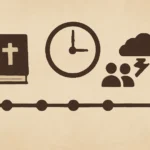
People often ask for a straightforward sequence of events. The biblical writers provide a framework that many readers find coherent when separated into stages, even if the exact timing remains uncertain. Here is a practical outline that captures the major milestones commonly discussed across traditions. Note that some steps may be understood differently in various schools of interpretation.
Inaugurated era: The first coming of Christ marks the beginning of the last age. Jesus’ life, death, and resurrection inaugurate the longing expectation that God’s kingdom is breaking in, even as the current order remains. This era includes the expansion of the church and the spread of the gospel to all nations.
Present church age: The ongoing period during which believers await the culmination of all things. This is often described as a time of mission, persecution, mercy, and spiritual formation. The gospel goes forth, miracles occur, and communities are formed to bear witness to Christ.
Rapture and/or reunion (contentious in some traditions): For many readers, a distinct event where believers are caught up to be with the Lord. In other traditions, this is subsumed under the single return of Christ. Either way, the call to readiness remains central: watchfulness and steadfast faith in the Lord are recurring themes.
Tribulation (great distress and divine judgment): A period characterized by intense pressure, trial, and the testing of faith. The duration and nature of tribulation are debated, but its presence in the prophetic narrative signals a turning point toward ultimate fulfillment.
Antichrist and the abomination of desolation: A symbolic and often literalized figure or set of powers opposing God and profaning sacred space. This stage raises questions about the opposition to God in political, religious, and cultural realms.
Second Coming of Christ: Christ returns in glory, judges, and executes righteous justice. This event ushers in the closing conflicts and the ultimate defeat of evil, while simultaneously inaugurating a new order rooted in God’s authority.
Millennium (range of interpretations): Some traditions see a literal thousand-year reign of Christ on earth; others interpret the reign symbolically as the present age of the Spirit’s rule in the church. Debates focus on the nature, location, and duration of this reign.
Final Judgment (Great White Throne Judgment): All people are judged by God. The righteous are welcomed into eternity with God, and the wicked face separation from God. The order of this judgment emphasizes justice and mercy together as the Creator completes all that is begun in Christ.
New Heaven and New Earth and the eternal state: God makes all things new. Creation is renewed without corruption, and God dwells with humanity in a transformed, intimate relationship. This final phase closes the current age and opens the unending era of divine fellowship.
Consummation and praise: The eternal state is characterized by unhindered worship, fulfilled purposes, and perfect peace. Believers dwell in the presence of God, and creation participates in the fullness of life for which it was designed.
Within this sequence, two moments frequently highlighted are the Great White Throne Judgment and the Great Commission continuity after Christ’s return. The accuracy of exact timelines remains a matter of interpretation; the emphasis for readers is the moral and spiritual obedience that grows out of hopeful anticipation.
Practical guidance for reading prophecy today
Prophetic literature can be spiritually enriching when approached with care. Here are practical steps to study and apply biblical end-time material.
Start with the gospel context. Prophecy always points to the person and work of Jesus. Ground your reading in the life, death, and resurrection of Christ as the lens through which all eschatology is interpreted.
Study passages in their original context. Pay attention to audience, genre, and historical setting. The apocalyptic literature of Daniel and Revelation uses symbolic language with vivid imagery that requires careful interpretation.
Compare scripture with scripture. Let the broader witness of the Bible guide your understanding of specific prophetic passages. Cross-references can illuminate meaning and prevent over-interpretation of single verses.
Avoid date-setting. The biblical writers frequently invite readers to be ready rather than to predict specific dates. The charge to “watch” and “be ready” remains central across eschatological passages.
Recognize symbolic language. Numbers like 7, 12, and 666 carry symbolic weight. Interpret symbols in light of their biblical usage and the overall theological message rather than seeking a purely secular alignment.
Balance hope with responsibility. Eschatology should inspire mission, justice, and mercy now, not despair or fatalism. The practical fruits of faith—charity, humility, evangelism—often reflect the character of the age to come.
Respect diversity of views. Solid, faithful Christians can disagree on timing and sequence. Engage respectfully, study together, and maintain unity in essential beliefs about Jesus, salvation, and the goal of God’s work in history.
Symbolic elements and how to interpret them responsibly
Prophetic literature frequently uses symbols and visions that require careful handling. Here are some common motifs and sensible approaches to interpretation:
Beasts and horns: Often symbolize political powers or spiritual forces rather than specific modern governments. Look for consistent biblical patterns: power, deception, persecution, and the ultimate authority of God.
Numbers: The number 7 commonly signals completeness or perfection; 6 can imply imperfection; 666 is debated, but many scholars see it as a symbolic sign of counterfeit sovereignty rather than a precise numeric code.
Babylon and Zion: Metaphors for spiritual allegiance. Babylon frequently represents worldly systems opposed to God, while Zion stands for the people of God and his presence among them.
Judgment and mercy: The prophetic voice often holds intention toward both justice for wrongdoing and mercy for the repentant. A healthy reading preserves the tension between accountability and grace.
New creation motifs: The visions of a renewed heavens and earth emphasize restoration, peace, and the divine presence—rather than merely a destruction narrative.
In every case, interpretive humility matters. When symbols seem to point toward current events, it is wise to ask: Do we have a robust textual basis for this reading? Does it harmonize with the gospel’s core message? How would this understanding shape ethical behavior and hope for neighbors?
Differences across Christian traditions: a quick map
Understanding the distinct emphases helps prevent caricatures and promotes respectful dialogue. A brief map of the landscape:
Premillennialism (often linked with dispensationalism): Christ returns before a literal millennium; accompanying belief in a pre-tribulation rapture by some, with a focus on a future, bodily fulfillment of prophecies.
Amillennialism (often associated with historic or covenantal theologies): The Millennium is symbolic of Christ’s present rule through the Spirit in the church; no expectation of a literal thousand-year reign separate from the current age.
Postmillennialism: The world gradually moves toward Christian influence and righteousness, culminating in Christ’s return once a long period of peace and gospel expansion has occurred.
Idealist and Preterist harmonies: Emphasize timeless spiritual truths or fulfillment in the first century, respectively, offering a different lens on the same biblical material.
Across these views, Christians agree on central truths: Jesus is Lord, God’s promises endure, and the future holds the consummation of all things in a renewed creation. The variance lies in how, when, and where those promises unfold.
Below are some frequently asked questions and concise answers to help readers orient their study and reflection without getting overwhelmed by details.
Is there a universal timeline? Not universally agreed. There is a broad consensus about the major milestones (coming of Christ, judgment, new creation), but the order and timing are interpreted differently across traditions.
What is the purpose of end-time prophecies? They encourage vigilance, ethical living, and hope. They also invite communities to participate in God’s mission, standing firm against injustice while offering mercy and grace.
Does prophecy predict exact dates? Most mainstream scholars discourage precise date-setting, emphasizing readiness and faithful living over numerical forecasts.
How should we respond to controversial passages? Seek commentary from trusted scholars, study the text in context, and discuss with fellow believers. Sensible conversation often clarifies difficult points without compromising faith.
Ethical and practical implications for today
Even as readers engage the future-oriented portions of biblical prophecy, the present moment remains central. The practical implications include:
Hope and perseverance: A resilient faith that endures suffering, injustice, and disappointment by trusting in God’s ultimate renewal.
Moral urgency: The ethical call to live justly, love mercy, and walk humbly with God in light of the coming restoration.
Global and local witness: The Great Commission continues as the church awaits the new creation—embracing evangelism, mercy ministries, and community transformation as signs of the kingdom already present.
Pastoral care and discernment: Communities are encouraged to teach, shepherd, and disciple, helping people navigate fear, sensationalism, and biblical literacy.
Glossary of core terms related to the end times
Having a quick reference helps readers stay grounded. Here are concise definitions of frequently used terms, with emphasis on their biblical context.
End times — the period in history culminating in God’s final victory and the creation’s renewal.
Eschatology — the study and interpretation of last things and ultimate destinies.
Second Coming — Jesus Christ’s return in glory to judge the world and fulfill God’s promises.
Rapture — an event described in some eschatological frameworks where believers are caught up to meet the Lord; perspectives on its timing vary.
Tribulation — a time of testing and judgment preceding Christ’s return in many timelines.
Antichrist — a figure or influence that opposes Christ and deceives people; commonly depicted as a culmination of apostasy and political power.
Armageddon — symbolic or literal final conflict between forces of good and evil under God’s sovereignty.
Millennium — the reign of Christ described in Revelation 20, interpreted in multiple ways (literal vs symbolic; present vs future).
Great White Throne Judgment — the final judgment where the dead are judged based on their deeds before God.
New Heaven and New Earth — the ultimate renewal of creation where God dwells with his people forever.
Closing reflections: how to approach these chapters with humility and faith
The biblical timeline of the end times invites us into a posture of faithful anticipation rather than anxious speculation. It invites believers to a robust life of worship, service, and hope. In reading prophecy, let the text shape your character: cultivate courage in the face of suffering, maintain integrity in a world marked by competing visions of power, and extend mercy to the vulnerable while proclaiming the good news of Christ’s reign. Whether one leans toward a futurist timeline, a symbolic interpretation, or a mix of both, the enduring goal remains the same: to honor God, love neighbor, and participate in the renewal of all things through Jesus Christ, who is Lord of history and the future beyond history.








Leave a Reply