Genesis 12:1-7: Meaning, context, and practical lessons
Genesis 12:1-7: Meaning, context, and practical lessons
Genesis 12:1-7 marks the beginning of Abram’s calling and the promise through which God intends to bless many peoples.
The passage is short, but it carries major weight in the biblical story. God tells Abram to leave his country, relatives, and father’s household and go to a land that God will show him. In return, God promises to make Abram into a great nation, bless him, make his name significant, and use him as a channel of blessing to all families of the earth.
Abram responds by setting out. He does not receive a complete map or a detailed explanation of every stage ahead. He travels through Canaan, reaches Shechem, and builds an altar to the Lord. Genesis 12:1-7 therefore brings together calling, trust, obedience, promise, worship, and mission.
The passage opens with God’s command to Abram: leave the familiar places and relationships associated with his former life. The wording moves from the broadest setting to the most personal one: Abram is to leave his country, his people, and his father’s household. This is not merely a change of address. It is a call to place his future under God’s direction rather than under the security of his established family system.
God does not first give Abram a destination that he can evaluate for himself. Instead, the destination is revealed as part of an ongoing relationship. Abram must begin moving before he knows all the details. The command is followed by several promises, showing that God’s initiative comes before Abram’s response.
The promises include a great nation, personal blessing, a great name, protection, and a role in blessing others. God also says that those who bless Abram will be blessed, while those who treat him with contempt will face judgment. The final promise expands the scope beyond Abram’s immediate household: all the families of the earth will be blessed through him.
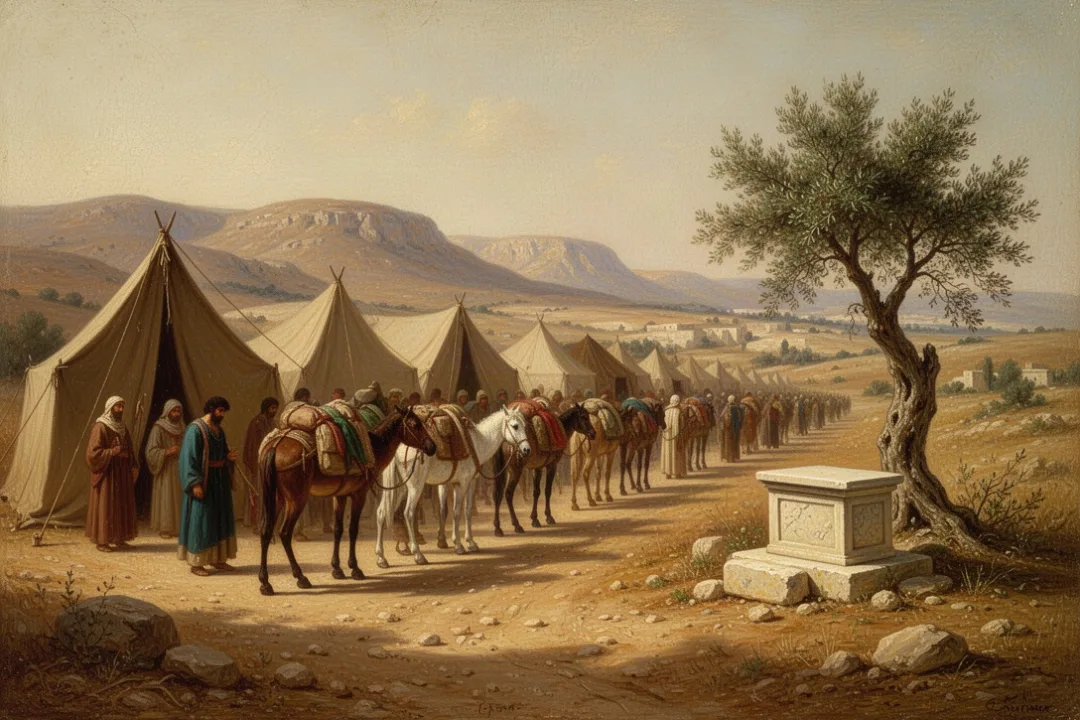
Abram then travels with Sarai, his wife, and Lot, his nephew, along with their possessions and the people connected to their household. He passes through the land of Canaan until he reaches Shechem, near the great tree of Moreh. There, the Lord appears to him and identifies the land as the land that will be given to his offspring. Abram builds an altar, expressing worship in the place where God has spoken.
Who Abram was when God called him
Abram was not introduced in Genesis 12 as a young man beginning with no responsibilities. He was already part of a family, married to Sarai, and established within a household. The preceding chapters locate his family in the ancient Near East and explain that Sarai was unable to have children. That detail becomes significant because God promises that Abram will become a great nation despite an apparent obstacle to having descendants.
Genesis 11:31 describes Abram’s family leaving Ur of the Chaldeans and settling in Harran. Genesis 12:4 gives Abram’s age as 75 when he departed from Harran. His obedience therefore should not be pictured as a youthful adventure detached from practical costs. He leaves with a wife, household, possessions, and family ties. The decision affects more than one person.
Abram’s name is later changed to Abraham in Genesis 17:5. In Genesis 12, however, he is still called Abram. Using the name “Abraham” when discussing later events is common, but keeping “Abram” here helps preserve the setting and sequence of the story.
The passage also makes clear that Abram is not chosen because he has already demonstrated a record of extraordinary achievements. The text emphasizes God’s call and promise. Abram’s faith becomes visible through his response, but the story begins with God choosing to act and speak.
Why God tells Abram to leave
Leaving his country, people, and father’s household means that Abram must loosen his dependence on the structures that normally provide identity and security. His homeland represents familiar territory. His people represent social belonging. His father’s household represents inheritance, protection, and continuity. God’s command reaches into each of these areas.
The command does not mean that every faithful person must abandon family or move to another country. Genesis 12:1-7 describes a particular call to a particular person in the biblical story. Its central lesson is not that geographical relocation is automatically more spiritual. The passage shows that faith may require releasing control over familiar forms of security when God gives a clear direction.
Abram is told to go to a land God will show him. The promise is therefore relational rather than merely geographic. Abram’s confidence cannot rest only on knowing where he is going; it rests on knowing who has called him. The destination matters, but the relationship with God is the foundation of the journey.
The command also separates Abram’s future from the patterns of the surrounding world. Genesis 11 has just described humanity’s attempt to make a name for itself through the building of Babel. In Genesis 12, God promises to make Abram’s name great, not as an invitation to personal vanity but as part of a larger purpose. Abram’s significance will come through receiving and transmitting God’s blessing.
Central idea: Abram does not leave because he has complete information. He leaves because God has spoken and attached a promise to the call.
What the promises in Genesis 12:2-3 mean
God’s promises to Abram are closely connected. They should not be treated as isolated benefits, because each one contributes to a larger purpose.
“I will make you a great nation”: Abram’s future will include a people, even though his household currently lacks the children needed for ordinary family continuity.
“I will bless you”: God promises favor and provision, but blessing in this passage is not limited to comfort, wealth, or an easy life.
“I will make your name great”: Abram will become widely significant because of God’s work through him, not because he manufactures his own reputation.
“You will be a blessing”: God’s gift to Abram is intended to move through him toward other people.
Protection from hostility: God distinguishes between those who honor Abram and those who treat him with contempt, placing Abram’s future under divine care.
Blessing for all families of the earth: Abram’s calling has a global horizon. His story is not only about one man’s private relationship with God.
The most important movement is from being blessed to becoming a blessing. God does not bless Abram merely so that Abram can accumulate advantages. The blessing has a purpose that extends beyond his own household and descendants.
The phrase about all families of the earth is also significant because it prevents a narrow reading of the passage. Abram is selected for the sake of a wider mission. His family will have a distinctive place in God’s plan, but that distinctiveness is directed outward. The promise anticipates the later biblical emphasis on God’s concern for the nations.
Different Christian traditions connect this promise to later biblical developments in different ways, including the promises to Israel and the blessing of the nations through Jesus Christ. Genesis 12 itself establishes the foundational pattern: God forms a people through whom blessing will reach beyond that people.
How faith appears in Abram’s response
Genesis 12:4 states that Abram went, and the brief wording gives the response unusual force. The text does not record a long debate, detailed negotiation, or list of conditions. Abram’s faith is shown through action. He hears the call and begins the journey.
That does not mean the journey is effortless. Leaving a known home creates uncertainty. Abram still has to travel, manage possessions, care for a household, and enter a land where other people already live. Obedience does not remove every practical problem. It changes the direction in which Abram faces those problems.
The passage also shows that obedience can be communal. Sarai and Lot travel with Abram, along with the people and possessions associated with his household. Abram’s decision affects the people around him. Faith is personal, but it is rarely isolated from family, work, leadership, or community.
Hebrews 11:8 later reflects on Abram’s response and emphasizes that he went out without knowing the final destination. That later reference helps clarify the nature of the faith described in Genesis 12: trust does not require complete visibility. It requires confidence in God’s character and promise sufficient to take the next faithful step.
At the same time, Genesis 12 should not be used to excuse reckless decisions. Abram’s response follows a divine call within the biblical narrative. For readers today, wisdom includes prayer, Scripture, counsel, responsibility, and careful attention to circumstances. Faith is not the same as refusing to think.
Why the land of Canaan matters
When Abram arrives in Canaan, the land is not empty. Genesis 12:6 specifically notes that the Canaanites were present. This detail keeps the promise grounded in real history and real tension. Abram reaches the promised land, but he does not immediately possess it in a simple or complete way.
The Lord appears to Abram at Shechem and identifies the land as the land that will be given to his offspring. The promise is future-oriented. Abram is standing in the land, yet the full realization of the promise lies beyond his immediate experience.
This distinction helps readers understand biblical promises that unfold over time. Arrival is not always the same as completion. Abram reaches a significant place, but he still lives by faith in what God has said about the future.
The reference to the Canaanites also reminds the reader that God’s purposes occur amid existing peoples and political realities. The passage does not present the land as an abstract spiritual metaphor. It is a concrete place involving households, communities, resources, and contested claims. Any interpretation should take that historical setting seriously.
Later biblical books develop the land promise in detail. Genesis 12:1-7, however, introduces it as part of God’s initial promise to Abram. The passage emphasizes the promise more than the mechanics of its eventual fulfillment.
What Abram’s altar teaches about worship
Abram builds an altar after the Lord appears to him. The altar is a visible response to revelation. Abram does not simply continue traveling as though the promise were an interesting idea. He marks the encounter through worship.
The altar also shows that Abram’s journey is not only about obtaining land or securing a future for his family. His response is directed toward God. Worship keeps the promise centered on the Promiser, rather than allowing the promised benefits to become the main object of attention.
Genesis 12 mentions more than one location associated with Abram’s worship. After reaching the land, he builds an altar at Shechem, and then travels toward the area east of Bethel, where he pitches his tent with Bethel to the west and Ai to the east. There he builds another altar and calls on the name of the Lord, as Genesis 12:8 records.
These movements suggest a pattern of traveling, receiving God’s direction, and responding through worship. Abram’s faith is not only expressed at the moment of departure. It is renewed along the way. The altar becomes a reminder that each stage of the journey remains connected to God’s presence and promise.
How Genesis 12:1-7 connects with the rest of Scripture
Genesis 12 is a turning point in the book of Genesis. Earlier chapters focus on creation, human rebellion, the flood, the nations, and the scattering connected with Babel. With Abram, the story narrows to one person and one family while simultaneously opening toward all nations.
This movement can seem surprising: why focus on one family if God’s purpose concerns everyone? Genesis 12 provides the answer. God chooses Abram as the means through which blessing will extend outward. The particular calling serves a universal purpose.
Genesis 12 also begins a series of promises that are developed in later passages. Genesis 15 addresses God’s covenant with Abram in another setting. Genesis 17 expands the covenant sign and records the name change from Abram to Abraham. Genesis 22 again emphasizes the promise concerning descendants and the blessing of the nations.
Later biblical writers return to Genesis 12 when discussing faith and God’s plan. Paul refers to the promise that the nations would be blessed in relation to the gospel in Galatians 3. The New Testament also presents Jesus as the one through whom blessing reaches the nations, connecting that mission with the promise given to Abraham.
These later connections do not erase the original meaning of Genesis 12. They show how the passage functions as a foundation within the larger biblical storyline. Abram’s call is both a personal event and the beginning of a much wider redemptive purpose.
Practical lessons and common mistakes when reading the passage
Genesis 12:1-7 can be applied wisely when its original setting is respected. The following lessons arise from the passage without turning it into a formula for guaranteed success.
Obedience may begin before every detail is visible. You may know the next responsible step without knowing the entire outcome.
God’s gifts are meant to serve others. Blessing should lead to generosity, hospitality, justice, encouragement, and faithful service rather than self-absorption.
Faith can involve real costs. Abram’s response affected location, relationships, possessions, and security. Following God should not be measured only by convenience.
Worship belongs in the middle of the journey. Do not wait for every promise to be fulfilled before acknowledging God’s faithfulness.
Patience is part of trust. Abram entered the land, but the full promise concerning his descendants developed over time.
Use discernment with claimed spiritual guidance. Not every strong feeling or attractive opportunity is a divine command. Test decisions through Scripture, prayer, wise counsel, and responsible action.
Several common mistakes can distort the passage:
Reducing blessing to material prosperity: Genesis 12 includes provision and protection, but its main emphasis is God’s purpose and the blessing of others.
Making Abram the hero instead of focusing on God: Abram acts faithfully, yet the repeated “I will” language places the initiative with God.
Assuming every believer receives the same call: The specific command to leave Abram’s homeland belongs to his unique role in salvation history.
Ignoring the nations: The promise is not simply about one family’s private success. It points beyond Abram to all families of the earth.
Expecting immediate results: Reaching Canaan did not mean every part of the promise was instantly visible.
Using the passage to justify impulsive choices: Biblical faith is purposeful trust, not careless action without wisdom or accountability.
Practical question: Ask not only, “What am I hoping God will give me?” but also, “How could God use what I receive to serve other people?”
What Genesis 12:1-7 means for personal faith
The passage invites readers to examine what they treat as secure. Abram had to leave familiar geography and inherited relationships, but the deeper challenge was to trust God with his identity and future. That challenge can appear in different forms today: surrendering control, changing a harmful pattern, accepting a demanding responsibility, or remaining faithful when results are delayed.
Personal application should begin with God’s character rather than with a demand for a dramatic experience. The text does not promise that every believer will receive a spectacular sign or a unique destination. It does show that God is faithful to his purposes and that genuine trust produces movement, endurance, and worship.
The passage also corrects a self-centered understanding of faith. Abram receives a promise, but the promise is larger than Abram. If God gives influence, resources, opportunity, or recognition, those gifts carry responsibility. Being blessed and being a blessing belong together.
Finally, Genesis 12:1-7 gives hope when the future is incomplete. Abram sees only part of what God has promised. He lives between the initial call and the full fulfillment. That position is familiar to many believers. The text encourages steady faithfulness: take the next obedient step, remember the promise, and keep worship at the center of the journey.
Questions for studying Genesis 12:1-7 more closely
Careful study can move beyond a general impression of “Abram had faith.” Consider the details and ask how they work together. Who speaks first? What does God promise before Abram acts? What does Abram leave, and what does he take with him? Where does he go? What does he do when God appears? Which promises concern Abram personally, and which extend to other families?
It can also help to read Genesis 11:27-32 before Genesis 12:1-7 and then continue into Genesis 12:8-20. The earlier passage supplies family context, while the following verses show Abram’s continuing movement and the challenges that arise soon after his arrival. Reading the surrounding material prevents the call from becoming an isolated inspirational quotation.
For a focused study, write the passage’s actions and promises in separate columns, without using a table in your notes if you prefer a simple list. The actions include leaving, going, passing through the land, arriving at Shechem, and building an altar. The promises include descendants, blessing, a significant name, protection, and blessing for the nations. This contrast makes the structure clear: Abram acts, but God establishes the future.
Genesis 12:1-7 therefore remains a foundational passage about trusting God beyond the familiar, receiving blessing with responsibility, and worshiping while the promise is still unfolding. Its central focus is not the romance of travel or the pursuit of personal greatness. It is God’s faithful purpose, beginning with one called man and extending toward all the families of the earth.
Frequently asked questions
What is the main message of Genesis 12:1-7?
The main message is that God calls Abram to leave his familiar surroundings, promises to make him a great nation, and intends to bless all peoples through him. Abram responds by going, even though he does not know the complete destination. The passage emphasizes God’s initiative, human trust, and the outward purpose of divine blessing.
How old was Abram when he left Harran?
Genesis 12:4 says Abram was 75 years old when he departed from Harran. This detail shows that the call came at a mature stage of life, after Abram had established family and household responsibilities. His response was not a youthful impulse but a significant act of trust involving Sarai, Lot, possessions, and the people connected with his household.
Does Genesis 12:1-7 mean every Christian should move to a new place?
No. Abram received a specific call connected to his unique role in biblical history. The passage does teach that faith may require surrendering control and taking a responsible step without knowing every future detail. Applying it today requires discernment, prayer, Scripture, wise counsel, and practical responsibility rather than assuming every major move is commanded by God.
What does “you will be a blessing” mean?
It means Abram’s blessing was intended to benefit others, not remain a private advantage. His descendants would have a role in God’s wider purpose for the nations. For believers, the principle encourages generosity, service, hospitality, and responsible use of influence. Receiving God’s goodness and becoming a source of goodness to others belong together.












Leave a Reply