Israel in the Bible: Origins, Names, and Its Biblical Significance
Israel in the Bible: Origins, Names, and Its Biblical Significance
Across the biblical canon, the figure and the people often known as Israel occupy a central and multi‑layered role. In Scripture, the word can refer to a person (the patriarch Jacob, whose new name becomes Israel), to a people (the descendants of Jacob, later called the Israelites or the people of Israel), or to a land (the land of Canaan or the land of Israel). Because the Bible presents a dynamic history in which divine promises intersect with human choices, the term Israel accumulates layers of meaning over time. This article traces the origins, the diverse names and designations, and the deep biblical significance of Israel within the biblical narrative, highlighting how the concept functions as a framework for faith, identity, and expectation from Genesis to the prophetic books and beyond.
The story of Israel begins with a call and a covenant. In the opening chapters of Genesis, Abram becomes the focal point of a promise that will shape the trajectory of nations. God’s pledge to Abram—“I will make you into a great nation, and I will bless you” (Genesis 12:2)—forms the seedbed for what will become Israel. This patriarchal arc moves from Abram to Isaac and then to Jacob, whose life bears a decisive turning point for the people that will bear his name.
Patriarchal foundations
Central to the origins are the three patriarchs, often framed as the founders of a people and a land. The journey is not merely genealogical but theological: a covenantal relationship between the God of Israel and the families that will become a nation. Important moments include:
God’s call to Abram, promising blessing to him and to “all the families of the earth” through him.
The sign of the covenant: Circumcision, marking a people set apart for divine purposes.
The promise extended to Isaac and then to Jacob, who, after a nocturnal encounter, receives a new name—Israel—signaling a vocation that involves both striving with God and divine engagement.
From this point, the Bible emphasizes that the descendants of Jacob—the Twelve Tribes of Israel—will become a people connected to a land and a divine mission. The name Israel itself emerges as a symbolic and literal mark of this new identity: a nation chosen to carry a blessing and to bear witness to the one God who called them out of the surrounding nations.
The Twelve Tribes and the formation of a people
Jacobs’ twelve sons become the progenitors of the tribes that comprise Israel as a people. The biblical text often speaks of the “Twelve Tribes of Israel,” a phrase that encapsulates both kinship and territorial allocation. The sons—Reuben, Simeon, Levi, Judah, Dan, Naphtali, Gad, Asher, Issachar, Zebulun, Joseph, and Benjamin—each contribute a tribal identity, while the stories of Joseph and his sons Ephraim and Manasseh add another layer to the national mnemonic. In this sense, Israel is both a genealogical reality and a political‑historical community, one that will later encounter exile, conquest, and revival while preserving a sense of covenant loyalty to Yahweh.
Exodus, Sinai, and the covenant at the foot of the mountain
The narrative of Israel as a people formally expands when the Lord delivers them from slavery in Egypt. The Exodus becomes the foundational act of national identity, a divine rescue that culminates at Sinai. There, the Law is given, establishing a framework of worship, justice, and communal life. The presence of the Ark of the Covenant, the rituals, and the construction of the Tabernacle illustrate a people who are not merely a political entity but a covenant community shaped by divine legislation and holy worship.
From Sinai onward, the people of Israel learn to live as a theocratic nation—with leaders, priests, judges, and prophets all playing roles in guiding the community. The covenant at Sinai is not only a code of conduct but a living relationship in which God’s presence dwells among Israel in their midst. The idea of being “a people for God” becomes a sustaining motif that recurs throughout the biblical record, even when the people wander or falter.
Land promises and the call to possess the inheritance
A recurring element in the origins of Israel is the land promise. The biblical authors describe a land “flowing with milk and honey” as the inheritance of the patriarchs’ descendants. This land is not merely a geographic prize but a stage for the demonstration of divine faithfulness: a place where the people will grow into a righteous nation, where justice under God can flourish, and where the temple and city worship can locate the central expression of devotion to the God who called them. The land becomes a geographic symbol of the broader theological principle that Israel is called to be a sign and instrument of blessing to the nations.
Names, terms, and the semantic breadth of Israel
One of the distinctive features of the biblical portrayal is the variety of names and designations that surround Israel. Each term carries nuance—connotations of familial origin, national identity, territorial claim, divine vocation, or prophetic hope. These linguistic shades reveal how readers in ancient times understood the scope and purpose of the people and the land.
From Jacob to Israel: the transformation of a name
In Genesis, Jacob earns the name Israel after a nocturnal encounter with a divine being. This event—often described as a struggle—conveys a dual sense of confrontation with God and a new vocational tract. The phrase “the God of Israel” begins to appear as a personified reference to the supreme God’s relationship with the people who will bear the cardinal name. In this sense, Israel begins as a personal designation for Jacob but rapidly expands into the collective term for his descendants and their shared mission.
The people and the land: Israel as a people, a nation, and a territory
As the narrative unfolds, the term Israel becomes multi‑faceted in its usage:
Israel as the collective descendants of Jacob, i.e., the Israelites or the people of Israel.
Israel as the land that God promised to give to these people; in many biblical books, this is the central setting for covenantal life.
Israel in the prophetic and poetic literature as a symbol of the community’s faithfulness or unfaithfulness to the covenant, and as a locus of divine judgment and future restoration.
Other names and regional designations
Beyond the core terms, the biblical corpus often refers to the land and its people through additional designations that reflect historical, geographical, and theological dimensions. Some of these terms include:
Canaan—the broader ancient Near Eastern territory that gradually comes to be identified with the land promised to the patriarchs and associated with Israel.
Judah and Israel—in the period after the united monarchy, the kingdom splits into two political entities: the northern kingdom Israel, and the southern kingdom Judah.
Zion and Jerusalem—terms that often symbolize the city’s sacred space, God’s throne, and the center of worship, while also representing the hope of restoration in prophetic literature.
Land of Israel or Eretz Israel—a phrase that emphasizes the geography tied to covenantal faithfulness and divine promise.
The importance of Israel in Scripture emerges in several interconnected strands. It is not merely a historical account of a people and their land, but a theological storyline about a covenant partner chosen by God, the duties associated with that calling, and the ultimate purposes that extend to all nations.
From the beginning, Israel is portrayed as a covenant community designed to be a channel of blessing for all peoples. This vocation is not only about geographic territory; it is about a relationship with the living God and a mandate to reflect divine wisdom, justice, and mercy. The repeated refrain that God will bless Israel so that these blessings may spill over to the nations frames the biblical testimony as a drama of mission and witness. The term Israel thus embodies a double responsibility: to remain faithful to the covenant and to be a light that makes God’s character visible to the surrounding cultures.
Law, worship, and the sacred space
Central to the biblical understanding of Israel is the arrangement of law and worship that binds the people to God. The coastal plains and hill country of the land of Israel host a distinctive pattern of feasts, sacrifices, and rituals designed to shape character, community life, and social justice. The Temple in Jerusalem becomes the symbolic center of worship—a place where heaven and earth meet—and where the people’s offerings, prayers, and celebrations converge. The laws about holy days, clean and unclean living, charity, and justice reveal a holistic ethic: Israel is meant to embody covenantal holiness in every aspect of daily life.
Prophets, exile, and restoration: the testing of fidelity
The prophetic books confront Israel with the consequences of disobedience and the lure of idolatry. When fidelity fails, the biblical narrative tends to describe punishment through exile—first the Assyrian captivity of the northern Israel, then the Babylonian exile of Judah.
In exile, the people remember their identity as the people of Israel, even far from the land.
Prophets call for repentance and promise a future restoration—often framed as a new covenant or a renewed relationship with God.
Return from exile and rebuilding become acts that demonstrate the resilience of Israel as God’s chosen instrument for divine purposes in history.
Geography and sacred geography: the land, the city, and the temple
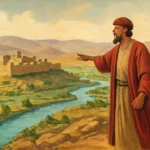
Geography in the biblical narrative is more than place; it is a language of meaning. The land of Canaan or Israel is described as a gift and a test, a setting where people live in relation to God’s law and to one another. The city of Jerusalem stands at the intersection of political power, religious life, and messianic expectation. The concept of Zion often conveys the sense of divine presence and leadership—the place where God’s will governs and where humanity experiences the possibility of renewal. The landscapes—mountain passes, fertile valleys, deserts, and rivers—are not merely physical backdrops but elements that shape narrative arcs, ritual practices, and prophetic imagery.
Promised land as a sign of divine faithfulness and a proving ground for obedience.
Jerusalem as the theological heart of the nation; the Temple as the focal point of worship.
Zion as a symbol of communal identity, future restoration, and hope in prophetic literature.
Israel in biblical poetry and prophecy: a language of hope and question
The poetic and prophetic books provide some of the most vivid language about Israel. The Psalms often address the people in communal prayer, celebration, and lament, frequently using the language of Zion, the city of David, and the dwelling place of God. The prophets, meanwhile, speak with a prophetic cadence about covenant fidelity, social justice, and future kingdoms that honor the Lord. The prophetic perspective on Israel is not only about past glories or present failings; it also looks forward to a hope for renewal, a restoration of Jerusalem, and a reconstituted people whose hearts are turned toward God.
The Psalms celebrate the king, the temple, and the life of the people within the worshiping community of Israel.
The prophets confront idolatry, social injustice, and neglect of the vulnerable, calling Israel back to covenant faithfulness.
Messianic expectation emerges in prophetic literature, with a longing for a ruler from the line of David who will bring peace and righteousness to Israel and the world.
From ancient identity to enduring memory: the post‑biblical and theological resonance of Israel
Even after the events of antiquity, the biblical portrayal of Israel leaves a lasting imprint on both Jewish and Christian thought. The memory of the patriarchs, the exodus, the giving of the law, the temple, the exile, and the hope of restoration continues to shape theological reflection, liturgy, and ethics. The people and the land are for many readers an ongoing symbol of divine faithfulness and human responsibility. In this sense, the biblical narrative of Israel functions not merely as a historical account but as a living conversation about the purposes of God, the meaning of covenant, and the possibility of renewal for humanity as a whole.
Key themes that recur in discussions of Israel in the Bible
As readers move through the biblical books, several themes recur with particular clarity, helping to organize the complex story of Israel.
Covenant as a binding relationship that defines identity and obligation.
Land and exile as two sides of the same theological coin: place of blessing and possibility, and place of judgment when faithfulness wanes.
Worship as the central expression of allegiance to God, with the temple, sacrifices, and liturgical rites shaping daily life and public policy.
Prophecy as a voice of critique and hope, challenging Israel to stay faithful and to look toward future restoration.
Messianic expectation as a horizon beyond the immediate political realities of the ancient world, pointing toward a future in which God’s purposes for Israel extend to all nations.
Israel in the biblical narrative: a broad spectrum of meanings
One of the strengths of the biblical portrayal is its capacity to accommodate multiple, sometimes overlapping meanings of Israel without collapsing them into a single definition. This flexibility reflects a long and layered tradition in which a person named Israel becomes a people, a land, and a vocation. The descendant of Jacob becomes the recipients of divine promises; the geography of the land of Canaan becomes the stage on which the drama of faith is enacted; and the prophetic voice pushes the community toward a future that fulfills the deepest hopes of the covenant.
As a person, Israel is the name given to Jacob after his struggle with a divine being, signaling a life marked by both wrestling and blessing.
As a people, Israel collects the descendants of Jacob, organized into the Twelve Tribes, whose history is told from exodus to exile and back to restoration.
As a land, Israel designates the territory promised to the patriarchs, the historic homeland that becomes the focal point for worship, law, and national identity.
As a concept within the prophetic imagination, Israel represents faithfulness to God, readiness for divine renewal, and the hope that the nation will serve as a beacon for the world.
In sum, the biblical figure of Israel is not a single, static category but a rich composite of identity markers—genetic descent, divine election, geographic location, and a mission to model the righteous order of God’s kingdom on earth. This layered understanding helps explain why the term remains resonant across centuries and religious traditions. It also clarifies why biblical authors repeatedly return to stories of transformation—both personal and communal—as the people move closer to the fulfillment of their calling.
For readers today, the biblical portrait of Israel invites careful attention to language and intention: to recognize when the text speaks of a person who becomes a people, a land that embodies divine purpose, or a covenantal vocation that remains meaningful for later generations. In this way, the biblical presentation of Israel continues to offer not only historical insight but also a resource for reflection on identity, responsibility, and hope in faith communities around the world.










Leave a Reply