“Goodness and mercy shall follow me” is the promise that God’s faithful care accompanies his people throughout life. The phrase comes from Psalm 23:6 in the King James Version, the closing assurance of David’s well-known song about the Lord as a shepherd.
Psalm 23 does not describe a life without danger, grief, or uncertainty. Instead, it presents God as the one who provides, leads, restores, protects, and remains present. The final verse gathers those themes into a confident statement about God’s continuing kindness and the believer’s lasting relationship with him.
Where “goodness and mercy shall follow me” appears in the KJV
The phrase appears in Psalm 23:6, the last verse of the psalm. The King James wording uses “follow me,” while many modern translations use language such as “pursue me” or “will follow me.” These different renderings point to the same central idea: God’s goodness and covenant mercy actively accompany the person who trusts him.
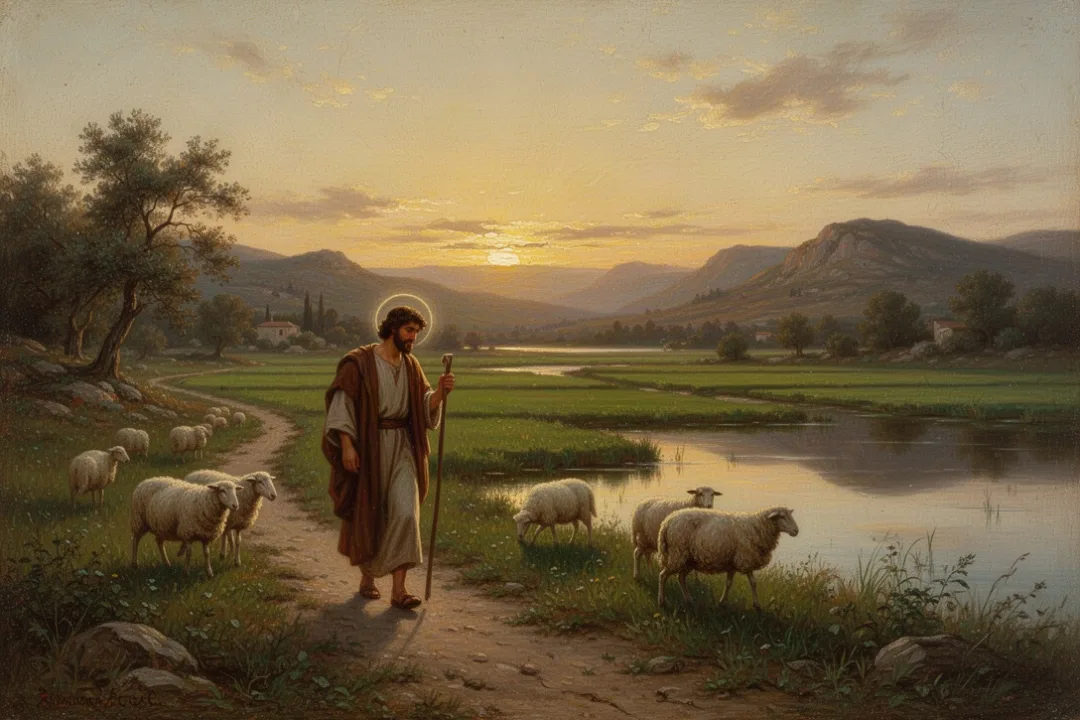
Psalm 23 is traditionally associated with David, who is identified at the beginning of the psalm as its speaker or author. David presents himself as a sheep under the care of a shepherd. That image would have been especially meaningful to him because he had worked as a shepherd before becoming king.
The psalm moves through several settings: green pastures, quiet waters, dark valleys, a table prepared in the presence of enemies, and finally the house of the Lord. Each setting adds a different dimension to God’s care. The closing phrase is not an isolated religious slogan; it is the conclusion of a carefully developed picture of trust under God’s guidance.
Key idea: In Psalm 23:6, “follow” suggests more than occasional help. It describes God’s steadfast goodness and mercy accompanying his people through every season of life.
What “goodness” means in Psalm 23:6
The word goodness refers to the beneficial, generous, and faithful character of God’s dealings with his people. It includes the ways God provides what is needed, gives wise direction, restores the weary, and brings good purposes through circumstances that may not feel good at the time.
Earlier images in Psalm 23 illustrate this goodness. The shepherd provides nourishment, brings the sheep to places of rest, and leads them along right paths. The language does not promise constant luxury or an easy route. It describes a God who knows what his people need and faithfully directs them toward life and safety.
God’s goodness is therefore more substantial than receiving everything you want. A shepherd does not simply let sheep wander wherever they choose. He leads them away from danger, finds suitable pasture, and keeps them together. In the same way, divine goodness can include provision, correction, restraint, patience, and guidance.
The Bible often treats goodness as part of God’s character, not merely as a series of pleasant events. Psalm 34, Psalm 100, and Psalm 107 all connect God’s goodness with his enduring love and dependable care. Psalm 23:6 invites you to interpret your life through that character, even when individual circumstances are difficult to understand.
What “mercy” means in the King James Version
In the KJV, mercy translates a Hebrew word often associated with steadfast love, covenant loyalty, and faithful kindness. It does not describe pity alone. It points to God’s commitment to show enduring love toward those with whom he has established a relationship.
This meaning helps explain why “mercy” appears beside “goodness.” God’s goodness speaks of the beneficial care he gives; his mercy speaks of the loyal love that remains constant. Together, the words portray a God who is both generous in action and faithful in relationship.
Mercy also matters because human beings are not perfectly faithful. Psalm 23 is a song of confidence, but it is not a claim that the speaker has earned flawless treatment from God. The assurance rests on the Lord’s character. His mercy covers weakness, failure, fear, and sin while calling the person back to trust and obedience.
That does not make wrongdoing insignificant. Biblical mercy is not permission to continue harming yourself or others. Rather, it means God does not abandon people when they need forgiveness, restoration, or correction. His mercy can confront sin while still offering a path back to him.
Why the KJV says goodness and mercy will “follow”
The word follow can sound passive in modern English, as if goodness and mercy merely trail behind a person. In Psalm 23:6, however, the underlying image is stronger. The idea includes pursuing, accompanying, or actively attending someone. God’s goodness and mercy are not distant qualities; they are presented as forces that remain close.
This wording creates an interesting contrast with the shepherd images earlier in the psalm. God leads the speaker beside waters and along right paths, while goodness and mercy follow behind. The picture includes care in every direction: God goes before his people as their guide, stays with them in danger, and continues after them with faithful kindness.
The phrase does not mean that every event will immediately appear good or merciful. A valley can still be dark. Enemies can still exist. Grief can still hurt. The promise is that hardship does not have the final authority over the believer’s life. God remains present and purposeful even when his work is hidden from view.
Some readers also understand “follow” as a picture of divine pursuit. Instead of imagining a person trying to catch up with God’s goodness, Psalm 23:6 presents God’s goodness as actively coming after the person. This offers particular comfort during seasons when you feel spiritually weak, confused, or unable to pray with confidence.
How Psalm 23 builds toward its final promise
The final statement becomes clearer when read alongside the rest of the psalm. Each earlier section contributes an aspect of the shepherd’s care:
The Lord provides: The shepherd image presents God as the source of what the speaker truly needs.
The Lord gives rest: Pastures and still waters represent refreshment, peace, and restoration.
The Lord leads: Right paths show that God’s guidance has a moral purpose, not merely a convenient destination.
The Lord stays present: In the dark valley, the speaker is not abandoned, even though danger is real.
The Lord protects: The rod and staff represent the shepherd’s authority, defense, and direction.
The Lord honors: The prepared table and anointing describe generous welcome in the presence of opposition.
The Lord receives: The closing reference to dwelling in the Lord’s house points toward lasting fellowship with God.
The structure moves from daily provision to ultimate belonging. The speaker is not merely asking God for occasional rescue. He is confessing that God is the source of life, the guide through danger, the host who welcomes him, and the one whose presence gives the future meaning.
That progression also prevents a shallow reading of the final verse. “Goodness and mercy shall follow me” does not stand alone as a promise of material success. It belongs to a psalm about relationship with the Shepherd. The greatest blessing is not simply what God gives but knowing that God himself remains near.
What the phrase means when life is difficult
Psalm 23 is often read at funerals, hospital visits, and moments of crisis because it speaks honestly about danger without surrendering to despair. The reference to a dark valley shows that the faithful person may walk through frightening circumstances. The promise is not that the valley will never appear, but that God will be with the person inside it.
When life is painful, the phrase can be understood in several related ways. God’s goodness may appear through the people who provide practical help, the strength to endure one more day, or the wisdom to make a difficult decision. His mercy may appear through forgiveness, unexpected comfort, or the assurance that failure has not placed you beyond his care.
Sometimes you recognize God’s goodness only after a season has passed. At other times, you may see no clear explanation for what has happened. Psalm 23:6 does not require you to call every painful event good. It invites you to trust that God’s character remains good even when your understanding is incomplete.
This distinction protects the verse from being used carelessly. Telling a grieving person that every loss is good can sound dismissive. A more faithful use of the psalm acknowledges sorrow while offering the deeper assurance that grief does not cancel God’s mercy or remove the person from his presence.
For seasons of grief: You do not need to deny pain to trust Psalm 23. The psalm makes room for fear and sorrow while affirming that God’s presence, goodness, and mercy remain with you.
How Christians apply Psalm 23:6 in daily life
The phrase can shape the way you interpret ordinary days. It encourages gratitude for obvious blessings, but it also trains you to notice quieter forms of care: a needed conversation, strength during responsibility, protection from a harmful choice, or patience to keep doing what is right.
Applying the verse does not mean forcing a spiritual explanation onto every event. It means developing a settled confidence that God is not absent from the details of your life. You can ask where his goodness is being shown, where his mercy is sustaining you, and how you should respond faithfully.
One practical way to use the verse is to reflect on it through prayer. You might name a current fear, remember a past instance of God’s help, and place the next step of your life in his care. Such prayer does not manipulate God into giving a particular outcome. It strengthens your awareness of the Shepherd who is already present.
The verse can also influence how you treat other people. Those who believe they have received mercy are called to extend patience, forgiveness, generosity, and compassion. The phrase is not only a source of private comfort; it can become a pattern for merciful behavior toward neighbors, family members, coworkers, and strangers.
Common mistakes when interpreting “goodness and mercy”
Psalm 23:6 is comforting, but several misunderstandings can weaken its meaning. Keeping the verse in its biblical context helps you avoid promises it does not actually make.
Assuming a trouble-free life: Psalm 23 includes a dark valley and enemies. God’s care does not eliminate every hardship.
Defining goodness only as wealth: The psalm emphasizes guidance, restoration, protection, and fellowship, not guaranteed financial prosperity.
Using mercy to excuse harmful behavior: God’s mercy forgives and restores, but it also leads people toward repentance and changed conduct.
Thinking “follow” means passive observation: The word carries the sense of active pursuit or accompaniment, not distant watching.
Separating the phrase from the Shepherd: Goodness and mercy are not impersonal luck or spiritual energy. They come from the Lord.
Expecting an immediate explanation: Trust in God’s goodness can exist before you understand why a particular event occurred.
Quoting the verse without offering compassion: In grief or crisis, the psalm should support honest care rather than silence someone’s pain.
These distinctions matter because biblical comfort should be both hopeful and truthful. Psalm 23 does not promise that you will always feel safe, understand God’s plan, or avoid loss. It promises something more durable: the Lord remains your Shepherd, and his faithful love is not limited to easy circumstances.
How “goodness and mercy” relate to Christian faith
For Christians, Psalm 23 is often read in light of the wider biblical picture of God’s saving work. The shepherd theme appears throughout Scripture and is applied to leaders, God’s people, and Jesus. In John 10, Jesus describes himself as the good shepherd who knows his sheep and lays down his life for them. That passage gives Christian readers a particularly personal understanding of God’s shepherding care.
The New Testament also connects mercy with forgiveness and new life through Christ. Christian confidence is not based on personal perfection. It rests on God’s grace, the work of Christ, and the continuing presence of God’s Spirit. Psalm 23:6 therefore speaks naturally to the Christian conviction that divine mercy follows believers not because they never fail, but because God remains faithful.
Different Christian traditions may explain the details of salvation, assurance, and perseverance in different ways. Still, the central comfort remains recognizable: God’s love is active, faithful, and personally directed toward his people. The verse calls for trust, gratitude, repentance, and hope rather than self-reliance.
It is also possible to appreciate Psalm 23 without using it as a formula for claiming a specific outcome. The psalm leads you toward God himself. Its deepest promise is not that every plan will succeed exactly as desired, but that the Shepherd will not abandon those who belong to him.
A simple way to meditate on Psalm 23:6
You can reflect on the verse slowly rather than treating it as a phrase to repeat mechanically. Read Psalm 23 in its entirety, then consider how the final verse gathers together the images that came before it. Ask how the Lord has provided, guided, restored, protected, or shown mercy in your life.
A short practice may help you connect the verse to a current situation:
Name the season: Identify whether you are experiencing rest, confusion, grief, responsibility, conflict, or change.
Recognize God’s care: Look for specific ways you have received guidance, strength, forgiveness, protection, or practical help.
Admit what hurts: Do not hide fear or sadness in order to sound faithful. Bring the honest situation before God.
Ask for the next step: Pray for wisdom to follow the Shepherd rather than demanding a complete map of the future.
Respond with faithfulness: Let received mercy shape the way you speak, decide, forgive, and serve.
This practice is not a way to earn God’s goodness. It is a way to notice and receive the care Psalm 23 describes. Some days your reflection may produce clear gratitude; other days it may simply help you remain present and trust God through uncertainty.
Why the ending points to lasting fellowship with God
The final image of Psalm 23 concerns dwelling in the Lord’s house. In the context of the psalm, this points beyond temporary assistance toward ongoing communion with God. The speaker does not want only the Shepherd’s gifts; he wants to remain in the Shepherd’s presence.
This ending gives “goodness and mercy” an eternal direction. God’s care is not limited to one rescue, one answered prayer, or one favorable season. It extends across the whole course of life and culminates in belonging with God. The believer’s hope is therefore larger than survival through present trouble.
For some readers, the language of dwelling in the Lord’s house also evokes worship, temple imagery, and the future hope of being with God. The exact emphasis may vary by tradition, but the basic meaning is clear: the destination of God’s mercy is fellowship, not merely relief from problems.
That is why the phrase continues to comfort people in very different circumstances. Someone beginning a new job, facing illness, grieving a loved one, raising children, or approaching death can find a relevant assurance in the same verse. The circumstances change, but the Shepherd’s character does not.
How to remember the promise without misusing it
When you repeat the phrase, keep all of Psalm 23 in view. Remember that the Lord leads as well as comforts, corrects as well as protects, and calls you to trust as well as promising his care. This fuller understanding keeps the words from becoming a vague affirmation detached from Scripture.
You can also let the phrase become a response to both blessing and difficulty. In blessing, it can produce humility rather than entitlement. In difficulty, it can produce hope rather than denial. In failure, it can lead you toward repentance and mercy rather than shame that makes you hide from God.
The KJV expression remains memorable because it joins three powerful ideas: the active presence of God, the goodness he gives, and the mercy he faithfully extends. Psalm 23:6 does not ask you to predict every event in your future. It calls you to trust the One who will be with you through all of it.
Frequently asked questions
What Bible verse says “goodness and mercy shall follow me”?
The phrase appears in Psalm 23:6 in the King James Version. It is the final verse of David’s shepherd psalm and expresses confidence that God’s faithful goodness and mercy will remain with the speaker throughout life. The verse also looks toward continued fellowship with God, described through the image of dwelling in the Lord’s house.
What does “follow” mean in Psalm 23:6?
“Follow” carries a stronger meaning than merely coming behind someone. The underlying biblical image suggests pursuing, accompanying, or actively attending a person. The wording presents God’s goodness and mercy as persistent companions. It emphasizes that divine care is not distant or occasional, even when someone is walking through danger, grief, or uncertainty.
Does Psalm 23:6 promise that Christians will not experience hardship?
No. Psalm 23 itself refers to a dark valley and the presence of enemies, so it recognizes that believers may face serious trouble. The promise concerns God’s presence and faithful care within those circumstances. It should not be used to guarantee wealth, constant comfort, or an explanation for every painful event.
How can I pray with Psalm 23:6?
Read the entire psalm, name the situation you are facing, and ask God to help you recognize his goodness and mercy in it. You can thank him for past guidance, bring your fears honestly, and ask for wisdom for the next step. The verse can guide a prayer of trust without requiring you to pretend that everything feels easy.









Leave a Reply