Hebrews 12:22 meaning, context, and Christian hope
Hebrews 12:22 meaning, context, and Christian hope
Have you ever read Hebrews 12:22 and wondered what “Mount Zion,” “the city of the living God,” and the angels mean? The verse uses vivid worship language to describe the believer’s spiritual standing through Jesus Christ. It does not merely point to a distant place in the future; it presents Christian faith as access to God’s heavenly presence.
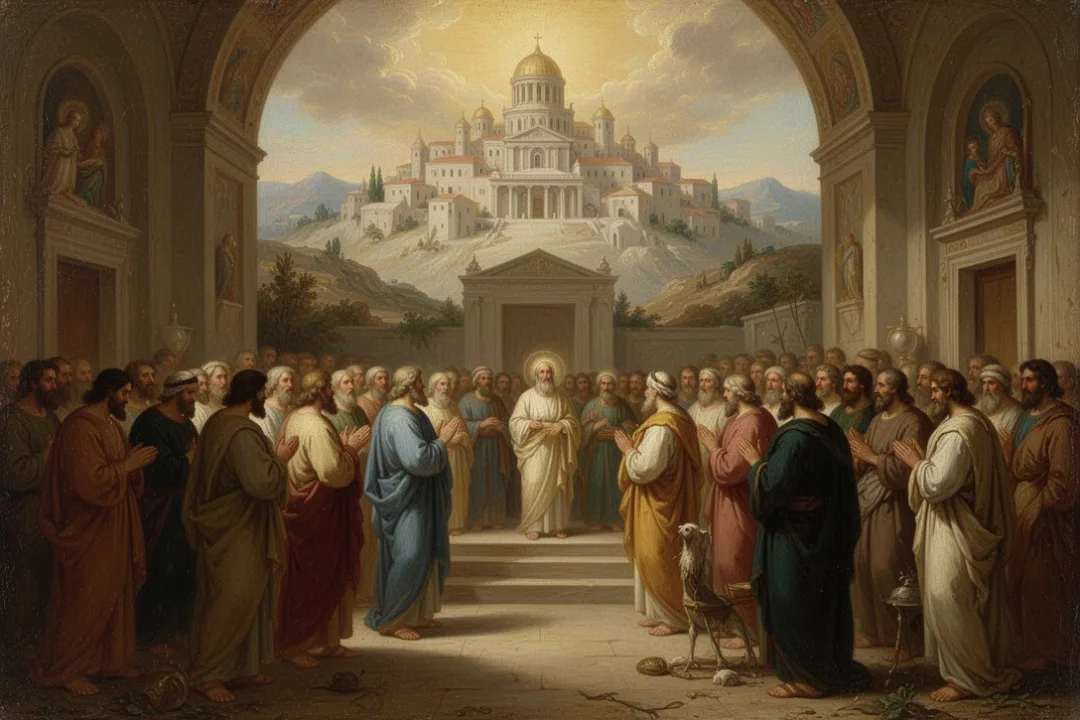
The verse appears in a larger contrast between two mountains. Mount Sinai represents the terrifying scene where Israel received the law, while Mount Zion represents the gracious approach to God made possible through Christ. Hebrews 12:22 assures Christians that they have come to a new covenant community centered on heavenly Jerusalem, joyful worship, and the presence of God.
What Hebrews 12:22 says about coming to Mount Zion
Hebrews 12:22 begins by telling its readers that they have come to Mount Zion. In the Old Testament, Zion was the hill associated with Jerusalem, Israel’s royal city, and the temple. It became a powerful symbol of God’s kingship, worship, protection, and future salvation.
The writer of Hebrews uses Zion in a deeper, heavenly sense. Christians are not being directed simply to a physical hill in earthly Jerusalem. They are being shown their spiritual destination and present relationship with God through the new covenant. By trusting in Christ, they are welcomed into the reality that Zion represents: God’s holy dwelling and the community gathered around him.
This language also carries a sense of movement. The readers have not earned their way to God by religious achievement. They have come because God has opened the way through Jesus, the mediator, whose work is explained in the verses that follow. The emphasis is on grace and access rather than personal merit.
Central idea: Hebrews 12:22 describes Christian worship as participation in the heavenly reality where God reigns, angels rejoice, and his redeemed people belong to him.
How Mount Zion contrasts with Mount Sinai
Hebrews 12:18-21 recalls Mount Sinai, where Moses encountered God when Israel received the covenant law. The scene was marked by fire, darkness, gloom, a storm, a trumpet blast, and a divine command that made the mountain untouchable. The people were overwhelmed by God’s holiness and feared direct contact with him.
That description is not meant to portray the Old Testament as bad or meaningless. Sinai revealed that God is holy and that sinful human beings cannot treat his presence casually. The law exposed the seriousness of sin and established the terms of Israel’s covenant relationship with God.
Hebrews then turns to Mount Zion. The contrast is not between an angry God and a kind God, as though God’s character changed. Instead, it is between two covenant settings and two ways of approaching God. Sinai emphasizes distance, fear, and the barrier created by sin. Zion emphasizes access, welcome, and fulfilled redemption through Christ.
The contrast can be seen in several ways:
Sinai is associated with a physical mountain that could not be touched; Zion represents heavenly access to God.
Sinai highlights fear before divine holiness; Zion highlights joyful worship in God’s presence.
Sinai is connected with the covenant given through Moses; Zion is connected with the new covenant established through Jesus.
Sinai emphasizes warning and separation; Zion reveals reconciliation without reducing the seriousness of holiness.
Hebrews 12:22 should therefore be read with reverence and confidence together. Believers do not approach God because holiness no longer matters. They approach because Jesus has dealt with sin and provides the access they could never create for themselves.
What “the city of the living God” means
Hebrews 12:22 calls Mount Zion the city of the living God. This phrase describes more than architecture or geography. A city is a place where people belong, live, gather, and share a common identity. The image presents God’s people as citizens of a community whose ruler is not an idol, a human king, or an abstract force, but the living God.
The word “living” matters because Scripture often contrasts the true God with idols that cannot speak, act, or save. The God of Hebrews is active, personal, and present. He gives life, judges rightly, welcomes his people, and keeps his promises. The heavenly city is therefore a place of real relationship with the living Creator.
The city also points to permanence. Earthly cities rise and fall, governments change, and human achievements eventually disappear. Hebrews directs attention to a kingdom that cannot be shaken, a theme developed later in the same chapter. Believers may live in temporary circumstances, but their deepest citizenship belongs to God’s enduring city.
This does not mean Christians should withdraw from ordinary responsibilities or treat the material world as worthless. The writer of Hebrews is encouraging faithful living within the world while reminding readers that their ultimate allegiance is elsewhere. The heavenly city gives them a stable identity when earthly security is uncertain.
Why Hebrews calls it heavenly Jerusalem
The phrase heavenly Jerusalem connects Hebrews 12:22 with the Bible’s broader hope for God’s restored dwelling among his people. Jerusalem was the historic center of Israel’s worship, but the heavenly Jerusalem represents the completed reality toward which God’s promises point.
Hebrews uses this language to show that salvation is larger than private forgiveness. God is creating a people, a city, and a renewed order under his rule. The believer is not simply rescued from guilt; the believer is brought into a holy community that includes God’s people across generations.
The phrase also helps explain why the writer can say believers have come to this city even while they still await the full completion of God’s promises. Christians live in an overlap between present faith and future fulfillment. They already belong to Christ and have access to God, yet they still wait for the final renewal of all things.
That tension appears throughout Hebrews. Believers have received God’s promises, but they continue toward the promised rest. They have confidence to draw near, but they still await the city that is to come. Hebrews 12:22 therefore encourages both present assurance and future hope.
Who the countless angels are in Hebrews 12:22
After naming heavenly Jerusalem, the verse describes an innumerable company of angels gathered in joyful assembly. The exact number is not the point. The language communicates a gathering too large for human calculation and marked by celebration rather than terror.
Angels appear throughout Scripture as servants and messengers of God. They worship him, carry out his purposes, and serve in ways that remain largely unseen. In Hebrews 12:22, their presence shows that the believer’s approach to God joins a heavenly congregation already centered on divine worship.
The atmosphere is significant. The scene is not a lonely spiritual experience or a private escape from the world. It is a vast gathering filled with praise and ordered around God’s throne. Christians are connected to worship that is larger than any local congregation, denomination, culture, or generation.
The joyful character of the gathering also corrects a distorted view of God’s presence. Reverence remains essential, but access to God through Christ is not presented as entry into hopeless dread. The angels’ celebration reflects the goodness of God’s saving work and the joy of belonging to his kingdom.
How Hebrews 12:22 relates to the people of God
The next phrase in the passage refers to the assembly of the firstborn who are enrolled in heaven. This points to the redeemed people of God as a registered or recognized community. The image resembles a citizenship record: those who belong to Christ have their names associated with God’s heavenly kingdom.
“Firstborn” does not mean that only a small group receives salvation. In biblical usage, the firstborn often carries the idea of honored status, inheritance, or special privilege. Hebrews presents believers as sharing in the inheritance that belongs to God’s family through Christ.
The phrase also emphasizes that faith is not merely individual. Each Christian has a personal relationship with God, but each also belongs to a larger people. The church is part of the heavenly assembly, even though its worship on earth is imperfect and divided by human limitations.
This truth can strengthen Christians who feel isolated. Your faith is not validated only by how confident you feel on a particular day. You belong to a people known by God, joined to Christ, and included in a worshiping community that reaches beyond what you can see.
What Hebrews 12:22 teaches about Christian access to God
The verse teaches that Christians can approach God with confidence because Christ has opened the way. Hebrews repeatedly urges believers to draw near, hold firmly to their confession, and continue in faith. That invitation rests on Jesus’ role as the perfect priest and mediator.
Confidence here does not mean casualness, self-importance, or the assumption that God owes us whatever we request. It means trusting God’s welcome because Jesus has provided the necessary basis for reconciliation. The believer’s access rests on Christ’s faithfulness, not on flawless emotions or performance.
This gives Hebrews 12:22 a practical significance for prayer. You do not need to manufacture a spiritual mood before approaching God. You may come with repentance, gratitude, confusion, grief, or need. Reverence shapes the way you come, but the gospel gives you reason to come.
The verse also challenges two opposite errors. One error is presumption, which treats God as though he were merely a tool for personal goals. The other is despair, which assumes that failure has placed God permanently out of reach. Hebrews offers a better path: humble confidence through Christ.
How Hebrews 12:22 fits with verses 23 and 24
Hebrews 12:22 is part of a continuous description rather than a self-contained statement. The following verses mention God as judge, the spirits of righteous people made complete, Jesus as mediator of the new covenant, and his blood speaking a better word than Abel’s blood.
These details explain why the heavenly city is a place of hope. God’s presence does not ignore justice. He is still the judge of all, and sin is still serious. Yet the passage also announces that Christ’s covenant provides cleansing and reconciliation instead of leaving sinners under condemnation.
The reference to Abel recalls Genesis 4, where Abel’s blood cried out after his murder. In Hebrews, Jesus’ blood speaks a better message. The passage does not provide a verbatim comparison of two voices, but its meaning is clear: Christ’s sacrificial death calls for mercy, forgiveness, and reconciliation rather than revenge.
The surrounding verses therefore keep the whole picture balanced:
God remains judge, so holiness and accountability are real.
Righteous people are made complete, showing that God finishes the work of salvation.
Jesus is the mediator, providing the relationship between God and his people.
Christ’s blood speaks a better word, offering the cleansing and peace that sinners need.
Reading verse 22 by itself can make the heavenly city seem like a general spiritual ideal. Reading it with verses 23 and 24 shows that the city is accessible because of God’s justice joined with Christ’s mercy.
What Hebrews 12:22 means for worship today
Hebrews 12:22 gives worship a larger horizon. When Christians gather to pray, sing, hear Scripture, celebrate communion, or encourage one another, they are not trying to persuade God to become present. Through Christ, they approach the God who is already present and whose heavenly worship never ends.
This does not mean every worship service will feel dramatic. Some gatherings are joyful, while others are quiet, distracted, or marked by sorrow. The reality described in Hebrews does not depend on the emotional intensity of a meeting. God’s faithfulness, not the strength of a particular feeling, defines Christian worship.
The verse also encourages churches to treat worship as more than entertainment or personal preference. Worship is participation in the praise of God’s people and angels. It should include joy, truth, repentance, reverence, gratitude, and care for others.
For personal worship, the passage can reshape prayer in several ways:
Begin with God’s character rather than only your immediate problems.
Remember that you approach through Christ, not through personal worthiness.
Bring both celebration and sorrow honestly before God.
Let heavenly hope give perspective to temporary circumstances.
Join private devotion to the life of the gathered church.
Practical ways to apply Hebrews 12:22
The verse becomes especially helpful when you connect its images with daily decisions. It teaches you where you belong, how you approach God, and what kind of future shapes Christian endurance. Application should grow from the passage’s meaning rather than from vague positive thinking.
Remember your deepest citizenship
Work, family, neighborhood, nationality, and culture all shape your life. None of them is unimportant, but none is ultimate for a Christian. When those identities become unstable, remember that your most secure belonging is in the city of the living God.
Approach God instead of hiding from him
Shame often encourages avoidance. Hebrews 12:22 points in the opposite direction. Confess sin honestly, ask for mercy, and return to God through Christ rather than waiting until you feel spiritually impressive or emotionally prepared.
Join the worship of the church
Because Hebrews describes a gathered people, the verse does not support a permanently isolated form of Christianity. Local churches are imperfect, but faithful participation helps you receive encouragement, correction, prayer, teaching, and practical care from other believers.
Let future hope shape present endurance
The heavenly city reminds you that present suffering and uncertainty do not define the whole story. This hope is not an excuse to ignore pain or injustice. It gives you a reason to remain faithful while seeking what is good and right in the circumstances before you.
Prayer prompt: Ask God to help you approach him with reverence, trust Christ’s mediation, and live as a citizen of the heavenly city while serving faithfully on earth.
Common mistakes when interpreting Hebrews 12:22
Several misunderstandings can arise when the verse is read without its context. Avoiding them helps preserve the balance between present access, future hope, holiness, and grace.
Assuming the verse is only about a physical location: Mount Zion points to the heavenly reality of God’s kingdom, not merely a modern geographical site.
Thinking Christians no longer need reverence: Access through Christ does not make God ordinary or holiness irrelevant.
Separating verse 22 from Christ: The heavenly city cannot be understood apart from Jesus’ mediating work in the verses that follow.
Reducing salvation to private spirituality: The passage describes angels and a redeemed assembly, so belonging to God includes belonging to his people.
Expecting constant emotional excitement: The joyful heavenly gathering is a theological reality, not a promise that every worship service will feel intense.
Using heavenly hope to neglect earthly duties: Future citizenship should produce faithful obedience, compassion, and perseverance rather than withdrawal.
How Hebrews 12:22 encourages people facing fear
The original readers of Hebrews needed courage. They faced pressure to abandon their confession, and the letter repeatedly urges them to persevere. Hebrews 12:22 answers fear by reminding them that their true spiritual situation is larger than the threats immediately around them.
They may have felt weak, excluded, or vulnerable, but they belonged to the heavenly Jerusalem. They were not approaching an unknown deity alone. They were joining the worship of angels, the assembly of God’s people, and the presence of the judge who had also provided a mediator.
The same encouragement applies when you face rejection, uncertainty, grief, or spiritual exhaustion. The verse does not promise that difficult circumstances will disappear quickly. It gives you a more durable foundation: God’s presence, Christ’s mediation, and a kingdom that cannot be shaken.
Hebrews 12:22 ultimately calls you to see your life from heaven’s perspective. Through Jesus, you are invited into God’s presence, joined to his people, and given a hope greater than anything earthly city or institution can provide. That identity can steady your worship and your obedience today.
Frequently asked questions
Is Hebrews 12:22 talking about heaven?
Yes, the verse describes heavenly Jerusalem and the presence of God, angels, and his redeemed people. It presents heaven as the true city of the living God. At the same time, Hebrews speaks of believers as already having come to this reality through Christ, so the verse includes both present spiritual access and the future completion of God’s kingdom.
What is the difference between Mount Sinai and Mount Zion in Hebrews 12?
Sinai represents the frightening revelation of God’s holiness under the Mosaic covenant, while Zion represents access to God through Jesus and the new covenant. The contrast does not suggest that God changed character. It shows the difference between approaching through the law’s covenant setting and approaching through Christ’s completed redemptive work.
Does Hebrews 12:22 mean Christians become angels?
No. The verse distinguishes between the angels gathered in worship and the people of God who join that heavenly assembly. Christians remain human beings redeemed by Christ. The point is that believers share in the worship and citizenship of heaven; it is not a statement that they change into angels after death.
How should Hebrews 12:22 affect prayer?
It encourages you to pray with both reverence and confidence. God is holy and remains the judge, but Jesus provides access as mediator of the new covenant. You do not need to earn the right to approach God through perfect performance. Bring your needs honestly, confess sin, give thanks, and trust Christ rather than your own worthiness.








Leave a Reply