Historical Evidence for the Bible: Archaeology and Texts
Historical Evidence for the Bible: Archaeology and Texts
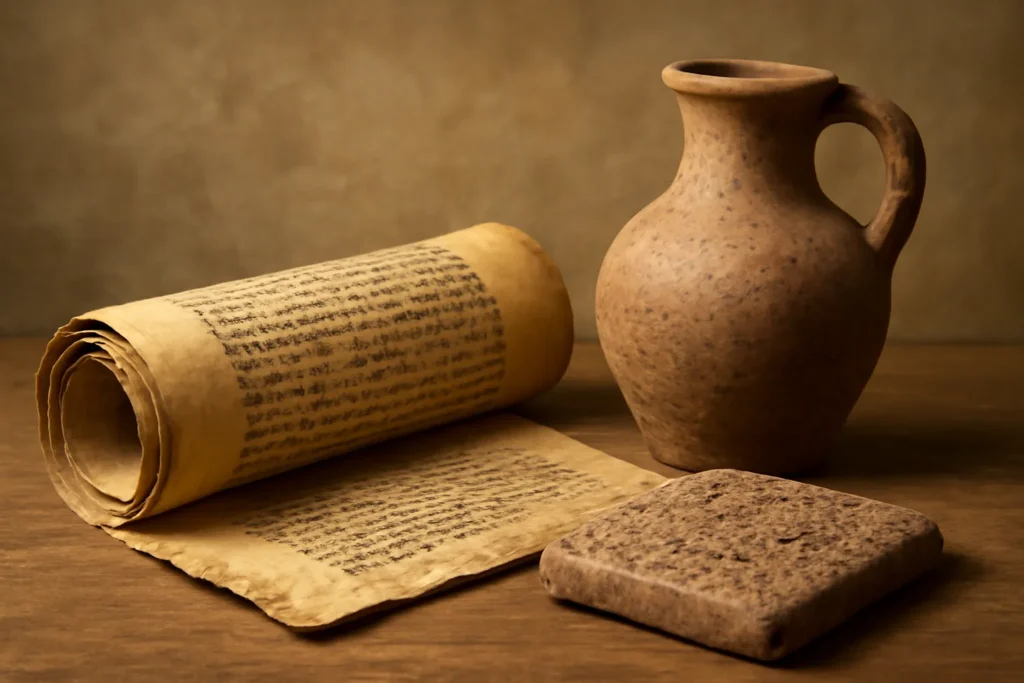
The Bible stands as a foundational text for religion, history, and culture, yet it is also a record that scholars approach with a toolbox of methods drawn from archaeology, epigraphy, and textual criticism. Historical evidence for the Bible comes from a blend of material culture—the things people left behind—and the manuscripts and inscriptions that preserve their words long after they spoke them. In this article, we survey the kinds of evidence scholars rely on to situate biblical events, characters, and languages in their ancient contexts, while explaining how this evidence is gathered, evaluated, and interpreted. We will explore both archaeology and texts—from the Dead Sea Scrolls to non-biblical references in ancient literature—so readers can appreciate the breadth and limits of what “historical evidence” means in biblical studies.
Archaeology helps anchor biblical narratives in space and time, illuminating the material culture, politics, daily life, and international interactions that shaped the ancient world described in biblical books. While archaeology cannot prove theological claims, it can illuminate the settings, corroborate specific events, and raise fruitful questions about authorship, redaction, and interpretation.
Several discoveries have become touchstones for understanding the world of the Hebrew Bible, including inscriptions, monumental architecture, and inscriptions from neighboring powers. Below are a few category-defining examples:
Dead Sea Scrolls and related manuscripts: Discovered beginning in 1947 near Qumran, these ancient manuscripts include copies and fragments from every book of the Hebrew Bible (except Esther) as well as sectarian writings from a Jewish community. They date from roughly the 3rd century BCE to the 1st century CE and are vital for assessing textual transmission, variant readings, and the development of biblical books.
Tel Dan Stele: A fragments-engraved stele discovered in the 1990s that mentions the “House of David” (Hebrew: Beit David). This is widely cited as the earliest extrabiblical reference to the dynasty of David, offering crucial context for the historicity of David as a real figure who established a political lineage in ancient Israel.
Mesha Stele (Moabite Stone): An inscription from the Moabite king Mesha dated around the 9th century BCE. It preserves a narrative that intersects with biblical accounts of Israel’s monarchy and the regional power dynamics, including conflicts with Israel and support from Moab.
Siloam Inscription: Carved on a tunnel lining at the foot of the Siloam Reservoir in Jerusalem, this inscription documents the construction of a water tunnel during the reign of Hezekiah. It provides a tangible link to biblical mentions of Hezekiah’s era and the city’s readiness against Assyrian threats.
Hezekiah’s Tunnel and related water works: Additional remains and surveys corroborate the biblical portrait of efforts to secure Jerusalem’s water supply in the late 8th century BCE, aligning with the account in the book of Isaiah and 2 Kings.
Lachish Letters: A collection of ostraca (pottery flakes with inscriptions) from Lachish, dating to the late 7th century BCE, which describe military movements and siege conditions that parallel biblical depictions of the Babylonian campaigns and the fall of key Judean fortresses.
Cyrus Cylinder and related Persian inscriptions: Not a direct biblical artifact, but a cuneiform document praising Cyrus the Great for allowing exiled peoples to return home. This aligns with biblical narratives about the Babylonian exile ending and the return to Jerusalem under Persian rule, as seen in books like Ezra and Isaiah’s later chapters.
Other significant Old Testament inscriptions and artifacts
Nebo-Sarsekim Tablet and other Babylonian-era inscriptions which provide geopolitical context for the late monarchies of Judah and surrounding regions.
Neo-Babylonian Chronicles and royal annals that illuminate the fall of Jerusalem and the exile period mentioned in the prophetic books and histories.
Ashurbanipal Library fragments and related cuneiform finds that illuminate Mesopotamian culture, law, and religion—background against which biblical authors were writing.
Archaeology and the reliability of place- and event-based claims
Archaeology often helps fix where events occurred, the scale of cities, and the technologies available at particular moments. For instance, excavations in Jericho, Hazor, Megiddo, and other sites have contributed to discussions about urban life in Israel’s forerunner kingdoms and how they relate to biblical narratives. It is important to emphasize:
The presence of ancient cities and monumental architecture can corroborate biblical settings, even if they do not confirm every detail of a story.
Inscriptions provide names, dates, and actions that can be cross-referenced with biblical accounts to build a broader historical picture.
Archaeology sometimes raises new questions about the chronology or scope of biblical events, prompting revised interpretations and more nuanced readings of the text.
New Testament archaeology and related findings
Among the gospel world and early Christian communities, archaeology has helped illuminate the social, urban, and cultural context in which the New Testament writings emerged. Notable areas of evidence include:
Ancient cities and roads (evidence for travel and commerce described in the Gospels and Acts) and the general layout of first-century towns like Nazareth, Capernaum, Philippi, and Corinth.
Pilgrimage and temple-related activity in Jerusalem, including inscriptions and artifacts from Second Temple Judaism that provide a backdrop for Jesus’ ministry and early Christian messaging.
Material culture of early Christians, such as symbols in catacombs or early church artifacts, which help scholars understand how communities interpreted and transmitted their beliefs.
New Testament sources and non-Christian corroboration
Beyond the gospel narratives, a spectrum of extrabiblical sources from the Greco-Roman world and Jewish writings provide context for the world in which the New Testament was composed and circulated. These sources do not prove doctrinal claims, but they do illuminate historical settings, people, and events mentioned in the biblical texts.
Non-Christian references to Jesus and early Christians
Tacitus, a 1st-century Roman historian, reports that Christ (Christus) was executed during the reign of Emperor Tiberius and that Christians in Rome were persecuted under Emperor Nero after the Great Fire. This passage helps anchor the timeline of early Christian origins in the mid-1st century.
Josephus, a Jewish historian, mentions Jesus in Antiquities of the Jews (with debates about later Christian editing), and he references James as a brother of Jesus who was considered the Christ in the later tradition. Although some passages have undergone later Christian interpolation, the core material reflects Jewish-Hellenistic perspective on Jesus and the early Christian movement.
Pliny the Younger, in correspondence with Emperor Trajan, describes Christians worshiping Christ as a god, providing evidence of a developing Christian community in the early 2nd century across the Roman world.
Suetonius and other Roman writers occasionally mention Christians or Christian nomenclature in the broader literary milieu of the empire, illustrating how early believers were perceived outside of religious circles.
Mara Bar-Serapion, a non-Christian letter to family or community, references the execution of a wise king named Jesus, sometimes cited as an additional early non-Christian reference to Jesus and the cross-cultural memory of early Christians.
Archaeology and the New Testament canon: what can be corroborated?
Geography, topography, and urban life described in the New Testament are compatible with the archaeological record of 1st-century Palestine and the broader Roman world.
Evidence for early Christian worship sites, house churches, and early Christian burials helps illustrate how communities organized themselves in the decades after Jesus’ life and death.
Inscriptions mentioning governors, soldiers, and local authorities echo the political environment depicted in the Gospels and Acts.
Textual evidence: manuscripts, inscriptions, and the transmission of biblical texts
Textual evidence is the backbone of how scholars reconstruct what ancient authors wrote and how their texts were circulated. This section highlights the major manuscript traditions and the kinds of textual evidence scholars weigh when studying biblical books.
Manuscript evidence for the New Testament
Papyri: Early New Testament fragments and manuscripts on papyrus date from the 2nd to 4th centuries CE, including famous items such as P52 (Papyrus Rylands Greek Fragment of John 18:31-33,37-38), which provides a very early glimpse into the text of the Gospel of John.
Chester Beatty Papyri (P45, P46, P47, etc.): Contain portions of all four canonical Gospels and Pauline letters, dating roughly from the 2nd to 3rd centuries CE.
Codex Sinaiticus and Codex Vaticanus: 4th-century majuscules that preserve extensive portions of the Greek Bible (Old and New Testament) and are central to modern critical editions.
Codex Alexandrinus: A 5th-century manuscript with substantial portions of the Hebrew Bible/Septuagint and the New Testament, contributing to the textual history of the Christian canon.
Together, these manuscripts illustrate a continuous chain of transmission, with thousands of later copies (Latin, Coptic, Syriac, and other versions) expanding the textual evidence base.
Manuscript evidence for the Old Testament
Dead Sea Scrolls include biblical books (Genesis, Exodus, Leviticus, Numbers, Deuteronomy, Isaiah, and others) dating from the 3rd century BCE to the 1st century CE, offering a critical resource for understanding textual variation in the Hebrew Bible.
Septuagint (LXX): An ancient Greek translation of Hebrew Scriptures, produced by Jewish scholars and widely used in the Hellenistic world; it sometimes reflects different Hebrew Vorlage readings and thus provides insight into how the Hebrew text was understood in different communities.
Masoretic Text (MT): The traditional Hebrew text that became standard in Jewish communities from late antiquity onward, often compared with the Septuagint and the Dead Sea Scrolls to study textual development.
Samaritan Pentateuch: A distinct version of the first five books, preserving a Samaritan religious perspective and revealing textual variations that illuminate the diversity of ancient Hebrew Bible manuscripts.
Textual criticism: what scholars look for and why
External evidence: How reliable a manuscript is considered depends on its age, provenance, and the manuscript family to which it belongs.
Internal evidence: When scribes copied texts, they sometimes altered readings to harmonize or correct what they perceived as errors; textual critics assess the likelihood of intentional alteration versus accidental scribal error.
Text-types and families: Manuscripts are grouped into families that share readings, helping scholars map the text’s history and identify where major variants arise.
Textual transmission and reliability: a balanced view
Textual transmission is a story of both continuity and variation. The Bible’s books were copied by hand for centuries, across languages and cultures. The result is a tapestry of readings, some of which differ by a handful of words and others by longer phrases. Understanding this process helps readers appreciate:
The vast majority of meaningful content in the biblical texts remains stable across manuscripts, which supports a sense of strong transmission for core stories and doctrines.
Where variations occur, scholars evaluate the date of the manuscript, the scribal milieu, and the likely original language to decide which reading best reflects the earliest attainable version.
Discrepancies do not automatically undermine the historical plausibility of biblical events; instead, they illuminate how communities read and edited sacred texts over time.
Evidence synthesis: how archaeology and texts work together
When historians and biblical scholars assess historical evidence for the Bible, they combine archaeology, inscriptions, and manuscript studies to create a multi-layered picture. This synthesis typically yields several notable patterns:
Contextual corroboration: Archaeological findings consign biblical settings to real places and times, even when the texts themselves are literary or theological in purpose.
Historical plausibility: Extrabiblical sources frequently align with biblical timelines, such as kings, exiles, and major geopolitical events, offering independent markers for chronology.
Textual stability and variation: The broad conservation of core narratives across centuries suggests that early communities held certain stories in common, while variations reveal interpretive practices and community boundaries.
Limitations and cautions in evaluating historical evidence
Scholars acknowledge several important limits when discussing historical evidence for the Bible:
Proof beyond doubt: Archaeology and textual evidence rarely prove divine claims; they establish historical contexts, authorship plausibility, and cultural milieu.
Fragmentary evidence: Much of ancient history rests on incomplete remains; gaps in the record require careful inference rather than definitive statements about every event.
Interpreting artifacts: Inscriptions and artifacts must be read within their linguistic, religious, and political frameworks; misinterpretations are possible without appropriate context.
Practical examples: how evidence informs biblical interpretation
To illustrate the practical value of these sources, consider a few concrete examples where archaeological and textual data intersect with biblical reading:
Davidic dynasty evidence: The Tel Dan Stele’s inscription mentioning the “House of David” provides extrabiblical support for the existence of a dynastic figure named David and for a monarchy in Judah mentioned in biblical books like Samuel and Chronicles.
Exilic and post-exilic periods: Babylonian and Persian inscriptions (including the Cyrus Cylinder) align with biblical narratives about exile, return, and the rebuilding of the Temple, helping readers understand the historical processes behind the biblical books of Ezra, Nehemiah, and Haggai.
Temple and city life: Excavations at Jerusalem, Lachish, Megiddo, and other sites illuminate urban planning, warfare, and temple cultic practices referenced in 1 and 2 Kings, Chronicles, and the prophetic books, providing a tangible context for sacred narratives.
Textual corridors: The Dead Sea Scrolls close gaps in our understanding of how the Hebrew Bible was transmitted before and during the early centuries CE, enriching debates about textual variants in Isaiah, Psalms, and other books.
What this body of evidence means for readers today
For modern readers, this integrated picture offers several encouraging takeaways:
Historical grounding: The Bible does not exist in isolation; it is part of a broader ancient Near Eastern and Greco-Roman world. Archaeology and external texts help situate biblical authors and audiences within that world.
Complex literary history: The Bible’s books reveal a long history of composition, transmission, and interpretation. Recognizing this complexity can enrich understanding and encourage careful reading.
Dialogue with other traditions: Extrabiblical sources often reveal parallel or contrasting perspectives, enabling constructive dialogue about ancient belief systems, practices, and political life.
In sum, the historical evidence for the Bible rests on a robust combination of archaeology, inscriptions, and texts. The Old Testament world emerges from stone and clay as much as from narrative; the New Testament milieu emerges from manuscripts, languages, and early Christian communities that left behind both religious writings and secular observations. Taken together, these elements provide a nuanced, evidence-based picture of how biblical texts arose, circulated, and were understood in their own time and how they continue to be read in later centuries.









Leave a Reply