Origins in the Babylonian exile and the return to Jerusalem
The history of the Second Temple centers on a dramatic turning point in ancient Near Eastern history: the return of a displaced people to a homeland and the reestablishment of worship at a rebuilt sanctuary in Jerusalem. After the fall of the northern and southern kingdoms and the devastation of the First Temple (Solomon’s Temple) decades earlier, the people of Judah faced exile, upheaval, and cultural rupture. The subsequent imperial pattern—rulers who permitted, encouraged, or constrained religious practice—shaped the temple’s identity for centuries.
The turning point came under the Persian king Cyrus the Great, who authorized exiles to return and permitted the rebuilding of the sacred precincts. A leader named Zerubbabel led a community renewal and began construction on a new sanctuary. This phase is often labeled the early period of the Second Temple because it stands as a deliberate re-creation of the earlier sanctum rather than a mere expansion of the earlier edifice. The aim was not to restore merely a building but to reconstitute a religious order, a priestly system, and a focal point for national memory.
The initial structure, completed around 516 BCE, was comparatively modest compared with the later monumental complex that would reframe Jerusalem’s skyline. Yet it served as the center of Jewish worship, sacrifice, and cultic service for generations. The rebuilt sanctuary allowed for the reestablishment of the Temple service and the return of a disciplined calendar of offerings, pilgrimages, and rituals that had been disrupted by exile.
The Second Temple in the Persian and Hellenistic eras
The Second Temple era spanned several centuries, marked by shifts in political power, religious leadership, and architectural ambitions. In the early centuries BCE, the temple complex remained a relatively austere place of worship, even as the surrounding city and its governance evolved under Persian authority and later under Hellenistic influence.
During the Persian period, the sanctuary served as a focal point for the community’s identity and ritual life. The priesthood—longstanding in its authority and responsibilities—played a central role in guiding sacrifices, offerings, and the upkeep of the sacred precincts. The temple’s rituals were not purely private acts; they were public acts that connected ritual purity, national history, and cosmic symbolism.
In the Hellenistic period, foreign cultural currents and internal political debates intersected with temple life. Some rulers outside the land sought to control or influence the temple, while Jewish leaders navigated the balance between maintaining purity and engaging with a broader cosmopolitan world. This era also includes moments of reform and resistance, culminating in a distinct period of renewal and rededication associated with events in the late second century BCE, including the Maccabean movement.
The Temple Mount, the elevated precinct surrounding the sanctuary, became a powerful symbol of sovereignty and religious authority. Though the physical structure waxed and waned under different rulers, the temple’s significance persisted: it was the site where the people could present offerings, engage in pilgrimage during major festivals, and participate in a priestly economy that linked worship, law, and communal life.
Herod’s expansion: a monumental transformation
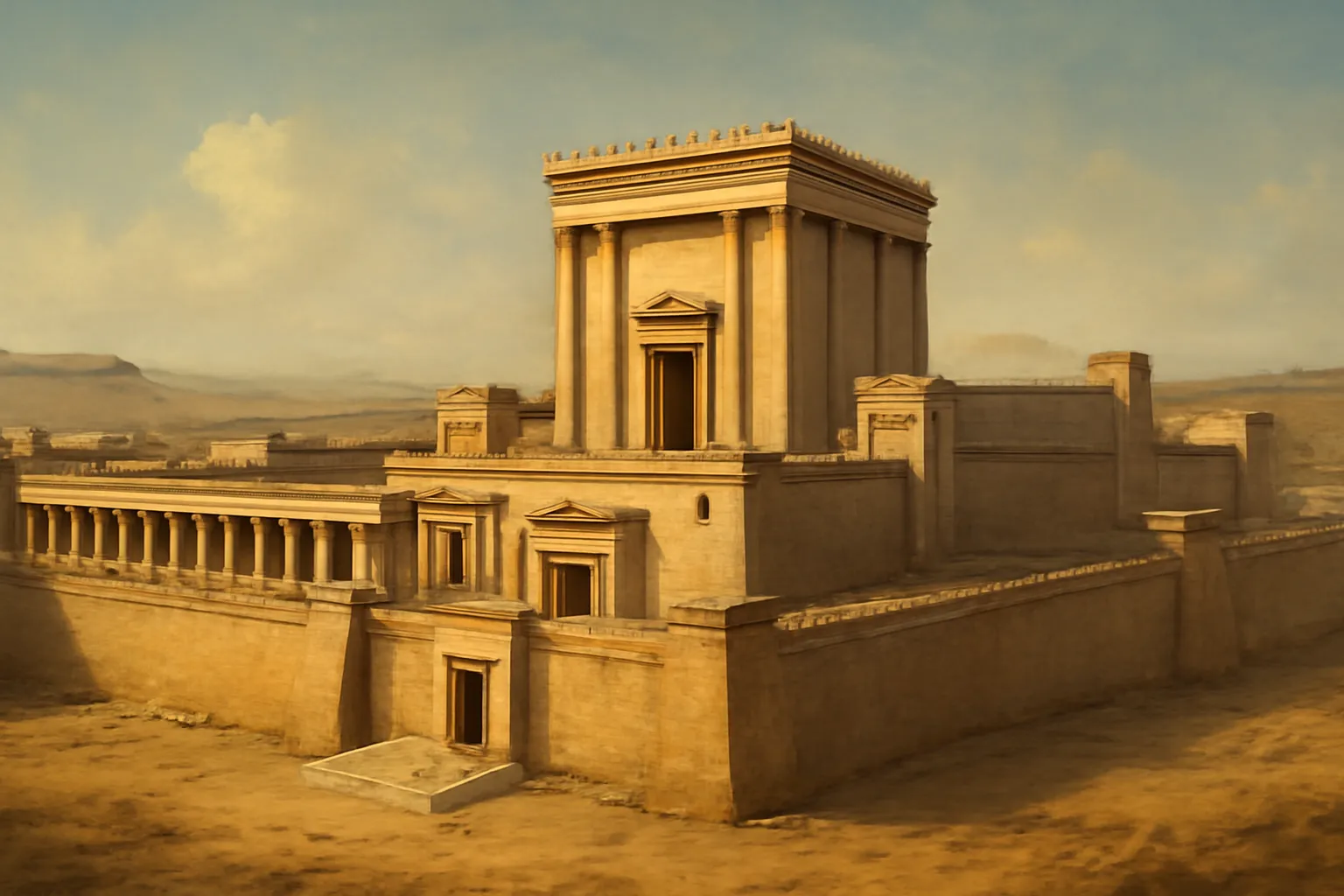
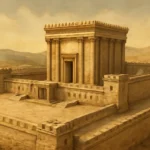
In the late Herodian period, the temple complex underwent a sweeping transformation that would define its image for two millennia. Herod the Great, a client ruler installed by Rome, sought to honor Jewish religious heritage while projecting imperial grandeur. The project was both restorative and transformative: the sanctuaries remained recognizable, but the surrounding courts, retaining walls, and monumental platform redefined the entire site.
The expansion was intended to elevate worship and accommodate large numbers of pilgrims who traveled from across the Jewish world for festivals such as Pesach (Passover), Shavuot, and Sukkot. The result was a vast and lavish complex, often described in sources as the most formidable expression of Jewish temple architecture in antiquity. Even as the work was underway, the project carried political and religious symbolism: it asserted Jewish sovereignty, reinforced priestly authority, and demonstrated a sophisticated engagement with Roman imperial power.
A number of features characterized this era’s redesign:
Massive retaining walls and a raised platform that turned the precinct into a grand ceremonial stage.
Expanded courts to facilitate surveillance and ritual purification for a wider range of worshippers.
Public spaces for teaching, admonition, and interpretive drama around sacred history.
Incorporation of decorative elements and alignments with broader Roman architectural aesthetics, while preserving traditional Jewish symbols.
The result was a sanctuary that functioned as a living center of worship and a statement of religious identity. The Temple Mount precinct, including its outer gates, inner courts, and the Holy of Holies, became the stage upon which priests performed daily and yearly rites, while laypeople engaged in prayer, study, and ritual purification in a carefully choreographed environment.
Political context and motives
The decision to undertake such a dramatic expansion met multiple aims. It reinforced a sense of continuity with the ancient covenant while signaling a dynamic, cosmopolitan urbanity that could stand alongside other major cities in the Roman world. It also reflected the balance of power between Jewish leadership and Rome, with the temple acting as a key repository of religious legitimacy and social order.
Construction and features
The construction sequence stretched over decades, incorporating both restoration and new build. The most visible signs of the transformation were architectural: new gates, courtyards, and a luminous exterior that would be familiar to later observers. Inside, the Holy of Holies remained the sanctuary’s most sacred space, but access to that inner chamber was tightly controlled by the priesthood.
Architectural layout and sacred geography
The Second Temple complex was not a single building but a multi-layered sacred geography. It combined a set of increasingly restricted spaces with an outer public area and a sequence of sanctified zones that reflected ritual purity, priestly function, and communal worship.
Core zones and progression of access
Temple Mount platform: the elevated sacred stage that framed all subsequent spaces.
Court of the Gentiles: the largest open space where non-Jews could approach but from which they were barred from nearer sanctuaries.
Court of the Women: the first space where Jewish women could participate in worship and offerings, indicating a regulated boundary of ceremonial access.
Court of Israel: where male worshippers could proceed further in ritual activity.
Court of the Priests: where the altar and the temple proper were located and where the daily sacrifices were performed.
Holy Place: the inner sanctuary housing sacred furniture and priestly service, accessible only to designated priests.
Holy of Holies: the most sacred chamber, traditionally associated with the divine presence; access was restricted to the high priest and only at specific times of the year.
Specific structures and symbolic elements
In addition to the sequence of courts, the complex included gates, porches, and vessels essential to ritual life. The gateways and ceremonial approaches were aligned with ritual purity codes and liturgical calendars. Architectural decoration—columns, carved friezes, and symbolic motifs—conveyed a sense of divine order and covenantal memory.
Relationship to temple service
The arrangement was not merely symbolic; it structured daily offerings, seasonal pilgrimages, and priestly instruction. The Temple service depended on a trained cohort of priests (the Levites and Aaronide lines) who administered offerings, prayers, and the maintenance of ritual cleanliness. The system reinforced political legitimacy, social hierarchy, and religious discipline in a way that linked sacred space to communal identity.
Religious life, ritual, and daily practice during the Second Temple era
The Second Temple period was defined by its liturgical rhythm: daily sacrifices, Sabbath observance, and festival pilgrimages that braided religious practice with civic life. The priesthood shaped the liturgy, but lay participation—through prayer, study, and festival processions—also defined temple life.
Pilgrimage and festivals
Pesach (Passover) attracted large choirs and animal offerings, along with symbolic retellings of the Exodus narrative.
Shavuot (Weeks) celebrated the giving of the Law at Sinai and the first fruits offerings.
Sukkot (Tabernacles) combined ritual tenure in temporary booths with water drawing ceremonies and public prayers.
Priestly function and broader society
The temple’s day-to-day routine depended on the rhythms of priestly sacrifice, ritual purity, and the management of sacred space. The priesthood maintained not only the animal offerings but also the calendar that determined holidays, fasts, and sabbatical cycles. The broader society engaged with the temple through petition prayers, charitable giving to the sanctuary, and participation in the sacral economy that connected land, people, and covenant.
Textual and interpretive life
The temple era produced a rich literature—biblical books that describe return, reform, and renewal; apocryphal writings that reflect evolving theology; and later rabbinic interpretations that recast temple practice for a diaspora world. The center of gravity gradually shifted from the literal institution to interpretive and ethical reflection about what the temple symbolized: national memory, divine presence, and a standard by which the community could measure justice, mercy, and fidelity.
The destruction and the long aftermath
The most defining catastrophe for the Second Temple era occurred in the late first century CE when Roman forces sacked Jerusalem and destroyed the temple complex in 70 CE. The siege, led by Titus, left the sanctuary in ruins and changed the spatial geography of the city. The destruction marked a pivot from a temple-centered sacrificial economy to a religion increasingly focused on study, prayer, and synagogue life in the diaspora.
One of the most enduring legacies of the destruction is the survival of a symbolic remnant: the Western Wall (also called the Wailing Wall), a part of the ancient retaining structures that now serves as a poignant place of prayer for many Jews. The fall of the temple did not erase Jewish religious life; instead, it redirected focus to the covenantal memory inscribed in scripture, ritual study, and communal worship, ensuring that the idea of the temple would persist in longing, ethics, and expectation.
Archaeology and historical sources
Our understanding of the Second Temple architecture and its rites relies on a blend of sources: biblical books describing the return and reforms, historical accounts from writers like Josephus who documented late Second Temple life, and later rabbinic texts that preserved ritual details and legal discussions. The Mishnah and Talmud, though written after the temple’s destruction, preserve much of the temple’s ritual language and reformulated instructions about how to live a life of religious fidelity in the absence of a standing sanctuary.
Legacy for Jewish memory and religious imagination
The Third Temple is a concept encountered in various streams of Jewish thought, ranging from symbolic longing to hypothetical future reconstruction. While the modern political landscape makes any real construction deeply contentious, the idea continues to shape liturgy, eschatological outlooks, and debates about religious belonging. The temple’s memory remains a wellspring for prayer, ethics, and communal purpose, reminding communities of their covenant with God and their responsibilities toward holiness in everyday life.
Significance across religious and cultural traditions
The Second Temple era has a far-reaching impact beyond the Jewish world. In early Christianity, Jesus and his followers engaged with the temple as a central locus of teaching and critique. The temple’s rituals and geography appear in gospel narratives, and the destruction of the temple becomes a catalyst for theological reflection about covenant, fulfillment, and the expansion of spiritual authority beyond a single sacred location.
For Islam and interfaith discourse, the Temple Mount remains a contested and deeply meaningful site. The wider historical memory of the Second Temple contributes to the complex tapestry of Jerusalem’s sacred geography, where one sacred tradition intersects with others in a long chronicle of devotion, longing, and political struggle.
Judaism and liturgical life
The temple’s ritual life informed later Jewish prayer structures, as many liturgical forms were shaped by the calendar and the memory of sacrifices.
Synagogues became focal points for study and worship in the absence of a standing temple, helping to preserve ritual discipline and ethical instruction.
The memory of the temple continues to influence Jewish art, poetry, and academic study, where the sanctuary stands as a symbol of covenantal fidelity and communal resilience.
Christian scriptural interpretation
In Christian New Testament literature, the temple functions as a backdrop for teachings about faith, ritual purity, and Jesus’ redefining of sacrifice. The destruction of the temple is interpreted in various ways across Christian traditions, often seen as a turning point toward a more universal church and a spiritual temple made not of stone but of living believers.
Key terms and a brief glossary of the Second Temple period
To navigate scholarly and popular discussions, here are essential terms that recur in studies of the Second Temple and its era:
Holy of Holies: the innermost sanctuary within the temple, believed to house the divine presence, accessed only by the high priest on specific occasions.
Court of the Gentiles: an outer space where non-Jews could approach the sacred precincts, reflecting legal and social boundaries of access.
Temple Mount: the elevated sacred platform that holds the entire temple complex and frames its sacred geography.
Herod’s Temple: the grand expansion and renovation undertaken by Herod the Great that produced a monumental sanctuary complex.
Wailing Wall / Western Wall: a surviving retaining wall that has become a place of prayer and reflection in later periods.
The study of these terms helps illuminate how a single complex could embody ritual, politics, and identity across centuries. It also clarifies why the Second Temple remains a central reference point for people who seek to understand ancient practice, modern religious life, and interfaith relationships in the city of Jerusalem.
Concluding reflection: why the Second Temple matters today
The story of the Second Temple is not merely a chronicle of brick and stone. It is a narrative about how a community forged a sense of sacred time, shared memory, and collective purpose in the face of exile, displacement, and foreign rule. It illustrates how architecture can embody theology, how ritual life can shape social cohesion, and how memory can sustain a people through upheaval. From the modest Zerubbabel-temple to the stunning Herodian precinct, each phase reveals a community that sought to live in covenant, to teach its children, and to interpret its history with seriousness and faith.
For students of history, archaeology, religious studies, and theology, the Second Temple era offers a fertile field for exploring questions about:
How religious institutions adapt to political power while preserving identity.
The relationship between sacred space, ritual practice, and national memory.
How communities reimagine worship after catastrophe and maintain continuity across generations.
In present-day discussions about Jerusalem, the Second Temple remains a touchstone for debates about sacred space, historical memory, and the possibility of dialogue among traditions rooted in the same city but different in belief. Its legacy endures in liturgy, scholarship, and the ongoing human search to understand how ancient rites illuminate contemporary life.

 Por Laura Jara