Dead Sea Scrolls: History, Contents, and Their Significance
Dead Sea Scrolls: History, Contents, and Their Significance
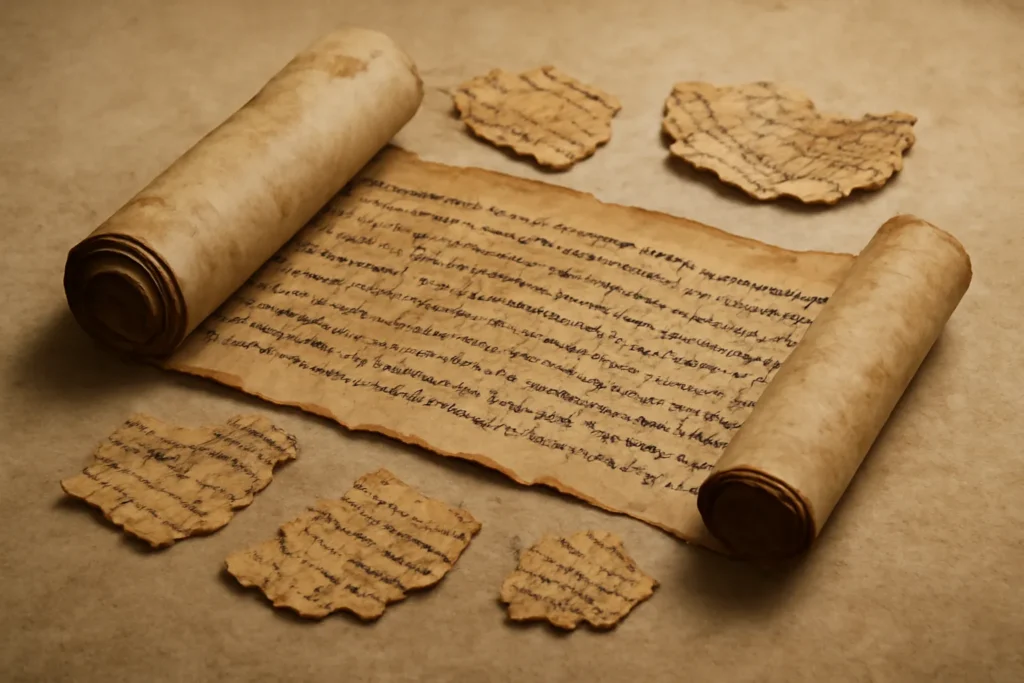
The Dead Sea Scrolls are among the most transformative finds in the study of Judaism, early Christianity, and the ancient world. Discovered in the rocky deserts along the shore of the Dead Sea, these ancient manuscripts date from roughly the last three centuries BCE to the first century CE. They include a broad spectrum of texts—biblical manuscripts, sectarian writings, apocryphal works, and legal and liturgical material—that illuminate how people prayed, studied, and organized religious communities in a formative period of religious history. The collection is also a cornerstone for understanding how texts were transmitted, copied, and interpreted in antiquity, and it continues to reshape questions about the Bible, ancient Near Eastern religion, and the diversity of Second Temple Judaism.
The story of the Dead Sea Scrolls begins in the Judaean Desert, where a series of caves yielded a remarkable trove of manuscripts. The initial discovery occurred in 1947, when a young Bedouin shepherd and his companions entered a cave near Qumran, about 12 kilometers inland from the northeastern shore of the Dead Sea. What they found were ceramic jars containing scrolls wrapped in linen. Although the exact circumstances and the ownership of the find remain subjects of historical nuance, the moment signaled a turning point in biblical archaeology and biblical studies. Subsequent excavations and finds expanded the corpus dramatically.
Over the following years, dedicated expeditions by scholars and the Israel Antiquities Authority, aided by international partners, uncovered dozens of caves in the vicinity of Qumran and the wider Judean Desert. These discover ies and the careful study of the fragments revealed a vast library associated with a community that organized itself around distinctive rules, practices, and beliefs. The scrolls recovered in the Dead Sea region were not a single cohesive library but a collection of texts produced by, or circulating among, a religious group that has been identified with the community of the Essenes by many scholars, though this is a matter of ongoing scholarly debate and interpretation.
Key milestones in the discovery and subsequent scholarship include the following:
The earliest surviving scrolls were found in several caves near the site of Qumran, a site that produced evidence of a substantial settlement including ritual baths, workshops, and dwellings.
Public interest surged with the publication of the first published editions of the scrolls in the 1950s, followed by decades of excavation, conservation, and scholarly publication.
The collection expanded beyond the initial finds to include a broader set of scrolls from many caves along the Dead Sea coast, each contributing to a larger, interconnected picture of the ancient library phenomenon.
Modern efforts have emphasized preservation, digital access, and collaborative scholarship, making these texts available to researchers around the world and, increasingly, to the general public.
Throughout the decades, researchers have used a range of methods—paleography, radiocarbon dating, philology, and textual criticism—to determine how and when these scrolls were produced and used. The variety of scripts and languages attested within the Dead Sea Scrolls (primarily Hebrew, with substantial Aramaic portions and some Greek) reflects a multilingual and culturally vibrant milieu in late Second Temple Judaism. The scrolls, in their many fragments, have provided a durable link to the religious life of a community and its interaction with surrounding groups and traditions.
Contents of the Scrolls
What is often referred to as the Dead Sea Scrolls collection is not a single book but a diverse archive. The texts range from biblical manuscripts that reflect a different manuscript tradition from the later Masoretic Text, to sectarian writings that reveal the internal rules and expectations of the Qumran community, to apocryphal and pseudepigraphal works that circulated in the broader Jewish world of the period. The total corpus is enormous, comprising thousands of fragments and scrolls, many of which survive only in small pieces, yet collectively they illuminate a broad spectrum of religious life in antiquity.
Biblical Texts
Among the most significant components of the Dead Sea Scrolls are biblical manuscripts that preserve early textual variants and a glimpse into the processes of scriptural transmission. The collection includes copies of most of the books of the Hebrew Bible, with some notable exceptions and some dramatic textual witnesses. The most famous of these is the Great Isaiah Scroll (1QIsaa), which preserves an almost complete copy of the Book of Isaiah and is a striking example of how the biblical text circulated in antiquity. Other biblical scrolls provide variants and readings that differ from later Masoretic copies and from the Septuagint, offering scholars critical data for reconstructing the history of the biblical text and its transmission traditions.
What the biblical manuscripts reveal goes beyond textual variations. They also reflect early interpretive tendencies, liturgical use, and the way communities organized their scriptural study. For instance, the presence of certain Psalms, prophetic texts, and scriptural fragments suggests that the Canon was not fixed in the sense of one definitive edition but rather a living, dynamic collection that different groups used for different purposes, in different contexts, and at different times.
Non-Biblical Texts and Sectarian Writings
Beyond the biblical books, the Dead Sea Scrolls contain a rich array of sectarian writings that illuminate the internal life of the community associated with the site near Qumran. Texts such as the Community Rule (1QS) and the Manual of Discipline (1QRule in various forms) articulate beliefs about purity, liturgical practice, membership, and community governance. The War Scroll (1QM) offers a dramatic glimpse into apocalyptic expectations and armed eschatology, describing a future battle that would involve the faithful in a cosmic struggle. The Damascus Document (CD) and related works outline a complex code of conduct, ritual purity, and the relationship of the community to the wider Jewish world and to internal leadership structures.
Other sectarian writings, sometimes called the Rule of the Congregation (1QH) and the Rules for Temple Worship, reveal detailed visions about how the community understood divine law, the role of the priesthood, and the proper way to conduct communal worship. These texts collectively help scholars understand how communities in the Second Temple period negotiated questions of authority, scriptural interpretation, and the boundaries of membership and rites.
Apocryphal and Pseudepigraphal Works
The Dead Sea Scrolls also contain works that are not part of the canonical Hebrew Bible but were widely read in the broader Jewish world of that era. These include apocryphal and pseudepigraphal writings—texts that elaborate on biblical characters, timelines, or themes, sometimes offering fresh perspectives on biblical events or theological ideas. Fragments of works such as Jubilees and Enoch-like writings appear in this corpus, alongside other pseudepigraphal compositions that illuminate how religious thinkers imagined earlier generations and how they sought to connect themselves to venerable ancestors. The presence of these texts demonstrates the pluralism of a religious culture in which multiple literary genres and interpretive strategies coexisted.
The scrolls are a linguistic snapshot of a world where Hebrew was the primary language for religious and literary expression, with Aramaic used in some legal, letter, and administrative texts, and a few Greek items indicating cross-cultural contact. The scribal practices evident in the manuscripts—his/ her use of palaeography, orthography, and stylistic variants—provide an important window into how texts were produced and copied. Variants in spelling, wording, and even line divisions give scholars material to analyze transmission patterns and the evolution of Hebrew writing over several centuries. The scripts range from early to late Paleo-Hebrew and square Hebrew scripts, reflecting a long span of textual culture in this region.
The Significance of the Scrolls
The Dead Sea Scrolls, the Qumran scrolls, the Qumran library, and the broader Dead Sea region manuscript tradition have a multi-layered significance that touches religion, history, linguistics, and cultural heritage. Their influence extends beyond a single discipline into the broader understanding of how ancient communities cultivated, stored, and transmitted sacred and secular texts.
Historical and Religious Context
one of the central contributions of the Dead Sea Scrolls is providing a richer, more nuanced picture of Second Temple Judaism. The finds reveal a world where diverse groups—priests, scribes, lay members, and possibly lay communities—engaged with scripture, ritual purity, and law in ways that differed from later Rabbinic traditions. In this sense, the scrolls illuminate the plurality of Jewish religious life in the centuries before and during the emergence of rabbinic authority. They also offer context for early Christian origins, by shedding light on the religious vocabulary, cosmic expectations, and interpretive practices that were part of the broader milieu of the period.
Textual Criticism and Biblical Studies
From the perspective of textual criticism, the Dead Sea Scrolls are a treasure trove. They provide earlier textual witnesses to many biblical books than are available elsewhere, and they demonstrate that the textual traditions of the Hebrew Bible were not monolithic. When scholars compare the Scrolls to the Masoretic Text that later became the standard text of Judaism, or to the Greek Septuagint, they can identify lines of transmission, regional preferences, and interpretive readings. The existence of multiple textual strands prompts reexamination of the historical reliability of particular readings and helps scholars reconstruct the history of the biblical text’s formation with greater fidelity.
Because the Dead Sea Scrolls contain both canonical and non-canonical works, they contribute to discussions about how the biblical canon might have formed and how communities understood what constituted authoritative scripture. The presence of nearly complete books, compared with fragmentary pieces, raises questions about how early communities valued certain texts, how they decided which texts to copy or replicate, and how interpretive traditions evolved. The Scrolls thus inform debates about the diversity of scriptural interpretation within Judaism before and after the rise of Christian communities, and they contextualize how later canonical boundaries were drawn in different Jewish and Christian streams.
Archaeology, Material Culture, and Cultural Heritage
The discovery of the Dead Sea Scrolls also reshaped how scholars and the public think about archaeology and material culture. The physical preservation of scrolls—many of which survived for two millennia in arid cave environments—demonstrates the resilience of ancient manuscripts when climate and storage conditions are favorable. The discovery, conservation, and study of these scrolls have driven advances in conservation science, imaging technology, and digital digitization. The Dead Sea Scrolls have become symbolic of cultural heritage and the responsibility to protect fragile artifacts for future generations, while at the same time balancing access for scholarly study and public education.
The modern era has witnessed remarkable efforts to democratize access to the Dead Sea Scrolls. Digitization projects, high-resolution imaging, and online repositories have enabled researchers around the world to examine fragile parchment fragments without the need to handle delicate artifacts physically. Institutions such as national libraries and major museums have collaborated to provide searchable databases and digital facsimies of the dead sea scrolls, often under careful scholarly annotation. This broad accessibility strengthens education, fosters interdisciplinary research, and invites public engagement with ancient texts that had long rested behind protected cases and scholarly journals.
Preservation, Access, and Modern Developments
The story of the Dead Sea Scrolls is ongoing, with preservation challenges, ethical debates about provenance, and ongoing scholarly debates shaping current understanding. The transition from a handful of famous parchment copies to a large, multifaceted archive has demanded innovative conservation strategies, collaborative scholarship across disciplines, and careful interpretation of what the texts reveal—and what they do not.
Conservation and Preservation Challenges
Fragile fragments require careful handling, controlled climate conditions, and protective storage. Advances in imaging technology, such as infrared reflectography and multi-spectral scanning, have helped scholars read faded inscriptions and recover lost lines. Conservation efforts also focus on stabilizing pigments, adhesives, and bindings that can degrade over time. The longer-term goal is to preserve the physical media while enabling researchers to access the content in as complete and accurate a form as possible.
Another facet of preservation is the careful documentation of provenance. The Dead Sea Scrolls were discovered in a complex environment of archaeological work, private markets, and institutional custodianship. Modern ethics emphasize proper provenance, scholarly transparency, and the return of materials to the rightful institutions when appropriate, while also enabling international access for research and education.
Digital Access and Public Platforms
Digital platforms have become central to the dissemination of knowledge about the Scrolls. Institutions around the world collaborate to catalog fragments, publish critical editions, and provide public-facing digitized copies. For many readers, the ability to zoom into a tiny fragment, compare readings across different manuscripts, and access scholarly commentary from a distance has transformed engagement with these ancient texts. The digital revolution has therefore complemented traditional philological study, enabling a broader audience to appreciate the linguistic, historical, and theological significance of the Dead Sea Scrolls.
Scholars often emphasize the importance of combining digital tools with traditional manuscript studies. The rich data embedded in the artifactual material—scribe marks, parchment quality, ink composition—needs careful interpretation alongside textual comparisons. In this sense, the scrolls continue to be a dynamic field of study, inviting new methodological approaches and cross-disciplinary collaboration among biblical scholars, archaeologists, linguists, and historians.
Over the decades, the Dead Sea Scrolls have transitioned from a scholarly curiosity to a major element of public understanding about the ancient biblical world. In popular culture, the Qumran scrolls have often been portrayed in ways that emphasize mystery and esoteric knowledge. In scholarship, however, the focus has been on rigorous analysis, critical editions, and careful delineation of textual variants. The intersection of scholarly rigor with public interest has produced a nuanced narrative: one that recognizes how this body of literature reframes questions about religious development, scripture, and the diversity of ancient belief systems.
Another important aspect of the scholarly discourse concerns the interpretation of the Scrolls in relation to Christian origins. While some readers look for direct correlations with early Christian texts, most researchers approach this with caution, emphasizing that the Scrolls illuminate the milieu in which Jesus and the earliest Christian communities emerged, rather than providing a straightforward account of Christian origins. This nuanced perspective helps avoid oversimplification and underscores the complexity of religious development in the first centuries BCE and CE.
Scholarly Debates and Controversies
As with many ancient archives, debates persist about attribution, authorship, and the precise identity of the communities behind the writings. Some items are clearly associated with a distinct community, while others are more ambiguous in their provenance. Debates also persist about how to interpret certain terms and ideas, such as the nature of the “sons of darkness” or the concept of the “teacher of righteousness” found in some sectarian texts. These debates illustrate how historical context, linguistic analysis, and archaeological evidence converge to produce evolving interpretations. In addition, questions about the ownership and display of such culturally significant artifacts remain part of ongoing conversations among scholars, museums, indigenous communities, and faith-based groups around the world.
In contemporary education and research, the Dead Sea Scrolls serve multiple purposes. They are used to illustrate textual transmission theory, to explore the historical context of the Second Temple period, and to illuminate how religious communities constructed meaning from sacred texts. They also function as a poignant reminder of how fragile cultural heritage can be and how careful stewardship ensures that such materials remain accessible for future work and public education.
Education and Curriculum
Educators use the Scrolls to introduce students to the concepts of textual criticism, manuscript culture, and the diversity of ancient religious life. High-quality translations, critical apparatus, and paleography studies enable learners to engage with the material on multiple levels—from linguistic features to broader historical themes. Museums and universities frequently host exhibitions, lectures, and workshops that use the Dead Sea Scrolls as a focal point to explore ancient scripts, liturgical practices, and manuscript conservation.
For readers seeking a broad overview, the Scrolls offer a case study in how textual sources from antiquity can shape contemporary understanding of religion, law, and culture. The ongoing research demonstrates the importance of interdisciplinary work, combining linguistics, archaeology, theology, and digital humanities to derive new insights from these ancient texts.
Public Exhibitions and Museums
Public exhibitions of the Dead Sea Scrolls have captivated visitors for decades. Reproductions, high-resolution images, and interpretive displays allow audiences to glimpse the world of a desert community that read, copied, and circulated writings about faith, purity, and expectation. The experience of seeing the scrolls in museum settings—often accompanied by expert commentary and scholarly catalogs—helps the public connect with a past that is both remote and intimately familiar through universal questions about meaning, identity, and communal memory.
What to Know About the Scrolls Today
For anyone seeking a concise synthesis: the Dead Sea Scrolls represent a vast library of ancient Jewish texts from a critical period in religious history. They include biblical manuscripts and non-biblical writings that reveal how a desert community related to scripture, ritual law, and community rules. The discovery reshaped biblical studies by providing earlier textual witnesses and by showing the diversity of interpretive traditions that existed alongside one another. In the broader historical landscape, these scrolls illuminate the religious and cultural climate of the late Second Temple period, illustrating how people negotiated identity, community boundaries, and religious authority during a time of dynamic change.
In the years since their discovery, the Dead Sea Scrolls have become a benchmark for cultural heritage preservation, for the study of ancient scripts and languages, and for understanding how ancient texts traveled through time—sometimes intact, sometimes in fragments. The ongoing effort to conserve, digitize, and contextualize these manuscripts ensures that their significance remains accessible to scholars, students, and curious readers around the world. The scrolls from Qumran and nearby caves continue to inspire and challenge scholars to reexamine assumptions about the biblical world and its enduring legacies.
Further Reading and Resources
For readers who want to explore in more depth, a range of scholarly editions, critical commentaries, and digital resources are available. Key areas of study include philology and paleography, textual criticism of biblical manuscripts, the archaeology of the Qumran site, and the interplay between canonical texts and apocryphal works. Public institutions often provide access to digitized images, scholarly introductions, and bibliographies that help navigate the complex landscape of the Dead Sea Scrolls and their ongoing scholarship.
Foundational overviews of the Dead Sea Scrolls, their discovery, and their impact on biblical studies
Detailed studies of specific texts such as 1QIsa and 1QS (Community Rule)
Digital archives and image repositories that provide high-resolution scans of scroll fragments
Research on paleography, language, and the scribal culture of the ancient Near East
Exhibitions and museum catalogs that contextualize the scrolls within broader cultural heritage narratives
The Dead Sea Scrolls will continue to be a living hinge between ancient texts and modern interpretation. Their enduring value lies not only in what they preserve but in the questions they provoke—about how religious communities define their sacred texts, how traditions are copied and transmitted, and how readers across time engage with ancient ideas in new ways. Whether approached as a window into a desert landscape, a compendium of biblical variants, or a repository of sectarian thought, the Scrolls from Qumran and their companions remain a central chapter in the story of how humans seek to understand the divine, the law, and community life across the ages.







Leave a Reply