The history books of the Bible usually refer to Joshua, Judges, Ruth, 1 and 2 Samuel, 1 and 2 Kings, 1 and 2 Chronicles, Ezra, Nehemiah, and Esther. In the New Testament, Acts is also a historical book because it records the growth of the early Christian church.
These books describe conquest, settlement, family loyalty, royal power, national collapse, exile, return, and God’s continuing work among his people. They are more than a timeline: they combine historical memory, theology, poetry, speeches, genealogy, and moral reflection.
In most Protestant Bibles, the Old Testament history section contains 12 books, beginning with Joshua and ending with Esther. They continue the story found in the Pentateuch, moving from Israel’s arrival in the promised land through the return of some Jewish communities from exile.
Joshua: Israel enters and settles in the land of Canaan under Joshua’s leadership.
Judges: Israel experiences repeated cycles of rebellion, oppression, rescue, and disorder.
Ruth: A Moabite woman shows remarkable loyalty and becomes part of David’s family line.
1 Samuel: Samuel, Saul, and David shape Israel’s transition from tribal leadership to monarchy.
2 Samuel: David rules as king, experiences military success, and faces severe family and political conflict.
1 Kings: Solomon’s reign, the temple’s construction, and the division of the kingdom dominate the narrative.
2 Kings: The northern and southern kingdoms decline and eventually face conquest and exile.
1 Chronicles: Genealogies and a retelling of Israel’s history emphasize David and worship.
2 Chronicles: Judah’s kings, the temple, national failure, and the beginning of restoration receive special attention.
Ezra: Jewish exiles return, rebuild the temple, and renew their commitment to the law.
Nehemiah: Jerusalem’s walls are rebuilt while the community works through religious and social reforms.
Esther: Esther and Mordecai help protect the Jewish people in the Persian Empire.
Acts is the New Testament history book. It begins after Jesus’ resurrection and follows the Holy Spirit’s work through the apostles, especially Peter and Paul. The book moves from Jerusalem into wider regions of the Roman world, showing how local congregations formed and how the Christian message crossed cultural and geographic boundaries.
Simple answer: If someone asks for the history books in the Protestant Bible, list Joshua through Esther in the Old Testament and Acts in the New Testament.
Why these books are called history books
The label history books describes the main form and subject of these writings. They tell connected stories about real communities, rulers, battles, migrations, worship, disasters, and political changes. Their authors preserve events through a religious perspective, asking not only what happened but also what those events meant.
This is different from treating the books as modern history textbooks. Ancient biblical writers did not usually provide dates, maps, technical explanations, or neutral reporting in the way a contemporary historian might. They selected speeches and episodes to show patterns such as faithfulness, injustice, repentance, pride, judgment, and hope.
For example, Kings evaluates rulers according to their relationship to the worship of Israel’s God. Chronicles retells much of the same period but gives greater attention to the temple, priests, musicians, festivals, and the Davidic line. The difference is not an error in the text; it reflects distinct purposes and audiences.
The historical books also use several kinds of material:
Narrative: Stories of leaders, families, wars, journeys, and national crises.
Speeches: Farewell addresses, prophetic warnings, royal statements, prayers, and public readings of the law.
Lists and genealogies: Records of families, officials, priests, soldiers, and returning exiles.
Poetry and songs: Prayers and celebrations appear inside narratives, especially in Samuel and Chronicles.
Legal and religious instructions: Community reforms and worship practices help explain what characters are trying to restore.
How Joshua through Esther tell Israel’s story
Joshua describes settlement in the land
Joshua opens after the death of Moses. Joshua leads Israel across the Jordan River, and the book presents the land as being distributed among the tribes. Important episodes include the fall of Jericho, the covenant ceremony at Mount Ebal and Mount Gerizim, and Joshua’s final challenge to the people.
The book combines military narratives with theological claims about promise, obedience, and inheritance. Its accounts of conquest can be difficult to read, particularly because they include warfare and divine judgment. Readers should avoid reducing the book to a simple military success story. It reflects an ancient setting, a specific covenant narrative, and a larger biblical discussion about land, justice, and human violence.
Judges shows the dangers of repeated rebellion
Judges follows the period after Joshua, when Israel is organized through tribes rather than a centralized monarchy. The nation repeatedly turns away from its covenant obligations, suffers oppression, cries out, and receives deliverance through a judge. The stories of Deborah, Gideon, Jephthah, and Samson illustrate different forms of leadership, courage, weakness, and compromise.
The cycle becomes increasingly disturbing as the book progresses. Its later chapters describe civil conflict, sexual violence, and social collapse. The repeated observation that everyone did what seemed right to them communicates a society without stable moral or political direction. Judges is not presenting every judge as an ideal model; it often exposes the damage caused by self-rule without justice.
Ruth places faithfulness inside ordinary family life
Ruth is short, but it connects personal loyalty with national history. Ruth, a widow from Moab, remains with Naomi and travels to Bethlehem. Through work, courage, and the protection offered by Boaz, the two women find security and a future.
The book highlights loyal love, responsible care, and inclusion. Ruth’s foreign origin matters because it challenges narrow assumptions about who can belong among God’s people. The final genealogy connects Ruth and Boaz to David, linking a quiet family story to Israel’s royal history.
Samuel explains the rise of Israel’s monarchy
First and Second Samuel cover the movement from tribal leadership to kingship. Samuel serves as prophet, judge, and anointer of kings. Saul begins with promise but becomes increasingly controlled by fear, impatience, and disobedience. David emerges as a gifted warrior and leader, though the book never presents him as flawless.
David’s story includes his conflict with Saul, the capture of Jerusalem, his covenant with God, and his failures as a husband, father, and king. The narrative gives substantial space to the consequences of his actions, including family violence and rebellion. That complexity matters: biblical heroes are not portrayed as morally perfect.
Samuel also explores the tension between divine purpose and human politics. Israel wants a king like other nations, yet kingship creates new opportunities for abuse. Leadership can unify a people, but it can also concentrate power in one household and make personal wrongdoing a national crisis.
Kings traces the divided kingdoms to exile
First Kings begins with Solomon, whose reign includes wisdom, wealth, international influence, and the construction of the temple in Jerusalem. The same reign also includes forced labor, heavy demands, and political tensions. After Solomon’s death, the kingdom divides into northern Israel and southern Judah.
Elijah and Elisha are central prophetic figures in the history of the divided kingdom. Their stories confront idolatry, corrupt rulers, exploitation, and the question of who truly controls Israel’s future. The books repeatedly evaluate kings through religious faithfulness rather than military achievement alone.
Second Kings follows both kingdoms toward catastrophe. Assyria conquers the northern kingdom, and Babylon later destroys Jerusalem and carries many people into exile. The fall is explained through a long pattern of injustice and unfaithfulness, not as a random political accident. Yet the book ends with a small sign of hope when the exiled king of Judah receives a place at the Babylonian table.
Chronicles retells the past for a restored community
First and Second Chronicles begin with extensive genealogies, from Adam through the tribes of Israel and the postexilic community. The narrative then focuses on David, Solomon, and the kings of Judah. It includes many familiar events but leaves out or reshapes some details found in Samuel and Kings.
Chronicles emphasizes the temple, worship, priests, musicians, and proper religious order. David prepares for temple worship, Solomon builds the temple, and later reforms receive careful attention. The book appears especially concerned with a community rebuilding its identity after national disaster.
Chronicles does not simply repeat earlier books. It interprets Israel’s past for people living after exile. By highlighting both failure and restoration, it encourages the returned community to see worship and covenant identity as central to its future.
Ezra and Nehemiah describe return and rebuilding
Ezra and Nehemiah cover the period when Jewish communities returned from Babylonian exile under Persian rule. The work of restoration includes rebuilding the temple, repairing Jerusalem’s walls, reading the law publicly, and addressing relationships that community leaders believe threaten covenant faithfulness.
The books show that returning home does not solve every problem. The people face opposition, internal inequality, discouragement, poor administration, and disputes about identity. Ezra emphasizes teaching and religious reform, while Nehemiah gives particular attention to leadership, construction, economic fairness, and the city’s security.
Their central concern is how a damaged community can rebuild its public and spiritual life. Physical walls matter, but the narratives also ask whether the people will practice justice, honor worship, and remember the lessons of exile.
Esther follows Jewish survival in the Persian Empire
Esther takes place among Jews who remain in the Persian Empire rather than returning to Jerusalem. Esther becomes queen, and Mordecai uncovers a plan to destroy the Jewish people. Through careful timing and courageous action, Esther exposes the plot and helps secure deliverance.
God is not directly named in the Hebrew form of the book, which makes its theological presentation distinctive. Providence appears through reversals, timing, hidden identities, and unexpected changes in power. The story also explains the origins of Purim, a Jewish festival celebrating deliverance.
Readers should notice both the courage in Esther’s actions and the book’s setting within an imperial court. Its world is shaped by royal decrees, political vulnerability, ethnic hostility, and the danger faced by minorities. The narrative asks how people preserve identity and act wisely when they live under rulers they do not control.
What Acts adds to the Bible’s historical story
Acts begins with Jesus’ followers in Jerusalem and follows the church as it expands into Judea, Samaria, and the wider Roman world. Peter is especially prominent in the earlier chapters, while Paul becomes the central missionary figure in the latter half. The book includes sermons, healings, debates, imprisonments, conversions, travel, and disputes within the growing movement.
Luke, the traditional author of Acts, presents the expansion of the church as the work of the Holy Spirit. The message crosses boundaries involving language, ethnicity, geography, social status, and religious background. Pentecost, the conversion of Cornelius, the council in Jerusalem, and Paul’s journeys are among the events that shape the book.
Acts does not provide a complete biography of every apostle or a full history of every congregation. It concentrates on selected people and turning points. The ending, with Paul living and preaching in Rome, leaves the movement’s mission open rather than bringing every later event to a formal close.
When reading Acts as history, pay attention to both repeated patterns and individual speeches. Some speeches summarize the speaker’s message in the author’s style, so readers should not assume every speech is a modern word-for-word transcript. The book’s historical purpose works together with its theological claim that the gospel is reaching the nations.
How Catholic and Orthodox Bibles differ
The phrase “history books of the Bible” depends partly on which biblical canon a reader uses. Protestant Bibles generally include the 12 Old Testament books from Joshua through Esther. Catholic Bibles include additional books or sections commonly called deuterocanonical, while Eastern Orthodox traditions may include a somewhat different collection.
In Catholic Bibles, Tobit, Judith, and 1 and 2 Maccabees are often grouped with the historical books. These writings cover family faithfulness, national resistance, martyrdom, and Jewish life under foreign empires. Additions to Esther and Daniel also expand stories found in Protestant Old Testaments.
Orthodox editions may include these writings and other books, depending on the particular church tradition. The labels and ordering can vary. If you are comparing a study guide, a church reading plan, or a Bible app, check which canon it follows before assuming that every list will match.
Canon tip: “History books” is a useful category, not a universal table of contents. A Protestant, Catholic, and Orthodox reader may name different books while discussing similar periods of biblical history.
How to read the history books responsibly
Start by identifying the book’s setting, main characters, and relationship to the books around it. Joshua follows Moses, Kings follows the establishment of monarchy, Ezra and Nehemiah follow exile, and Acts follows Jesus’ resurrection. Those transitions help explain why the tone and concerns change from one book to another.
Then distinguish between description and approval. A narrative may report deception, revenge, polygamy, political violence, or religious failure without presenting those actions as admirable. Ask what the storyteller emphasizes, what consequences follow, and how the wider biblical context evaluates the behavior.
It also helps to read repeated phrases and structural patterns. Kings repeatedly evaluates rulers; Judges repeats its cycle of rebellion and rescue; Chronicles returns to worship and the temple; Acts repeatedly shows the message crossing a new boundary. These patterns are part of how the books communicate meaning.
Common mistakes to avoid when studying these books
Assuming every book is a complete timeline: Biblical writers select events, compress periods, and sometimes arrange material by theme.
Ignoring the ancient setting: Customs involving kingship, warfare, inheritance, slavery, marriage, and honor require historical context.
Calling every leader a role model: David, Samson, Solomon, and other major figures display both strengths and serious failures.
Reading one passage in isolation: Compare parallel accounts, nearby chapters, and the book’s repeated themes.
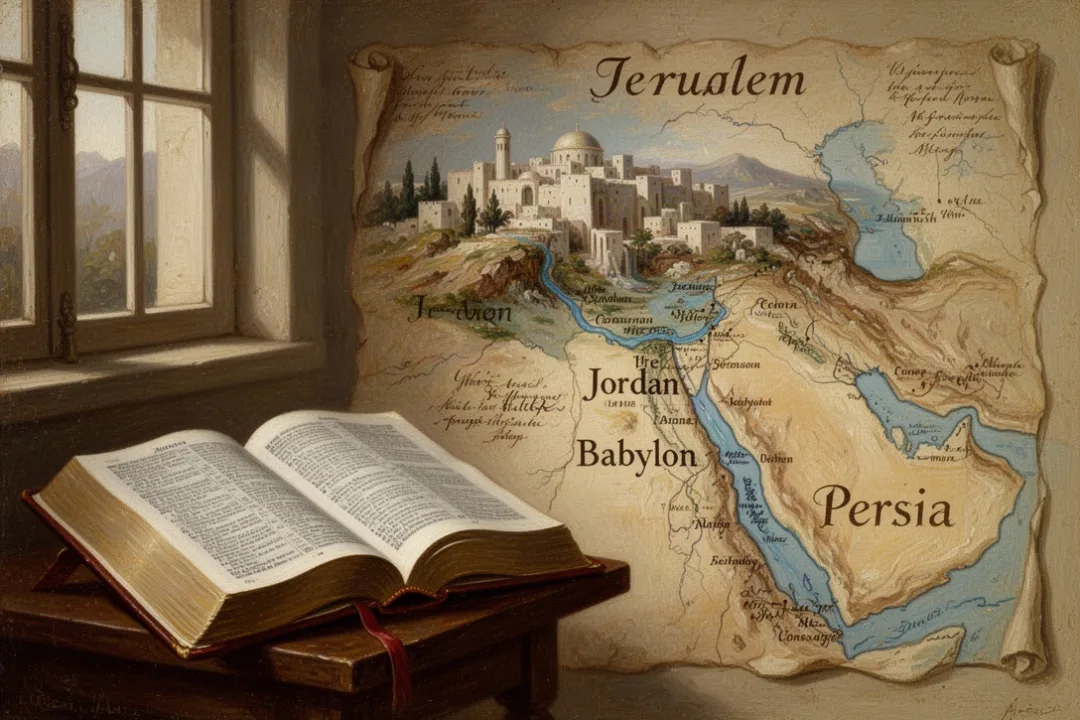
Confusing modern political borders with ancient geography: Use a reliable map showing the Jordan River, Jerusalem, Samaria, Judah, Assyria, Babylon, and Persia.
Overlooking women and outsiders: Ruth, Rahab, Deborah, Hannah, Abigail, Esther, Lydia, Priscilla, and other women play important roles in the biblical historical narratives.
Treating Acts as a complete church history: Acts records selected developments and does not describe every early Christian community.
Assuming all traditions use the same canon: Check whether the Bible edition is Protestant, Catholic, or Orthodox.
A practical reading order for the history books
Reading straight through from Joshua to Esther gives you the broad Old Testament sequence. However, a few connections make the material easier to follow. You can read Ruth alongside the early monarchy material because its genealogy leads toward David, and you can compare Samuel and Kings with Chronicles after becoming familiar with the basic storyline.
Read Joshua and Judges together: Notice the contrast between initial settlement and later instability.
Read Ruth before or during Samuel: This places David’s family background beside the account of his rise.
Read 1 and 2 Samuel next: Track the movement from Saul’s reign to David’s rule.
Read 1 and 2 Kings: Mark the division of the kingdom, the prophetic ministries, and the two exiles.
Read Chronicles as a retelling: Compare its treatment of David, Solomon, temple worship, and Judah’s kings with Samuel and Kings.
Read Ezra and Nehemiah together: Follow the linked challenges of temple restoration, city rebuilding, and communal reform.
Read Esther: Consider the experience of Jews who remained in the Persian Empire.
Read Acts after a Gospel: Luke and Acts form a natural pair in the New Testament tradition, moving from Jesus’ ministry to the church’s mission.
Keep a simple timeline as you read. Mark the settlement period, the judges, the united monarchy, the divided kingdoms, the Assyrian and Babylonian conquests, the Persian period, and the first-century expansion of the church. You do not need to memorize every king to understand the major movement.
The main themes that connect the history books
Leadership is one of the clearest themes. Joshua, judges, kings, governors, priests, prophets, apostles, and household leaders all shape the lives of others. The narratives repeatedly ask whether authority is being used for service, justice, worship, protection, or personal advantage.
Covenant faithfulness also links the books. Israel’s success is not measured only by land or military power. The books evaluate whether the people remember their obligations to God and to one another. Exile is interpreted as the result of long-term failure, while return creates an opportunity for renewal.
God’s presence during instability appears in different forms. Sometimes it is associated with the ark, the temple, a prophetic word, a deliverer, a courageous queen, or the Spirit’s work in the church. The historical books often place divine faithfulness beside human weakness rather than hiding the weakness.
Remembering the past is another central concern. Genealogies, festivals, public readings, songs, memorials, and written records keep communities from losing their identity. The books suggest that history can shape wiser choices, but only when people are willing to face failure honestly.
Finally, these writings emphasize that ordinary people matter. A widow, a foreign woman, a young servant, a farmer, a prophet’s apprentice, a city worker, or a house church leader can influence events far beyond their immediate circumstances. Their stories keep biblical history from becoming only a record of kings and battles.
Questions to ask while studying each book
A few consistent questions can turn a difficult passage into a more focused study. You can write the answers in a notebook or use them as prompts for group discussion.
What political, geographic, and family setting shapes this episode?
Who holds power, and who is vulnerable?
What does the narrator praise, criticize, or leave unresolved?
How do worship, justice, and loyalty affect the outcome?
Does the passage repeat a pattern found elsewhere in the book?
What changes for women, foreigners, the poor, exiles, or religious minorities?
How does this account connect with what comes before and after it?
What should be described as a historical claim, a theological interpretation, or a character’s personal viewpoint?
These questions help you avoid two opposite errors: treating the books as bare data or turning every scene into a simple lesson. The history books invite careful reading because they preserve both the complexity of human events and the convictions of the communities that remembered them.
Where the history books fit in the whole Bible
Joshua through Esther stand between the Pentateuch and the wisdom and prophetic writings in the Protestant Old Testament arrangement. They continue the story of Moses and Israel, then provide the setting for books such as Isaiah, Jeremiah, Hosea, Amos, and many other prophets. Knowing the historical setting makes those prophetic messages easier to understand.
Acts connects the four Gospels with the letters of the New Testament. Events in Acts explain the circumstances behind several letters, including conflicts, journeys, church communities, and missionary relationships. The book therefore serves as a bridge between Jesus’ ministry and the life of the early church.
Taken together, the history books cover a long and varied story: entering a land, forming a nation, living under kings, losing political independence, returning from exile, surviving under foreign empires, and carrying the Christian message across the Roman world. Their value lies not only in what happened but also in how communities interpreted those events and remembered the people involved.
Frequently asked questions
Are the history books of the Bible all in the Old Testament?
No. The commonly recognized Old Testament history books are Joshua through Esther, while Acts is generally considered the historical book of the New Testament. Some traditions also include Tobit, Judith, and 1 and 2 Maccabees among their historical writings. The exact list depends on the biblical canon used by a Protestant, Catholic, or Orthodox church.
What is the shortest history book in the Bible?
Ruth is the shortest of the commonly listed Old Testament history books, with four chapters. It tells the story of Ruth, Naomi, and Boaz during the period of the judges. The book is brief but connects a personal story of loyalty and family restoration to the ancestry of King David.
Are the books of Samuel and Kings historical or prophetic?
They are usually classified as historical books, although prophets play major roles in them. Samuel includes figures such as Samuel, Nathan, and Gad, while Kings features Elijah and Elisha among others. Their narratives record political events but evaluate kings and national choices through a theological and prophetic perspective.
Why do Chronicles repeat material from Samuel and Kings?
Chronicles retells much of Israel’s story for a community living after exile. It gives special attention to David, the temple, priests, worship, and the kings of Judah. Its differences from Samuel and Kings reflect a different purpose and emphasis, not simply an attempt to duplicate earlier accounts word for word.







Leave a Reply