Christian Old Testament: Books, Meaning, and How to Read It
Christian Old Testament: Books, Meaning, and How to Read It
The Christian Old Testament is the first major section of the Bible, telling the story of God’s covenant dealings with Israel before the life of Jesus.
The Christian Old Testament is a collection of ancient Jewish Scriptures that Christians receive as inspired Scripture. It describes creation, humanity’s rebellion, God’s relationship with Israel, the giving of the law, the rise and fall of kingdoms, Israel’s worship, and the hope of restoration.
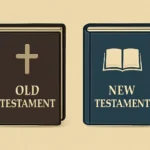
Christians call these writings the “Old Testament” because they understand them in relation to the new covenant associated with Jesus Christ. The word “old” does not mean useless or unimportant. It refers to the earlier covenant and its historical place in the biblical story.
The Old Testament is not one continuous book written in one style. It includes law, narrative history, poetry, wisdom literature, prophecy, songs, prayers, genealogy, and symbolic visions. Its books were written and preserved across many centuries, yet they repeatedly return to themes such as God’s holiness, human sin, covenant faithfulness, justice, mercy, and redemption.
Central idea: The Old Testament presents God as the Creator and covenant Lord who judges evil, shows mercy, forms a people, and promises a future restoration.
How the Christian Old Testament developed
The Christian Old Testament grew out of the Scriptures of ancient Israel. These writings were composed in different historical settings and eventually gathered into recognized collections. Jesus and the earliest Christians treated Israel’s Scriptures as authoritative, often referring to them as “the Scriptures” or “the Law and the Prophets.”
Most of the Old Testament was written in Hebrew, with smaller portions in Aramaic. The books were copied, translated, and transmitted through Jewish and Christian communities. The Greek translation known as the Septuagint also played an important role in the early Christian world.
Different Christian traditions do not have exactly the same Old Testament collection. Protestant Bibles generally contain 39 Old Testament books. Catholic Bibles include additional books commonly called the Deuterocanonical books, while Orthodox traditions may include an even broader collection. The differences concern the canon, not the central story of creation, covenant, Israel, judgment, and hope.
The Christian Old Testament books by major section
The books can be grouped in several ways. Jewish, Catholic, Orthodox, and Protestant traditions arrange them differently, but a basic Christian arrangement helps you see what each part contributes.
The Pentateuch: Genesis, Exodus, Leviticus, Numbers, and Deuteronomy.
Historical books: Joshua, Judges, Ruth, 1 and 2 Samuel, 1 and 2 Kings, 1 and 2 Chronicles, Ezra, Nehemiah, and Esther.
Wisdom and poetry: Job, Psalms, Proverbs, Ecclesiastes, and Song of Solomon.
Major Prophets: Isaiah, Jeremiah, Lamentations, Ezekiel, and Daniel.
Minor Prophets: Hosea through Malachi, a group of twelve shorter prophetic books.
The labels “major” and “minor” refer mainly to the length of the books, not their importance. A short book such as Micah or Habakkuk can make a major theological claim, while a longer book may develop several themes across a large historical setting.
The Pentateuch establishes creation and covenant
Genesis begins with creation, the dignity of human beings, sin, judgment, and God’s continuing purpose for the world. Its stories introduce Adam and Eve, Noah, Abraham, Isaac, Jacob, and Joseph. The promises to Abraham become especially important: God will bless him, form a people through him, and use that people as a means of blessing to others.
Exodus tells how God delivers Israel from slavery in Egypt and enters into a covenant with the nation at Mount Sinai. The tabernacle, priesthood, sacrifices, and laws describe how a holy God will dwell among a people who need forgiveness and guidance.
Leviticus focuses on worship, holiness, purity, sacrifice, and ethical responsibility. Numbers follows Israel’s wilderness experience, including repeated complaints, acts of unbelief, divine judgment, and divine provision. Deuteronomy presents Moses’ final teaching and calls Israel to love God, obey the covenant, and remember what God has done.
The historical books show faithfulness and failure
Joshua describes Israel’s entrance into the land promised to the patriarchs. Judges presents a recurring pattern: Israel turns away, suffers oppression, cries out, receives deliverance, and then returns to disobedience. The book’s repeated failures show the need for faithful leadership and a transformed people.
Ruth offers a more personal account of loyalty, loss, provision, and family redemption. Its story also connects to the royal line associated with David. First and Second Samuel trace the rise of Samuel, Saul, and David, while First and Second Kings follow the monarchy, the division of the kingdom, and the eventual exile of both Israel and Judah.
First and Second Chronicles retell much of Israel’s history with particular attention to David, the temple, worship, and the community of Judah. Ezra and Nehemiah describe the return from exile and the rebuilding of the temple and Jerusalem’s walls. Esther portrays the preservation of Jewish people in a foreign empire, even though God’s name is not explicitly mentioned in the Hebrew text.
Poetry and wisdom address ordinary human experience
Job wrestles with suffering, justice, and the limits of human understanding. It does not offer a simple explanation for every hardship. Instead, it challenges the assumption that suffering always proves a person’s guilt and directs attention toward God’s wisdom and sovereignty.
The Psalms contain prayers and songs for worship, grief, confession, thanksgiving, trust, kingship, and lament. They give readers language for bringing honest emotions before God. Some psalms celebrate God’s reign, while others ask why God seems distant or why the wicked appear to prosper.
Proverbs presents short teachings about wisdom, speech, work, discipline, relationships, money, and integrity. Ecclesiastes examines the apparent instability and frustration of life “under the sun,” urging humility about what human effort can ultimately secure. Song of Solomon celebrates marital love through poetic imagery.
The prophets call for repentance and hope
The prophets were not primarily fortune-tellers. They were covenant messengers who confronted idolatry, injustice, political arrogance, exploitation of the poor, and empty religious practice. They warned of judgment while also announcing mercy, restoration, and future hope.
Isaiah speaks of judgment against sin and nations, but also of comfort, a restored people, God’s servant, and a renewed creation. Jeremiah warns Judah before the fall of Jerusalem and speaks of a future covenant written on the hearts of God’s people. Lamentations mourns Jerusalem’s destruction.
Ezekiel uses vivid visions and symbolic actions to explain judgment, God’s departure from and return to the temple, the responsibility of individuals, and the restoration of Israel. Daniel combines stories of faithfulness in exile with visions of kingdoms, conflict, judgment, and God’s everlasting rule.
The twelve Minor Prophets address different moments and problems. Amos condemns oppression and religious hypocrisy. Hosea uses the image of a troubled marriage to portray Israel’s unfaithfulness and God’s persistent love. Micah condemns corruption and points toward humble obedience. Habakkuk questions God about injustice, while Malachi calls for renewed faithfulness.
A step-by-step way to read the Christian Old Testament
Reading the Old Testament becomes clearer when you pay attention to its setting, genre, covenant structure, and movement toward hope. The following approach can help you read responsibly rather than treating every passage as an isolated saying.
Identify the book and genre. Ask whether you are reading law, narrative, poetry, wisdom, prophecy, or apocalyptic vision. Genre affects how language and structure work.
Locate the passage in the story. Determine whether Israel is before the exodus, in the wilderness, in the land, divided into kingdoms, in exile, or returning from exile.
Notice the covenant setting. Ask what God has promised, what the people are commanded to do, and what consequences or blessings the passage describes.
Read the surrounding context. A verse about sacrifice, war, kingship, or judgment may be misunderstood if separated from the chapters around it.
Look for the book’s main concern. Consider what problem the author addresses and what response the text seeks from its original audience.
Compare related passages. Themes such as creation, exodus, temple, kingship, sacrifice, wisdom, and restoration often develop across several books.
Read through the Christian canon. Christians interpret the Old Testament in light of Jesus and the New Testament, while still taking the original Old Testament setting seriously.
Apply the passage carefully. Distinguish between a command given to ancient Israel, a principle reflected in the text, and a direct instruction for Christian life.
Reading tip: Do not begin with difficult laws or obscure visions in isolation. Start with Genesis, Exodus, selected Psalms, the historical storyline, and a trusted guide to the prophetic books.
How covenant shapes the Old Testament story
Covenant is one of the most important ideas in the Christian Old Testament. A covenant is a solemn relationship established through promises, obligations, signs, and sometimes sacrifices. God’s covenants with Noah, Abraham, Israel, David, and the future restored people each contribute to the larger biblical story.
The covenant with Noah emphasizes God’s preservation of the world after the flood. The covenant with Abraham focuses on descendants, land, and blessing. At Sinai, God forms Israel as a covenant nation and gives laws for worship, community life, justice, and holiness.
The covenant with David connects God’s purposes to a royal line. David’s descendants are associated with the kingdom and the hope of a faithful ruler. When later kings fail and the kingdom collapses, the promise creates a tension that the prophets address through expectations of future restoration.
Israel’s repeated disobedience does not make the covenant theme disappear. Instead, the Old Testament shows both the seriousness of covenant breaking and the persistence of God’s purposes. Prophetic promises of a renewed covenant, a cleansed people, and a restored relationship with God become central to Christian interpretation.
How Christians understand Old Testament law
Old Testament law includes commands about worship, sacrifice, food, agriculture, courts, family life, property, festivals, sexual conduct, and care for vulnerable people. These laws were given within Israel’s covenant life and should not be read as a random list detached from that setting.
Many Christian traditions distinguish between laws connected especially to Israel’s ceremonial worship, laws governing the ancient nation, and moral principles that express God’s character. The exact categories and their application vary among denominations. Christians generally agree that the law reveals God’s holiness and exposes human sin, even when they disagree about how particular commands apply today.
Jesus’ teaching, as recorded in the Gospels, treats the Old Testament as authoritative while emphasizing its deepest purposes: love for God, love for neighbor, mercy, justice, and wholehearted obedience. The New Testament also presents Jesus as fulfilling the law and the prophetic hope. This does not permit careless dismissal of the Old Testament; it calls for reading it within the complete Christian story.
Why the Old Testament includes violence and judgment
Some of the most difficult passages describe war, conquest, death, exile, or severe judgment. These texts require careful attention to historical context, literary form, the biblical presentation of divine justice, and the difference between describing an event and prescribing it for later readers.
The Old Testament does not portray Israel as morally superior to every other nation. Israel itself faces judgment for idolatry, oppression, violence, and covenant unfaithfulness. The prophets repeatedly insist that belonging to Israel does not make injustice acceptable.
Christians approach these passages in different ways. Some emphasize God’s unique authority as judge and the specific role of certain events in biblical history. Others stress the use of ancient war language, the theological purpose of the narratives, or the need to interpret all Scripture through the teachings of Jesus. Responsible reading avoids both minimizing the difficulty and making confident claims that the text itself does not establish.
How the Old Testament points toward Jesus in Christian interpretation
Christians read the Old Testament as a unified story that reaches fulfillment in Jesus, but they do not need to turn every detail into a hidden prediction. Some passages directly express future hope; others establish patterns, symbols, offices, or institutions that Christians later understand as fulfilled in Christ.
Creation: Jesus is understood as participating in God’s work of creation and renewal.
Exodus: Deliverance from slavery becomes a pattern for salvation and freedom from sin.
Sacrifice and priesthood: These prepare the framework for Christian teaching about atonement and mediation.
Davidic kingship: The promise of a lasting royal line contributes to the Christian understanding of Jesus as Messiah.
Prophetic hope: Promises of a new covenant, restored people, God’s Spirit, and renewed creation are connected with the work of Christ.
Wisdom and worship: Psalms and wisdom writings shape Christian reflection on prayer, righteousness, suffering, and faithful living.
The New Testament quotes or alludes to the Old Testament frequently. For Christians, this shows continuity between the two testaments. The Old Testament provides the vocabulary and storyline that make terms such as Messiah, sin, sacrifice, redemption, kingdom, covenant, and resurrection meaningful.
What Christians can learn from the Old Testament today
The Old Testament teaches Christians to take both worship and ethics seriously. Its prophets reject religious ceremonies that coexist with exploitation, dishonesty, and neglect of the poor. Its wisdom books show that faith includes speech, work, friendship, money, sexuality, leadership, and responses to suffering.
Its stories also provide a realistic account of human character. Abraham trusts and doubts. Moses leads and fails. David shows courage and commits serious sin. Elijah experiences spiritual confidence and exhaustion. These accounts do not present biblical leaders as flawless heroes; they show the consequences of sin and the possibility of repentance.
The Psalms give Christians permission to pray with honesty. Lament is not treated as a failure of faith. A person can grieve, question, confess, wait, praise, and ask for justice within the life of prayer. This range of expression remains one of the Old Testament’s most practical gifts.
The Old Testament also widens the meaning of justice. God’s concern includes the widow, orphan, foreigner, poor laborer, debtor, prisoner, and person who lacks social power. The prophets repeatedly connect love for God with honest courts, fair treatment, compassionate generosity, and resistance to exploitation.
Common mistakes when reading the Christian Old Testament
One common mistake is treating the Old Testament as a collection of disconnected moral examples. David and Goliath, Daniel in Babylon, and Jonah’s experience may offer lessons, but each story also belongs to a larger account of covenant, judgment, mercy, and God’s purposes.
Another mistake is assuming that every passage has the same kind of meaning. A proverb is not a guaranteed promise in every circumstance, a lament is not a doctrinal statement in every line, and a prophetic image should not automatically be read as a literal timetable of future events.
A third mistake is portraying the Old Testament God as harsh and the New Testament God as gentle. Both testaments speak of judgment and mercy, holiness and forgiveness. The Christian claim is that the same God acts throughout Scripture, with Jesus providing the fullest revelation of God’s character and saving purpose.
Do not ignore context: Read the whole paragraph, chapter, and book.
Do not flatten genres: Poetry uses imagery, while law and narrative function differently.
Do not erase Israel’s setting: These writings first addressed real communities in particular historical circumstances.
Do not treat difficult passages casually: Ask what the text says, what it does not say, and how Christian interpretation has addressed it.
Do not separate theology from ethics: Knowing God in the Old Testament is repeatedly linked with faithful conduct.
A practical reading plan for the Christian Old Testament
A reader who wants to understand the whole collection can combine a storyline approach with shorter selections from poetry and prophecy. Reading every book in canonical order is valuable, but the historical and literary connections may become easier to see with a guided sequence.
Read Genesis to understand creation, the fall, the flood, the patriarchs, and Joseph.
Read Exodus, especially the deliverance from Egypt, the covenant, and the tabernacle sections.
Read selected passages from Leviticus, Numbers, and Deuteronomy with attention to holiness and covenant life.
Read Joshua, Judges, Ruth, 1 Samuel, 2 Samuel, and selected chapters from Kings.
Read Psalms and Proverbs alongside the historical books to experience Israel’s worship and wisdom.
Read Isaiah, Jeremiah, Ezekiel, and Daniel with an explanation of the exile and its causes.
Read Ezra, Nehemiah, Esther, and the twelve Minor Prophets to consider life before and after exile.
Revisit major themes through the Gospels and New Testament passages that quote the Old Testament.
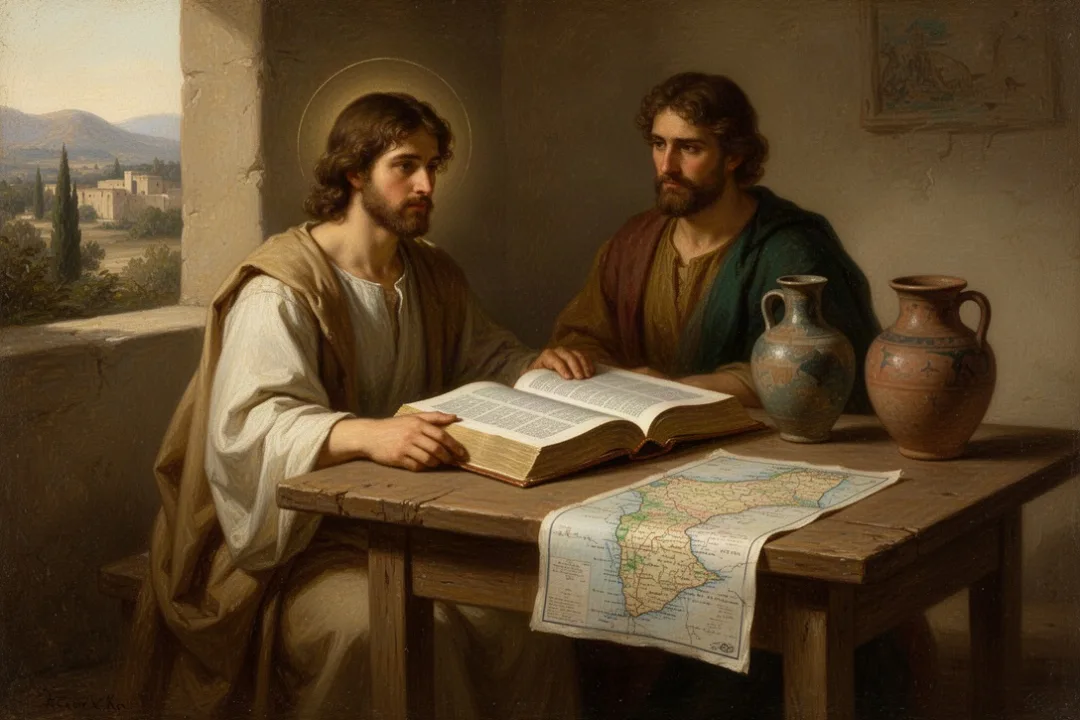
Use a Bible translation you can understand, but compare another translation when a passage seems unclear. Study notes, maps, historical background, and cross-references can help, especially in books involving ancient customs, political events, measurements, or poetic symbolism.
Why the Christian Old Testament remains essential
The Christian Old Testament gives the Bible its beginning, vocabulary, history, and expectation. Without it, concepts such as creation, covenant, sin, sacrifice, kingdom, prophecy, Messiah, and resurrection lose much of their biblical depth.
It also refuses to offer a shallow picture of faith. The Old Testament contains celebration and grief, obedience and rebellion, wisdom and confusion, judgment and mercy. It teaches readers to worship God, face sin honestly, pursue justice, endure suffering, and hope for the restoration of all things.
For Christians, the Old Testament is therefore neither an obsolete preface nor a collection of unrelated ancient documents. It is the first part of the Bible’s unfolding witness to God’s work, read in continuity with the New Testament and centered ultimately on God’s covenant faithfulness.
Frequently asked questions
Is the Christian Old Testament the same as the Hebrew Bible?
The collections overlap substantially, but their organization and, in some Christian traditions, their contents differ. The Hebrew Bible is arranged as the Torah, Prophets, and Writings. Protestant Old Testaments contain the same core books arranged differently, while Catholic and Orthodox Bibles include additional writings accepted by those traditions.
Why do Christians call it the “Old” Testament?
The term refers to the earlier covenant established in the biblical story, especially the covenant associated with Israel. Christians believe Jesus establishes the new covenant, but they do not generally regard the earlier Scriptures as worthless. The Old Testament remains authoritative for understanding God’s character, Israel’s history, sin, worship, and the promises fulfilled in Christ.
Should Christians obey every Old Testament command?
Christians agree that the Old Testament reveals God’s holiness and moral purposes, but traditions differ about how particular laws apply after Christ. Commands connected to Israel’s temple worship, sacrifices, civil government, and ritual practices are interpreted differently from enduring teachings about love, justice, faithfulness, and care for others.
What is the best Old Testament book to read first?
Genesis is usually the most helpful starting point because it introduces creation, sin, covenant, the patriarchs, and the family that becomes Israel. Exodus follows naturally. Psalms can be read alongside the narrative for prayer and worship, while a study guide can make prophetic books and ancient historical settings easier to understand.





Leave a Reply