How Do We Know Moses Wrote Genesis? Evidence and Theories
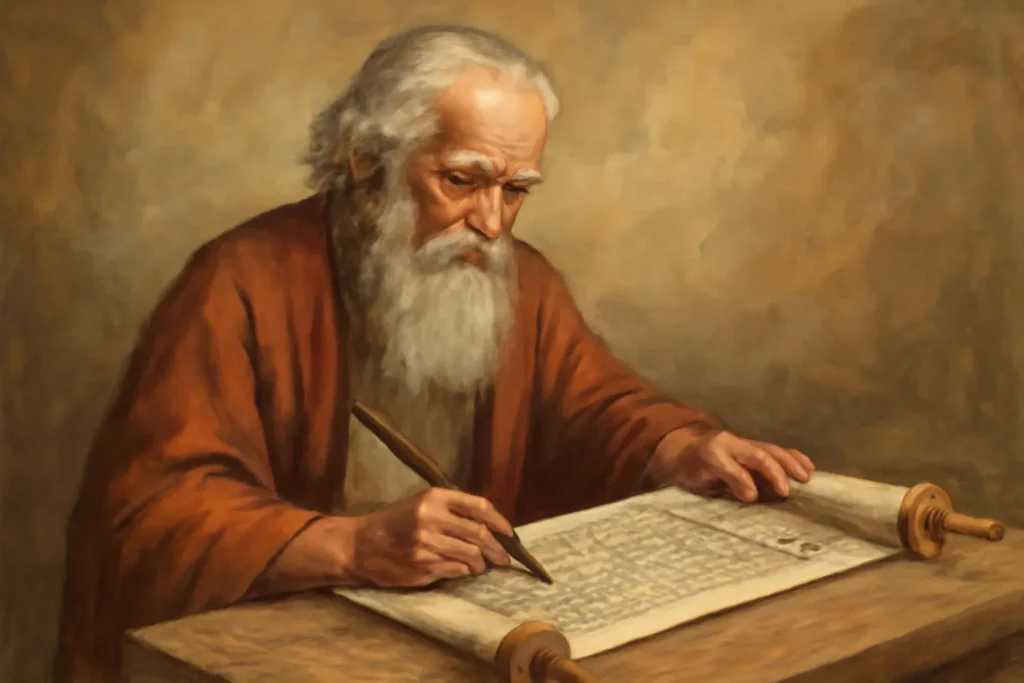
The question of who wrote Genesis has engaged readers, theologians, and scholars for centuries. While traditional religious teaching often attributes these foundational biblical writings to Moses, modern scholarship tends to treat the Pentateuch (Genesis through Deuteronomy) as the product of multiple voices, editors, and traditions compiled over time. This article surveys the ways researchers and readers approach the question, examining the evidence, the major theories, and the variety of viewpoints that shape contemporary discussions about Mosaic authorship and the composition of Genesis.
Historical Background: The Setting of the Question
In many religious communities, the idea that Moses wrote Genesis rests on a combination of tradition, scriptural references, and the broader assumption that a single prophetic author (Moses) dictated or compiled the laws and early narratives that define Israel’s earliest history. Yet the text of Genesis itself does not explicitly name a human author. Instead, readers encounter a rich tapestry of stories—creation, flood, patriarchs, exodus narratives, and genealogies—longstanding in oral and written form. The question, then, is not simply “Who wrote Genesis?” but “What is the most plausible account of its origins given internal content, historical context, and available manuscript evidence?”
Two key ideas frame most discussions about authorship. First, the Pentateuch (the first five books of the Bible) is often treated as a single literary unit by theologians and lay readers, even though many scholars think it emerged through multiple stages of composition. Second, the traditional claim that Moses authored or at least compiled Genesis has had enormous influence on how communities interpret the text, even as critical methods increasingly emphasize authorship as a complex, layered process rather than a single, identifiable author.
The Documentary Hypothesis: A Framework for Understanding Genesis
One of the most influential scholarly approaches to Genesis and the Pentateuch is the Documentary Hypothesis, a model that proposes the text originated from several distinct sources that were later edited into a unified narrative. Although the specifics have evolved and some scholars have revised or rejected parts of the theory, the Documentary Hypothesis remains a central reference point in discussions about Mosaic authorship and the composition of Genesis.
The Four Main Sources (J, E, P, D) and Genesis
J source (the Jahwist)—often associated with narratives that use the divine name YHWH (LORD) and human-like portrayals of God. In Genesis, many scholars assign portions that present a vivid, anthropomorphic depiction of divine action to J.
E source (the Elohist)—tends to emphasize prophetic and dream motifs and uses the term Elohim for God in certain passages. Some Genesis sections are attributed to E due to stylistic and thematic features.
P source (the Priestly source)—distinguished by genealogies, priestly concerns, formal lists, and systems of laws or ritual detail. In Genesis, the genealogies, the creation account in Genesis 1, and other structured materials are often associated with P.
D source (the Deuteronomist)—more prominent in Deuteronomy, but debates sometimes place earlier Deuteronomistic redactional activity across the Pentateuch. In Genesis, D elements are less visible than in Deuteronomy, but scholars consider redactional layers that reflect Deuteronomistic concerns.
Proponents of the Documentary Hypothesis argue that Genesis exhibits distinct literary strands—each with its own vocabulary, theological emphases, and narrative aims—that were later woven together by redactors. Supporters might point to shifts in divine names, differences in geography, and variations in genealogical and legal material as evidence for combining multiple strands. Critics, meanwhile, acknowledge the utility of the framework but note that not all Genesis material cleanly slots into one source category. The upshot is that, under this framework, Genesis is not a single author text but a composite that reflects multiple voices and traditions, which has implications for the idea of a lone author like Moses.
In this view, the question becomes less about whether Moses wrote Genesis in a strict sense, and more about whether a Moses-era frame or perspective can account for the blending and layering of sources that biblical scholars detect in the text. The Documentary Hypothesis thus reframes the question from a question of a single author to a question about origin, transmission, and redactional editing across generations.
Some scholars prefer less rigid distinctions and speak simply of compositional layers or editorial redaction rather than discrete sources.
Others emphasize supplementary theory or fragmentary theory as alternative ways to explain how Genesis developed from smaller pieces over time.
A number of studies explore how ancient Near Eastern literary conventions could shape the Genesis text without requiring a single author’s hand.
Internal Evidence in Genesis Itself
Beyond the Documentary Hypothesis, scholars also examine the internal features of Genesis to assess claims about Mosaic authorship. While Genesis does not explicitly name its author, certain internal factors are discussed in debates about how Genesis came together and what that implies about the idea that Moses wrote it.
Genesis displays a range of naming conventions for God (e.g., YHWH versus Elohim), which some scholars see as markers of different traditions or redactional layers.
The use of genealogies and numerological patterns in Genesis has led some to argue for a priestly or temple-oriented editorial hand. This is often linked to P source characteristics.
Different narrative voices, perspectives on blessing, covenant, and blessing formulae appear across Genesis. These shifts are cited as evidence for multiple contributors or later edits rather than a single authorial voice.
Genesis presents a broad arc—from creation and primeval history to the patriarchal narratives. Some scholars contend that a single author would struggle to harmonize such a sweeping range of themes; others argue that a coherent project could reflect a deliberate theological strategy.
Key motifs—such as covenant fidelity, divine promises, and human failure—show up in varied forms. The way these motifs are framed can point to different editorial aims rather than to one author.
In sum, internal evidence often leads readers to see Genesis as a composite text that may reflect multiple strata, rather than a straightforward, singular authorship narrative attributed to Moses.
External Evidence: Tradition, Manuscripts, and Early Interpretations
External evidence asks what ancient readers and communities believed about the authorship of Genesis and how they treated the text. This includes early Jewish and Christian traditions, as well as manuscript history and the way the Pentateuch was handled in ancient copies and translations.
Historically, many communities held to the belief that Moses authored the Pentateuch, including Genesis. This traditional view is reflected in rabbinic writings and the early church Fathers who frequently attributed the five books to Moses or to a Mosaic authorship framework.
Some patristic writers argued that Moses wrote: "from creation to the giving of the law" as a way to emphasize the unity of the Pentateuch’s message, while others acknowledged that it may be more accurate to speak of Moses as the primary lawgiver and organizer of material that older traditions had already circulated.
Over time, as theological emphasis shifted and textual criticism developed, many Christian and Jewish scholars began to distinguish between Mosaic authorship as a divine in-spiration of a foundational text and human authorship as a process involving later editors and scribes.
The existence of ancient manuscripts (such as the Dead Sea Scrolls) demonstrates that the Pentateuch circulated in multiple forms and with variations that reflect copyists’ practices and local readings. This confirms that transmission was complex and layered, which in turn invites careful consideration of claims about a single original author.
Translations into Greek (the Septuagint) and later Latin versions show how early translators understood the text and sometimes augmented or clarified ambiguities. The translation history can illuminate how readers in different periods imagined authorship and authority.
Some early Jewish authorities engaged in textual discussion about the Pentateuch’s composition, using arguments about authorship to defend or refine doctrinal positions. This shows a long-standing interest in who wrote the text and how it should be read.
External evidence, thus, does not settle the question but shows that the assumption of a single author linked to a central figure—often Moses—has deep roots in tradition. It also reveals how those traditions evolved in response to textual findings and interpretive needs over time.
Tradition and the Theological Implications of Mosaic Authorship
Religious communities often tie the question of authorship to broader theological implications. The claim that Moses wrote Genesis is not only about literary provenance; it also affects how readers understand revelation, covenant, and law. Some key implications discussed in this vein include:
Respect for divine inspiration and the sense that sacred texts are given to a chosen messenger or leader, with Moses serving as a central figure in Israel’s communal memory.
The relationship between law and narrative: if Genesis is authored by Moses, it may be read alongside the legal material that Moses is traditionally believed to have delivered, inviting a more integrated view of law and story.
Authority and transmission: longstanding tradition may influence how communities treat Genesis in liturgy, catechesis, and ethical reflection.
Scholars who doubt single-author authorship nonetheless often recognize that tradition plays a crucial role in shaping how Genesis is interpreted and valued in different faith communities. The balance between honoring tradition and engaging critical inquiry is a central tension in discussions about Mosaic authorship and the authorship of Genesis.
Modern Scholarly Positions: A Spectrum of Views on Mosaic Authorship
Today, there is a broad spectrum of positions regarding whether Moses wrote Genesis and the Pentateuch as a whole. The following summarizes key stances and the reasoning behind them.
Some scholars and religious thinkers continue to defend the notion of Mosaic authorship, arguing that Moses either wrote Genesis or compiled it from earlier traditions under divine guidance. They may treat Genesis as a unified theological narrative anchored in Moses’ leadership and the Exodus event.
Supporters often highlight the Pentateuch’s central role in Israelite identity and law, and they may invoke biblical statements that imply Moses’ authorship or authorship by one figure closely associated with Moses’s generation.
Many contemporary scholars favor some form of the Documentary Hypothesis or related redaction theories, arguing that Genesis preserves multiple sources and editor-driven revisions rather than a single author’s hand.
Within this approach, the question becomes less about identifying Moses as the author and more about understanding how a community’s scriptures were formed—how traditions circulated, were organized, and were harmonized into the text that later readers encountered.
Alternative models propose that Genesis grew through supplementary additions to an earlier core narrative, or through a collection of fragments that were later stitched into a continuous story by editors.
This view accommodates the appearance of different narrative voices, stylistic shifts, and variations in vocabulary without insisting on a single author.
Some scholars pursue nuanced redaction theories that allow for a central organizing hand while acknowledging significant material from multiple sources. This approach emphasizes the role of redactors who shaped materials into a cohesive whole rather than writing them from scratch.
In such models, debates about authorship become debates about editorial intention, theological aims, and community memory rather than straightforward questions of literary attribution to a single person.
What Counts as Evidence for or Against Mosaic Authorship?
Evaluating the claim that Moses wrote Genesis involves weighing a variety of evidence. Here are some of the kinds of considerations scholars weigh, with brief notes on what they can (and cannot) prove.
Presence or absence of explicit author claims in Genesis itself. The text rarely (if ever) says, “Moses wrote this.”
Consistency or inconsistency of stylistic features across Genesis that might indicate multiple authors or editors.
Relationships to other books in the Pentateuch, especially how Genesis interacts with Exodus, Leviticus, Numbers, and Deuteronomy in terms of style, vocabulary, and theological emphasis.
The way Genesis presents covenant, creation, and early history might align with or diverge from the concerns attributed to Mosaic leadership.
Archaeological and historical context can shed light on when certain stories likely circulated or were written, which may support or challenge a Mosaic-era composition.
Documented variations in manuscripts can reveal how the text evolved over time and help identify editorial hands that may or may not trace back to Moses’ era.
Translations and reception history illuminate how different communities understood authorship and authority, which in turn informs scholarly conclusions about Mosaic authorship.
Ultimately, readers should recognize that the presence of multiple strands, layered editors, and ancient transmission practices complicates any strict claim that Genesis was authored solely by Moses. However, this does notMean that the figure of Moses is unimportant: many scholars stress Moses' central role as a foundational figure in the narrative arc of Genesis and the Pentateuch, whether as primary organizer, recipient of revelation, or symbolic anchor for the collection’s unity.
As with any major scholarly debate, there are frequent objections to the Mosaic-authorship position, as well as common counterarguments. Here are some representative points and how critics and proponents respond.
Objection: If Moses wrote Genesis, why does the text not explicitly say so? How can you claim authorship on the basis of tradition alone?
Response: In ancient literary culture, explicit author attributions were not always included in biblical texts. Many works circulated with their authors unmentioned, while later traditions attributed them to prominent figures. The absence of a direct statement does not conclusively rule out a historical plausibility or traditional credibility for a Moses-era origin, but it does invite caution and a search for corroborating evidence.
Objection: The internal evidence clearly points to multiple sources or editors. How can Moses be the author in such a scenario?
Response: The presence of multiple voices does not automatically negate the possibility that Moses founded or initiated the project, or that he played a guiding role in collecting and shaping earlier traditions. A single leader could have commissioned, gathered, or edited sources under divine direction, resulting in a composite work with a central guiding influence.
Objection: Early Genesis stories reflect older oral and local traditions that predate the Mosaic era. How can Moses claim authorship over material that likely existed before his time?
Response: The question of authorship is not limited to historical dating. A broader framework considers the process by which oral and written traditions are gathered, edited, and canonized. Whether certain traditions are older or younger does not automatically determine the author’s identity; it may instead reflect a complex chain of transmission and editorial activity in which Moses is a central, authoritative figure within a particular tradition.
The question of Mosaic authorship influences how readers approach Genesis in religious, literary, and historical contexts. Some practical implications include:
Interpreting Genesis as a unified narrative versus recognizing its composite nature helps readers appreciate its depth and diversity of voices.
Understanding how tradition shapes interpretation can encourage humility in reading ancient texts—acknowledging that belief communities have long wrestled with authorship, authority, and revelation.
Recognizing multiple possible models of authorship invites a more nuanced approach to biblical texts, one that values both scholarly methods and faithful reading.
In light of the evidence and theories discussed, the most balanced way to answer how do we know Moses wrote Genesis is to acknowledge the following:
There is a strong traditional association of Moses with the Pentateuch, including Genesis, in many faith communities and early interpretive traditions.
The Documentary Hypothesis and related theories offer a robust framework for understanding Genesis as a composite text with multiple sources and editorial stages, rather than the product of a single author in the Mosaic era.
Internal features of Genesis—naming patterns, doublets, variations in style and emphasis, and genealogical material—often align with what scholars attribute to redactional activity or multiple sources.
External evidence from manuscript history and reception shows a long tradition of attributing the text to Moses, even as textual criticism emphasizes a more complex authorship history.
Thus, the best answer today may be phrased as follows: Mosaic authorship of Genesis is unlikely to be a simple, one-to-one authorship claim. Instead, Genesis can be understood as a sacred text with deep traditional association to Moses, shaped by a long process of transmission, compilation, and redaction that involved multiple voices and communities. Readers who seek a comprehensive understanding will likely benefit from engaging both traditional beliefs and critical scholarship, recognizing that each approach illuminates different aspects of this foundational biblical book.
The question “how do we know Moses wrote Genesis?” does not have a single, definitive answer. It invites us into a long-standing conversation about authorship, transmission, tradition, and interpretation. By examining internal textual features, external traditions, manuscript history, and modern scholarly methods, readers can appreciate the complexity of Genesis’s origins while remaining mindful of the enduring significance of Moses as a central figure in its historical and theological memory. Whether one leans toward a traditional Mosaic-authorship view, a more nuanced redactional model, or a hybrid perspective that honors both history and faith, the study of Genesis remains a dynamic field—one that invites ongoing questioning, careful analysis, and careful reading of what this ancient book has to say to readers today.
For further exploration, you might engage with these guiding questions:
What early texts or traditions most strongly imply a Mosaic influence on Genesis?
How do modern manuscript discoveries shape our understanding of Genesis’s authorship?
In what ways do theological aims influence editorial decisions in the Genesis narratives?
How can readers hold multiple scholarly explanations about authorship while still finding meaning in Genesis’s stories?
Ultimately, the inquiry into How Do We Know Moses Wrote Genesis? remains a fruitful intersection of faith, history, and literature. It is a reminder that biblical texts are living documents—shaped by generations of readers, editors, and communities who continue to ask, interpret, and reflect on where these ancient words come from and what they mean for us today.










Leave a Reply