Leprosy from the Bible: meaning, stories, and lessons
Leprosy from the Bible: meaning, stories, and lessons
Leprosy in the Bible does not always mean Hansen’s disease, the specific bacterial illness known by that name today. Biblical writers used terms translated as “leprosy” for a range of visible skin conditions and, in some passages, discoloration or decay affecting clothing and buildings.
The subject combines medical uncertainty, religious purity, social separation, and healing. The Bible presents leprosy as a condition that could make someone ritually unclean and require temporary isolation, but it does not teach that every person with a skin disease was personally sinful.
The main Hebrew term translated as leprosy is tzara’at. Its precise medical meaning is uncertain. It appears in laws concerning human skin, fabric, leather, houses, and other surfaces, so it cannot refer only to modern Hansen’s disease.
The Greek word lepra is also broader than the modern medical term. Ancient people did not classify diseases using today’s laboratory tests, bacterial theories, or dermatological categories. Biblical translations retained the familiar word “leprosy,” even though readers should not automatically connect every passage with one particular illness.
Some biblical cases may have involved scaly skin, discoloration, swelling, or chronic eruptions. Other cases may have been temporary conditions that changed noticeably over time. The text focuses less on naming the disease and more on determining whether the person or object was clean, unclean, healed, or restored.
Important distinction: Biblical “leprosy” is a translation category, not a reliable diagnosis of Hansen’s disease. Reading every passage through the modern meaning can create confusion about both the Bible and the historical illness.
How the laws in Leviticus handled suspected leprosy
Leviticus 13 and 14 contain the Bible’s most detailed instructions about skin conditions and ritual status. A priest examined the affected area, considered its appearance, and sometimes required the person to remain separated for a period before another examination.
The priest was not functioning as a modern doctor. His role was connected to Israel’s worship system and community boundaries. He determined whether the person was ceremonially clean or unclean according to the law, while the text does not claim that he identified the exact biological cause of the condition.
A suspected case did not always result in a permanent declaration. The instructions describe observations such as whether a mark appeared deeper than the surrounding skin, spread, changed, or showed signs of recovery. A person could be isolated temporarily and examined again rather than being condemned immediately.
When someone was declared unclean, the person had to live outside the main camp or community area. Leviticus 13 describes distinctive clothing and public warning behavior so that others would know the person’s status. These practices created distance, but they also established a formal process rather than leaving the community to react through rumor or fear.
The separation had a ritual and communal purpose. It was not necessarily a judgment that the person had committed a particular sin. The biblical system treated several ordinary bodily conditions as causes of ritual uncleanness, including some bodily discharges and contact with death. Ritual uncleanness and moral guilt were related concepts in the religious system but were not identical.
Why clothing and houses could also be called affected
Leviticus 13 applies related language to clothing and leather. A greenish or reddish mark that spread could lead to inspection, washing, isolation, or destruction of the material. This language likely concerns mildew, mold, or fungal deterioration rather than a disease literally spreading through fabric in the same way it affects human skin.
Leviticus 14 also discusses houses with suspicious patches or spreading discoloration. The priest inspected the building, ordered it closed for a time, and returned to see whether the problem had changed. If the condition persisted, contaminated materials could be removed, and in severe cases the structure could be dismantled.
These passages show that biblical leprosy terminology was not limited to one human disease. The shared concern was visible contamination or decay that might affect the health, holiness, or orderly life of the community. The rules also show a practical concern with inspection, waiting, cleaning, and preventing a spreading problem.
Readers should avoid forcing a single modern explanation onto every detail. Some features may resemble mold or mildew, but the laws also serve a symbolic religious purpose. The biblical text joins physical observation with the theological idea that Israel’s camp and worship space were to remain holy.
What ritual uncleanness meant for a person with leprosy
Being declared unclean could affect a person’s housing, worship, clothing, and contact with others. The person might have to live apart from the community and could not participate normally in sacred activities until being declared clean.
This separation was painful because it affected more than physical health. A person could lose daily companionship, family routines, economic opportunities, and public dignity. The biblical laws recognize that the condition required a visible social response, but they also set boundaries around that response through priestly examination and procedures for restoration.
Unclean did not mean worthless. That distinction matters when reading the stories. The law marked a person’s ritual status at a particular time; it did not erase the person’s humanity or prove that God had rejected him or her.
Leviticus 14 describes a restoration process after healing. The priest went outside the camp to examine the person. If the condition had cleared, the person brought specified offerings, washed, changed clothing, and completed additional steps before returning fully to the community and worship.
The offerings could include birds, animals, grain, oil, and other materials depending on the person’s circumstances. Leviticus makes provision for people who could not afford the more costly offerings, which shows that restoration was not intended to be limited to the wealthy.
The procedure did not magically cure the condition. It recognized that healing had occurred and allowed the person to reenter community life. The priest served as the official witness who confirmed the change in status.
What Miriam’s experience teaches about biblical leprosy
Numbers 12 tells of Miriam becoming affected with a condition traditionally translated as leprosy after she and Aaron challenged Moses. The passage connects her condition with a dispute about Moses’ authority, making it one of the clearest examples in which a skin affliction is linked to a specific act of disobedience.
Even here, the story should not be turned into a general rule that every sick person is being punished. The narrative is about a particular prophetic event involving particular leaders. Aaron acknowledges wrongdoing, Moses intercedes, and Miriam remains outside the camp for a limited period before being brought back.
Miriam’s case also shows that separation was not always permanent. Her exclusion lasted seven days in the account, after which the people continued their journey. The story combines discipline with intercession and restoration rather than presenting illness as the end of a person’s place among God’s people.
What Naaman’s healing reveals about faith and status
Naaman, described in 2 Kings 5, was a powerful commander from Aram who had a skin disease translated as leprosy. His military position and social influence could not solve the problem, and he sought help through the prophet Elisha.
Elisha instructed Naaman to wash in the Jordan River. Naaman initially reacted with anger because he expected a more dramatic remedy and considered the rivers of his homeland superior. After his servants persuaded him to follow the instruction, he washed and was restored.
The story emphasizes humility, obedience, and God’s concern for outsiders. Naaman was not an Israelite, yet he received healing through the God of Israel. The prophet did not perform a public spectacle or accept payment for the healing, reinforcing that divine mercy could not be controlled by status or purchased with wealth.
Naaman’s story also contrasts external rank with personal vulnerability. A commander could lead armies and command respect while still needing help with an intimate and stigmatizing condition. His healing changes not only his skin but also his understanding of God.
The account includes a warning through Gehazi, Elisha’s servant. Gehazi secretly pursued Naaman and accepted gifts after Elisha had refused them. As a consequence, Gehazi was struck with the condition that Naaman had been healed from. The narrative condemns greed and deception, not the existence of skin disease itself.
How other Old Testament stories use leprosy
King Uzziah is described in 2 Chronicles 26 as becoming affected with leprosy after entering the temple to burn incense, an act reserved for the priests. He remained separated from the temple and from ordinary royal life for the rest of his reign.
This story uses the condition to express a breach of sacred boundaries. Uzziah’s political power did not give him authority to take over a priestly duty. The resulting separation illustrates how the biblical writers connected holiness with limits on religious authority.
The stories of Miriam, Naaman, Gehazi, and Uzziah are not interchangeable. Miriam’s account centers on a challenge to leadership, Naaman’s on healing and an outsider’s response, Gehazi’s on dishonest gain, and Uzziah’s on improper worship. The same translated word appears in different narrative settings, so each passage must be read on its own terms.
How Jesus treated people with leprosy
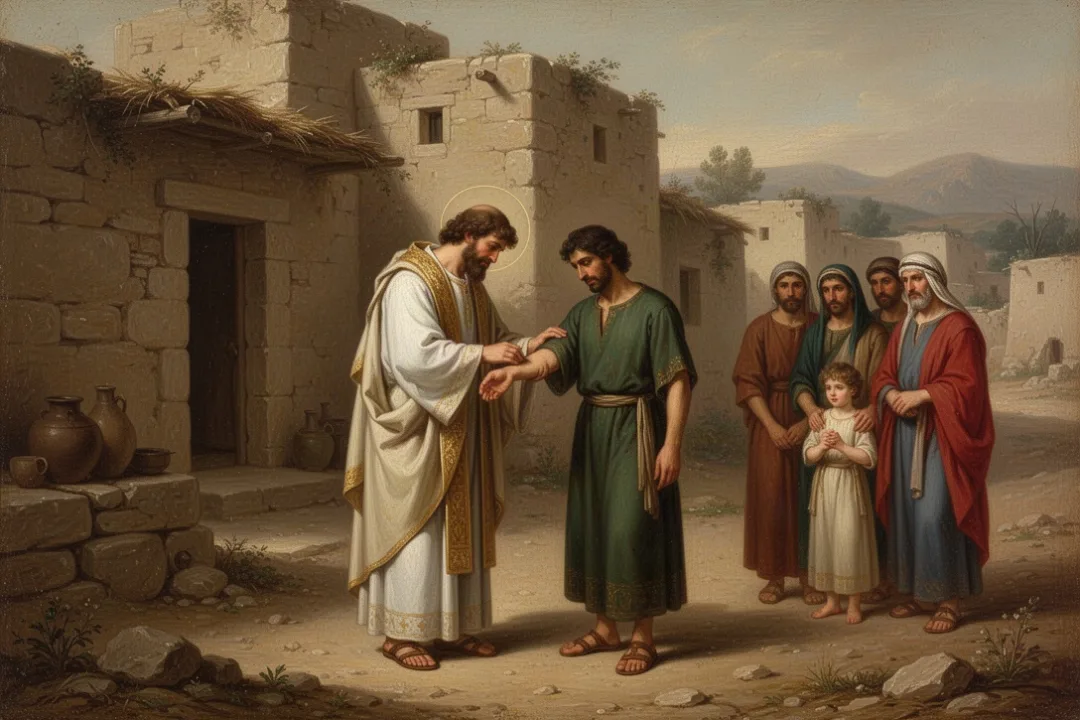
The Gospels repeatedly describe Jesus healing people called lepers. In Matthew 8, Mark 1, and Luke 5, a man approaches Jesus and asks to be made clean. Jesus responds with compassion, touches him, and the man is cleansed.
The touch is significant because contact with an unclean person could be understood as creating ritual risk. In these healing scenes, however, Jesus’ holiness moves toward the suffering person rather than retreating from him. The action communicates mercy, dignity, and restoration, not merely physical treatment.
Jesus then directs the healed man to show himself to the priest and follow the required offering. This instruction connects the miracle with Leviticus 14. The man is not only relieved of symptoms; he is given a path back into worship and community life.
The story also shows that compassion does not require ignoring religious or communal procedures. Jesus meets the person with mercy while recognizing the official process that confirms restoration. Healing and reintegration belong together.
Why the ten lepers story focuses on gratitude
Luke 17 describes ten people with leprosy who call to Jesus from a distance and ask for mercy. Jesus tells them to present themselves to the priests, and as they go, they are cleansed. Only one returns to thank him, and that person is identified as a Samaritan.
The story reflects the social distance associated with the condition: the group does not approach as an ordinary crowd might. Their shared illness temporarily places Jews and Samaritans together, crossing a boundary that normally divided them.
The returning Samaritan receives special attention because he recognizes the source of his healing and gives praise to God. The passage does not suggest that the other nine were not healed. Instead, it asks what a person does after receiving mercy and whether gratitude leads to a deeper response.
The account also challenges assumptions about who understands God’s work. The religious outsider is the one who returns. Faithful response is measured by recognition and gratitude, not by ethnic identity or social respectability.
What the Bible does and does not say about sin
Some biblical stories directly connect a leprosy-like condition with a person’s wrongdoing. Miriam, Gehazi, and Uzziah are examples in which the narrative explains a particular cause. That does not authorize readers to assume that every person with a disease is being punished.
The Bible itself resists simplistic explanations of suffering. The Book of Job challenges the idea that personal suffering always proves personal guilt, and the Gospels often show Jesus responding to suffering with compassion rather than accusation.
Illness is not a dependable measure of moral character. A person can be sick without being guilty, and a healthy or powerful person can still act unjustly. The stories must be interpreted within their specific narrative and covenant settings.
The biblical emphasis on cleansing also differs from the modern idea of simply treating an infection. “Clean” can describe a person’s restored ritual status, while “unclean” can describe a temporary condition without declaring the person morally corrupt.
How leprosy became a symbol of exclusion and restoration
Leprosy stories carry emotional weight because the condition often represents separation from ordinary life. The afflicted person may be physically marked, publicly identified, and kept outside the community. That experience makes healing meaningful as social restoration as well as bodily change.
The Bible’s language of cleansing can therefore point to several dimensions at once: relief from a condition, release from isolation, return to worship, and renewed belonging. The most complete healing stories do not stop when the skin changes. They show people coming back into relationship with God and neighbor.
At the same time, symbolic use can become harmful if it turns real people into metaphors for impurity. Modern readers should preserve the dignity of people living with Hansen’s disease or other skin conditions. A biblical interpretation should not encourage fear, mockery, or social exclusion.
The central movement in many of these passages is from outside to inside: outside the camp to within it, outside worship to restored participation, or outside social acceptance to renewed belonging. That movement helps explain why the healing stories mattered so much to ancient audiences.
Common mistakes when interpreting leprosy in the Bible
Equating every biblical case with Hansen’s disease: The original terms cover a broader range of conditions and surface problems.
Assuming every sufferer was guilty: Some narratives describe judgment, but the Bible does not give permission to accuse every sick person of hidden sin.
Treating “unclean” as a synonym for evil: Ritual uncleanness was a religious status and could result from conditions that were not moral failures.
Ignoring the community’s role: The laws address isolation, examination, worship, and return, not only an individual’s symptoms.
Reading healing as only physical: Biblical restoration often includes renewed family, worship, dignity, and social belonging.
Overlooking outsiders: Naaman and the Samaritan in Luke 17 show that God’s mercy is not limited to insiders or respected groups.
Using the stories to stigmatize modern patients: Ancient religious categories should not be used to label people today as contaminated or spiritually defective.
Practical ways to read these passages responsibly
A careful reading begins with the passage’s setting. Ask who is speaking, what kind of writing you are reading, whether the scene is a law or a story, and whether the text identifies a cause for the condition.
Check the translation and context. Compare how “leprosy” functions in Leviticus, historical narratives, and the Gospels rather than treating the word as identical everywhere.
Separate ritual status from moral blame. Ask whether the passage describes ceremonial uncleanness, divine judgment, physical sickness, or several ideas at once.
Notice the social consequences. Look for references to the camp, priests, family, worship, distance, and return.
Follow the restoration process. In many passages, the important question is not only whether someone is healed but whether that person can belong again.
Read Jesus’ actions carefully. His touch, attention, commands, and response to faith all contribute to the meaning of the healing.
Apply the ethical lesson without copying ancient stigma. Compassion, humility, truthful interpretation, and welcome remain relevant; treating illness as proof of impurity does not.
For Bible study: Read Leviticus 13–14 alongside Numbers 12, 2 Kings 5, 2 Chronicles 26, Matthew 8, Mark 1, Luke 5, and Luke 17. Comparing the different settings prevents one story from defining every use of “leprosy.”
What these passages can mean for readers today
The Bible’s leprosy passages speak to the fear of visible illness and the pain of being separated from others. They also expose the danger of allowing a physical condition to define a person’s identity. The afflicted person is never merely a symptom; each story involves a human being who needs mercy, truth, and a place in the community.
These passages encourage practical compassion. A healthy response to someone with a contagious illness includes appropriate medical precautions, accurate information, and humane treatment. Safety and dignity do not oppose each other.
They also challenge religious communities to examine how they treat people who appear different, sick, poor, foreign, or socially inconvenient. Naaman is an outsider, the Samaritan is despised by many of Jesus’ audience, and the isolated leper is often approached only from a distance. Yet each becomes central to a lesson about God’s mercy.
For Christian readers, the Gospel healing stories present Jesus as one who restores people to health, worship, relationship, and belonging. For readers studying the Hebrew Bible, Leviticus shows a community trying to manage disease, purity, and public order through structured examination and restoration. Both sets of texts deserve attention to their own historical and theological purposes.
“Leprosy from the Bible” is therefore not one simple topic. It includes ancient disease language, priestly law, social exclusion, stories of judgment, unexpected healing, and the return of outsiders to community. Reading those layers together produces a more accurate and humane understanding than treating the word as a direct equivalent of a modern diagnosis.
Frequently asked questions
Was biblical leprosy the same disease as Hansen’s disease?
Not necessarily. The Hebrew term translated as leprosy was used for several skin conditions and even for problems affecting clothing and houses. Ancient writers did not have modern diagnostic categories, so the biblical term is broader than Hansen’s disease. Each passage should be interpreted from its setting rather than assigned a definite modern diagnosis.
Did people with leprosy have to leave their families permanently?
The law generally required separation while a person was considered unclean, but separation was not always permanent. Priests could examine the person again, and Leviticus 14 describes a process for confirming healing and restoring community and worship participation. Some biblical stories describe temporary exclusion, while others portray long-term consequences.
Does the Bible say that leprosy is always punishment for sin?
No. A few stories connect a condition with a specific act of disobedience, but that does not establish a general rule. The Bible also presents people who suffer without assigning them personal blame. Ritual uncleanness is not identical to moral guilt, and modern readers should not accuse sick people of hidden wrongdoing.
Why did Jesus tell healed people to visit the priests?
The priests were responsible for confirming that a person was clean under the laws in Leviticus. Jesus’ instruction recognized the established process for returning to worship and community life. The healing was therefore not only a physical change; priestly confirmation made the person’s restored social and religious status publicly recognized.











Leave a Reply