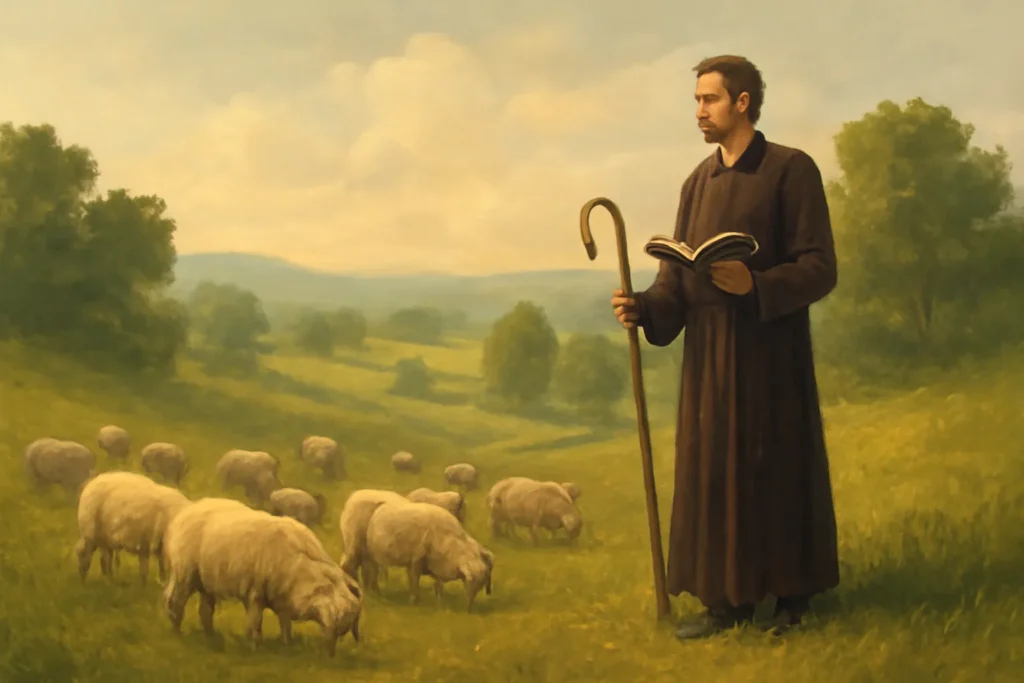
In the broad landscape of church life, pastoral leadership stands at the intersection of doctrine, care, and mission. It is less about prestige and more about service, less about control and more about guidance, and less about novelty and more about fidelity to the gospel over time. A healthy model of pastoral ministry recognizes that leadership is a form of shepherding—a calling to lead people in a way that honors God, strengthens the flock, and multiplies faithful disciples. This section outlines the enduring foundations that undergird effective ministry in a local church, highlighting how biblical vision, personal integrity, and servant-hearted authority work together to sustain a sustainable ministry.
First, a pastor or ministry leader must anchor practice in a clear theological framework and a robust sense of calling. Without a solid worldview, leadership can drift toward pragmatism or personal preference. With a biblically informed lens, leaders articulate a shared church mission that is neither clever rhetoric nor sentimentality, but a concrete invitation to follow Christ in everyday life. Second, leaders cultivate character as the essential currency of influence. Integrity, humility, courage, and consistency are not optional add-ons; they are the conditions for trust. A trustworthy leader creates a climate where confession is safe, accountability is welcomed, and mistakes become opportunities for growth rather than cover-ups.
Third, the practice of discipleship sits at the center of pastoral work. Leadership that merely manages programs will eventually become stagnant; leadership that makes disciples multiplies itself. A healthy pastoral model deliberately equips other believers to lead, teach, and care for others, thereby distributing responsibility in healthy ways while maintaining pastoral stewardship. In short, leadership development is a core ministry mandate: train leaders, empower teams, and sustain a culture of growth.
Pastoral Care in Practice
Central to pastoral ministry is the care for people in every season of life. Pastoral care is not a set of episodic acts but a continuous posture—being present with people in joy and sorrow, in triumph and trial. The practical dimensions of care include visitation, counseling, crisis response, and ongoing spiritual accompaniment. A robust care program respects confidentiality, guards the dignity of every person, and prioritizes safety and discernment in all ministry decisions.
Effective pastoral care requires a framework that can scale from individual conversations to ministry-wide strategies. Consider these actionable elements:
Care teams organized around neighborhoods, life stages, or ministries (children, students, adults, seniors) to support families with practical acts of mercy and spiritual guidance.
Care pathways with clear entry points: how someone enters a care conversation, who you involve, what resources are offered, and how follow-up happens.
Training in listening and essential counseling skills that respect boundaries, referral when necessary, and the limits of lay counseling within a church context.
Compassionate outreach that responds to crisis—bereavement, job loss, illness, or divorce—without exploiting suffering for publicity or programmatic gain.
Some practical protocols help sustain care over time. For example, pre-structured visitation guides can ensure no member is overlooked, while confidential notes and a consistent follow-up cadence keep the care relational rather than transactional. Equally important is fostering a culture where pastoral boundaries are clear, so caregivers do not burn out or become entangled in situations that require professional intervention.
Church Growth and Sustainable Expansion
Church growth is a nuanced discipline that blends spiritual vitality with organizational health. It is not solely about growing numbers but nurturing maturity, vibrancy, and impact in the surrounding community. A biblically informed growth strategy centers on disciple-making, genuine community, and a clear sense of mission that aligns with the church’s calling. Growth becomes a healthy byproduct of faithful practice rather than an end in itself.
To pursue sustainable expansion, leaders implement systems that are simple, scalable, and teachable. These systems support consistent discipleship, clear communication, and reliable project execution. The guiding question is not, “How big can we become?” but “How can we cultivate a church where people become more like Christ and invite others into that life?”
Vision casting: articulate a compelling direction that is both aspirational and attainable, and align programs, budgets, and volunteers around this shared vision.
Discipleship pathways: design a step-by-step process for new believers to grow, serve, and multiply themselves in small communities like life groups or home churches.
Multiplication mindset: every program or ministry has a deliberate plan for reproduction, whether through mentoring new leaders or planting a new congregation.
Pastoral presence: maintain regular, meaningful engagement with the congregation through preaching, teaching, pastoral conversations, and public leadership in times of crisis.
Growth is most healthy when a church balances margins (the ability to absorb losses, handle conflict, and weather conflict) with boundaries (clear limits around time, resources, and relationships). Without margins, growth can be decoupled from sustainable care; without boundaries, growth can become chaotic or dependent on a charismatic personality rather than on communal resilience.
Leading Teams and Volunteers
A thriving ministry harnesses the energy and gifts of volunteers while ensuring that leadership remains coherent and accountable. The backbone of any growing church is its teams: worship, children, youth, missions, hospitality, and administration all require intentional leadership, clear roles, and healthy rhythms.
Volunteer development is not a one-time event but a recurring process of recruitment, training, deployment, and recognition. Consider these steps:
Identify gifts and align people with opportunities that fit their strengths and passions.
Train in mission and in practical skills—communication, teamwork, risk management, and hospitality.
Delegate with accountability—give authority with clear boundaries and measurable outcomes.
Celebrate and sustain—acknowledge contributions publicly and provide ongoing spiritual formation for volunteers.
A healthy leadership culture includes team norms, conflict resolution protocols, and a shared confessional statement about core beliefs and church values. When teams operate with trust and clarity, ministries become more resilient, adaptable, and fruitful.
In addition to internal teams, a practical ministry strategy invests in partnerships with neighboring churches, schools, nonprofits, and local businesses. These collaborations extend the church’s reach, provide social value to the community, and model mutual benefit across the broader body of Christ.
Discipleship and Spiritual Formation
At the heart of pastoral leadership is a durable commitment to discipleship: helping people become more like Jesus in character, knowledge, and action. Effective pastoral care and leadership flow from a robust culture of spiritual formation that permeates preaching, teaching, and daily practice.
A practical discipleship framework may include:
Intentional curricula for new believers, mid-level maturity, and seasoned practitioners that build from basic gospel clarity to advanced theology and missional living.
Mentoring relationships where seasoned members walk with younger ones in Scripture study, prayer, and life-on-life accountability.
Prayer disciplines integrated into weekly rhythms—corporate prayer, personal devotion, and intercession for community needs.
Missional practices that encourage believers to live out their faith in everyday contexts—work, school, neighborhoods, and service projects.
A thriving formation culture also guards against superficial engagement. It invites depth: perseverance through doubt, honest conversation about failure, and a reliable process for repentance and renewal. When people grow in grace and truth, the church becomes a living classroom for life in Christ rather than a consumption model for religious services.
Pastoral Communication: Vision, Sermons, and Dialogue
Communication lies at the core of effective pastoral ministry. A leader must be a clear, compelling, and persuasive communicative presence. This entails not only pulpit preaching but also everyday dialogues, email updates, social media stewardship, and transparent governance announcements. Strong communication fosters trust, reduces the likelihood of misunderstanding, and invites participation in the church’s mission.
Important dimensions of strong pastoral communication include:
Clear vision articulation that connects worship, teaching, service, and witness to the church’s core purpose.
Accessible preaching that explains Scripture plainly, applies it practically, and invites response from diverse listeners.
Open channels for feedback, questions, and constructive critique, ensuring that people feel heard and valued.
Consistent cadence of information so that the community can anticipate updates and understand how to participate.
A robust teaching ministry integrates theology with life. Sermon planning should include a thoughtful progression: exposition of the text, articulation of its gospel-centered implications, practical applications for families and work, and a clear invitation to respond in faith or service. Beyond the pulpit, leaders should model transparent decision-making and invite conversation about important directions, which fosters ownership and shared responsibility.
Ethics, Boundaries, and Self-Care for Sustained Ministry
The long arc of pastoral work is shaped not just by what is done but by how it is done. Ethical integrity, appropriate boundaries, and personal self-care are not luxuries; they are essential guardrails that protect the church and the minister alike. A sustainable ministry recognizes the dangers of burnout, the temptations of power, and the risks of over-familiarity with prayerless leadership.
Key practices include:
Clear boundary policies that protect time, personal life, and congregational relationships, with documented processes for dispute resolution and care.
Accountability structures such as mentors, peer supervision, and a governing board that exercises spiritual and financial oversight.
Continual formation through reading, retreats, theological education, and coaching to stay grounded in Scripture and doctrine.
Self-care rhythms that ensure rest, sabbath, family time, and space away from ministry pressures to maintain long-term health.
A healthy minister models humble dependence on God while inviting the community to participate in the ongoing work of reconciliation, mercy, and justice. In a world of noise and distraction, the pastor’s integrity and steadiness become a beacon—an example of faithful leadership rooted in grace and truth.
Digital Ministry, Technology, and Community Engagement
In the twenty-first century, digital ministry is not optional; it is a critical channel for equipping, outreach, and connection. Technology offers a platform for equipping the saints, extending hospitality, and well-targeted evangelism. A robust digital strategy should reflect the church’s values, maintain privacy and security ethics, and preserve the human warmth that characterizes in-person ministry.
Practical areas to develop in digital ministry:
Online resources—podcasts, video sermons, devotionals, and study guides that help people engage with Scripture outside church walls.
Live and on-demand services with high production standards and accessible formats for diverse audiences.
Community online—moderated forums, virtual small groups, and guided prayer spaces that foster relationship and accountability.
Digital stewardship—transparent communication about giving, expenses, and impact to build trust with online participants.
Yet digital ministry must be tethered to relational ministry. Online presence should reinforce the in-person experience, enabling people to transition between virtual engagement and physical participation in ways that feel organic rather than transactional.
Missional Living and Community Transformation
A hallmark of strong pastoral ministry is the church’s outward focus. Missional living means that the church moves beyond its own walls to serve, heal, and advocate in the community. This is not a program but a way of life—where congregants use their unique gifts to address real needs, from economic injustice to spiritual hunger.
Practical missional initiatives might include:
Community service partnerships with schools, clinics, shelters, and food banks, where the church contributes resources and volunteers with respect for dignity and local leadership.
Exploration of public theology—speaking into social issues with care, wisdom, and gospel-centered critique that respects pluralistic contexts while declaring the Christian hope.
Evangelism through service—demonstrating love before declaring beliefs, thereby creating spaces for conversation and genuine curiosity.
Social justice and mercy ministries placed within a robust theological framework that honors the image of God in every person and invites justice as a natural overflow of a reconciled life.
When a church acts as a neighborhood partner rather than a distant institution, it becomes a compelling witness to Christ’s love. This requires cultural humility, listening to diverse voices, and adapting programs to meet real and stated needs while preserving doctrinal integrity.
Developing a Culture of Leadership and Worship
The culture of a church sets the conditions for all other ministries. A thriving culture honors worship as a lifestyle, fosters creative excellence in preaching and music, and sustains civic engagement through responsible stewardship. Leaders shape culture by modeling honesty, generosity, and courage in the face of difficulty. Culture is reinforced by rhythms—annual calendars of renewal, vision refreshers, and regular evaluation of programs to ensure alignment with mission.
Creative leadership in worship, arts, and communications can enliven a church while remaining theologically grounded. When people experience beauty and truth together, the gospel message becomes intelligible and approachable. Yet creativity should never be an end in itself; it must serve the gospel, elevate the Word, and build up the body of Christ.
Sustainability, Evaluation, and Adaptive Leadership
A growing church must learn how to assess impact without becoming enslaved to metrics alone. Evaluation should balance pastoral intuition with data-informed decision making. The purpose of measurement is to inform improvement, not to shame volunteers or pressure leaders. Adaptive leadership means being willing to pivot when circumstances change—whether due to demographic shifts, economic realities, or unexpected crises—while maintaining a consistent gospel-centered core.
Regular feedback loops with staff and volunteers to learn what is working and what needs adjustment.
Implementation reviews after new initiatives or programs to capture lessons and celebrate successes.
Health indicators beyond finances—measures of spiritual growth, volunteer engagement, member retention, and community impact.
Succession planning and leadership development so the church can endure beyond a single personality and continue the mission with fresh leadership.
Building a Legacy of Faithful Leadership
The aspirational goal of pastoral ministry is not only to meet present needs but to lay a durable foundation for future generations. A legacy of faithfulness rests on faithful teaching, compassionate care, and a community that learns to live missionally together. This is accomplished through intentional planning, ongoing formation, and a culture that values both ritual repetition and imaginative adaptation.
In practice, building a lasting legacy involves:
Documented values and a confessed mission that anchors every decision.
Ongoing leadership development to raise up new pastors, elders, and lay leaders who can carry forward the work with competence and humility.
Healthy governance with clear roles for the pastor, elders, deacons, and ministry directors, all accountable to the church body and to God.
Transparent financial stewardship that aligns resources with mission and is accessible to the congregation for trust and confidence.
A Practical Roadmap for Everyday Leadership
For those who are actively serving in pastoral ministry or aspiring to lead a local church, here is a pragmatic, high-level roadmap that integrates leadership, care, and growth:
Clarify your mission and ensure every program and role serves that mission, avoiding mission creep.
Establish a leadership pipeline that grows future leaders through mentoring, delegated authority, and structured training.
Prioritize pastoral care with scalable systems for visitation, counseling, and crisis response, while maintaining personal boundaries.
Invest in discipleship by providing clear pathways from new believer to mature disciple who makes disciples.
Strengthen worship and teaching to connect truth with life through compelling proclamation and meaningful liturgy.
Engage the community through service, partnerships, and missional initiatives that reflect gospel values in action.
As you implement these practices, remember that pastoral ministry is a team sport. The pastor leads best when able to mobilize a diverse group of people who bring different gifts to bear on common goals. The journey requires patience, prayer, and perseverance, but the reward is a community that thrives in love, grows in grace, and advances the gospel with integrity and power.
In closing, the work of pastoral leadership involves guiding a community toward maturity in Christ, caring for people in their most vulnerable moments, and cultivating a culture where every member participates in God’s mission. By anchoring ministry in sound doctrine, practicing compassionate care, and pursuing strategic growth with humility and accountability, churches can become healthier, more resilient, and more fruitful for generations to come.
If you are a church leader, a volunteer, or someone discerning a sense of vocation, may this practical guide serve as a companion for your journey. May your ministry be marked by gospel clarity, humble service, and a durable hope that God will continue to do immeasurably more than we can ask or imagine through the ordinary means of pastoral care, faithful preaching, and courageous gospel witness.











Leave a Reply