Pray Why: Why We Pray and What It Reveals About Belief
Pray Why: Why We Pray and What It Reveals About Belief
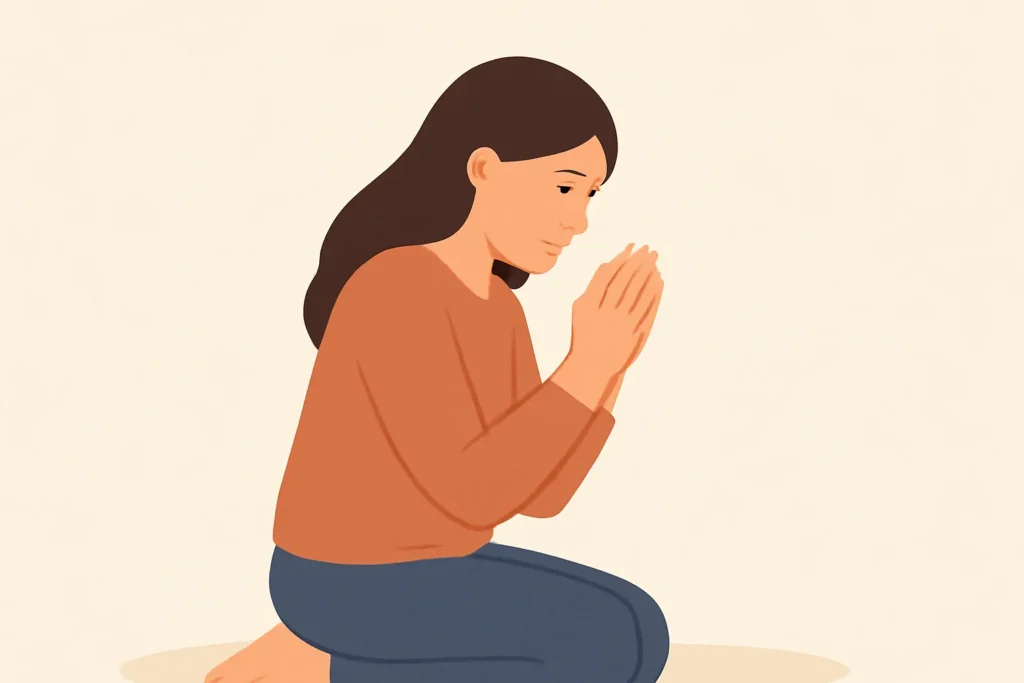
The phrase “pray why” invites a close examination of a practice that appears in nearly every culture and epoch. Whether framed as a request, a confession, a prayer of gratitude, or a quiet moment of stillness, prayer is more than a ritual—it is a window into how people imagine the world, relate to forces greater than themselves, and organize their lives around meaning. In this article, we explore why we pray, what the act reveals about belief, and how diverse traditions interpret and practice prayer across time and space. We will consider psychological, social, theological, historical, and even scientific dimensions, all while highlighting the ways in which the simple question “why we pray?” expands into a broader inquiry about human longing, responsibility, and hope.
The question of why we pray has many answers, depending on personal experience, tradition, and circumstance. In a broad sense, prayer answers the human instinct to reach beyond the present moment toward something larger than the self. The motivations can be grouped into several interlocking spheres: personal need, relational connection, moral orientation, and a desire to engage with mystery or the sacred. Some people encounter prayer as a practical tool for navigating difficulty; others encounter it as a way to express gratitude or to align their choices with a sense of purpose. Still others use prayer as a form of surrender, trust, or hope in the face of uncertainty.
Variations of the question across contexts
The phrase “pray why” shifts in emphasis across communities:
Why do we pray? emphasizes the purpose or function in a person’s life.
Why we pray highlights the collective or cultural practices that shape a community’s prayers.
Why pray? or pray why we can foreground philosophical or existential inquiry.
Why praying reflects ongoing action and habit, rather than a one-time event.
Across these angles, several core purposes recur:
Relief and coping: In moments of pain or fear, prayer can offer a sense of control, consolation, or emotional release.
Gratitude: Thankfulness for gifts, protection, or opportunity is a frequent motive for prayer in many traditions.
Confession and repentance: Prayer can serve as a space to acknowledge mistakes, align intentions with values, and seek forgiveness or renewal.
Intercession: Prayers on behalf of others express solidarity, compassion, and a concern for the welfare of the community.
Transcendence: A longing to connect with something greater than daily life—whether that's a divine presence, the universe, or a sense of ultimate reality.
Guidance and discernment: People often seek help in making decisions, choosing a path, or understanding a life situation.
In many accounts, prayer is not solely about petitioning a power but about forming a relationship—with the divine, with others, and with the self. This relational dimension is echoed in prayers of supplication as well as in prayers of praise and reflection.
What It Reveals About Belief
The practice of prayer exposes a constellation of beliefs. How a person prays—what words are chosen, what posture is assumed, what moments of silence are observed—offers clues about their worldview, metaphysical assumptions, and ethical commitments. Below are several key themes that reveal belief when we examine prayer in depth.
1) Concepts of the divine, the sacred, and the transcendent
Prayer commonly presupposes some sense of a transcendent source—a personal deity, a universal principle, or a sacred energy that stands beyond ordinary life. Some traditions conceive of this as a personal, addressable being with whom one can converse. Others describe the sacred as impersonal, infinite, or immanent within all creation. Still others maintain that prayer is not aimed at a being or force but at aligning the heart with truth, beauty, or moral virtue. Each stance shapes the language of prayer—from direct address and supplication to meditative listening and ethical intention.
2) Relationship and power dynamics
The question why we pray also reveals assumptions about relationship and power. For many, prayer acknowledges a relationship to the sacred that is reciprocal, although not necessarily symmetrical. Some traditions frame prayer as petitioning a sovereign who determines outcomes, while others present a dialogical encounter in which the divine listens, transforms, or reframes the believer’s desires. Still others place the emphasis on the practitioner’s interior transformation—praying not to bend the divine will but to align the human will with a larger order.
3) Language, rhetoric, and the limits of expression
The selection of words, poetic imagery, and liturgical formulas communicates beliefs about the limits and possibilities of human language before the sacred. Prayer language often balances humility with longing, ceremony with spontaneity, and tradition with personal voice. Some people rely on ancient creeds, hymns, and written prayers, while others prefer improvised utterances or silent contemplation. The very act of choosing words—whether precise and doctrinal or open-ended and experiential—reads as a statement about how truth is apprehended.
4) Time, space, and rhythm
Belief is also shaped by how prayer is situated in time and space. Some communities structure prayer with strict daily schedules—dawn, noon, evening—while others invite occasional, situational prayer in response to events. The rhythm of prayer, including moments of stillness, repetition, or communal singing, communicates a sense of order, purpose, and belonging. This rhythm can reflect a cosmology in which time cycles, seasons, or sacramental moments mark human life.
5) Ethics and responsibility
Finally, prayer reveals ethical commitments. Prayers for forgiveness, mercy, justice, and healing often accompany actions in the world. For many believers, prayer is not a withdrawal from responsibility but a resource that strengthens courage, compassion, and moral deliberation. The relationship between private prayer and public ethics—how meditation translates into action—lies at the heart of how belief is lived out.
Prayer has a long history that intersects with language, politics, art, and science. Across civilizations, people have experimented with modes of communication with the sacred that reflect the technologies, social structures, and philosophical ideas of their times. By tracing some key developments, we gain insight into how prayer has evolved yet remains deeply persistent in human culture.
Ancient and classical roots
In ancient Mesopotamia, Egypt, and the broader Near East, daily offerings, ritual libations, and invocations served as practical means to harmonize human life with divine order. In Greek and Roman contexts, prayer often took the form of oaths, supplications, and orations directed toward gods who governed natural and civic realms. The underlying belief was that human flourishing depended on favorable relations with supernatural powers who could intervene in weather, health, and fortune.
Scriptural and prophetic traditions
In the Abrahamic traditions, prayer becomes a sustained mode of communication that shapes identity, law, and community life. The prayers of the Hebrew Bible, the psalms, and later liturgical forms in Judaism emphasize covenant, memory, and justice. Christian traditions develop a nested set of practices—collective liturgy, personal devotion, fasting, and intercession—often centered on the life and teachings of Jesus. In Islam, daily prayers (salat) are prescribed rituals that structure the rhythm of the day and mark a constant alignment with God.
Medieval and early modern transformations
Across medieval Europe and parts of Asia, prayer became formalized within liturgical calendars, monastic routines, and scholastic philosophy. The reform movements of the 16th century, including Protestant and Catholic currents, reframed how believers understood access to the divine, the authority of scripture, and the role of communal worship. In many non-Western traditions, prayer remained intertwined with temple practices, guru lines, or meditation traditions that emphasized inner transformation rather than external display.
Modern and contemporary shifts
In the modern era, globalization and pluralism have diversified the repertoire of prayer. People borrow forms from different traditions, adapt to secular settings, and explore secular spiritualities that retain the core human longing for connection, meaning, and healing. Debates about prayer in public life—schools, government ceremonies, and civic rituals—reflect ongoing negotiations about civic pluralism, freedom of conscience, and the boundary between personal belief and public expression.
Practical Insights: How People Pray
Understanding how people pray sheds light on both practice and belief. Across traditions, there are several broad categories of prayer that people employ, often in combination.
Liturgical prayer
Liturgical prayer follows established rites, texts, and schedules. It offers communal rhythm, solidarity, and shared language. Examples include formal services in churches, mosques, temples, and synagogues, as well as official prayers recited in response to the liturgical calendar (e.g., seasonal prayers, feasts, and fasts). The virtue of liturgy lies in its ability to bind individuals into a larger story and to transmit doctrinal or ethical teachings through ritual.
Contemplative and meditative prayer
In contrast, contemplative or meditative prayer emphasizes stillness, awareness, and interior listening. Practices include breath-focused mindfulness, centering prayer, contemplative silence, and guided inward attention. The aim is less about dictating outcomes and more about opening space for perception, transformation, and the sense of being held by something larger than oneself.
Spontaneous or extemporaneous prayer
Spontaneous prayer emerges in the moment—spoken or silent—without a fixed text. It often arises from personal need, gratitude, or crisis. This form can feel intimate and immediate, creating a direct line between inner experience and outward expression. It can also reflect the dynamic, evolving nature of belief when people articulate their fears, hopes, and questions in real time.
Intercessory and communal prayer
When many people raise their voices for someone else or for communal healing, the practice becomes intercessory prayer. The social dimension of prayer is powerful: it creates a sense of shared responsibility, solidarity, and mutual care. The act of praying for others—whether in a family circle, a church congregation, a neighborhood group, or a global network—embodies a communal ethic that extends beyond individual concerns.
Some prayers center on confession and gratitude. In confession, the believer names harms or shortcomings and seeks reconciliation. In thanksgiving, prayers recount blessings and marks a posture of humility before life’s gifts. These forms reveal belief in accountability to a moral order and in the possibility of renewal or restoration.
Neuroscience and Cognitive Aspects of Prayer
In recent decades, researchers have explored how prayer and related practices affect the brain and mind. While science does not adjudicate the truth claims of faith, it can illuminate the cognitive and affective processes that accompany prayer and how these processes relate to well-being, stress regulation, and social connectedness.
What happens in the brain during prayer
Neuroimaging studies suggest that prayer and meditation engage networks involved in attention, emotion regulation, and self-referential processing. Practices that emphasize focused attention can reduce activity in the default mode network, which is associated with mind-wandering, and can enhance executive control. Intercessory prayer trials have produced mixed results, yet many participants report subjective improvements in mood, perceived social support, and coping.
Psychological mechanisms
Several mechanisms may contribute to the subjective experience of prayer, including placebo-like effects, expectancy, meaning-making, and the sense of control that comes from active coping strategies. Prayer can also foster a sense of meaning in suffering, a narrative that gives struggle purpose and aligns events with a larger story.
Implications for practice and care
For clinicians, educators, and spiritual caregivers, understanding the cognitive and emotional dimensions of prayer can inform compassionate care. For individuals, awareness of how prayer affects stress and social connection can guide personal practice in ways that are psychologically healthy and ethically sensitive to others.
Contemporary Debates
In the modern era, the practice of prayer intersects with science, politics, education, and pluralistic society. Debates about whether prayer should be public or private, how it should be taught, and how it influences public life illustrate the continuing tension between belief and secular norms.
Prayer in public life
Some communities advocate for inclusive, non-denominational invocations during public events, while others argue for freedom of expression that accommodates diverse beliefs. The central issue is balancing respect for individual conscience with the desires of groups who wish to maintain historical or cultural traditions.
The relationship between prayer and science often centers on questions of efficacy and mechanisms. Some see prayer as an external intervention with measurable effects, while others argue that prayer belongs to the realm of meaning and relationship rather than causality. A careful approach recognizes both the subjective benefits some people report and the methodological limits of testing prayer as a biomedical intervention.
Interfaith and intercultural dialogue
As beliefs converge and diverge in diverse societies, dialogue about prayer can become a bridge for understanding. Appreciating the ways different traditions address similar human concerns—suffering, gratitude, hope, and moral decision-making—can foster mutual respect and peaceful coexistence.
For many people, prayer as daily practice anchors routine, intention, and moral imagination. Whether embedded in a religious framework or used as a personal ritual, daily prayer can be a resource for clarity, compassion, and steadiness in the face of life’s unpredictability.
Practical pathways to integrate prayer thoughtfully
Set a regular time and place to create a predictable rhythm that supports focus and intention.
Choose a form that fits your temperament—short prayers, written readings, silent reflection, or journaling.
Combine prayer with action by pairing intent with concrete steps—grace in daily decisions, acts of service, or restorative conversations.
Invite community while honoring personal boundaries—group prayer can offer support, while quiet personal time preserves autonomy.
Keep a flexible repertoire: rotate texts, adapt language, and allow personal voices to emerge alongside traditional forms.
Ethical considerations in daily practice
As you cultivate a practice, consider how inclusivity and humility shape your prayers. Acknowledge diverse beliefs, avoid coercive language, and recognize that others may experience prayer differently. The aim is often to deepen empathy, not to marginalize or invalidate other ways of seeking meaning.
Ethical and Social Implications
The act of praying, or choosing not to pray, carries ethical weight in public and private life. What we believe about the nature of prayer—whether it changes outcomes, how it shapes character, or how it relates to justice—can influence social norms, community expectations, and personal behavior.
Justice, mercy, and accountability
Prayers that call for healing, justice, or mercy often imply a commitment to action. The belief that prayer should be accompanied by ethical vigilance can motivate advocacy, generosity, and service. Conversely, some worry that prayer without corresponding action may risk sentimentalism or resignation. A thoughtful approach emphasizes alignment between inward intention and outward deeds.
Respect for pluralism
In pluralistic settings, practicing respect for diverse prayer traditions is essential. Public spaces, institutions, and workplaces may encounter a spectrum of beliefs, and thoughtful etiquette involves listening, avoiding coercion, and recognizing the dignity of all seekers.
People should have autonomy in choosing whether, how, and when to engage in prayer. Respect for consent and personal boundaries is a basic ethical principle—especially when prayer is offered in caregiving contexts, educational environments, or healthcare settings.
Conclusion: Reflection on Pray Why
The question “pray why” leads us to a broader inquiry about human beings, their communities, and their deepest hopes. Across time and tradition, prayer has remained a compact yet expansive practice that helps people articulate longing, align choices, and bear witness to the sacred in everyday life. By examining why we pray, we uncover not only the mechanics of invocation or liturgy but the deeper currents of belief: how people imagine the cosmos, how they relate to others, and how they imagine their own becoming.
Whether you approach prayer as an ancient discipline, a personal habit, a form of spiritual support, or a secular contemplative practice, the core questions persist: What sustains us when life is hard? How do we express gratitude and responsibility? In what ways does a practice of prayer shape a person’s character and a society’s character? The exploration of these questions is ongoing, and the answers are as varied as the lives people lead.
If you are seeking a path forward, consider starting from your own experience: what does prayer do for you in moments of stress, hope, or doubt? How might you translate inner intention into outward kindness, justice, or service? And how can you honor the diverse ways others seek meaning while staying true to your own beliefs? The practice of asking “pray why” itself can be a form of attentive listening—listening to the inner voice, listening to others, and listening for a sense of direction that honors the dignity of all life.





Leave a Reply