Introduction: Why Communion Passages Matter for Reflection and Teaching
In Christian life, the act of sharing bread and cup is more than a ritual—it is a
doorway into foundational truths about who God is, who we are, and how we relate
to one another as a community. The communion passages in Scripture
illuminate how Jesus framed the supper, what the church is called to remember, and
how believers participate in the mystery of grace. This article surveys key verses,
explains their meaning and implications, and offers practical ways to
reflect on them through prayer, study, and worship.
Whether you are a student of the Bible, a pastor preparing a service, or a layperson
seeking personal nourishment, the communion passages invite us into a rhythm of
contemplation, confession, gratitude, and hopeful anticipation of the Kingdom to come.
The verses below are presented in a way that highlights their theological themes,
their pastoral wisdom, and their practical application for
today.
Overview: What the Bible Teaches About the Lord’s Supper
The Lord’s Supper, or communion, appears in several New Testament accounts, most
prominently in the Gospels and in Paul’s letters. Across these passages you will
encounter several core ideas:
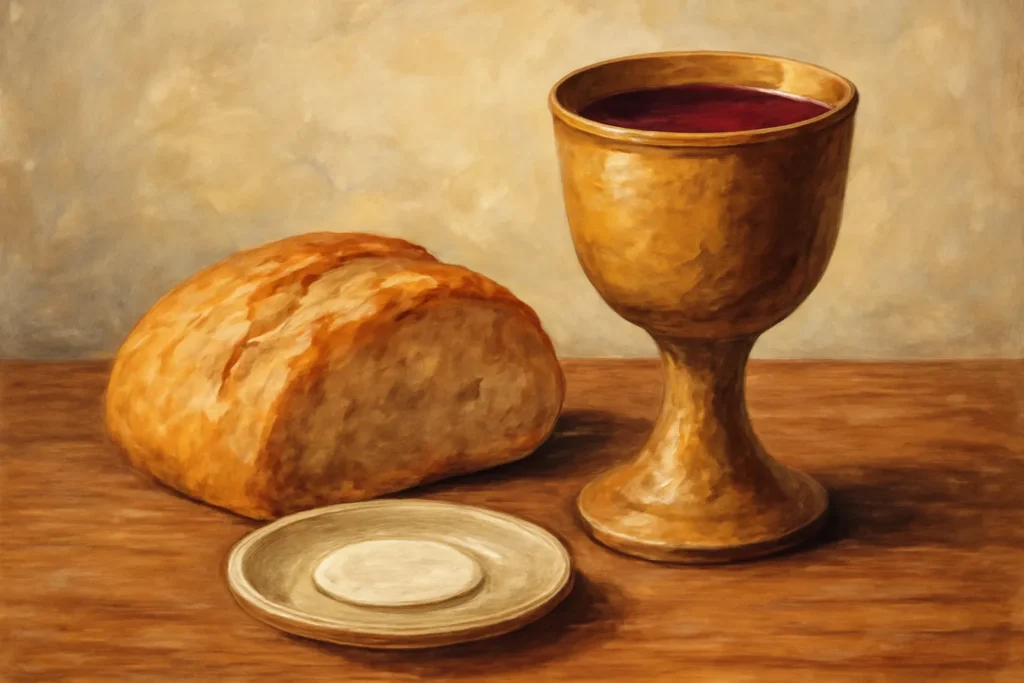
Bread and cup as symbols of Jesus’ body and blood.
The confession of a new covenant established by Christ’s sacrifice.
An exhortation to remember Jesus’ death and to proclaim his work until he comes.
Call to self-examination and to participate in a way that honors the church body.
Affirmation of unity among believers as they share in the one loaf and one cup.
Key Passages About the Lord’s Supper
Matthew 26:26-29 — The Institution and the New Covenant
In Matthew’s account, Jesus blesses the bread, breaks it, and gives it to the
disciples, saying, “Take and eat; this is my body.” He then offers the cup,
declaring it as his blood of the covenant poured out for many
for the forgiveness of sins. A central phrase calls the readers to eat and drink in remembrance of him.
Brief reflection: This passage anchors the supper in Jesus’ self-offering and
introduces the language of a new covenant inaugurated by his death.
Mark 14:22-25 — A Shared Meal with a Promise
Mark’s version mirrors Matthew’s account, emphasizing the disciples’ reception of the
bread and cup and Jesus’ words about the cup being poured out for many.
The emphasis on a shared meal among the followers underlines
communal participation in Jesus’ redemptive work.
Luke 22:19-20 — Remembrance and the Blood of the Covenant
Luke records Jesus instructing his disciples to do this in remembrance of me.
He identifies the cup as the new covenant in his blood, poured out for
them. The act is both a memory and a proclamation of salvation secured by Christ.
1 Corinthians 11:23-26 — Tradition, Remembrance, and Proclamation
Paul recounts the familiar words of institution and adds a Pauline layer: the
practice should be done in a way that honors Christ’s body and his work.
He says, “as often as you eat this bread and drink this cup, you proclaim the Lord’s death until he comes.”
This makes remembrance into a dynamic, forward-looking proclamation.
1 Corinthians 10:16 and 10:17 — The Cup of Blessing and the One Body
Paul connects the cup of blessing to the shared participation in the body of Christ.
The imagery emphasizes unity and the grace that flows through the one loaf shared by many.
John 6:53-58 — Eating Flesh and Drinking Blood: A Spiritual Nourishment
In John, Jesus speaks of the necessity to partake in him as the source of life: eternal life is tied to consuming what he gives. While this
passage is often discussed in sacramental language, its core is intimacy with Christ and reliance on him for spiritual life.
1 Corinthians 11:27-29 — Examination, Reverence, and Avoiding Judgment
Paul warns against partaking in an unworthy manner and calls believers to examine themselves before eating and drinking.
The practice becomes a self-assessment moment that guards the
soul and honors Christ’s body.
Themes Across the Passages: What They Teach the Church Today
A careful reading across these verses reveals several enduring themes that shape both
personal devotion and congregational life.
Remembrance — The command to remember Jesus’ death is central to the practice.
Proclamation — The supper declares the significance of the crucifixion and the hope of his return.
New Covenant — The blood of Christ inaugurates a new way of relating to God.
Participation — The bread and cup symbolize real participation in Christ and in the church body.
Self-examination — The warning about an unworthy manner invites ongoing reflection and repentance.
Unity — Sharing the meal binds believers together as one body in Christ.
Grace — The meal reveals God’s grace given through Jesus for forgiveness and life.
Prayers Based on Communion Passages
Prayer of Gratitude and Remembrance
“Lord Jesus, we thank you for the gift of your body given for us and your blood
shed for many. As we partake, remember your sacrifice and
proclaim your death and resurrection until you come again. Amen.”
Prayer for Self-Examination and Unity
“Merciful God, search my heart and know me. If there is any wicked way in me,
lead me in the way everlasting. Help us, as a church, to partake in a way that
honors your body and fosters unity among your people. Amen.”
Prayer for the New Covenant Hope
“Jesus, we celebrate the new covenant in your blood. May your grace
abound in our lives, offering forgiveness, renewal, and the strength to live as
your people in a broken world. Come, Lord Jesus, and establish your Kingdom among us. Amen.”
A Practical Guide: How to Reflect on Communion Passages
Prepare your heart with a posture of humility. Spend a few minutes in confession and gratitude before approaching the table or its meditation.
Read and Compare the verses listed above. Note how each account emphasizes a different facet—remembrance, covenant, unity, or life in Christ.
Reflect with prompts such as:
What does it mean for me to participate in the body of Christ today?
How have I experienced God’s grace through the sacrifice on the cross?
Is there any division, bitterness, or failure to love that I need to confess?
Respond by praying, repenting, and choosing concrete acts of love toward others in the church and in the world.
Return to the table—whether literally in a service or in daily life—as a continual practice of grace.
Variations Across Traditions: How Different Churches Speak of Communion
Across Christian traditions, the Lord’s Supper is celebrated with diverse
practices and interpretive emphases. Here are a few broad strands to help you
understand the semantic breadth of communion language:
Memorial View — Emphasizes remembrance and proclamation, often with a symbolic understanding of the bread and cup. Common in many Protestant churches.
Real Presence View — Teaches that Christ is truly present in the elements, in varying interpretations (e.g., spiritual presence, consubstantiation). Typical in several liturgical traditions, including some Anglican, Lutheran, and Catholic contexts.
Symbolic or Memorial-Plus — Maintains symbolic meaning while inviting believers to encounter Christ spiritually through faith as they partake.
Unity and Mission Focus — Emphasizes reconciliation, healing, and shared mission as the church participates together in Christ’s work.
The biblical passages themselves are robust enough to support diverse
theological frameworks while consistently pointing to Jesus’ death, resurrection, and
the life he gives to all who trust him. When reading or teaching these passages, it can be
helpful to name the tradition you are within and explain how the text speaks to that
tradition's practice—without losing sight of the universal themes of grace, remembrance, and joyful obedience.
Historical Context: Early Church Practice and Doctrinal Shifts
The earliest Christians inherited a ritual meal from Jesus and his apostles. The Didache,
an early Christian teaching document likely written in the late first century, gives
instructions for thanksgiving prayers and for breaking bread in fellowship. Paul’s letters
further shaped the practice by addressing abuses in the church, emphasizing order, discernment, and love as essential to the meal. Over the centuries,
theological debates about the nature of Christ’s presence and the meaning of the bread and
cup led to distinct traditions—without dissolving the essential sense that the meal binds
believers to Christ and to one another.
Practical Tips for Personal and Family Devotions Centered on Communion Passages
Whether you are preparing for a Sunday service or guiding a family devotional, the following
tips can help you engage the communion passages with depth:
Schedule regular times for reflection on the passages, even outside of the church service.
Use a study Bible or commentary to explore historical context, audience, and possible meanings.
Journal responses to prompts like “What is the Spirit saying to me through this passage today?”
Practice humility and careful listening—allow the text to challenge as well as comfort you.
Incorporate prayer of intercession for church leaders, the global church, and the marginalized as an extension of the meal’s grace.
A Final Reflection: The Meaning of Communion for Everyday Faith
The communion passages invite believers into a rhythm that is both intimate and cosmic.
They point to a reconciled future in which God’s people dwell together in love, and they anchor
daily living in the gravity of Jesus’ life, death, and resurrection. In personal worship, the
supper becomes a moment to align our desires with Christ’s mission; in corporate worship, it
becomes a living symbol of unity and shared purpose. And in the quiet of personal
reflection, the prayers and verses encourage us to trust more deeply, repent more freely,
and love more generously.
Conclusion: Embracing the Bread, the Cup, and the Gospel
The Bible’s portrait of the Lord’s Supper is not a single picture but a mosaic made of
many voices and contexts. From Matthew and Mark to Luke and Paul, the call remains
coherent: remember, proclaim, and participate in the
life of Christ and in the life of his people. When you read these passages, let their
richness provoke worship, draw you to repentance, and empower you to live as a
citizen of the Kingdom of God. May your reflection on these verses deepen your faith,
strengthen your community, and renew your hope in the day when all things will be made
new.





Leave a Reply