Acts of praying—in all their varied forms across cultures and faiths—occupy a central place in human life. This article explores acts praying by unpacking their meaning, their significance, and their practice in diverse contexts. We will examine how people express prayer through spoken words, silent contemplation, communal rituals, and personal routines, and how these acts shape individuals, communities, and even social cultures. The goal is not to prescribe one right way to pray, but to illuminate the breadth of prayerful acts and offer practical guidance for anyone seeking to understand or deepen their own practice.
At its most basic level, praying is an intentional act of communication that seeks connection—whether to the divine, to the self, to others, or to a larger sense of purpose. The phrase acts praying emphasizes not a single moment of utterance but a cluster of behaviors, gestures, and intentions that constitute a living practice. Across traditions, praying is often described as a dialogue, a petition, a form of gratitude, or a way of aligning one’s inner life with a larger order or mystery.
Several dimensions help readers understand the breadth of these acts:
Verbal and nonverbal communication: Some acts of praying are spoken aloud—structured prayers, supplications, or spontaneous words. Others are silent or contemplative, relying on breath, rhythm, or stillness to focus the mind. Still others combine language and silence in alternating moments.
Posture and movement: The body often participates in prayer through posture, gestures, or levels of physical supplication—kneeling, standing with arms lifted, bowing, prostration, or simple stillness. These physical acts can symbolize humility, attentiveness, or surrender.
Time and place: Prayer can be scheduled (daily prayers at dawn or dusk), spontaneous, or seasonal (during festivals or rites of passage). Spaces dedicated to prayer—church pews, mosques, temples, chapels, shrines, or quiet corners—often shape the experience of the act.
Content and language: Prayers may be ancient and formal or freshly composed. Some rely on canonical texts; others are crafted in the moment to address present concerns, gratitude, or gratitude in action.
Intent and intention: The aims of praying vary: petition for needs, intercession for others, confession of fault, thanksgiving, praise, or a search for guidance. The intent behind the act often shapes its meaning for the practitioner.
To speak of acts of praying is to recognize that prayer is not a single event but a spectrum of practices. Some observers emphasize the communal and ceremonial aspects, while others highlight the intimate, interior dimensions. Both dimensions are essential because they reflect how prayer functions in the human experience: as a bridge between inner life and outer reality, between oneself and others, and between the finite and the infinite.
Significance of Praying
Personal significance
Many people experience prayer as a source of meaning during times of joy, struggle, or uncertainty. When life feels overwhelming, the act of praying can provide grounding, clarity, and a sense of agency—even if concrete outcomes are not guaranteed. For some, praying is a practice of mindful presence, directing attention to what matters and inviting a pause that interrupts the busyness of daily life. For others, it is a doorway to inner transformation, where repeated acts of asking, listening, or naming feelings can lead to greater emotional regulation, compassion, and resilience.
Researchers and scholars in psychology and spirituality have described several potential personal benefits of regular praying or contemplation, including: improved regulation of stress, greater emotional balance, a sense of connection to something larger than the self, and a framework for processing life events. Even when outcomes are not strictly measurable, the practice of praying often strengthens a person’s sense of purpose and moral orientation.
Communal significance
Beyond the individual, acts of praying often contribute to the cohesion and identity of communities. Shared prayers can create bonds among participants, establish common values, and offer a structure for collective mourning, celebration, or remembrance. In many communities, prayer is a form of civic spiritual ecology, weaving together family networks, neighborhoods, and institutions. Seasonal prayers, liturgical cycles, and communal rituals mark times of transition—births, weddings, deaths, harvests, or national remembrance—and reaffirm social responsibilities such as care for the vulnerable, acts of service, and solidarity with the marginalized.
In interfaith contexts, acts of praying can become bridges of mutual respect. When communities learn about one another’s prayers—whether through shared spaces, dialogue, or public events—the experience can foster tolerance, curiosity, and collaboration. In diverse settings, the act of praying publicly may invite questions about belief, practice, and the meanings ascribed to life’s mysteries, helping people articulate their own convictions with clarity and respect for others.
Social and cultural significance
Praying as a cultural practice carries symbolism, ritual memory, and ethical expectations. The vocabulary of prayer—prayers of gratitude, petition, confession, intercession—often reflects a tradition’s concerns and aspirations. For instance, some traditions emphasize social justice and mercy in prayer, linking the sacred with acts of compassion in daily life. Others highlight discipline and restraint, viewing prayer as a form of self-pulled restraint that cultivates humility and patience. Across cultures, the way prayers are taught, memorized, and transmitted can serve as the most durable form of cultural education, shaping how new generations encounter the world, cope with suffering, and imagine hope.
Individual prayer varies widely, yet several common modes recur across religious and secular settings. Here are representative categories that illustrate the breadth of individual acts of praying:
Spoken prayers—recited words that may be memorized from tradition or composed by the practitioner in the moment.
Silent prayers—inner dialogue, silent petition, or meditative listening that may exclude external vocalization.
Contemplative or centering prayer—a practice focused on breath, presence, and nonjudgmental awareness rather than content.
Personal petitions—inquiries, requests, or intercessions directed toward the divine, the universe, or one’s higher ideals.
Gratitude practice—thanksgiving for blessings, opportunities, and the gifts of life.
Confession or self-examination—acknowledging faults, seeking forgiveness, and outlining steps toward growth.
Hymns and devotional songs—musical avenues for expressing devotion, praise, or longing.
In secular settings, individual prayer might be reframed as a personal reflection, a “quiet time,” or a moment of ethical intention before action. The line between religious and secular practice can be porous: many people use breathwork, guided visualization, or reflective journaling as a form of personal prayer, even if explicit references to a divine being are not part of their vocabulary.
Communal practices
Communal prayer brings people together to share intention, ritual, and voice. It can be formal and liturgical, or informal and spontaneous. Key forms include:
Congregational prayer—group recitation or response-led prayer in a sanctuary or hall, often guided by a leader or clergy.
Intercessory group prayers—collective petitions on behalf of others or larger concerns, such as healing, peace, or social justice.
Rituals of blessing—prayers that confer protection, guidance, or favor through a communal ritual or rite.
Accompanied rituals—prayers embedded in life-cycle events (weddings, funerals, naming ceremonies) and seasonal observances.
Community chants and mantras—repeated phrases that unify participants through cadence and sound.
In many traditions, communal prayer reinforces social ethics. It is not merely about inward focus but a shared stance toward others—neighbors, strangers, and the vulnerable. The act of praying together can cultivate a sense of obligation to act in alignment with the values expressed in the prayers themselves.
Praying is frequently a somatic practice, meaning the body participates in the meaning-making. Postures and gestures carry symbolic weight and can influence the emotional and cognitive dimensions of the act. Common postures include:
Kneeling—often signals humility and reverence; a grounding posture that creates a sense of surrender before the sacred or the ideal.
Standing with raised hands—a gesture of openness, reception, and offering, sometimes associated with praise or seeking blessing.
Bowing or prostration—acts of surrender, submission, or deep respect; found in many spiritual and martial traditions as a sign of humility.
Sitting or lotus pose—a stable seat for contemplation, teaching, or recitation in various traditions.
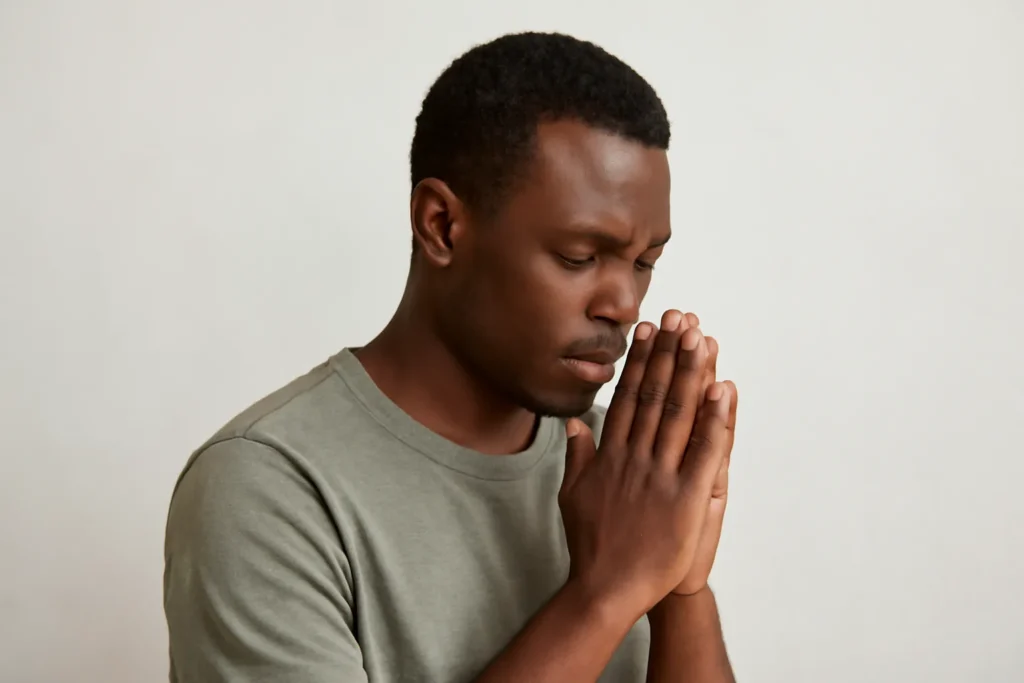
Hands clasped or folded—a simple, portable sign of focus and intent that can accompany whispered or quiet words.
Proximity to sacred space—arranging oneself toward an altar, a sacred image, or a direction (such as toward a holy city or cardinal points) that signals orientation in the prayer act.
Movement can accompany these postures. Gentle bowing, walking prayers, or cyclical breathing patterns can structure time and energy during a prayer session. For some practitioners, physical discipline—such as ritual fasting, silence, or controlled breath—becomes part of the act of praying, shaping the inner atmosphere in which prayer takes place.
Language, Silence, and Sound in Praying
Words, sounds, and silence
Language plays a central role in many prayer traditions, but silence is equally valued. The balance between spoken words and quiet listening often defines the character of a prayer practice. Key patterns include:
Recited prayers—textual prayers that provide linguistic structure, rhythm, and communal identity. Examples range from formal liturgies to repeated phrases that travel across generations.
Personal supplications—spontaneous words offered from the heart, which can vary day to day depending on circumstances.
Chant and repetition—repeated phrases, syllables, or mantras that create a hypnotic or meditative environment, helping practitioners enter a contemplative state.
Opening and closing rubrics—directional phrases that frame the act, inviting a particular mood, focus, or ethical orientation.
Silence often serves as a discipline and a doorway. In silent prayer, attention turns inward, inviting self-awareness, moral discernment, and open-ended listening. Some traditions teach that listening to the inaudible voice within—“the still small voice” as some describe—is as significant as heard words. Finally, sound can be a bridge: singing, chanted prayers, or instrumental music can elevate the sense of the sacred and unify participants through shared sonic experience.
Challenges and Misconceptions About Praying
Common misunderstandings
Like any deeply held practice, acts of praying invite a few misunderstandings. Here are some frequent concerns and their clarifications:
Prayer is supposed to guarantee outcomes: In many traditions, outcomes are not guaranteed, but prayer shapes a person’s relationship to life, suffering, and possibility. The value of prayer often lies in the process itself—attention, intention, and alignment—more than in control of external results.
Praying is only for the faithful: People with diverse beliefs or even non-religious people may engage in reflective, ethical, or hopeful forms of prayer, such as a moment of gratitude or a request for guidance.
Prayer equals passivity: Praying can be a dynamic act of action in the world—intercession often motivates compassionate deeds, advocacy, and care for others.
Long prayers are superior: The quality of a prayer is not determined by length but by sincerity, focus, and the intention behind it. Short, precise acts of prayer can be deeply transformative.
Ethical and practical considerations
When engaging in acts of praying, communities may wrestle with issues of inclusivity, language, and access. For example, multilingual communities may face questions about which prayers to translate, how to maintain the integrity of liturgical texts while honoring diverse voices, and how to ensure that spaces remain welcoming to newcomers and to people of varying abilities. Ethical prayer practice also involves mindful engagement with social realities—prayer can inspire action toward justice, mercy, and care for the vulnerable, but it should not be a substitute for real-world responsibility and service.
Modern Adaptations: Faith, Technology, and Daily Life
In the twenty-first century, the practice of praying has extended beyond physical spaces and traditional formats. The digital age offers new avenues for acts praying, while many people retain the core sensibilities of ancient practices. Notable developments include:
Online communities and virtual prayer circles that enable people to share intentions, read prayers, or offer support across geographic boundaries.
Prayer apps that guide users through daily prompts, track spiritual practices, or provide audio readings of sacred texts.
Live-streamed services and remote participation, allowing households, hospitals, or prisons to join in communal prayer despite physical separation.
Guided mindfulness and breathwork used as secular or spiritual practice, often framed as “prayerful presence” or “contemplative practice.”
Despite the convenience and reach of technology, many practitioners emphasize that the strongest forms of praying remain rooted in personal intention, sincere attention, and a lived sense of purpose. Technology can support discipline, accessibility, and community, but it does not replace the inner work that prayer often requires.
How to Begin or Deepen Your Practice
Whether you are starting anew or seeking to deepen existing habits, here is a practical approach grounded in the diversity of prayerful acts:
Clarify your intention: Ask yourself what you seek through this practice—peace, guidance, gratitude, intercession, or a sense of connection to something larger than yourself.
Choose a form that fits you: Begin with a form that resonates—spoken prayers, silent reflection, journaling, or a short daily ritual. Remember that variety can nourish growth: mix short moments with longer sessions as your schedule allows.
Set a regular rhythm: Consistency helps. Choose a predictable time or anchor your practice to daily routines (e.g., after waking, before sleep, or during a midday break).
Create a conducive space: A quiet corner, a small altar, a favorite chair, or a simple ritual object can cue the mind toward focus and reverence.
Engage the body: Integrate a posture or gesture that matches your intention, whether it is sitting upright, kneeling, standing with open hands, or walking slowly while praying.
Include breath and silence: Use breath as an anchor—inhale with awareness, exhale slowly, allowing thoughts to pass without judgment. End with a moment of stillness to absorb the experience.
Practice in community when possible: If you can, join a group for a season. Shared practice amplifies the sense of belonging and accountability.
Reflect and adjust: Periodically assess what is working and what is not. Prayer is a living practice; it can and should evolve with your life’s changes.
As you begin or deepen your practice, you may notice that acts of praying become less only about words and more about a posture of attention—an ongoing habit of choosing compassion, gratitude, and courage in the midst of daily life.
Across traditions, the acts praying differ in form, language, and emphasis, yet they often converge on shared human concerns: gratitude, mercy, guidance, and hope. Here are some illustrative variations:
Liturgical prayers—Aimed at formal, communal recitation within a sanctioned framework, often accompanied by ritual actions, readings, and responses.
Spontaneous or private prayers—Unscripted expressions arising from the moment, deeply tied to personal circumstance and emotion.
Contemplative prayer—A practice centered on quiet awareness, often with guidance from a teacher or tradition but without explicit content.
Intercessory prayer—Prayers offered for the welfare of others, including individuals and communities facing hardship or injustice.
Thanksgiving and praise—Prayers that foreground gratitude for life’s gifts, resilience, and the beauty of existence.
Ritual and ceremonial prayers—Prayers performed within rites of passage, feasts, and calendar cycles, reinforcing social and spiritual bonds.
Different contexts—home, church or temple, mosque, synagogue, shrine, monastery, school, or hospital—shape how acts of praying unfold. In many places of worship, space, sound, and time are meticulously arranged to support a particular sense of the sacred. In homes and informal settings, prayer may be adapted to fit family life, work routines, or personal needs, illustrating the flexible nature of prayerful acts and their capacity to meet people where they are.
Prayful acts need not be isolated to set times or venues. Many people integrate acts of praying into daily life in practical, meaningful ways:
Mindful pauses during the day to acknowledge gratitude, check intentions, or offer a brief intercession for someone in need.
Ethical decisions rooted in a contemplative awareness of one’s values, aligning actions with prayers for justice, mercy, or peace.
Compassionate service as an extension of prayer, turning intention into concrete deeds such as volunteering, advocacy, or acts of support for neighbors.
Spiritual literacy—learning from diverse prayer traditions to enrich one’s own vocabulary of meaning and expression.
In this sense, acts of praying become not only a private practice but a source of guidance for behavior, relationships, and commitments to the common good. The impact often radiates outward, shaping how individuals respond to suffering, celebrate joys, and participate in community life.
Ethics lie at the heart of sustained prayer practice. Prayer can nurture humility, compassion, and responsibility, but it can also become a barrier if misused—as a private shield against action, a way to judge others, or a substitute for solidarity in the face of injustice. Ethical prayer practice invites:
Humility—recognizing human limits and seeking guidance rather than claiming certainty.
Accountability—being responsible for one’s actions toward others, especially the vulnerable.
Inclusivity—honoring diverse beliefs and practices while remaining true to one’s own tradition.
Action—translating prayer into concrete deeds and advocacy where possible.
When practiced with these commitments, acts of praying can become a catalyst for personal growth and social good, linking inner life to outer responsibility.
Acts Praying: Meaning, Significance, and Practice reveals that prayer is not a single fixed act but a living, evolving practice that crosses boundaries of language, culture, and belief. Whether through spoken liturgy or silent contemplation, whether in intimate private moments or wide-scale communal rituals, the act of praying remains a fundamental human activity: a deliberate turning toward what matters most, a ceremonial shaping of attention, and a hopeful widening of the circle to include others and the world we share.
For those seeking a practical path, remember that the core of any praying act is intention: to connect, to listen, to give, and to grow. Start where you are, honor your own pace, and allow your practice to expand in response to life’s changes. The variety of prayerful acts offers a generous map: you can mix, match, and adapt forms to fit your heart, your culture, and your circumstances. In the end, the meaning of praying lies not in a single moment of utterance but in a lived rhythm of attention—an ongoing conversation with memory, meaning, and possibility.
Further Reading and Resources
If you would like to explore more about the diverse landscape of praying, consider these avenues:
Canonical prayers and their historical contexts within various religious traditions.
Contemplative traditions that emphasize silence, breath, and presence across different cultures.
Interfaith dialogues that explore shared values and different modes of prayer.
Mindfulness and spirituality resources that connect secular practices with contemplative prayer concepts.
Ultimately, the study and practice of acts praying invite ongoing curiosity, humility, and generosity. May your exploration of prayerful acts enrich your life, deepen your relationships, and illuminate paths toward greater compassion and understanding.







Leave a Reply