Samaria in the Bible: history, people, and meaning
Samaria in the Bible: history, people, and meaning
Samaria in the Bible refers both to a city and to the surrounding region in the central hill country of ancient Israel. The city became the capital of the northern kingdom of Israel, while the wider region later became associated with the Samaritan people. Samaria appears in stories about kings, prophets, exile, worship, social division, and the expanding mission of Jesus’ followers.
Its biblical importance comes from several connected developments: the founding of the capital under King Omri, the fall of the northern kingdom to Assyria, the long-standing hostility between Jews and Samaritans, and Jesus’ deliberate interactions with Samaritans. To understand the references, it helps to distinguish the city, the region, the kingdom, and the people who later carried the Samaritan name.
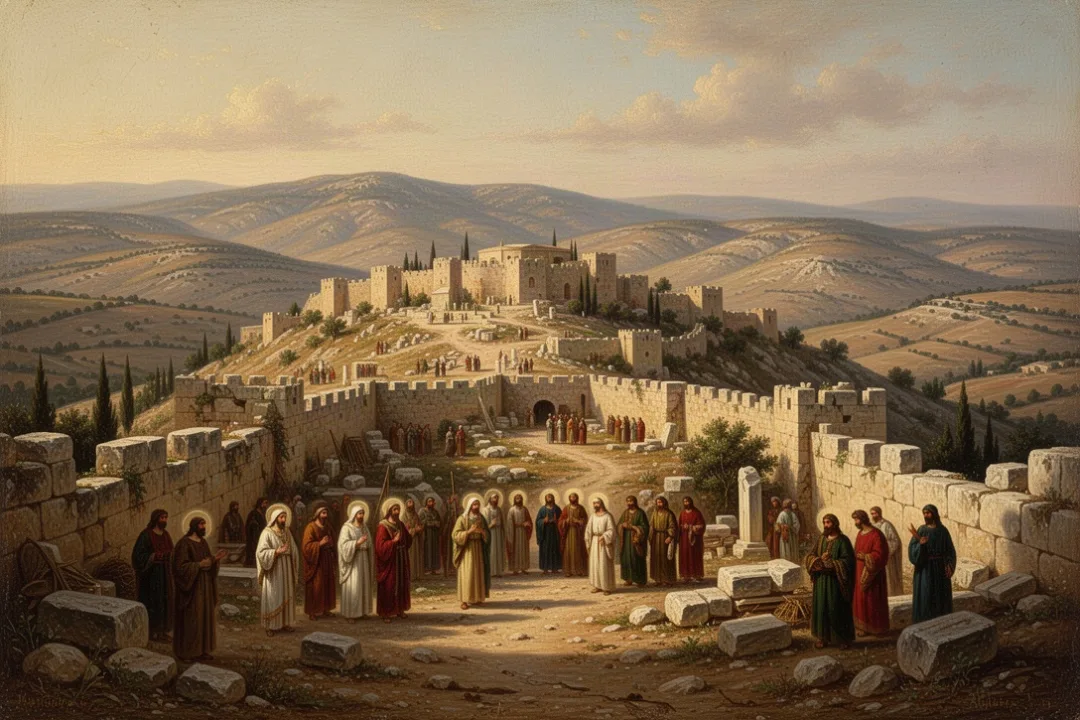
Samaria first appears as the name of a city. King Omri of Israel purchased a hill from a man named Shemer and built a fortified capital there, naming it Samaria after the former owner, according to 1 Kings 16:24. The city stood in a strategically valuable location in the central hill country.
Over time, “Samaria” also became a name for the northern kingdom of Israel and for the territory under its control. This kingdom had separated from the kingdom of Judah after the reign of Solomon. Its kings ruled from Samaria until the Assyrian conquest ended the kingdom in the late eighth century B.C.
In the New Testament, Samaria usually means the region lying between Galilee and Judea. It also refers to the people identified as Samaritans. The meaning depends on the passage, so a reference to Samaria may describe a place, a political territory, or a community with its own religious and cultural identity.
Quick distinction: Samaria was originally a city and capital, but the name later described a larger region and the people associated with it. Reading each passage in its historical setting prevents these meanings from being confused.
How Samaria developed through biblical history
The history of Samaria can be followed through several major stages. Each stage explains why the name carries both political and religious significance in Scripture.
Omri establishes the capital. After political instability in the northern kingdom, Omri purchased the hill of Samaria and built a new royal center, as recorded in 1 Kings 16.
Samaria becomes the center of northern Israel. The city served as the administrative and military capital of the kingdom of Israel. It was also connected with the worship of the Lord under a religious system that biblical writers criticize for combining devotion to God with unauthorized worship.
The city experiences prosperity and injustice. During periods of strength, the wealthy class in Samaria benefited from luxury and political power. Prophets such as Amos and Hosea condemned exploitation, corruption, and false confidence.
Assyria conquers the northern kingdom. Samaria fell after a long Assyrian campaign. The event is described in 2 Kings 17 and is connected with the exile of many Israelites.
The region gains a mixed and contested identity. Assyrian imperial policy brought deportations and resettlement. Later biblical passages describe conflict over worship, ancestry, and political loyalty between the people of Samaria and the community centered in Jerusalem.
Jesus and the apostles cross the boundary. In the New Testament, Jesus teaches through Samaritan examples, speaks with a Samaritan woman, heals a Samaritan leper, and sends his followers toward Samaria as part of their mission.
This sequence shows why Samaria cannot be reduced to a symbol of wickedness or division. It was a real capital with a complex history, and the Bible presents both its serious failures and the dignity of people connected with the region.
Why Omri founded Samaria as Israel’s capital
Before Samaria became the capital, the northern kingdom had used other royal centers, including Shechem and Tirzah. Omri’s purchase of the hill gave him a new site that could be fortified and controlled. Its position in the hill country also provided visibility and access to important routes.
The city’s name is linked to Shemer, the man who owned the hill. The account in 1 Kings 16 does not present the founding as a spiritual renewal. Instead, it introduces the city within a record of royal power struggles and the political consolidation of Omri’s dynasty.
Samaria grew into a major royal and economic center. Archaeological remains from the site have included evidence of monumental construction and the wealth of the royal court. The biblical prophets, however, repeatedly place that wealth beside the suffering of the poor and the corruption of leaders.
What the prophets said about Samaria
The prophets often used Samaria as a concrete example of the northern kingdom’s unfaithfulness. Their messages addressed more than private religious practice. They condemned oppression, dishonest commerce, corrupt courts, sexual exploitation, political arrogance, and dependence on foreign alliances.
Amos and the luxury of Samaria
The prophet Amos spoke against the comfortable elite of Samaria. In Amos 3–6, Samaria represents a society that enjoys security and luxury while ignoring injustice. Amos challenges those who assume that religious ceremonies can protect them from accountability while vulnerable people are mistreated.
His message gives Samaria a moral dimension. The city’s problem was not simply that it was wealthy. The problem was that wealth had become tied to exploitation and indifference. Amos connects worship with justice and treats the treatment of the poor as evidence of whether the nation’s faith was genuine.
Hosea and Samaria’s divided loyalty
Hosea describes the northern kingdom as spiritually unfaithful. Samaria becomes associated with political instability, foreign dependence, and worship that turns away from the covenant with God. Hosea 8–14 portrays the kingdom’s reliance on military or diplomatic solutions as a sign that it has forgotten its proper source of security.
Hosea’s language is often poetic and emotionally intense. The prophet does not discuss Samaria as a neutral geographical label. He uses the city to represent a people whose public life, leadership, and worship have become disordered.
Isaiah and Micah on Samaria’s fall
Isaiah refers to Samaria in warnings about the coming judgment on the northern kingdom. Isaiah 7 describes a political crisis involving Israel, also called Ephraim, and Judah. Isaiah 8–10 later reflects on Assyria’s advance and the danger facing the region.
Micah 1 names Samaria as a leading example of Israel’s rebellion and announces that the city will be brought low. These prophetic texts connect the city’s destruction with covenant unfaithfulness, but they also place the event within the international reality of Assyrian expansion.
How Samaria fell to Assyria
The northern kingdom weakened through internal conflict and pressure from the Assyrian Empire. Samaria was eventually besieged, and the city fell during the reign of Hoshea. The account in 2 Kings 17 presents the conquest as a decisive turning point: the kingdom of Israel came to an end, and many of its inhabitants were deported.
Assyria did not merely defeat Samaria militarily. The empire reorganized the population and political structure of the region. Second Kings describes people being brought from other conquered areas and settled in the cities of Samaria. The biblical account presents this resettlement as part of the complicated background to later Samaritan identity.
The northern tribes did not simply disappear at the moment of conquest. Some people remained in the land, some were deported, and others likely moved into neighboring areas, including Judah. The phrase “lost tribes” can therefore oversimplify what happened. The biblical and historical evidence points to displacement, assimilation, survival, and continued identity in different forms.
Reading tip: When 2 Kings 17 explains Samaria’s fall, it combines political history with theological interpretation. The chapter describes Assyria’s actions while also arguing that Israel’s persistent worship practices and injustice brought covenant judgment.
How Samaria differed from Jerusalem and Judah
After Solomon’s reign, the united monarchy divided into two kingdoms. The northern kingdom was generally called Israel or Ephraim, while the southern kingdom was called Judah. Jerusalem became the center of Judah, and Samaria became the capital of Israel.
The two kingdoms shared much of Israel’s earlier history, including the traditions of Abraham, Moses, the exodus, and the covenant. Yet they developed separate royal institutions, political alliances, and religious centers. The northern kingdom established worship sites at Bethel and Dan, which biblical writers criticize as unauthorized alternatives to Jerusalem.
The rivalry became sharper after the exile of the northern kingdom. The community returning to Jerusalem under Persian rule did not regard the people of the surrounding region as simply identical with the Judean community. Disagreements arose over temple rebuilding, political cooperation, ancestry, and acceptable worship.
These tensions help explain the social force of the Samaritan references in the New Testament. A Jew traveling through Samaria was crossing a boundary shaped by centuries of political separation, competing sacred traditions, and mutual suspicion.
Who the Samaritans were in the New Testament
By the time of Jesus, Samaritans formed a distinct community associated with the central region of Samaria. They worshiped the God of Israel but differed from Judeans in important ways. Samaritan tradition recognized the authority of the Torah, or five books of Moses, and centered worship on Mount Gerizim rather than Jerusalem.
The Gospel of John reflects this difference in the account of Jesus and the Samaritan woman. In John 4, she raises the question of whether worship should take place on Mount Gerizim or in Jerusalem. Jesus’ response shifts the focus toward worshiping God in spirit and truth, without treating the woman’s question as irrelevant.
The relationship between Jews and Samaritans was not simply a matter of personal dislike. It involved competing claims about identity, Scripture, sacred geography, and legitimate worship. The Gospel accounts assume that their audience understood the significance of Jesus choosing Samaritan settings and characters for important teaching.
What Jesus taught through Samaritan encounters
The Samaritan woman at the well
John 4 records Jesus speaking publicly with a Samaritan woman near Sychar. The conversation crosses several boundaries at once: Jew and Samaritan, male and female, teacher and socially vulnerable person. Jesus addresses her religious questions seriously and reveals that the scope of God’s work is not limited by the old hostility between the communities.
The woman then tells people in her town about Jesus, and many Samaritans come to hear him. John presents this as a significant response to Jesus’ identity. The story shows Samaria not merely as a place needing correction, but as a region where people recognize and respond to the message.
The parable of the good Samaritan
In Luke 10, a legal expert asks Jesus about the meaning of loving one’s neighbor. Jesus answers with the parable commonly called the good Samaritan. A wounded man is ignored by respected religious figures but helped by a Samaritan, who provides practical care and accepts personal expense.
The force of the parable comes partly from the Samaritan’s unexpected role. Jesus does not choose a socially admired member of the listener’s own group as the example of neighborly love. He makes the outsider the person who acts with compassion, then asks the hearer to imitate that mercy.
The story should not be reduced to a general instruction to be nice. It defines neighbor love through concrete action: seeing suffering, interrupting one’s plans, treating the injured person’s wounds, arranging continued care, and accepting cost. It also challenges assumptions about who can be morally faithful.
The grateful Samaritan leper
Luke 17 describes ten men with a serious skin disease who cry out to Jesus for mercy. Jesus tells them to present themselves to the priests, and as they go, they are cleansed. Only one returns to thank Jesus, and he is identified as a Samaritan.
Again, the Samaritan is placed at the center of a lesson about faith and gratitude. The story does not suggest that every Samaritan was automatically more faithful than every Jew. Rather, it uses the unexpected outsider to expose the spiritual blindness of those who might assume that religious privilege guarantees a grateful response.
Why Jesus traveled through Samaria
John 4 says Jesus went through Samaria while traveling from Judea toward Galilee. Some travelers might have chosen a route around the region because of hostility between Jews and Samaritans, but Jesus’ journey creates an opportunity for conversation and ministry.
The Synoptic Gospels also preserve a more cautious moment. In Matthew 10, Jesus initially sends the Twelve to the “lost sheep” of Israel and tells them not to enter Samaritan towns during that mission. This instruction belongs to a specific stage of Jesus’ ministry and should not be used to cancel the later emphasis on Samaria.
The different passages show development in the mission’s scope. Jesus’ ministry takes place within Israel’s story, yet it also points beyond familiar boundaries. His treatment of Samaritans includes correction, compassion, respect, and inclusion rather than a simplistic denial of existing differences.
What Acts says about the mission to Samaria
After Jesus’ resurrection, Acts 1:8 describes the witnesses’ mission moving outward from Jerusalem to Judea and Samaria and then to the ends of the earth. Samaria is placed between the immediate Jewish homeland and the wider Gentile world, making it a meaningful geographical and cultural stage in the spread of the gospel.
Acts 8 records Philip preaching in a city of Samaria. Crowds listen, signs occur, and many people respond to the message. The apostles in Jerusalem later visit, showing that the Samaritan believers are being received into the growing Christian community rather than treated as a separate spiritual class.
The account of Simon the magician also appears in Acts 8. Simon is impressed by the apostles’ works and seeks spiritual authority for himself. Peter rebukes his attempt to treat God’s gift as something that can be acquired through money. The episode shows that Samaria’s inclusion did not remove the need for discernment, repentance, and responsible leadership.
Acts 8 later describes Philip meeting an Ethiopian official on the road away from Jerusalem. Although that encounter is not specifically Samaritan, its placement after the Samaritan mission reinforces the expanding geographical movement of the Christian message.
What Samaria can mean in biblical interpretation
Samaria carries several themes, but they should be drawn from particular passages rather than imposed on every mention. Its meaning changes depending on whether the text is describing a capital city, a condemned kingdom, a contested religious community, or a mission field.
Political power and vulnerability: Samaria was a royal capital, yet its defenses could not preserve the northern kingdom from Assyria.
Religious compromise: Prophets connect the northern kingdom with worship practices that depart from covenant faithfulness.
Social injustice: Amos and other prophets criticize the exploitation hidden beneath the city’s prosperity.
Historical trauma: The Assyrian conquest, deportations, and resettlement shaped later conflict and identity.
Outsider compassion: Jesus uses Samaritan characters to challenge assumptions about goodness, faith, and neighborly responsibility.
Mission across boundaries: Acts presents Samaria as an important region in the spread of the gospel.
One mistake is to use “Samaritan” as a permanent synonym for evil because some Old Testament passages condemn Samaria. Another is to erase the real religious and political differences between Jews and Samaritans in order to make the stories seem less challenging. A careful reading holds both truths together: conflict was real, and Jesus still called people to mercy across that conflict.
Important Bible passages about Samaria
These references provide a practical starting point for studying the subject. Reading the surrounding chapters is essential because the same name can carry different emphasis in different books.
1 Kings 16:23–24: Omri buys the hill of Samaria and establishes the city as the capital of Israel.
1 Kings 18: Samaria appears in the setting of Ahab’s reign, the prophet Elijah, and the conflict over Baal worship.
2 Kings 6–7: The city experiences siege and famine during a conflict with Syria.
2 Kings 17: Samaria falls to Assyria, and the northern kingdom comes to an end.
Amos 3–6: The prophet condemns the injustice and complacency of Samaria’s wealthy leaders.
Hosea 8–14: Samaria represents the northern kingdom’s divided loyalty and political instability.
Micah 1: Samaria is named in a prophetic warning of coming judgment.
Luke 9:51–56: A Samaritan village refuses to welcome Jesus, and he rejects his disciples’ desire for destruction.
Luke 10:25–37: The parable of the good Samaritan defines neighborly love through costly compassion.
Luke 17:11–19: A Samaritan who is healed returns to thank Jesus.
John 4: Jesus speaks with a Samaritan woman and teaches about worship, identity, and God’s work.
Acts 1:8 and Acts 8: Samaria becomes a major setting for the church’s expanding mission.
How to study Samaria without missing the context
Begin by identifying what kind of reference you are reading. A passage in Kings or the prophets may refer to the capital or the northern kingdom, while a Gospel passage may focus on Samaritan people and Jewish-Samaritan relations.
Locate the passage in history. Ask whether it belongs before the Assyrian conquest, after the exile, during Jesus’ ministry, or during the early church.
Identify the speaker’s purpose. A prophet may be announcing judgment, while Jesus may be exposing prejudice or teaching mercy.
Separate geography from character. Samaria can name a region without suggesting that every person there shares the same moral condition.
Read the surrounding verses. The central point may depend on the response to a warning, healing, conversation, or act of compassion.
Compare related passages. The Old Testament’s prophetic criticism and the New Testament’s Samaritan examples should be interpreted in their own settings, then considered together.
Studied this way, Samaria becomes more than a background location. It reveals how political collapse, religious division, social prejudice, and God’s inclusive purpose intersect across the biblical story.
What Samaria means for readers today
The Bible’s treatment of Samaria challenges the habit of judging entire communities by the failures of their leaders or by inherited conflict. The prophets hold a society accountable for injustice, but Jesus also makes a Samaritan the model of practical compassion and welcomes a Samaritan witness into the story of faith.
Samaria also shows that religious conflict can last for generations. Differences over worship, ancestry, and sacred places shaped how Jews and Samaritans viewed one another. Yet the biblical narratives repeatedly bring people across that boundary, asking readers to recognize the image of God, the possibility of faith, and the duty of mercy beyond familiar group lines.
For a study of Scripture, Samaria is therefore both a historical subject and a test of interpretation. It calls attention to the consequences of injustice and unfaithfulness, while also warning against turning an entire people into a stereotype. The city fell, the kingdom ended, but the biblical story continued to ask how God’s people should respond to outsiders, opponents, and neighbors in need.
Frequently asked questions
Was Samaria part of Israel or Judah?
Samaria belonged to the northern kingdom of Israel, not the southern kingdom of Judah. It became Israel’s capital under King Omri. Judah’s capital was Jerusalem. After the northern kingdom fell to Assyria, the region of Samaria remained politically and religiously distinct from the Judean community centered in Jerusalem.
Are Samaritans Israelites?
Samaritans regarded themselves as connected to the people of Israel and accepted the Torah, but they developed a distinct communal identity. Their traditions centered worship on Mount Gerizim rather than Jerusalem. The biblical texts reflect both shared heritage and serious disagreement between Samaritans and Judeans.
Why did Jews and Samaritans dislike each other?
Their hostility grew from centuries of political separation, competing claims about ancestry, different worship centers, and disputes over cooperation and religious legitimacy. The conflict was not identical in every period or between every individual, but it was strong enough that Jesus’ Samaritan examples carried considerable social force.
What is the most famous Samaritan story in the Bible?
The best-known is the parable of the good Samaritan in Luke 10:25–37. Jesus describes a Samaritan caring for a wounded stranger after respected religious figures pass by. The story teaches that love of neighbor is demonstrated through costly, practical mercy rather than limited by ethnic or religious boundaries.












Leave a Reply