Old Testament Women | Deuterocanonical Women | Symbolic Figures
Shiphrah: The Courageous Hebrew Midwife of Exodus
📅 13th-15th century BCE, during the Egypt of the Exodus · 📜 Shiphrah (שִׁפְרָה) means 'beautiful' or 'fair' in Hebrew, symbolizing her integrity and noble character.
ShiphrahMidwivesExodusFaith in Action
The midwives, however, feared God and did not do what the king of Egypt had told them to do; they let the male children live.— Exodus 1:17
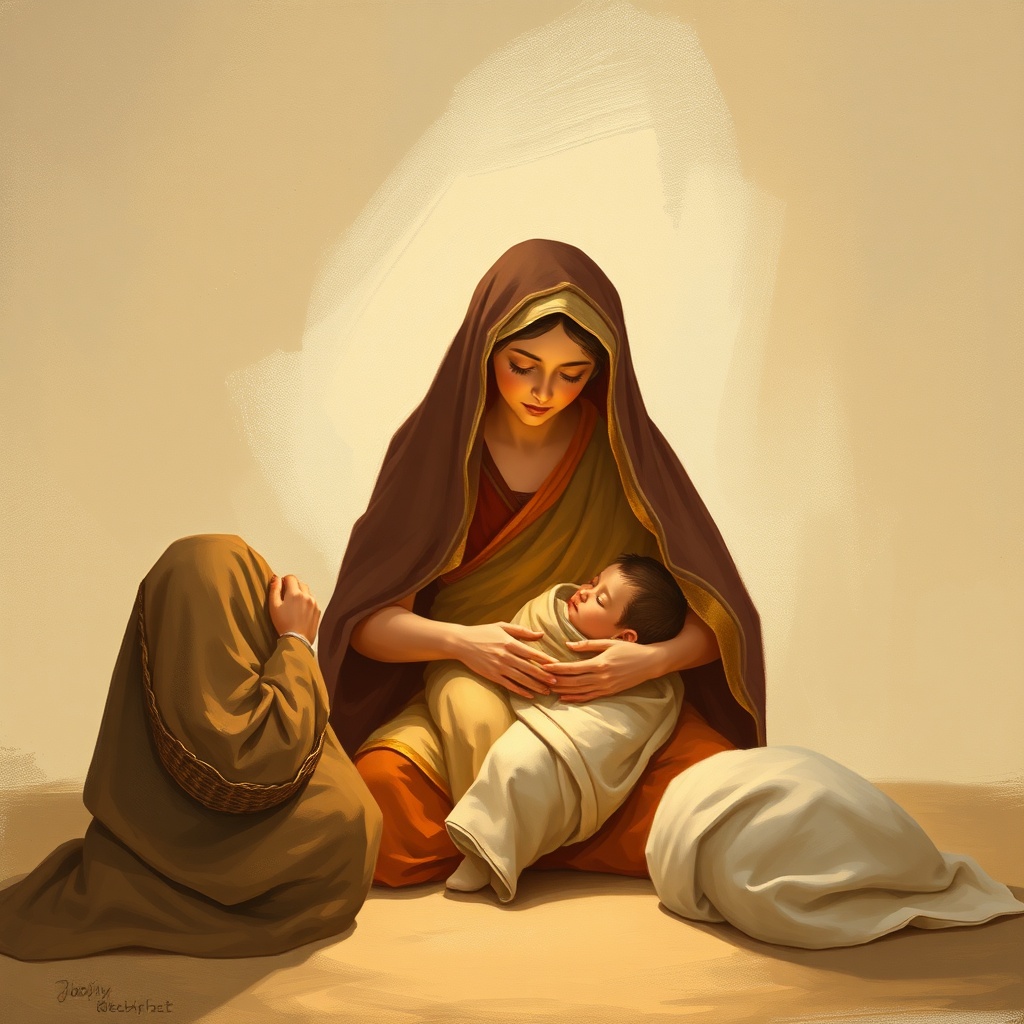
Shiphrah was one of the Hebrew midwives tasked with delivering Hebrew babies in Egypt during a time of increasing oppression. When Pharaoh ordered the midwives to kill male infants to control the Hebrew population, Shiphrah and her colleague Puah secretly defied the king’s command. They feared God more than Pharaoh, choosing to preserve life over obedience to unjust laws. Their courage led to God's blessing—the midwives were favored, and the Israelites' population thrived. Her actions highlight faith, bravery, and moral integrity, making her a model of righteous resistance. Although her name isn’t explicitly linked to leadership, her peaceful defiance played a pivotal role in the salvation narrative, setting the stage for the eventual deliverance of Israel. Her story underscores the importance of moral courage in the face of brutality, and her defiance contributed to God's plan of liberation for His people.
🏛️ Cultural & Historical Context
Living in ancient Egypt, Shiphrah operated within a patriarchal society where women’s roles were mostly domestic. Yet, midwives held significant authority in life-and-death situations, especially among the Hebrew community. Their actions reflect a courageous resistance to oppressive imperial policies, highlighting an undercurrent of moral agency despite societal limitations. Pharaoh’s decree exemplifies the dehumanization of Hebrew slaves, and midwives like Shiphrah exemplified individual resistance rooted in faith and moral conviction. Women’s roles as caregivers and protectors of community wellbeing afforded them opportunities to act ethically, even under dangerous circumstances. Her story reveals the subtle yet profound impact women could have within patriarchal structures, shaping history through moral bravery.
👨👩👧 Family Connections
The biblical text does not specify her family details; however, she is identified as one of the Hebrew midwives working under Pharaoh's command, with no recorded immediate family, emphasizing her role and faith.
Shiphrah symbolizes faith in divine justice and moral courage amidst persecution. Her refusal to obey unjust laws demonstrates that God's standards surpass human authority, emphasizing the biblical theme that righteousness often requires civil disobedience. Her story underscores God's providence—protecting those who act righteously—and highlights the importance of moral integrity in salvation history. Her courage foreshadows the themes of deliverance and God's sovereignty. As a woman who risked her life to uphold God's commandments, she serves as a spiritual archetype of righteous resistance and divine favor, reminding believers that obedience to God often involves standing firm against evil.
📖 Lessons for Today
📖 Lesson 1
Standing up for what is right can require moral courage, even in the face of authority or danger.
Shiphrah shares similarities with women like Deborah and Ruth, who also exemplified courage and faithfulness. Unlike Eve or Miriam, who were involved in foundational moments or leadership, Shiphrah's silent yet courageous resistance highlights the quiet strength women can exercise in safeguarding life and righteousness. Her story contrasts with women who led openly, emphasizing that moral activism can also be subtle yet impactful within societal constraints.
📜 Scripture References
Reference
Exodus 1:15-21
❓ Frequently Asked Questions
Who was Shiphrah in the Bible?
Shiphrah was a Hebrew midwife in Egypt who, along with Puah, defied Pharaoh's order to kill Hebrew male infants, showing courage and faith (Exodus 1:15-21).
What does Shiphrah’s story teach us today?
Her story teaches us that standing firm in our moral beliefs and trusting in God's justice can make a significant impact, even when facing authority or danger.
Was Shiphrah a leader or warrior?
No, she was a midwife, but her moral courage and faith made her a significant figure in God's plan of salvation, demonstrating that heroism can take many forms.
✨ Did You Know?
The name Shiphrah is believed to be derived from the Hebrew root meaning 'to be beautiful' or 'to be fair,' which may reflect her character or the esteem in which she was held. Additionally, her story shows that many women subtly impacted biblical history through acts of faith and resistance, even without detailed personal background.











Leave a Reply