The fall of mankind: Meaning, consequences, and hope
The fall of mankind: Meaning, consequences, and hope
The fall of mankind refers to humanity’s first disobedience to God, described in Genesis 3. Adam and Eve rejected God’s command, trusted the serpent’s deception, and ate from the tree of the knowledge of good and evil. Christians understand this event as the entrance of sin, alienation, suffering, and death into human experience.
The account does not merely explain how one ancient couple made a bad decision. It presents a pattern that continues through every generation: people distrust God, define good and evil for themselves, and experience the damage caused by broken fellowship with him and with one another.
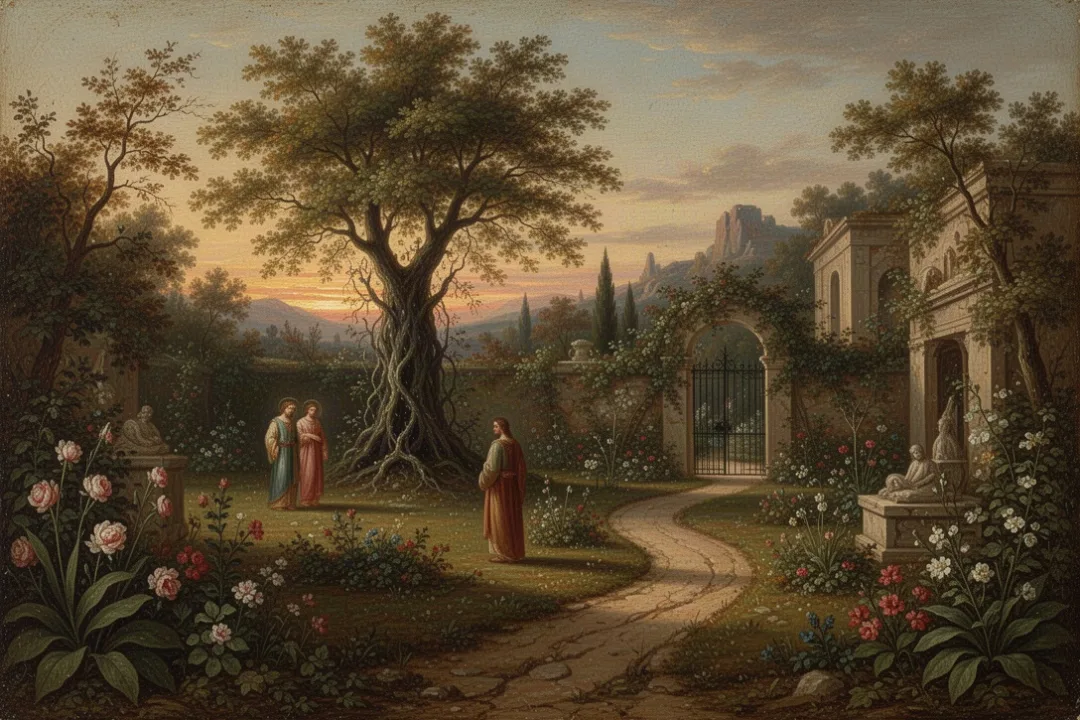
Genesis 1 and 2 portray creation as good and humanity as made in God’s image. Adam and Eve live in the garden of Eden with meaningful work, open fellowship, and access to the tree of life. God gives them freedom within a clear boundary: they must not eat from the tree of the knowledge of good and evil.
Genesis 3 begins with the serpent questioning God’s command. The serpent suggests that disobedience will not bring death and that eating the fruit will make the humans like God, able to know good and evil. Eve eats, gives some to Adam, and he eats as well. The text presents their action as a deliberate choice to place their own judgment above God’s word.
The central issue is therefore more than the fruit itself. Scripture does not identify the fruit as an apple, and the specific kind of tree is less important than the act of rebellion and misplaced trust. Adam and Eve want the wisdom and independence promised by the serpent without submitting to the God who created them.
Immediately afterward, they become aware of their nakedness and make coverings. When they hear God in the garden, they hide. Their fear, shame, and avoidance show that sin has disrupted their relationship with God before the later consequences are announced.
Central idea: The fall is fundamentally a rupture of trust and obedience. Its consequences spread into human relationships, work, creation, and mortality, but the first break occurs between humanity and God.
Why the serpent’s temptation matters
The serpent’s approach follows a recognizable pattern. It first distorts God’s command, then contradicts God’s warning, and finally offers an attractive vision of independence. The temptation appeals to the desire for wisdom, pleasure, and control, while concealing the cost of rejecting the Creator.
Eve sees that the tree is good for food, pleasing to look at, and desirable for gaining wisdom. These details show that temptation often works through legitimate desires pursued in a forbidden way. Hunger, beauty, knowledge, influence, and freedom are not inherently evil, but they become destructive when people treat them as more authoritative than God.
Adam’s role also matters in the narrative. He is present with Eve when she eats, yet he does not intervene or refuse the fruit. Genesis presents both individuals as responsible, even though later biblical passages sometimes focus on Adam’s representative role in the human fall. The passage does not allow either person to avoid accountability by blaming the other.
The serpent’s promise contains a partial truth presented in a deceptive way. Their eyes are opened, but the result is not the glorious equality they expected. They gain an awareness of good and evil through disobedience, accompanied by shame, fear, and judgment. Their new knowledge does not make them divine; it reveals their guilt and vulnerability.
How sin changes humanity’s relationship with God
Before the fall, Adam and Eve are described as unashamed and at peace in God’s presence. Afterward, they hide and attempt to manage the consequences themselves. This movement from openness to concealment illustrates a lasting feature of sin: people often respond to wrongdoing by defending themselves, shifting blame, or withdrawing from God.
When God questions Adam, Adam blames Eve and indirectly blames God for giving her to him. Eve blames the serpent. Their answers reveal that sin damages not only obedience but also responsibility. Instead of confessing plainly, they try to move guilt elsewhere.
Christian theology commonly describes this damaged relationship as alienation from God. Humanity remains valuable because people still bear God’s image, but the fellowship intended in creation is broken. The fall does not erase human dignity; it corrupts human desires and leaves people unable to restore the relationship by their own moral effort.
Some Christian traditions describe humanity as inheriting original sin, meaning that Adam’s fall affects the condition into which every person is born. Other traditions emphasize inherited mortality, a wounded nature, or a universal tendency toward sin rather than treating every person as personally guilty for Adam’s individual act. These differences should be acknowledged, but the broad Christian claim is shared: all people are affected by sin and need God’s grace.
What consequences follow from the fall
Genesis 3 describes several consequences, and later biblical writings develop them further. The fall affects the whole direction of human life rather than creating only one isolated problem.
Shame and fear: Adam and Eve become conscious of their vulnerability and hide from God.
Broken relationships: Suspicion, blame, conflict, and unequal power enter human fellowship.
Pain and struggle: Childbearing and other forms of human labor become marked by difficulty.
Frustrated work: The ground produces resistance, so work becomes tiring and often disappointing.
Mortality: Humanity loses access to the tree of life and must return to the dust from which it was formed.
Exile: Adam and Eve leave Eden and no longer live in the garden’s immediate setting of blessing.
These consequences do not mean that every individual hardship can be traced to a specific personal sin. The book of Job, the teaching of Jesus, and other biblical passages reject simplistic assumptions that a person’s suffering always proves that person is more sinful than others. The fall describes the broken condition of the world as a whole, not a formula for judging each tragedy.
Sin also affects the created order. Romans 8 describes creation as subjected to frustration and waiting for liberation, using the language of groaning and longing. This passage connects human rebellion with a wider disorder in creation, while still pointing toward God’s future renewal.
How death enters the biblical story
Death is one of the most serious results associated with the fall. God warns that disobedience will lead to death, and Genesis 3 ends with humanity removed from the tree of life. Adam and Eve do not collapse physically at the instant they eat, but death now governs their existence: they become mortal, separated from Eden, and eventually return to dust.
Paul develops this theme in Romans 5 and 1 Corinthians 15. He connects Adam’s trespass with condemnation and death, then contrasts Adam with Jesus Christ, whose obedience and resurrection bring grace, justification, and life. The comparison presents Adam as a representative head of fallen humanity and Christ as the representative head of redeemed humanity.
In the Bible, death is more than the end of biological life. Sin produces spiritual death, a condition of separation from God and inability to produce true reconciliation through human strength alone. Physical death and spiritual alienation are related aspects of a world no longer living in the fullness of its intended relationship with God.
Yet the biblical story does not treat death as the final word. The resurrection of Jesus is presented as God’s decisive answer to sin and death. First Corinthians 15 links Christ’s resurrection with the future resurrection of his people, while Revelation 21–22 portrays renewed creation, restored fellowship, and the removal of death and mourning.
How the fall affects human identity and behavior
People are not presented as worthless after the fall. Genesis 1 continues to provide the foundation for human dignity: men and women are made in God’s image. That dignity supports the biblical concern for justice, compassion, marriage, family, work, and care for the vulnerable.
At the same time, the fall means human nature is morally disordered. People can recognize goodness, create beauty, show courage, and seek justice, but they also lie, exploit, envy, abuse power, and excuse wrongdoing. The Bible holds these truths together: humanity retains real goodness as God’s creation while remaining deeply affected by sin.
This explains why moral progress in one area does not eliminate evil in another. Education, laws, technology, wealth, and social reform can restrain harm and improve life, but none of them can fully cure the heart’s estrangement from God. External change matters, but Christian teaching says genuine restoration also requires forgiveness, repentance, and inner renewal.
The fall also affects the way people understand freedom. Modern discussions often define freedom as the ability to choose without restriction. Biblical Christianity presents a fuller view: people are most free when they live according to the good purposes for which they were created. Sin offers independence but eventually produces slavery to disordered desires.
What Genesis 3 suggests about responsibility
The fall raises difficult questions about blame. Adam and Eve are influenced by the serpent, but they are not portrayed as helpless victims. They hear God’s command, understand the boundary, and make a choice. The serpent’s deception helps explain the temptation, but it does not remove human responsibility.
The narrative also shows that responsibility includes what people fail to do. Adam’s silence is significant. He does not need to invent the temptation to participate in the disobedience; his failure to guard what was entrusted to him is itself meaningful.
Blame shifting becomes one of the first visible effects of sin. Adam points toward Eve, Eve points toward the serpent, and neither begins with an honest admission. The pattern remains familiar in families, workplaces, churches, and public life. People often protect their image instead of seeking truth and repair.
Christian repentance reverses that pattern. Repentance is not merely feeling embarrassed or regretting unpleasant consequences. It involves turning from sin, acknowledging responsibility, receiving God’s mercy, and changing direction. Confession does not earn forgiveness as a payment; it expresses a truthful response to grace.
How the rest of the Bible responds to the fall
The fall of mankind sets the direction for the biblical story that follows. Cain’s murder of Abel shows sin intensifying within the family. The violence before the flood, the pride of Babel, Israel’s repeated idolatry, and the injustice condemned by the prophets all display the continuing reach of rebellion.
God’s response is not to abandon creation. He calls Abraham and promises blessing for the nations through his family. He gives Israel covenant instructions, provides sacrificial worship, raises prophets, and repeatedly calls people back to faithful obedience. These measures reveal both the seriousness of sin and God’s persistent purpose to restore his people.
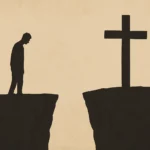
The New Testament identifies Jesus as the answer to the problem introduced in Eden. His life fulfills faithful obedience, his death is interpreted as a sacrifice for sin, and his resurrection defeats death. John 3 describes God’s love and the call to trust in the Son; Romans 3 explains that people are made right with God through grace received by faith rather than through boasting in their own works.
Jesus is also portrayed as the “last Adam” in 1 Corinthians 15. Where Adam’s disobedience leads toward condemnation and death, Christ’s obedience leads toward righteousness and life. This does not mean the fall is ignored. It means God addresses its guilt and consequences through a new representative, a new covenant, and the promise of resurrection.
The Christian hope: Redemption does not simply return people to the innocence of Eden. Through Christ, God promises forgiveness, renewed relationship, transformed character, resurrection, and a restored creation in which sin and death no longer rule.
Common mistakes when interpreting the fall of mankind
Genesis 3 is often used to support ideas that go beyond what the text says. Careful reading avoids both minimizing the fall and adding claims that Scripture does not make.
Calling the fruit an apple: Genesis does not name the fruit. The important issue is disobedience, not its botanical identity.
Blaming Eve alone: Both Adam and Eve disobey. The narrative and later biblical teaching assign responsibility to humanity rather than to women alone.
Assuming the serpent is fully explained in Genesis 3: Later biblical passages connect the serpent with Satan, but readers should distinguish Genesis’s immediate description from later theological development.
Treating every hardship as personal punishment: The fall explains a broken world, but it does not prove that a particular illness, loss, or disability results from a specific sin.
Confusing guilt with human worth: Sin is serious, yet people remain bearers of God’s image and must be treated with dignity.
Reducing the fall to sexual temptation: The text focuses on distrust, disobedience, and the desire to determine good and evil independently of God.
Stopping the story at judgment: Genesis 3 includes judgment, but it also contains signs of God’s care, including clothing for Adam and Eve and the continuing promise of his purpose for humanity.
Using the fall to excuse passivity: A fallen world still calls people to pursue justice, protect the vulnerable, cultivate creation, and take responsibility for their actions.
How the fall helps explain suffering without excusing it
The fall provides a Christian framework for understanding why the world contains both beauty and terrible disorder. Creation is still God’s creation, so goodness remains visible. Yet sin has damaged human communities, institutions, bodies, desires, and the natural world.
This framework can help people resist two opposite errors. One error is naïve optimism, which assumes that people are naturally good enough to solve every problem through education or organization. The other is despair, which concludes that evil is so deep that no goodness is possible. The biblical view expects real acts of love and justice while recognizing that lasting healing requires God’s redemption.
The fall should never be used to dismiss another person’s pain. Saying that suffering exists because the world is fallen may be doctrinally accurate, but it can become cruel if offered without compassion or practical help. Jesus consistently responds to suffering with mercy, presence, healing, and truth rather than with cold explanations.
Christian belief also distinguishes between explaining the origin of a broken condition and assigning blame for every event. The fall explains why death and suffering belong to the human story; it does not tell you that a grieving person caused a particular tragedy. Wisdom requires humility when the reasons for individual suffering remain unknown.
What a faithful response to the fall looks like
The fall calls for honest self-examination. Instead of asking only how Adam and Eve failed, you can ask where you distrust God, justify wrongdoing, hide shame, or blame others. The purpose is not unhealthy self-condemnation but truthful recognition of the ways sin damages your relationship with God and with people.
A Christian response includes repentance and faith. Repentance turns away from rebellion, while faith relies on God’s mercy rather than personal achievement. Together, they lead to changed relationships, greater honesty, renewed obedience, and a willingness to repair harm wherever possible.
Practical responses often include:
Admit wrongdoing clearly: Name the action without minimizing it or making another person carry your responsibility.
Seek God’s forgiveness: Christian prayer brings guilt into God’s presence instead of hiding it behind excuses.
Make amends when possible: Apologize, restore what you can, and accept that forgiveness does not erase every consequence.
Resist temptation early: Pay attention to rationalizations, secrecy, resentment, and desires that are beginning to control your choices.
Receive support: Mature Christian community, pastoral care, and professional counseling can help address patterns that individual willpower has not changed.
Practice faithful obedience: Small decisions involving truthfulness, generosity, self-control, and compassion express restored trust in God.
These practices do not reverse the fall through human effort. They are responses to grace. Christian hope rests on God’s action in Christ, while daily faithfulness shows that this grace is reshaping people in the present.
Why the fall matters for Christian hope
The fall of mankind explains why the Bible speaks so seriously about sin and so urgently about salvation. If humanity were merely uninformed, better instruction would solve the problem. If people were merely unlucky, improved circumstances would be enough. But the biblical diagnosis is deeper: people need reconciliation with God and liberation from the power of sin.
That diagnosis also gives Christian hope its shape. Salvation is not only escape from punishment after death. It includes forgiveness now, a renewed relationship with God, the transformation of character, the healing of human community, and the future resurrection of the body.
Genesis begins with humanity in a garden, separated from the tree of life because of sin. The Bible’s final vision in Revelation returns to a renewed creation where God dwells with his people and the tree of life is again present. Between these scenes stands the work of Christ, through whom Christians believe the curse of sin is being overcome and the purposes of creation will be fulfilled.
The fall is therefore a story of catastrophic human disobedience, but it is not the whole Christian message. It explains the wound; the gospel announces the remedy. Humanity’s rebellion is real, its consequences are serious, and God’s grace is greater than the ruin.
Frequently asked questions
Is the fall of mankind the same as original sin?
The terms are closely related but not identical. The fall usually refers to Adam and Eve’s first disobedience in Genesis 3. Original sin describes the theological understanding that this event affected the condition of all humanity. Christian traditions explain inherited sin differently, but most agree that every person lives in a world marked by sin and needs God’s grace.
Did Adam and Eve die immediately after eating the fruit?
Genesis does not say that they physically died at that moment. Instead, they experienced immediate shame, fear, and separation from God, then were expelled from Eden and denied access to the tree of life. Their mortality became unavoidable, and they eventually returned to dust. The account therefore includes both spiritual alienation and physical death.
Does the fall mean people are completely evil?
Christian teaching generally says that sin deeply affects every person, not that every person is as evil as possible or incapable of any good action. People still bear God’s image and can show love, courage, creativity, and justice. However, human goodness cannot by itself repair alienation from God or remove the power and guilt of sin.
How does Jesus address the fall of mankind?
The New Testament presents Jesus as the obedient counterpart to Adam. Through his life, sacrificial death, and resurrection, Jesus deals with sin, offers forgiveness, restores fellowship with God, and defeats death. Christians therefore see salvation as more than moral improvement: it is God’s gracious work of creating a new humanity through Christ and promising renewed creation.








Leave a Reply