What Is an Evangelist in the Bible? Meaning, Roles, and Biblical Examples
What Is an Evangelist in the Bible? Meaning, Roles, and Biblical Examples
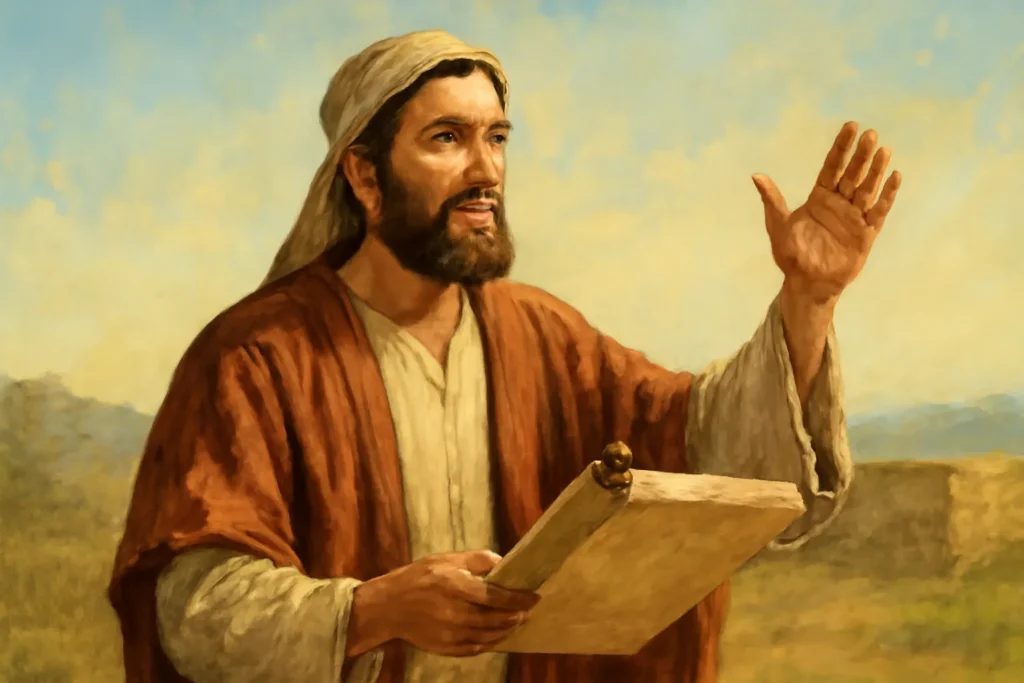
In biblical terms, the word evangelist designates a bearer of good news—the one who proclaims the message about Jesus Christ and calls people to respond in faith. But the term carries nuance beyond a simple preacher’s badge. An evangelist is defined not only by what they say, but by how they carry the message of the gospel, how they engage audiences both near and far, and how their work fits into God’s larger plan for the church. This article explores what is an evangelist in the Bible, its meaning, roles, and biblical examples, while highlighting how this ancient calling speaks to believers today.
The term evangelist comes from the Greek word euangelistes, formed from eu (good) and angelion (message or news). In essence, an evangelist is a messenger of good news, a person who carries the message of salvation through Jesus Christ and invites people to respond in faith. In biblical usage, the emphasis is less on clever rhetoric or merely delivering a sermon than on accurately conveying the content of the gospel—the life, death, and resurrection of Jesus, and the implications of that truth for sinners and for the world.
Over time, the term acquired a specialized nuance within Christian community life. Some see an evangelist as a specific church office or gift, while others use the term more broadly to describe anyone who proclaims the gospel with particular urgency or reach. The Bible itself helps clarify this breadth and focus. At its core, the evangelist is a gospel messenger who proclaims the news that offers reconciliation with God and the promise of eternal life through faith in Christ.
Evangelist in the New Testament: How the Role Is Defined
The New Testament presents the evangelist in a few distinct but complementary ways. The most explicit reference to the role appears in Paul’s list of gifts given to the church, where the evangelist is named alongside apostles, prophets, pastors, and teachers as part of the fivefold ministry. This foundational passage helps us understand that the evangelist has a unique function within the broader ministry of the church: to equip Christians for gospel work and to extend the reach of the gospel through proclamation.
Ephesians 4:11-12: “And he gave some, apostles; and some, prophets; and some, evangelists; and some, pastors and teachers; for the perfecting of the saints, for the work of the ministry, for the edifying of the body of Christ.”
2 Timothy 4:5: “But you, keep your head in all situations, endure hardship, do the work of an evangelist, discharge all the duties of your ministry.”
Acts 21:8: “Leaving that place, we landed at Tyre, and there we stayed for seven days. Through the Spirit they urged Paul not to go on to Jerusalem, and when we came inside we stayed with Philip the evangelist, who was one of the seven.”
Another important biblical picture is seen in Philip the Evangelist in the book of Acts. Philip is introduced as “one of the seven,” a diaconal role in Acts 6:1-6, and is then described explicitly as an evangelist in Acts 21:8. His ministry illustrates the practical outworking of the title: he proclaims Christ, performs signs, and engages individuals in personal conversations that lead to serious faith decisions.
Roles and Responsibilities: What Does an Evangelist Do?
The biblical function of the evangelist has several interwoven strands. While the exact duties can vary across times and communities, several core responsibilities recur across passages and examples:
Proclaiming the gospel: The primary calling is to declare the message about Jesus—His identity, His work, and the response He requires—from repentance and faith to baptism and new life.
Calling people to faith: An evangelist invites individuals to trust Christ, to understand the necessity of forgiveness, and to commit themselves to following Jesus as Lord.
Planting churches or strengthening new communities: The early church’s evangelists helped establish and nurture new fellowships where the gospel could be taught, worshiped, and lived out in local contexts.
Equipping others for ministry: In Paul’s framework, the evangelist is part of the team that equips all believers for good works; they help believers develop a gospel-centered, mission-focused lifestyle.
Cross-cultural and strategic outreach: By nature, evangelists often move beyond familiar boundaries to share the gospel with new audiences, cultures, and languages, guided by the Spirit’s leading.
Teaching and apologetics when necessary: While not the same as a pastor or teacher, a gospel messenger often explains the truth about Jesus and addresses questions, objections, and misconceptions to help hearers understand and respond.
It is important to recognize that the evangelist’s work is deeply integrated with the church’s overall mission. An evangelist is not simply a loner who preaches in isolation; the role is designed to be connected to a local body, under spiritual authority, and oriented toward building up a community of faith that continues to spread the gospel in ordinary life as well as extraordinary moments.
Biblical Examples of Evangelists: People and Patterns
Philip the Evangelist: A Model of Spirit-Led Proclamation
Philip’s story—first as a deacon and then as an evangelist—offers a concise blueprint for gospel outreach. In Acts 8, Philip preaches Christ in Samaria, performs miraculous signs, and leads many to faith. He then responds to God’s command to take the gospel to unfamiliar territory, which culminates in the dramatic encounter with the Ethiopian eunuch. In this narrative, the evangelist demonstrates several important traits:
Sensitivity to the Spirit: Philip is directed by an inner leading to leave a fruitful ministry field in Samaria to pursue a desert road toward Gaza (Acts 8:26-40).
Clarity about the gospel: He explains the gospel clearly from the scriptures, helping the Ethiopian understand Jesus as the fulfillment of prophecy.
Conversion and discipleship: The Ethiopian’s conversion is followed by baptism, signaling not just a decision but a public commitment and the start of a disciple-making journey.
Philip’s example shows how evangelists can combine proclamation with personal guidance, moving from public preaching to intimate conversations that nurture faith and obedience.
Timothy: The Call to Do the Work of an Evangelist
The apostolic letters extend the call beyond itinerant preachers into the daily life of church leadership. In 2 Timothy 4:5, Paul exhorts Timothy to “do the work of an evangelist,” even as Timothy ultimately shepherds a local church. Timothy’s role illustrates that the evangelist is not only a travel-borne figure but also a perpetual shape of gospel labor within a community. This passage emphasizes:
Contextualized proclamation: Timothy is urged to adapt to his setting, maintaining gospel clarity while engaging various audiences.
Faithfulness under pressure: The instruction to endure hardship highlights the courage required to share the gospel in hostile or challenging environments.
Discipleship and continuity: The evangelist’s work supports the church’s long-term health by preparing others to carry the message forward.
Apollos: A Faithful Preacher with Room to Grow
In Acts 18:24-28, Apollos is described as an “eloquent man, mighty in the Scriptures,” who passionately defended the gospel but needed further instruction about the full counsel of Christ. While the text does not explicitly call him an “evangelist,” his example aligns with the broader function of gospel proclamation—someone who boldly communicates Christ while refining his understanding in community. From this narrative we learn:
Humble reception of correction: Priscilla and Aquila teach him more accurately the way of God, showing that even strong gospel messengers benefit from mentorship.
Effectiveness in proclamation: After being instructed, Apollos “vigorously refuted the Jews in public debate, showing by the Scriptures that Jesus is the Christ.”
Public impact: A capable gospel messenger can influence both listening crowds and local churches through clear teaching and persuasive argument.
Distinctive Features: How the Evangelist Relates to Other Roles
Within the broader matrix of Christian leadership, the evangelist occupies a unique position that intersects proclamation, mission, and church-building. Several distinctions help clarify its relationship to other roles:
Apostles are foundational messengers with a special authority and a broader scope of mission, often tied to the founding of churches and the establishment of doctrine.
Prophets speak God’s word with a revelatory or exhortational edge for building up the church in a particular moment or circumstance.
Pastors and teachers focus on shepherding and doctrinal instruction within the local congregation, nurturing maturity and stability over time.
Evangelists concentrate on the urgent communication of the gospel and the expansion of the church beyond its current boundaries, often catalyzing new faith communities and cross-cultural reach.
In practice, these roles are not isolated silos. The New Testament picture emphasizes collaboration—evangelists align with pastors, teachers, and apostles to fulfill God’s redemptive purposes. The evangelist’s energy and focus on reaching the next audience may be complemented by the church’s governance, teaching ministry, and pastoral care to help new believers grow in Christ.
How Evangelists Operate Today: Methods, Gifts, and Heart
Although the biblical model is centuries old, the underlying principles of evangelistic ministry remain relevant for contemporary churches and individual believers. Several practical strands characterize a biblical evangelist’s operation in modern times:
Gospel-centered communication: The message remains focused on Jesus’ life, death, and resurrection, explaining how faith in Him brings forgiveness and new life.
Spirit-led opportunity: The evangelist seeks divine direction in where and how to share the gospel, recognizing opportunities in everyday life as well as in organized outreach events.
Contextual sensitivity: Proclaiming the gospel in a diverse world requires listening to questions, understanding cultural contexts, and presenting the message in accessible language without compromising truth.
Discipleship and follow-up: True evangelism includes mentoring new believers, equipping them to grow in faith, and integrating them into a local church where they can be discipled and planted for long-term growth.
Humility and teachability: Even seasoned messengers benefit from community oversight, accountability, and continual learning, as shown by Apollos’ experience.
In addition to personal proclamation, biblical evangelists often partner with missions, outreach programs, and church planting efforts. They may work alongside sponsors, volunteers, and local leaders to create sustainable patterns of evangelism that multiply believers and form new congregations. The aim is not merely to convert individuals in a moment but to usher them into a living relationship with Christ, nurturing them toward mature faith and active service in God’s mission.
Several popular assumptions can obscure the biblical concept of an evangelist. Clarifying these misconceptions helps believers discern the biblical pattern from cultural stereotypes:
Evangelists are only itinerant preachers: The Bible presents evangelists as travelers in some contexts, but the role also includes local, sustained gospel work within a church or community. An evangelist can serve as a local or visiting messenger who brings the life-giving message to new settings.
Evangelists replace pastors or teachers: In the biblical model, evangelists complement other gifts. The goal is to equip the saints for ministry and to build up the church, not to assume all pastoral responsibilities.
Evangelists only care about numbers and conversions: While evangelism emphasizes response to the gospel, a faithful evangelist also values discipleship, spiritual formation, and the ongoing growth of new believers into mature faith communities.
Modern evangelism disregards doctrinal depth: Proclaiming good news includes presenting the gospel clearly and with doctrinal integrity. A biblically robust approach balances invitation with truth about sin, redemption, and the lordship of Christ.
Modern Implications: What It Means to Be an Evangelist Today
For Christians living in the present age, the question is not merely “Who were the evangelists in the Bible?” but “How can I embody the calling in a 21st-century context?” Here are practical implications and pathways for individuals and local churches seeking to steward the evangelistic impulse biblically:
Every believer as a messenger: While some receive distinctive callings as evangelists, all Christians share in the responsibility to bear witness to Christ in word and in life (Acts 1:8; Matthew 28:18-20). The church is called to be a praying, supportive, and sending community for gospel outreach.
Strategic goals for outreach: Churches can set intentional, sustainable goals—partnering with schools, workplaces, and communities to share the gospel in ways that address real needs and questions people have.
Training and equipping: Just as the biblical example includes instruction and growth, modern evangelists and churches should invest in training that helps believers share their faith clearly, compassionately, and responsibly.
Discipleship pipelines: Evangelism should lead to discipleship—new believers joining a community, learning the gospel, growing in prayer and Scripture, and developing a lifestyle that honors Christ.
Cross-cultural engagement: In a globalized world, evangelists often reach people from diverse backgrounds. Sensitivity, humility, and cultural awareness are essential for meaningful gospel witness.
Ultimately, the biblical concept of the evangelist blends courage, compassion, and clarity. It is not a stage performance but a faithful invitation to life in Christ—a call to carry the good news to friends, neighbors, strangers, and the “ends of the earth.” The apostolic pattern invites every believer to participate in a grand mission that transforms hearts and communities through the power of the gospel.
Frequently Asked Questions About Evangelists
Is an evangelist the same as a pastor? No. While both may proclaim the gospel, the evangelist is primarily focused on proclaiming the good news to new audiences, often across boundaries, whereas the pastor tends to shepherd a local congregation, providing long-term care, teaching, and leadership.
Can a church have multiple evangelists? Yes. Churches may equip several individuals or teams to engage in outreach, missions, and discipleship, ensuring that the work of evangelism is diverse, sustainable, and culturally responsive.
What about prophets and apostles—how do they relate to evangelists? In the New Testament, these offices exist within a unified framework of ministry gifts. The evangelist contributes a distinctive emphasis on gospel proclamation and mission, which complements the exhortations and foundational work of prophets, apostles, pastors, and teachers.
Is evangelism just about converting people? While conversion is a central goal, biblical evangelism also aims at forming disciples who follow Christ, grow in grace, and participate in God’s mission in the world.
Concluding Reflections on What It Means to Be an Evangelist in the Bible
From the book of Acts to the Ephesian letter, the evangelist emerges as a key messenger in God’s redemptive drama. The examples of Philip, Timothy, and, by extension, others who are called to the work, reveal a calling characterized by bold proclamation, compassionate engagement, and a commitment to disciple-making. The biblical model emphasizes not merely the act of preaching but the larger purpose of extending Christ’s church—across cultures, across barriers, and across the fear that often accompanies gospel witness.
For readers today, the invitation remains consistent: to take part in the gospel’s ongoing advance by bearing witness to Christ, loving our neighbors, and supporting one another in building communities that reflect the kingdom of God. Whether one identifies as an evangelist, as a church leader, or as a layperson who loves the gospel, the biblical vision is clear: the good news is for all, and the church’s mission is to carry that news to every nation, starting with one person at a time.









Leave a Reply