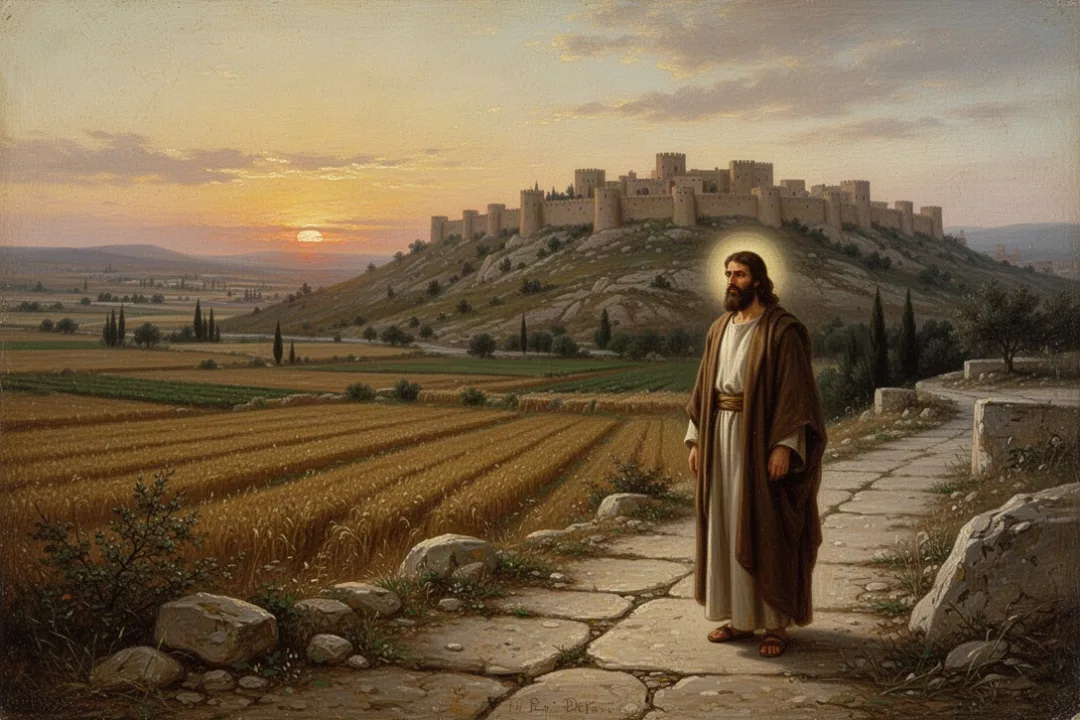
Hosea was a prophet of God who ministered to the northern kingdom of Israel during the eighth century B.C. His personal life, marriage, and children became signs pointing to Israel’s unfaithfulness, coming judgment, and the possibility of restoration.
The Book of Hosea is unusual because it joins prophetic preaching with a painful domestic story. Hosea’s marriage to Gomer illustrates the relationship between God and Israel: Israel repeatedly pursued other gods, yet God continued to call his people back to faithful relationship. The book contains severe warnings, but it also offers some of Scripture’s strongest pictures of divine compassion.
Hosea was a prophet from the northern kingdom of Israel
Hosea is identified as the son of Beeri in Hosea 1:1. He spoke primarily to the northern kingdom, which the Bible often calls Israel, Ephraim, or Samaria. The southern kingdom was Judah, centered on Jerusalem, while the northern kingdom had its own kings and capital.
Hosea’s ministry took place during the reign of Jeroboam II in Israel and during the reigns of Uzziah, Jotham, Ahaz, and Hezekiah in Judah. The opening verse names these rulers, placing Hosea’s work in a period when Israel appeared politically strong but was spiritually and morally unstable.
The exact dates of Hosea’s individual prophecies are not always clear, but his ministry belonged to the period before the northern kingdom was conquered by Assyria. That fall occurred in the late eighth century B.C. Hosea therefore warned a nation that had not yet collapsed but was already moving toward disaster.
The central fact about Hosea: he preached that Israel’s worship of other gods was not merely a religious mistake; it was a breach of covenant loyalty, comparable to adultery in a marriage.
Hosea’s historical setting explains the urgency of his message
Israel had inherited a covenant relationship with the Lord, but its leaders and people increasingly combined worship of the Lord with devotion to Baal and other fertility deities. Baal worship was connected with hopes for rain, crops, livestock, and economic prosperity. Hosea treated this behavior as betrayal because the people were crediting other gods for blessings they had received from the Lord.
The nation also suffered from political instability. After Jeroboam II, Israel experienced rapid changes of leadership, including violence and assassinations. Kings sought security through alliances with foreign powers such as Assyria and Egypt, but Hosea argued that these political strategies could not replace trust in God.
Assyria was becoming the dominant military power in the region. Israel sometimes tried to appease Assyria and at other times rebelled against it, creating further danger. Hosea interpreted the approaching Assyrian invasion as a consequence of Israel’s broken covenant, not simply as an unfortunate result of international politics.
His criticism reached beyond kings and armies. Hosea condemned religious corruption, dishonest commerce, violence, exploitation of the vulnerable, and leaders who encouraged the people’s rebellion. The problem was not a single bad ruler or one isolated act of disobedience. It was a national pattern of forgetting God while maintaining outward religious activity.
Hosea’s marriage became a prophetic sign
God commanded Hosea to marry Gomer, the daughter of Diblaim, according to Hosea 1:2–3. The wording of the passage has led to different interpretations. Some readers understand Gomer as a woman known for sexual unfaithfulness before the marriage, while others understand the command as pointing toward the unfaithfulness that would become evident in the marriage.
The text presents Gomer’s conduct as a picture of Israel’s spiritual unfaithfulness. Israel belonged to the Lord through the covenant, yet the nation pursued other gods and relied on foreign powers. Hosea’s marriage therefore became more than a private sorrow; it was a public sign of the relationship God said Israel had violated.
Hosea’s story should not be used to excuse abuse, coercion, or a dangerous relationship. The prophetic sign belongs to a specific biblical setting, and readers should not assume that every difficult marriage must be preserved in the same way. The passage reveals the depth of covenant betrayal and God’s grief over it; it does not provide a general rule requiring someone to remain in an unsafe situation.
Hosea 3 describes the prophet’s renewed love for a woman who had turned away and his action in bringing her back. Many interpreters connect this woman with Gomer, although the chapter does not repeat her name. The scene emphasizes costly restoration: reconciliation is not presented as denial of wrongdoing, but as a deliberate act of faithful love.
The names of Hosea’s children carry God’s message
Hosea and Gomer had children whose names communicated prophetic warnings. In the ancient world, names could carry meaning, but in Hosea’s ministry these names functioned as brief sermons. Each one helped explain what Israel’s relationship with God had become and what judgment was approaching.
Jezreel: This name refers to the Jezreel Valley and recalls violence connected with the house of Jehu. It also points toward coming judgment on Israel’s royal power. Hosea 1:4–5 connects the name with the end of the kingdom’s military strength.
Lo-Ruhamah: This name means “not shown mercy” or “not pitied.” It signals that Israel would experience judgment rather than continued protection because of persistent rebellion.
Lo-Ammi: This name means “not my people.” It expresses the seriousness of Israel’s broken covenant relationship, echoing the covenant language that had defined the nation’s identity.
These names are severe, but the book later reverses their force. Hosea 1:10–11 speaks of a future time when those who were called “not my people” will be called children of the living God. Hosea 2 also transforms the message associated with the children’s names, showing that judgment is not God’s only word for Israel.
The movement from rejection toward restoration is one of the book’s defining patterns. Hosea does not minimize sin, but neither does he treat judgment as the final purpose. God disciplines his people to expose their false hopes and draw them back to genuine knowledge of him.
Hosea compares idolatry with marital unfaithfulness
Hosea’s most recognizable metaphor is the comparison between idolatry and adultery. Israel had not simply adopted incorrect ideas; it had violated a relationship. The image communicates emotional injury, deliberate betrayal, and the loss of trust in ways that a purely legal description would not.
The prophet often describes Israel as a wife who runs after other lovers. These “lovers” represent the gods and political powers Israel credited with providing food, clothing, security, and prosperity. Hosea 2 explains that the people failed to recognize that the Lord was the true giver of their blessings.
This imagery also reveals that biblical faith is more than agreement with religious information. God wanted loyal love, knowledge, and obedience, not rituals performed while the heart pursued other priorities. Hosea 6:6 expresses this concern by contrasting steadfast love and knowledge of God with sacrifice offered as a substitute for faithful living.
The marriage metaphor is emotionally powerful because it portrays God as personally affected by Israel’s choices. Hosea describes jealousy, grief, anger, compassion, and longing for restoration. These descriptions are not meant to reduce God to a human spouse; they communicate the seriousness of covenant love through familiar human language.
Hosea exposed empty worship and social injustice
Hosea criticized religious activity that was disconnected from character. The people continued to offer sacrifices, visit sanctuaries, and use religious language, but their worship did not produce faithfulness or justice. Ritual became a cover for rebellion rather than an expression of repentance.
The prophet also condemned dishonest business practices and violence. Hosea 12 refers to deceptive scales and describes a culture in which economic gain mattered more than integrity. Other passages portray leaders, priests, and ordinary people as participating in a system that ignored God’s commands.
That combination matters because Hosea did not separate devotion to God from treatment of neighbors. A person could not claim to know God while cheating customers, exploiting the weak, encouraging violence, or manipulating worship for personal advantage.
Hosea’s message therefore challenges a narrow definition of sin. The nation’s failure was not limited to private religious belief. It included public corruption, broken promises, abuse of power, and economic dishonesty. The prophet saw these behaviors as evidence that Israel had forgotten who God was.
Hosea warned that Israel could not avoid judgment
Hosea repeatedly announced that Israel’s rebellion would produce consequences. The nation’s alliances, military strength, wealth, and religious ceremonies could not prevent judgment. Assyria would become the instrument through which Israel experienced defeat, exile, and the loss of political independence.
Hosea used images of harvest, sickness, birds, wild animals, and withering plants to describe the coming disaster. These images show that judgment would affect the nation’s entire life, not merely its government. The people would lose the security they had assumed was permanent.
Yet Hosea’s warnings were not simply predictions intended to satisfy curiosity about the future. They were calls to repentance. When a prophet announced judgment, the warning itself created an opportunity for people to return to God before the consequences became complete.
Hosea also challenged false confidence in national identity. Israel could not rely on its history, sacred traditions, or descent from Jacob while rejecting the God who gave those gifts. Privilege did not cancel responsibility. The nation’s special relationship with God made its betrayal more serious, not less.
Hosea presents God’s compassion alongside his justice
The book’s most moving passages show God struggling, in humanly understandable imagery, with judgment and compassion. Hosea 11 recalls Israel’s early history: God taught the nation to walk, cared for it, and brought it out of Egypt. Israel responded by turning toward idols, yet God’s compassion was not extinguished.
Hosea 11:8–9 uses questions and emotional language to show that God does not treat Israel as a disposable enemy. The passage does not deny judgment, but it reveals that destruction is not God’s deepest desire for his people. Mercy remains active even when discipline is necessary.
This tension prevents two common misunderstandings. God’s love is not indifference to evil, and God’s judgment is not evidence that he has stopped caring. Hosea presents both truths together: covenant love confronts rebellion, and covenant compassion seeks restoration.
Hosea 14 gives a clear invitation to return. Israel is told to abandon reliance on Assyria, military power, and man-made idols and to come back to the Lord with words of repentance. The chapter ends with images of healing, growth, fragrance, and fruitful roots, showing what restored relationship can produce.
Read Hosea’s warnings with its promises: the book moves from betrayal to judgment, but it repeatedly keeps restoration in view. Its severe language is meant to awaken repentance, not to portray God as unwilling to forgive.
Hosea’s message appears elsewhere in the Bible
Later biblical writers drew on Hosea’s language and themes. Matthew 2:15 applies Hosea 11:1 to Jesus’ return from Egypt. Hosea originally recalled Israel’s exodus as God’s “son,” while Matthew uses the passage to connect Jesus with Israel’s story and identity.
Paul refers to Hosea 1:10 and 2:23 in Romans 9:25–26. He uses the restoration language about those once called “not my people” to discuss God’s mercy and the inclusion of people who had not previously belonged to the covenant community in the same way.
Peter also echoes this language in 1 Peter 2:10. He describes believers as having received mercy and identity as God’s people. These New Testament uses do not erase Hosea’s original setting; they show how early Christians understood the prophet’s restoration promises as part of a wider biblical story.
Jesus’ teaching also reflects Hosea’s priority. In Matthew 9:13 and 12:7, Jesus cites Hosea 6:6 to emphasize mercy over empty religious performance. The point is not that worship or sacrifice has no value, but that religious acts cannot substitute for compassion, repentance, and faithful obedience.
How to read Hosea without missing its main point
Hosea contains poetry, symbolic actions, historical references, accusations, promises, and abrupt changes in tone. Reading a single verse by itself can make the book seem harsher or more confusing than it is. Pay attention to the surrounding passage and identify who is being addressed.
These practices can help you understand the book more carefully:
Start with the historical setting. Remember that Hosea spoke to the northern kingdom before its fall to Assyria, not to a vague or timeless audience.
Track the names and images. Jezreel, Lo-Ruhamah, Lo-Ammi, adultery, sickness, harvest, and restoration each contribute to the message.
Separate metaphor from direct instruction. Hosea’s marriage is a prophetic sign; it is not a universal command for every believer’s marriage.
Read judgment and mercy together. Do not quote the warnings without noticing the invitations to return and the promises of healing.
Look for covenant themes. Ask what the passage says about loyalty, knowledge of God, worship, justice, and the consequences of forgetting God.
Compare related passages carefully. When Matthew, Paul, or Peter uses Hosea, read Hosea’s original context before considering the later application.
Common mistakes people make when explaining Hosea
Several approaches can distort Hosea’s message. Avoiding them does not remove the book’s difficulty, but it makes its meaning clearer and more responsible.
Calling Hosea only a “minor prophet.” The term refers to the shorter length of the book, not to the importance of Hosea’s message. His themes are central to biblical teaching about covenant, sin, mercy, and restoration.
Reducing the book to a romance. Hosea’s marriage is essential, but the book also addresses idolatry, political alliances, corrupt worship, dishonest trade, leadership, and national judgment.
Assuming every detail about Gomer is settled. The text gives important information, but interpreters differ over the exact meaning of the phrase describing her sexual unfaithfulness and over the relationship between Hosea 3 and the earlier narrative.
Using Hosea to pressure victims of abuse. The prophetic sign should not be turned into a command to tolerate violence, coercion, or danger. Faithfulness and safety are not opposites.
Ignoring Israel’s historical context. Hosea’s references to kings, Assyria, Egypt, Jezreel, and Samaria help explain why his warnings were urgent.
Focusing only on condemnation. Hosea contains some of the Bible’s strongest calls to repentance and some of its most tender promises of restoration.
Treating ritual as the whole of religion. Hosea insists that sacrifice without mercy, knowledge of God, and ethical conduct is hollow.
These cautions help preserve the balance of the book. Hosea is neither a simple story about marital hardship nor a list of predictions detached from real history. It is a sustained appeal for a covenant people to recognize their betrayal, reject false sources of security, and return to the God who still desires to restore them.
What Hosea means for readers today
Hosea asks readers to examine what they trust when they feel insecure. Israel trusted idols, military alliances, wealth, and political arrangements. Modern people may place the same kind of confidence in money, status, institutions, relationships, ideology, or personal control. The particular objects differ, but the underlying question remains: what receives the loyalty that belongs to God?
The book also challenges the separation of worship from ordinary conduct. A person’s spiritual claims are tested by honesty, mercy, treatment of vulnerable people, use of power, and willingness to repent. Hosea gives no support to religious performance that leaves injustice untouched.
At the same time, Hosea offers hope to people who recognize that they have wandered. Returning to God is not presented as pretending that nothing happened. It involves naming false dependence, abandoning idols, accepting correction, and trusting God’s mercy. The closing promise of Hosea 14 portrays restoration as a new kind of life with deep roots and visible fruit.
Hosea’s message can therefore be stated plainly: God takes unfaithfulness seriously, but he does not stop calling his people home. The prophet’s life and words reveal the cost of betrayal, the limits of false security, and the persistent compassion of the God who seeks faithful relationship.
Frequently asked questions
Was Hosea married to Gomer?
Yes. Hosea 1 identifies Gomer, daughter of Diblaim, as the woman he married. The passage presents the marriage as a prophetic sign of Israel’s unfaithfulness to God. Interpreters differ about whether Gomer was already sexually unfaithful before the marriage and whether the woman in Hosea 3 is definitely Gomer, so those details should be stated cautiously.
What do Hosea’s children’s names mean?
The names communicate prophetic messages. Jezreel recalls judgment associated with the Jezreel Valley and Israel’s royal violence. Lo-Ruhamah means “not shown mercy” or “not pitied,” while Lo-Ammi means “not my people.” Later passages reverse the last two messages by promising renewed mercy and restored identity for God’s people.
Was Hosea from Judah or Israel?
Hosea primarily preached to the northern kingdom of Israel, also called Ephraim or Samaria. His ministry occurred while Israel and Judah were separate kingdoms. Hosea 1:1 names kings from both kingdoms because it places his prophetic work within the wider history of the divided monarchy, but his accusations are directed mainly toward northern Israel.
What is the main message of the Book of Hosea?
Hosea teaches that Israel’s idolatry and injustice were covenant betrayal, not merely religious errors. God would judge the nation, especially because it trusted idols, foreign powers, and empty rituals. Yet judgment was not the final word. Hosea repeatedly calls Israel to return and portrays God as willing to heal, forgive, and restore his people.





Leave a Reply