Biblical prophets: Their message, role, and lasting meaning
Biblical prophets: Their message, role, and lasting meaning
Biblical prophets were people called to speak God’s message to individuals, kings, communities, and nations. Their work included confronting sin, defending the vulnerable, interpreting events, warning of judgment, and announcing hope.
Prophets did sometimes speak about future events, but prediction was not their main function. A prophet addressed the spiritual meaning of the present: whether people were honoring God, practicing justice, keeping covenant, and trusting the promises they had received.
The Hebrew Bible commonly uses a word translated as prophet for someone who serves as a messenger or spokesperson. The prophet did not simply offer private religious opinions. Prophetic speech claimed to communicate a message received from God, often introduced with language such as “this is what the Lord says,” though the exact wording varies by translation.
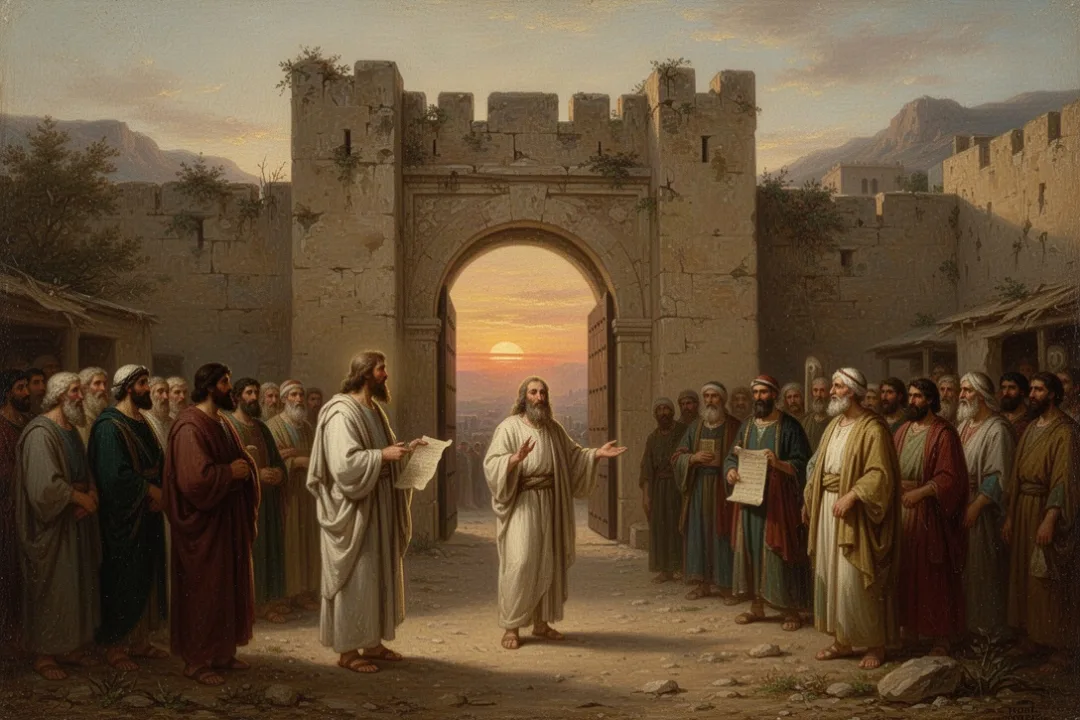
A prophet might speak to a king in a palace, to worshipers gathered at a sanctuary, to residents of a city, or to people living in exile. The audience could be Israel, Judah, neighboring nations, or even a single person. The setting changed, but the central concern remained faithfulness to God.
Prophets often addressed several related failures:
Idolatry: treating other gods, images, power, or wealth as worthy of ultimate trust.
Injustice: exploiting the poor, withholding fair treatment, abusing authority, or using dishonest business practices.
Religious hypocrisy: performing worship while ignoring obedience and mercy.
Political arrogance: assuming military strength or alliances could replace dependence on God.
Covenant disloyalty: abandoning the obligations that shaped Israel’s relationship with God.
The prophetic message was therefore both spiritual and practical. Isaiah could challenge empty worship, Amos could condemn economic exploitation, Jeremiah could confront false confidence in Jerusalem, and Micah could describe faithful living in terms of justice, mercy, and humble devotion to God.
Central idea: Biblical prophecy is primarily a call to hear God and respond faithfully; forecasts about the future serve that larger purpose rather than replacing it.
How prophets fit into the biblical story
Prophets appear throughout the Bible, but they become especially prominent during the period of Israel’s monarchy. After Saul, David, and Solomon, the united kingdom divided into Israel in the north and Judah in the south. Prophets spoke into the political and religious crises that followed.
Some prophets served near royal courts. Nathan confronted David after David’s abuse of power in the matter involving Bathsheba and Uriah. Gad also advised David. Micaiah opposed King Ahab’s preferred military counsel, showing that a prophet’s loyalty to God could place him in conflict with a ruler.
Other prophets worked outside royal institutions. Elijah challenged the worship of Baal during the reign of Ahab and Jezebel. Elisha continued a prophetic ministry that included guidance for rulers, concern for ordinary households, and acts of healing. Amos came from Judah to speak against injustice in the northern kingdom, while Hosea used the painful imagery of marriage to portray Israel’s unfaithfulness.
The Assyrian and Babylonian crises shaped many prophetic books. The northern kingdom fell to Assyria, and Judah later experienced the destruction of Jerusalem and the temple, followed by exile in Babylon. Prophets interpreted these disasters not merely as military defeats but as moments requiring moral and theological reflection.
After the exile, prophets such as Haggai and Zechariah encouraged the rebuilding of the temple and the restoration of communal life. Malachi addressed worship, leadership, marriage, and the responsibilities of the people. Their messages show that prophetic ministry did not end with judgment; restoration also required renewed obedience.
The major biblical prophets and the books associated with them
In many Christian Bibles, Isaiah, Jeremiah, Lamentations, Ezekiel, and Daniel are grouped as the Major Prophets. The word “major” refers mainly to the length or scope of the books, not to a higher spiritual rank. Daniel’s placement differs across Jewish and Christian traditions, and Lamentations is closely connected with Jeremiah in many Christian arrangements.
Isaiah speaks of judgment, holiness, and hope
Isaiah ministered in Judah during a period of international danger and internal corruption. His visions emphasize God’s holiness, human pride, the danger of trusting foreign powers, and the need for justice. He warns that religious activity cannot conceal oppression or rebellion.
The book also contains some of the Bible’s most influential visions of renewal. It describes a future in which God’s rule brings peace, the nations turn toward divine instruction, and a restored servant carries out a significant mission. Christian readers often connect several servant and kingdom passages with Jesus, while Jewish interpretation approaches them through its own established traditions.
Jeremiah addresses a nation facing collapse
Jeremiah spoke during the final years of Judah before Jerusalem fell to Babylon. He warned that the city, temple, and political system could not protect people who refused justice and covenant faithfulness. His message made him unpopular, and the book portrays him as a deeply human figure who experienced fear, grief, loneliness, and resistance.
Jeremiah also announced hope beyond catastrophe. He spoke of a renewed covenant in which God’s instruction would be deeply internalized, not merely displayed through external ceremonies. His prophecies hold together honest lament and confidence that judgment would not be the final word.
Ezekiel interprets exile through dramatic visions
Ezekiel was among the exiles in Babylon. His book includes vivid symbolic actions and visions, including the extraordinary opening vision of God’s glory and the later vision of dry bones. These images communicate that God’s presence is not limited to Jerusalem and that a scattered, seemingly lifeless people can receive renewed life.
Ezekiel strongly criticizes irresponsible leaders who feed themselves rather than care for the people. He also presents a vision of a transformed community, a renewed temple, and ordered worship. The book’s symbolism can be difficult, so its historical setting and repeated themes should guide interpretation.
Daniel combines faithful witness with apocalyptic visions
Daniel presents stories of Jews maintaining loyalty to God while living under foreign imperial power. It also contains symbolic visions involving beasts, kingdoms, judgment, and divine rule. These scenes use imagery rather than ordinary historical description, and they call readers to remain faithful when oppressive powers appear unstoppable.
Daniel belongs among the biblical writings in the Jewish arrangement, while many Christian Bibles place it with the Major Prophets. Its message complements the prophetic tradition by showing that God’s authority extends over rulers and empires.
The Minor Prophets are twelve distinct voices
The twelve shorter prophetic books are often called the Minor Prophets: Hosea, Joel, Amos, Obadiah, Jonah, Micah, Nahum, Habakkuk, Zephaniah, Haggai, Zechariah, and Malachi. “Minor” does not mean less important. These books are shorter than Isaiah or Jeremiah, but they address major questions about justice, judgment, repentance, worship, and hope.
Hosea portrays Israel’s unfaithfulness through the painful symbolism of a broken marriage. Joel describes a devastating crisis and calls the people to return to God; it also looks toward a broad outpouring of the divine Spirit. Amos, a shepherd and agricultural worker from Judah, condemns wealthy people who profit from the suffering of others.
Obadiah focuses on judgment against Edom for hostility toward Judah. Jonah tells of a reluctant prophet sent to Nineveh and exposes the narrowness of a person who wants mercy for his own people but resents mercy shown to enemies. The book’s central challenge concerns God’s compassion and the prophet’s unwillingness to share it.
Micah condemns corrupt rulers, priests, and prophets while also offering hope for a restored ruler and community. Nahum announces judgment against Nineveh, presenting the fall of a violent empire as relief for oppressed peoples. Habakkuk openly questions why God permits wrongdoing and learns to wait for divine justice without pretending that injustice is easy to understand.
Zephaniah warns of a sweeping day of judgment but also promises purification and restoration. Haggai urges the returned exiles to rebuild the temple rather than neglecting communal worship. Zechariah combines encouragement for the restored community with symbolic visions of cleansing, leadership, and future renewal.
Malachi confronts careless worship, corrupt religious leadership, and broken commitments. Together, the twelve books show that prophetic preaching is not one repetitive message. Each prophet addresses a particular place, crisis, audience, and form of unfaithfulness.
Prophetic themes that appear across the Bible
Justice is a spiritual responsibility
Biblical prophets repeatedly reject the idea that worship can be separated from the treatment of other people. Amos condemns those who maintain religious festivals while crushing the poor. Isaiah challenges people who fast while exploiting workers. Micah connects faithful life with doing justice, loving mercy, and walking humbly with God.
These messages do not reduce faith to social action alone. Instead, they show that love for God must shape public and personal behavior. Honest courts, fair business, protection for the vulnerable, truthful speech, and responsible leadership all matter within the prophetic vision.
Judgment follows persistent rebellion
Prophets warn that wrongdoing has consequences. Judgment may involve military defeat, economic collapse, exile, political humiliation, or the loss of security that people have treated as guaranteed. The warnings are not random threats; they are connected to repeated betrayal, injustice, and refusal to change.
Prophetic judgment can also reach beyond Israel and Judah. Amos, Isaiah, Jeremiah, Ezekiel, Nahum, Obadiah, and other books speak against foreign nations. No empire is morally exempt, and no nation can claim permanent immunity from accountability.
Repentance remains possible
Warnings often contain an invitation. To repent in the prophetic tradition means more than feeling regret. It involves turning from destructive behavior, abandoning false loyalties, repairing relationships, and returning to faithful worship.
Some prophetic books leave the response open or unresolved. Jonah, for example, shows Nineveh responding to warning while the prophet resists the result. This emphasizes that the purpose of warning is not to display the prophet’s accuracy but to make transformation possible.
Hope is grounded in God’s faithfulness
Prophetic hope is not always a promise of immediate comfort. It may come after devastation, exile, or the exposure of deep corruption. Images of a remnant, a new heart, restored land, renewed worship, a righteous ruler, and peace among nations point toward a future shaped by God rather than human power.
Christian readers often understand passages about a coming king, servant, new covenant, or outpouring of the Spirit in relation to Jesus and the church. Jewish readers interpret these passages within Jewish scriptural and communal traditions. Careful reading respects the original setting while recognizing how later communities have received these texts.
Women who served as prophets
The biblical record includes women who are explicitly identified as prophets. Miriam is called a prophet and leads worship after the Israelites cross the sea. Deborah serves as a prophet and judge, offering counsel and helping direct Israel during a national crisis.
Huldah, a prophet in Jerusalem during the reign of Josiah, confirms the significance of a newly discovered book of instruction and delivers God’s message to royal officials. Her authority is presented without suggesting that prophetic insight is limited to men.
The New Testament also refers to women who prophesied. Anna speaks about the infant Jesus in the temple, and the book of Acts mentions the four unmarried daughters of Philip who prophesied. These examples broaden the picture of prophetic speech as a spiritual calling rather than an office reserved for one gender.
How prophecy differs from fortune-telling
Fortune-telling generally seeks hidden information about an individual’s future through a technique, object, or specialist. Biblical prophecy has a different foundation. The prophet speaks under divine commission and addresses a moral relationship between God and people.
Even when a prophet announces something future, the message usually carries an ethical demand. A warning may call people to repent; a promise may strengthen them to endure; a prediction about a ruler or nation may expose arrogance. The future matters because it reveals the consequences of faithfulness and rebellion, not because prophecy exists to satisfy curiosity.
Prophetic language also uses poetry, symbols, visions, metaphors, and dramatic actions. A statement about mountains singing, bones living, or nations drinking a cup of judgment should not automatically be treated as a literal description. Genre and context help determine how a passage communicates.
Practical ways to read biblical prophets responsibly
Prophetic books can seem difficult because they move between historical events, poetry, visions, speeches, and promises. A careful method keeps the original audience in view before applying a passage to current events or personal circumstances.
Identify the historical setting. Look for references to a king, city, empire, war, exile, temple, or social crisis. These details show what prompted the message.
Determine the speaker and audience. Ask whether the prophet addresses Judah, Israel, a foreign nation, religious leaders, a king, or a specific individual.
Read the surrounding section. Do not build an interpretation on one dramatic sentence separated from the warning, promise, or argument around it.
Notice the genre. Poetry, narrative, vision reports, symbolic actions, and direct sermons communicate in different ways.
Trace the moral issue. Ask what behavior, attitude, or false confidence the prophet challenges.
Separate original meaning from later application. A passage may have a historical reference and also receive new significance in later Jewish or Christian interpretation.
Compare related passages. Similar themes across Isaiah, Jeremiah, Ezekiel, and the Twelve can clarify how biblical writers use images such as the day of the Lord, remnant, shepherd, vineyard, and new covenant.
Several common mistakes can make prophetic books more confusing than they need to be:
Reducing prophecy to prediction: this overlooks the prophets’ teaching about worship, justice, repentance, and leadership.
Ignoring history: reading every oracle as a direct message about the present can erase the crisis that originally shaped it.
Treating all symbols literally: visions often communicate through images that require interpretation.
Assuming “major” means more important: the classification mainly reflects book length and traditional arrangement.
Blaming every national disaster on a particular sin: the prophets speak with divine authority in their own settings, but readers should avoid making unsupported claims about modern events.
Using one verse as a prediction calendar: prophetic books rarely provide a simple sequence of dates and headlines.
Overlooking hope: stopping at denunciation misses the restoration, mercy, and faithfulness that often complete the prophetic message.
Helpful reading habit: Read a short prophetic book from beginning to end before studying individual verses. Its repeated images and changes in tone become easier to understand as a complete message.
Why biblical prophets still matter
The prophets remain relevant because they ask questions that every community must face. Who benefits from the way power is used? Are religious practices matched by compassion and integrity? Do leaders accept correction? Are vulnerable people protected, or are they treated as obstacles to prosperity?
Their writings also challenge simplistic ideas about success. A nation may be wealthy and militarily strong yet morally corrupt. A faithful person may suffer, be rejected, or appear unsuccessful. Prophetic faith measures life by loyalty to God and concern for others, not by status alone.
For Christians, the prophets form a major part of the Old Testament witness that shapes understandings of Jesus, the kingdom of God, repentance, the Spirit, justice, and hope. For Jewish communities, the prophetic books remain central to Scripture, worship, ethical reflection, and the interpretation of Israel’s relationship with God.
Read carefully, biblical prophets do more than predict what comes next. They expose false security, demand truthful worship, defend people who are mistreated, interpret national catastrophe, and keep hope alive after failure. Their lasting question is direct: Will people respond to God’s word with faithful action?
Frequently asked questions
Were all biblical prophets authors of books?
No. Many prophets are known through stories rather than standalone writings. Samuel, Nathan, Elijah, Elisha, Huldah, and Deborah are examples of prophets whose ministries appear in biblical narratives. Conversely, some prophetic books may reflect the work of a prophet’s followers or later editors who preserved, arranged, and applied earlier messages for a new generation.
Why are some prophets called “major” and others “minor”?
The labels mainly describe the length of the books in common Christian arrangements. Isaiah, Jeremiah, Ezekiel, and Daniel are called major because their books are longer or more expansive. The twelve minor prophets have shorter books, but their messages are not considered less authoritative or spiritually significant.
Did prophets always predict the distant future?
No. Prophets most often addressed immediate conditions such as idolatry, injustice, corrupt leadership, war, or exile. Some announced events that had not yet happened, but those predictions usually supported a warning or promise. The central concern was how people should respond to God in their present circumstances.
How should readers interpret frightening prophetic visions?
Begin with the historical setting, intended audience, literary genre, and repeated images. Apocalyptic visions use symbolism to communicate God’s judgment, the limits of oppressive powers, and hope for faithful people. Avoid assigning a modern person or event to every symbol without strong contextual reasons, and compare the passage with related biblical themes.








Leave a Reply