Acts of the Apostles study guide: themes and chapters
Acts of the Apostles study guide: themes and chapters
Acts is the story of the risen Jesus continuing his work through the Holy Spirit and his witnesses.
The book commonly called The Acts of the Apostles connects the life of Jesus with the growth of the early church. It begins in Jerusalem after the resurrection and follows the gospel as it reaches Judea, Samaria, Asia Minor, Greece, and Rome. Acts does not record every apostle’s ministry; instead, it concentrates especially on Peter in the first half and Paul in the second.
Traditionally, Luke is understood to be the author of Acts and the Gospel of Luke. The two books form a continuous account: Luke describes what Jesus began to do and teach, while Acts shows how that mission continues through the Spirit-empowered church. The book is both a historical narrative and a theological account of God’s mission, the church’s witness, and the gospel’s expanding reach.
Central idea: Acts presents the Holy Spirit as the guiding presence of the church, giving ordinary believers courage, wisdom, unity, and power to witness despite opposition.
Acts follows the four Gospels and comes before the letters of Paul. That position helps explain why it matters: the book supplies the setting for many New Testament letters. For example, Acts describes Paul’s ministry in Corinth, Philippi, Thessalonica, Ephesus, and Rome, while the letters associated with those communities address their beliefs, conflicts, and practical needs.
The book opens with Jesus appearing to the apostles after his resurrection. He instructs them to wait in Jerusalem for the Holy Spirit and describes a widening witness that will move from Jerusalem to Judea and Samaria and to the ends of the earth. This geographical pattern provides a framework for reading the whole narrative.
Acts 1–7: The church is established in Jerusalem, with the apostles preaching, healing, sharing resources, and facing opposition.
Acts 8–12: The message spreads beyond Jerusalem, Samaria receives the gospel, and Gentile inclusion begins to come clearly into view.
Acts 13–20: Paul and his coworkers carry out missionary journeys across the eastern Mediterranean.
Acts 21–28: Paul is arrested, defended before various authorities, and taken to Rome, where he continues proclaiming God’s kingdom.
The ending is deliberately open. Paul is in Rome, but the narrative does not provide a formal final resolution. The gospel has reached the imperial capital, and the mission remains active. That unfinished ending invites readers to see themselves as participants in the continuing witness of the church.
What Acts teaches about the Holy Spirit
The Holy Spirit is not a minor theme in Acts. The Spirit directs the church’s mission, gives believers courage, crosses social boundaries, and confirms that God is welcoming people from many nations. Acts begins with the promise of the Spirit and repeatedly shows the Spirit at work in preaching, prayer, decision-making, travel, suffering, and community life.
At Pentecost in Acts 2, the disciples receive power to speak publicly about Jesus. The appearance of many languages signals that the gospel is intended for people from different ethnic and linguistic communities. Peter interprets the event through Israel’s Scriptures and announces that God has raised Jesus from the dead.
The Spirit’s work is visible in several different ways:
Empowering witness: Peter, John, Stephen, Paul, and others speak with courage before crowds and authorities.
Guiding decisions: The Spirit directs missionaries and helps the church recognize where the gospel should be proclaimed.
Breaking barriers: The conversion of Cornelius and his household shows that Gentiles can receive the Spirit without first becoming Jewish proselytes.
Strengthening communities: Believers receive wisdom, encouragement, gifts, and endurance during hardship.
Confirming God’s welcome: The Spirit’s presence becomes evidence that God is saving people outside the original circle of Jesus’ Jewish followers.
Acts also keeps the Spirit’s power connected to faithful testimony, not personal status. The apostles are not presented as independent heroes who build a movement by their own ability. They repeatedly pray, rely on God, and direct attention toward Jesus rather than themselves.
How the gospel moves from Jerusalem to Rome
The geographic movement of Acts is also a theological argument. Jerusalem is the starting point because Jesus’ death, resurrection, and the first public proclamation occurred there. The message then moves outward through communities that may have been viewed with suspicion or distance by many first-century Jews.
Acts 8 describes Philip preaching in Samaria. This is significant because Jews and Samaritans had a long history of religious and social tension. The gospel does not remain confined to one city or one familiar group. It crosses a boundary that challenges the early believers’ assumptions about who belongs in God’s people.
Acts 10–11 presents Peter’s encounter with Cornelius, a Roman centurion. Peter comes to understand that God does not show favoritism among nations and that Gentiles can receive the Holy Spirit. The event does not erase the significance of Israel; instead, it demonstrates that God’s promise is reaching the nations through Israel’s Messiah.
Paul’s journeys continue this outward movement. His ministry regularly begins in Jewish synagogues, where he reasons from the Scriptures, and then extends to Gentiles when opposition develops or when non-Jewish hearers respond. The result is a growing network of churches connected by shared faith, teaching, generosity, and prayer.
Reading tip: When a new city appears, ask what social group receives the message, what resistance arises, and how the new believers become part of the wider church.
Who the main people in Acts are
Peter and the Jerusalem church
Peter is the most prominent human figure in the opening chapters. He speaks at Pentecost, heals a man at the temple, confronts opposition from religious authorities, and helps the church recognize God’s work among Gentiles. His role shows continuity between Jesus’ ministry and the church’s public witness.
Peter is not portrayed as flawless. His encounter with Cornelius requires a profound change in perspective, and his earlier history includes fear and denial during Jesus’ arrest. Acts emphasizes that leadership depends on God’s grace and the Spirit’s guidance, not on an idealized human record.
Stephen and the cost of faithful witness
Stephen is one of the seven servants chosen to help address the needs of widows in the Jerusalem community. He becomes a powerful witness and is accused of speaking against the temple and the law. His speech in Acts 7 retells Israel’s history and argues that God’s people have repeatedly resisted the messengers God sends.
Stephen’s death marks a turning point. Persecution scatters believers, and those scattered Christians proclaim the message in new places. Acts therefore presents suffering as genuinely painful while also showing that opposition cannot finally stop the mission.
Paul and his changing mission
Paul first appears as a persecutor of the church. His encounter with Jesus near Damascus transforms his purpose, though his acceptance by the believers develops gradually because they remember his earlier violence. Paul becomes the central missionary figure in the second half of Acts.
Paul’s ministry includes preaching, teaching, debate, healing, manual work, travel, imprisonment, and public defense. He is adaptable in communication but consistent in the core message: Jesus is the risen Messiah, and God’s saving promise is being extended to all peoples.
Barnabas, Priscilla, Aquila, and other coworkers
Acts does not present mission as the work of one person. Barnabas encourages Paul and helps bridge relationships within the church. Priscilla and Aquila teach Apollos more accurately and provide an example of a married couple involved in Christian ministry. Lydia, Philip, Silas, Timothy, and many unnamed believers also contribute to the spread of the gospel.
These figures remind readers that the church’s mission depends on networks of hospitality, teaching, financial support, prayer, and local leadership. Public preaching matters, but so do the less visible acts that sustain communities.
Major themes to track while studying Acts
Witness and testimony
Jesus tells the apostles that they will be his witnesses. This does not mean simply sharing private religious experiences. In Acts, witness includes publicly announcing what God has done through Jesus, explaining its meaning from Scripture, and remaining loyal when authorities demand silence.
Speeches occupy a large portion of the book. Peter, Stephen, Paul, and others address different audiences, but their messages repeatedly include Jesus’ death, resurrection, exaltation, the fulfillment of God’s promises, and a call to repentance or faith. Comparing these speeches shows both consistent gospel content and sensitivity to the audience.
Prayer and dependence on God
The believers pray before major decisions, after threats, during persecution, and while appointing leaders. Prayer is not decorative background material; it is part of how the church responds to uncertainty. In Acts 4, the community does not ask first for an easier situation but for boldness to speak faithfully.
Prayer also reveals the church’s shared identity. Believers pray together, care for one another, and interpret their circumstances through Scripture. A useful study question is: What does this prayer show about the community’s understanding of God?
Community and generosity
Acts describes believers sharing possessions and providing for those in need. These passages should not be reduced to a single economic formula, because the book shows different forms of support, including shared resources, hospitality, financial gifts, and practical service.
The point is clear, however: the gospel creates a community in which people are responsible for one another. Acts 2 and Acts 4 portray generous fellowship, while the problem involving Ananias and Sapphira shows that dishonest religious performance threatens the community’s holiness and trust.
Conflict and discernment
Acts includes conflict inside and outside the church. Believers disagree over food distribution, circumcision, missionary partnerships, and the treatment of Gentile converts. These disputes do not mean the mission has failed. They show the church learning how to apply the gospel in changing circumstances.
The Jerusalem Council in Acts 15 is especially important. The leaders listen to testimony, consider Scripture, deliberate together, and send a decision to the churches. The event demonstrates that unity does not require ignoring serious differences; it requires communal discernment centered on God’s work and the gospel.
Opposition, suffering, and God’s sovereignty
Arrests, beatings, riots, imprisonment, and legal accusations occur throughout Acts. The book does not promise that faithful witness will be safe or socially accepted. Instead, it shows believers continuing to speak and serve while trusting that God can work through circumstances they cannot control.
Paul’s imprisonment illustrates this theme. Confinement limits his movement, but it creates opportunities to speak with governors, kings, soldiers, fellow prisoners, and visitors. Acts does not call suffering good in itself; it shows that suffering cannot prevent God’s purpose from advancing.
A chapter-by-chapter guide to Acts
Acts 1–2: Waiting, ascension, and Pentecost
Acts 1 establishes the mission and records Jesus’ ascension. The apostles wait in Jerusalem, choose Matthias to join the Twelve, and prepare for the promised Spirit. Acts 2 describes Pentecost, Peter’s sermon, the response of the crowd, and the formation of the first community of believers.
Pay attention to the relationship among promise, waiting, power, proclamation, and community. The church does not begin by strategic planning alone; it begins by receiving God’s promised help.
Acts 3–5: Healing, boldness, and internal holiness
Peter and John heal a man at the temple and use the event to proclaim Jesus. The authorities arrest them, but the apostles refuse to stop speaking. The believers pray for boldness, and the community’s generosity is contrasted with the deception of Ananias and Sapphira.
These chapters connect public witness with internal integrity. A church can appear powerful while being spiritually compromised, so Acts emphasizes both courageous proclamation and truthful community life.
Acts 6–7: Service and Stephen’s speech
A dispute over the distribution of food leads to the appointment of seven respected believers. This shows the importance of addressing practical injustice before it damages fellowship. Stephen then becomes a prominent witness, and his extended speech interprets Israel’s history in light of resistance to God’s messengers.
Read Stephen’s speech as an argument, not merely a history lesson. Ask why he emphasizes the patriarchs, Moses, the tabernacle, the temple, and Israel’s repeated resistance.
Acts 8–9: Scattering, Samaria, and Paul’s conversion
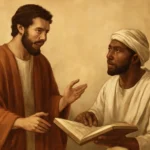
Persecution scatters believers, and Philip preaches in Samaria. He also explains the Scriptures to an Ethiopian official, showing the gospel reaching someone from outside the central Jewish community. Saul’s encounter with Jesus redirects him from persecutor to apostle.
These chapters show that the mission expands through both planned ministry and forced displacement. They also emphasize that conversion changes not only a person’s beliefs but also their relationships, reputation, and purpose.
Acts 10–12: Cornelius and the Gentile question
Peter visits Cornelius after receiving visions that challenge his assumptions about ritual cleanliness and social boundaries. The Holy Spirit falls on Gentiles, and Peter recognizes that God has accepted them. The church in Jerusalem debates the event before acknowledging God’s work.
Herod’s persecution, Peter’s imprisonment and escape, and the church’s prayer add another dimension. Political power can threaten believers, but it cannot control the gospel’s reach.
Acts 13–14: The first missionary journey
The church in Antioch sends Barnabas and Paul after prayer and fasting. They proclaim the message in Cyprus and parts of Asia Minor, encounter both acceptance and opposition, and establish local communities. Their return report focuses on what God has done among the nations.
Notice the shared leadership and the repeated pattern of preaching, response, resistance, and strengthening new disciples. Mission involves both initial proclamation and sustained pastoral care.
Acts 15: The Jerusalem Council
The church faces a central question: must Gentile believers adopt the full Jewish law, including circumcision, in order to belong? The apostles and elders consider the matter through testimony, Scripture, and the evidence of God’s work.
The decision protects the truth that Gentiles are welcomed by grace while offering practical instructions that support fellowship between Jewish and Gentile Christians. Acts 15 is essential for understanding Christian unity amid cultural difference.
Acts 16–18: Macedonia, Philippi, Athens, and Corinth
Paul’s second journey includes the conversion of Lydia, imprisonment in Philippi, ministry in Thessalonica and Berea, Paul’s speech in Athens, and extended work in Corinth. The chapters show different approaches to different audiences, from synagogue discussion to philosophical engagement in a public setting.
Paul’s ministry also includes ordinary work, friendship, hospitality, and endurance. The gospel advances through relationships as well as formal sermons.
Acts 19–20: Ephesus and Paul’s farewell
In Ephesus, Paul teaches extensively, and the message affects both religious practice and local commerce. The riot demonstrates that conversion can challenge profitable systems and public identity. Paul’s farewell to the Ephesian elders reveals his view of ministry as humble, sacrificial, and accountable.
His speech also warns church leaders about future dangers. Study the balance between care for the flock, personal integrity, doctrinal vigilance, and perseverance.
Acts 21–26: Arrest and defense
Paul returns to Jerusalem despite warnings about danger. He is arrested after accusations concerning the temple and is given opportunities to speak before Jewish leaders, Roman governors, and King Agrippa. His defenses combine personal testimony with an explanation of the resurrection and the hope of Israel.
Paul does not treat legal hearings as interruptions to ministry. He uses each setting to bear witness, while also exercising his rights as a Roman citizen and seeking a fair hearing.
Acts 27–28: Shipwreck and Rome
Paul’s voyage to Rome includes a severe storm, a shipwreck, and the survival of everyone aboard. On Malta, Paul serves the sick and continues to demonstrate God’s care. In Rome, he meets with Jewish leaders and welcomes visitors while proclaiming the kingdom of God.
The book ends with Paul under guard but still teaching openly. The unresolved ending emphasizes that the mission continues beyond the final page.
Practical tips and common mistakes for studying Acts
A good study of Acts combines careful observation with theological reflection. Read a manageable section several times, notice repeated words and actions, and resist the temptation to treat every event as a direct instruction for modern church practice.
Read the whole book once. Get a sense of the major movement before focusing on individual verses.
Mark locations and people. Geography helps you see how the mission expands, while recurring names reveal partnerships and conflicts.
Separate description from command. Acts reports what happened; not every reported event is presented as a pattern every church must copy.
Study speeches in context. Ask who is speaking, who is listening, what problem is being addressed, and how the message uses Scripture.
Track the Spirit’s role. Record when the Spirit directs, empowers, reveals, confirms, or comforts.
Compare parallel events. Peter’s ministry and Paul’s ministry share patterns, but they are not identical in every detail.
Discuss difficult passages honestly. Bring questions about miracles, judgment, cultural conflict, and political authority to the text rather than forcing quick answers.
Several common mistakes can weaken a study. One is treating Acts as a manual for reproducing every outward detail of the first-century church without considering the specific situation. Another is focusing only on dramatic miracles while overlooking teaching, generosity, suffering, administration, and patient relationship-building.
Do not reduce Acts to the story of Paul. Peter, Stephen, Philip, Barnabas, Priscilla, Aquila, Lydia, and many others are vital to its message.
Do not ignore the Jewish context. The early church’s faith in Jesus grows from Israel’s Scriptures and hopes.
Do not assume every speech is identical. The core message remains consistent, but the wording and emphasis fit each audience.
Do not treat opposition as proof of failure. Acts often shows resistance alongside genuine growth.
Do not separate spiritual power from moral character. Bold witness, truthful conduct, generosity, and care for the vulnerable belong together.
Questions for personal study or group discussion
Use questions that move from observation to interpretation and application. Start with what the passage says before deciding what it means for your setting. This approach helps prevent familiar stories from becoming detached from their original context.
What does this passage reveal about God’s character and purposes?
How does Jesus remain central even when he is not physically present in the scene?
What role does the Holy Spirit play in the decisions or events described?
Which social, ethnic, religious, or economic boundary is being crossed?
How do the believers respond to danger, disagreement, or disappointment?
What does the passage show about the relationship between public witness and community life?
Where do you see Scripture shaping the church’s interpretation of events?
What would a faithful response look like without copying details that belong specifically to the first-century setting?
For group study, assign different readers to trace a theme across several chapters. One person might follow prayer, another persecution, another the treatment of outsiders, and another the use of Scripture. Comparing those observations often reveals connections that are easy to miss in a single reading.
How Acts can shape Christian practice today
Acts challenges churches to see mission as both proclamation and embodied community. The believers announce Jesus, teach Scripture, welcome outsiders, share resources, care for the vulnerable, and endure opposition. None of these elements should be isolated from the others.
The book also encourages patient discernment. The early church does not understand every implication of the gospel immediately. It learns through Scripture, prayer, testimony, debate, and attention to the Spirit’s work. That pattern can help modern Christians handle disagreements without abandoning either conviction or fellowship.
Finally, Acts presents courage as faithfulness rather than fearlessness. Peter, Paul, and other believers experience anxiety, danger, and uncertainty. Their courage consists in continuing to speak and serve because they trust that the risen Jesus is directing the mission. The book’s open ending leaves readers with the same calling: to participate faithfully in the witness that began in Jerusalem and continues among the nations.
Frequently asked questions
Who wrote the Acts of the Apostles?
The book does not name its author directly. Christian tradition identifies the writer as Luke, the companion of Paul and author of the Gospel of Luke. The shared language, themes, and opening addressed to Theophilus strongly connect Luke and Acts. The “we” passages indicate that the author sometimes presents himself as part of Paul’s traveling group, though the precise identity remains a matter of historical discussion.
What is the main message of Acts?
Acts teaches that the risen Jesus continues his mission through the Holy Spirit and the witness of the church. The gospel moves from Jerusalem toward the nations, crossing ethnic and geographic boundaries. The book also shows that prayer, Scripture, generosity, courage, and communal discernment are essential features of faithful Christian witness, especially when believers face conflict or persecution.
Why does Acts end without describing Paul’s death?
The open ending keeps attention on the continuing spread of the gospel rather than on Paul’s final biography. Paul reaches Rome and proclaims God’s kingdom, showing that imprisonment has not stopped the mission. Acts does not claim to provide a complete history of the apostles, so its ending is best read as a purposeful stopping point rather than an unfinished account caused by missing information.
How long does it take to study Acts?
A focused reading can be completed in about four weeks by covering roughly seven chapters each week. A slower group study may take several months, especially if participants examine historical background, speeches, geography, and theological themes. A practical approach is to read one chapter daily, record observations, and reserve one weekly session for discussion and application.








Leave a Reply