Apostles Bible: A Comprehensive Guide to the Apostles in Scripture
Apostles Bible is a phrase that evokes the central figures who shaped the early Christian movement. This article offers a thorough overview of the Apostolic narrative—the lives, roles, and writings of the men chosen by Jesus and recognized in the Bible as his representatives. Whether you encounter the term apostles in the Apostolic Writings, the Apostolic Scriptures, or the broader Apostolic canon, the core ideas remain consistent: leaders commissioned by Christ to testify, teach, heal, and spread the message of the gospel. In this guide, we will explore who the apostles were, how they were chosen, what they did, and how their message lives on in Scripture and Christian faith today.
Understanding the term and its scope
In biblical usage, the word apostle denotes one who is sent with authority. The New Testament uses the term in several related ways, including:
The Twelve: the original group commissioned by Jesus during his earthly ministry.
Pattterns of apostolic activity: missionaries and church leaders recognized as having apostolic authority, sometimes including Paul and others.
Apostolic succession: the idea that certain churches trace their authority to the original witnesses through a line of leaders.
The phrase Apostles Bible thus points to the biblical material about these figures—from the gospel narratives through the Acts of the Apostles and their epistles. In practice, discussions about the apostles often use a mix of terms: apostles, the Twelve, the Twelve Apostles, Paul the Apostle, or the mission of the early Christian missionaries. This article uses several variations to reflect that semantic breadth while staying faithful to the biblical text.
The Twelve: who they were and what they did
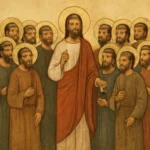
At the heart of the Apostles Bible are the original Twelve appointed by Jesus to accompany him, witness his resurrection, and continue his mission after his ascension. Their calling and identity are described across the gospel narratives and the early church book of Acts. The list of the Twelve appears in a few places with minor variations, reflecting the harmony of the gospel accounts.
Peter (also known as Simon) — often named first; sometimes called Cephas in Aramaic, a title that signifies his foundational role in the church.
James, son of Zebedee — part of Jesus’ inner circle; brother of John.
John — James's brother; author of the Gospel of John and Revelation in tradition; often associated with the “beloved disciple.”
Andrew — Peter’s brother; described as a disciple who guided others toward Jesus.
Philip — engaged in questions that reveal Jesus’ identity; plays a role in dialogues about belief.
Bartholomew — sometimes identified with Nathanael in John’s Gospel; associated with faith and proclamation.
Matthew — the former tax collector; author of the Gospel bearing his name in the New Testament tradition.
Thomas — known for questions about faith and for his famous doubt which leads to confession when he meets the risen Jesus.
James, son of Alphaeus — sometimes called James the Less; connected to the wider Jerusalem church in tradition.
Simon the Zealot — a figure whose nickname hints at a radical or political background; Scripture presents him within the apostolic circle.
Judas, son of James — sometimes referred to as Jude or Thaddaeus in varying manuscripts; one of the Twelve listed in the gospel lists.
Judas Iscariot — the one who ultimately betrayed Jesus; his replacement is discussed below in the Acts narrative.
Several notes help illuminate their roles:
These men were eyewitnesses to Jesus’ ministry, death, and resurrection, and they were commissioned to bear witness to these events.
They traveled, preached, taught, performed miracles, and established early Christian communities.
They held a unique authority in early Christian leadership, which later generations understood as foundational for church life and doctrine.
In the New Testament, the phrase the Twelve frequently signals a specific, unity-bound group with shared witness to Christ. Yet the New Testament also presents a broader category of apostles—the term is applied to other believers who were sent by God to proclaim the gospel, not all of whom were part of the original Twelve.
Replacement and expansion: Matthias and the broader apostolic circle
The gospel narratives and Acts describe a pivotal moment after Jesus’ ascension when the disciples sought to restore the number of apostles to twelve after Judas Iscariot’s betrayal and death. In Acts 1:15-26, Matthias is chosen by lot to replace Judas, restoring the symbolic number of the original apostles. This event is often cited as a sign of continuity and commitment to the apostolic witness as the church began its missionary work in earnest.
Matthias is selected by the gathering of believers who prayed for divine guidance and cast lots, a practice that reflected their reliance on God’s direction at the outset of the church’s mission.
Following Matthias’ inclusion, the apostles continue to exercise leadership as the church expands beyond Jerusalem into Judea, Samaria, and the ends of the earth.
Beyond the Twelve, Christian tradition has historically recognized a broader sense of apostolic authority vested in other early Christian workers, including Paul. The next section explores this expansion and its significance for the Apostles Bible narrative across the New Testament.
Paul the Apostle: the Apostle to the Gentiles
In many lists and in the letters of the New Testament, the apostle Paul is identified as an Apostle even though he was not part of the original Twelve. The biblical portrait of Paul emphasizes a dramatic encounter with the risen Christ on the road to Damascus (Acts 9) that reorients his life and mission. Several features mark Paul’s apostolic calling:
Divine commissioning: Paul repeatedly describes his call as a direct sending by Christ, not merely a human appointment.
Gentile mission: Paul’s primary vocation was to proclaim the gospel to non-Jewish communities, expanding the reach of the Apostles Bible beyond the original Jewish context.
Writings and theological depth: The epistles attributed to Paul (Romans, 1-2 Corinthians, Galatians, Ephesians, Philippians, Colossians, 1-2 Thessalonians, Timothies, Titus, Philemon) are foundational to Christian theology and practice.
Authorship and authority: Paul appeals to his apostleship as a source of authority for his teachings, demonstrating that the concept of apostolic leadership is broader than the Twelve alone.
Paul’s inclusion in the Apostles Bible illustrates a key dynamic: apostolic authority can emerge from a compelling encounter with Christ and a clear, Spirit-guided mission. The New Testament presents Paul as a vital link in the chain of apostolic witness, ensuring that the gospel reaches diverse audiences and is interpreted through consistent Christ-centered teaching.
Apostolic mission and teachings in the Apostles Bible
The core purpose of the apostles, whether among the original Twelve or in the expanded circle, was to bear witness to Jesus and to teach the early church how to live in light of the gospel. Several recurring themes appear across their collective ministry:
Proclaiming Jesus as Messiah: the apostles consistently present Jesus as the fulfillment of biblical expectations and the decisive revelation of God’s kingdom.
Resurrection testimony: the resurrection is central in their preaching, validating Jesus’ identity and mission.
Kingdom ethics: teachings on love, humility, forgiveness, and justice shape the life of the believing community.
Mission and mission strategy: the apostles prioritize evangelism, church planting, and the formation of communities where believers can grow in faith.
Worship and prayer: early Christian practice centers on prayer, the breaking of bread, and communal life.
In the Apostolic period, the apostles also confront challenges such as persecution, doctrinal disputes, and integration of Gentile believers with Jewish Christians. The Apostles Bible records resolutions to these tensions, for example, through the Jerusalem Council described in Acts 15, which addresses how non-Jewish believers fit into the new covenant community.
Apostolic authority and the New Testament writings
The biblical collection commonly known as the New Testament includes several distinct types of writings attributed to apostolic figures or closely connected to their teaching and mission. These works are often grouped by genre and purpose:
Gospels (the accounts of Jesus’ life and ministry) that lay the groundwork for apostolic preaching.
Historical narratives (Acts) that trace the spread of the gospel under apostolic leadership.
Epistles (letters) addressed to churches and individuals that articulate apostolic doctrine, ethics, and church practice.
Revelation (apocalyptic literature) grounded in the apostolic witness to the risen Christ and his ultimate victory.
Within these writings, the concept of apostolic authority is often tied to eyewitness testimony, the inspiration of the Holy Spirit, and the ongoing discernment of the church community. The apostles’ letters were not merely personal notes; they functioned as canonical guidance passed down through generations as churches sought to remain faithful to Christ’s message.
How the Apostles Bible informs Christian faith and practice
For students of Scripture and engaged readers of Christian tradition, the Apostles Bible provides guidance in several practical domains:
Doctrine: the apostolic witness helps shape core Christian beliefs about the person of Jesus, salvation, grace, faith, and the church.
Ethics: teachings on love, holiness, community life, and care for the vulnerable offer a moral framework for believers today.
Church structure: from the early church’s decision-making to the roles of leaders and elders, the apostolic model influences contemporary church governance.
Mission and compassion: the example of the apostles motivates missionary work, social outreach, and cross-cultural engagement.
To navigate the Apostles Bible wisely, many readers turn to these navigational tools:
Cross-referencing: comparing gospel accounts, Acts narratives, and Pauline letters to understand context and meaning.
Historical-context reading: considering first-century Judaism, Greco-Roman culture, and early church dynamics helps illuminate why certain decisions were made.
Theological themes: tracing motifs like faith, hope, love, righteousness, and eschatology through the apostolic writings.
Frequently encountered questions about the Apostles Bible
Below are some common inquiries readers have when exploring the topic of the apostles in Scripture, with concise responses that reflect biblical accounts and scholarly consensus:
Were the apostles perfect? No. The apostolic circle includes individuals who varied in temperament, understanding, and spiritual growth. Their imperfect moments, such as Peter’s denial or the arguments among the disciples, show how God works through imperfect vessels to accomplish his purposes.
Why is Matthias debated in some traditions? The replacement of Judas Iscariot with Matthias in Acts 1:26 is sometimes interpreted differently in various Christian traditions. Some emphasize the continuity of the Twelve, while others emphasize the broader, ongoing mission of the early church beyond a fixed numerical limit.
Is Paul an apostle in the same sense as the Twelve? Paul is called an apostle, but his commissioning differs from that of the Twelve. He is often described as an apostle to the Gentiles, bringing a distinct but complementary dimension to the apostolic witness.
Do all Christians owe their authority to the apostles? While many church traditions affirm apostolic teaching as foundational, theological authority in later ages is understood through the interpretive work of the church’s leadership, grounded in Scripture and guided by the Spirit.
Historical and literary context of the Apostles Bible
Understanding the apostolic material requires awareness of its historical and literary setting. The apostolic witnesses emerged in a world where:
Roman governance provided a setting for early Christian mission and sometimes tense relations with authorities.
Judaism coexisted with Hellenistic culture, shaping how early Christians read Scripture and interpreted Jesus as the Messiah.
Oral transmission preceded written text, so many early sayings and deeds were circulated and later codified by the gospel writers and editors.
Literary techniques in the Apostles Bible include narrative retellings, speeches, and letters that address specific communities. The Gospels present the life and ministry of Jesus in ways that prefigure the apostles’ mission, while Acts shows the expansion of that mission through the agency of apostolic leadership. The Epistles then articulate how those early experiences were to be applied within church life. Taken together, these writings provide a multidimensional portrait of apostolic authority, mission, and doctrine.
The lasting impact of the Apostles Bible
Even as centuries have passed since the apostolic era, the influence of the apostles remains visible in multiple Christian traditions. Here are a few ways the original apostolic witness continues to matter today:
Doctrine and creeds: many core creeds and confessional statements draw their vocabulary from apostolic teaching about who Jesus is, what salvation means, and how communities should live.
Liturgical and devotional life: practices such as baptism, the Lord’s Supper, and communal worship echo patterns described in the Acts and Epistles.
Mission and evangelism: the apostolic impulse to proclaim the gospel to all nations has shaped modern missionary movements and cross-cultural outreach.
Ecclesiology: understanding church leadership, discernment, and unity in diversity draws from apostolic guidelines for governance and conflict resolution.
For readers seeking to engage deeply with the Apostles Bible, attention to context, language, and literary form is essential. A disciplined approach—combining historical study with theological reflection—will illuminate how the apostles’ witness informs contemporary faith and practice.
Practical guide to studying the Apostles in Scripture
If you are planning a study or teaching series on the apostolic witness, here is practical guidance to structure an engaging, responsible exploration:
Start with the Twelve: examine each member’s background, role, and portrayal in the gospels, noting both strengths and weaknesses in the narratives.
Read the Acts narrative alongside the Gospels: observe how the apostles carry forward Jesus’ mission and how the church responds to challenges.
Incorporate Paul carefully: study Paul’s letters in relation to the Twelve’s testimony to appreciate the expansion of apostolic authority and mission.
Explore key events: the selection of Matthias, Pentecost, the Jerusalem Council, and the travel narratives of Paul’s journeys to understand how apostolic leadership functioned in a changing world.
Engage with historical context: consult reliable commentaries and scholarly works to discern first-century culture and how it shapes the biblical text.
Discuss contemporary relevance: reflect on how apostolic teaching informs modern church life, ethics, and outreach while remaining faithful to Scripture.
Use primary sources: whenever possible, read the actual passages (Gospels, Acts, Epistles) to form your own sense of what the apostolic witness intended for early believers and how it applies today.
Conclusion: the enduring message of the Apostles Bible
In summary, the term Apostles Bible captures a vast and enduring story—the story of how a small group of witnesses transformed into a world-changing movement through the power of the Spirit. From the intimate circle of the original Twelve to the extended circle that included Paul and other apostolic figures, the apostolic witness provided the core framework for the early church’s preaching, teaching, and community life. The canonical writings associated with this illustrious tradition—Gospels, Acts, Epistles, and Revelation—continue to guide readers in understanding who Jesus is, what he accomplished, and what it means to follow him in faith, hope, and love. Whether you approach these scriptures as a window into ancient history or as a living guide for faith today, the Apostles Bible remains a foundational resource for exploring Christian belief and practice across generations.











Leave a Reply