When you read the New Testament and reach the end of the Gospels, you may wonder what happened after Jesus’ resurrection. Who carried his message forward, how did the first churches form, and why did Christianity spread beyond Jerusalem? Acts of the Apostles answers those questions by telling the story of the early Christian movement from Jesus’ ascension to Paul’s arrival in Rome.
Acts is more than a record of famous missionaries. It describes how the apostles preached, how communities shared their lives, how disputes were handled, and how the message about Jesus crossed cultural and geographic boundaries. The book also shows that the church’s growth depended on the Holy Spirit, courageous witnesses, and God’s work through both ordinary believers and prominent leaders.
Acts is the fifth book of the New Testament and follows the four Gospels. It functions as a continuation of the Gospel of Luke: Luke tells the story of Jesus’ ministry, death, and resurrection, while Acts tells what happened through Jesus’ followers afterward. Together, the two books are often called Luke-Acts.
The book does not identify its author by name within the text. Early Christian tradition associates it with Luke, a companion of Paul who is mentioned in several of Paul’s letters. Modern readers should distinguish between that longstanding tradition and what can be proven directly from the book itself. Acts presents a carefully arranged narrative, includes medical language according to some interpreters, and contains passages written in the first-person plural, but none of these details settles authorship by itself.
Acts is addressed to a person named Theophilus, the same recipient named at the beginning of Luke. The opening connects the two volumes and indicates that the author wanted to provide an orderly account of events. The book is therefore both a continuation of Jesus’ story and an account of how his mission continued through the apostles and the wider community.
Helpful perspective: Acts is not a complete diary of every Christian leader or congregation in the first century. It is a selective narrative that follows the movement from Jerusalem outward, with special attention to Peter, Paul, and the spread of the gospel among Jews and Gentiles.
The events in Acts take place during the early decades of the Christian movement. The exact date of composition is debated, but many scholars place the writing sometime in the latter half of the first century. The book should be read as ancient historical narrative shaped by theological purpose: it reports people and events while emphasizing what those events mean for God’s work in the world.
How the story of Acts unfolds from Jerusalem to Rome
The book begins after Jesus has risen from the dead. Before his ascension, he tells the apostles that they will be his witnesses in Jerusalem, throughout Judea and Samaria, and to the ends of the earth. That geographical pattern provides a useful outline for the entire book.
Jerusalem becomes the starting point
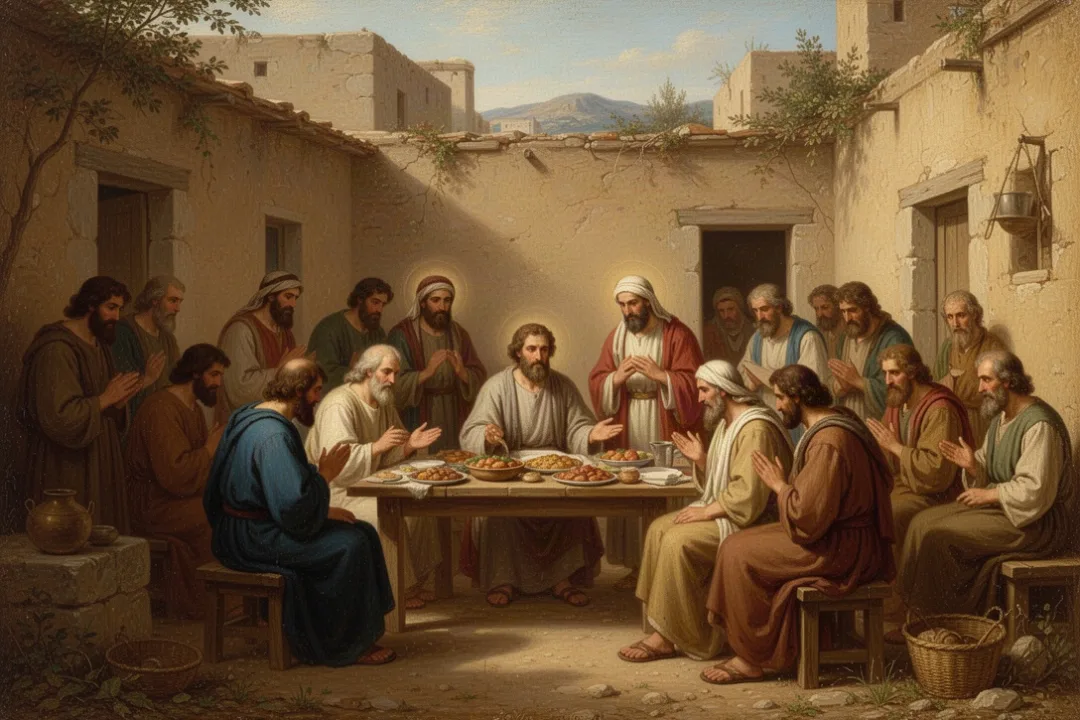
Acts 1–7 focuses mainly on Jerusalem. The apostles wait together, choose Matthias to join the Twelve, and receive the Holy Spirit at Pentecost. Peter then speaks publicly about Jesus, and many people become part of the new community. The early believers gather for teaching, prayer, fellowship, and shared meals.
The Jerusalem church quickly encounters pressure. Peter and John are questioned by authorities after healing a man, while the apostles continue teaching despite warnings. The community also faces internal problems, including the deaths of Ananias and Sapphira and a complaint that some widows were being overlooked in the distribution of food. These episodes show both the spiritual vitality and the practical challenges of a growing church.
Stephen, one of the seven appointed to help serve the community, becomes a powerful witness. His speech before the council reviews Israel’s history and challenges the leaders’ resistance to God’s purposes. After Stephen is killed, severe persecution scatters many believers beyond Jerusalem. That painful displacement becomes one way the message reaches new places.
The message crosses cultural boundaries
Acts 8–12 describes expansion into Samaria, along the Mediterranean coast, and beyond. Philip announces the message in Samaria and later meets an Ethiopian official traveling home from Jerusalem. The official receives instruction and is baptized, showing that the movement is already reaching people outside its original local setting.
Peter’s encounter with Cornelius is one of the book’s most significant turning points. Cornelius is a Gentile Roman officer, while Peter is a Jewish follower of Jesus. Through visions, spiritual experiences, and the gathering of witnesses, Peter comes to understand that Gentiles should not be treated as religious outsiders when they respond in faith. The episode forces the Jerusalem believers to reconsider their assumptions about who belongs in the people of God.
Meanwhile, Saul, a determined persecutor of Jesus’ followers, encounters the risen Jesus while traveling to Damascus. He becomes known as Paul and eventually emerges as the central missionary figure in the second half of Acts. The church in Antioch becomes an important base for teaching and missionary work, and it is there that the disciples are first called Christians, according to Acts 11.
Paul’s missions lead toward Rome
Acts 13–28 follows Paul and his coworkers through several missionary journeys. They visit cities in Cyprus, central and western Asia Minor, Macedonia, Greece, and other parts of the eastern Roman world. Their work usually includes teaching in synagogues, speaking with Gentiles, forming local communities, and appointing or encouraging leaders.
Paul’s ministry brings both acceptance and opposition. He faces angry crowds, legal accusations, imprisonment, beatings, and dangerous travel. Acts also records disagreements among missionaries, including the separation of Paul and Barnabas over John Mark. The book presents the missionaries as committed servants, not flawless heroes.
The final chapters focus on Paul’s arrest in Jerusalem, his defenses before Jewish and Roman authorities, and his voyage to Rome. A severe storm and shipwreck interrupt the journey, but Paul eventually reaches the imperial capital. Acts ends with Paul living under guarded conditions and proclaiming the kingdom of God. The ending feels open because the mission has not stopped; the message has reached Rome and remains available to others.
Acts 1–7: Jesus’ followers witness in Jerusalem and face opposition.
Acts 8–12: The message moves into Samaria and reaches Gentiles, including Cornelius.
Acts 13–20: Paul and his coworkers establish communities across the eastern Mediterranean.
Acts 21–28: Paul is arrested, defends his faith, survives the journey to Rome, and continues teaching.
How the Holy Spirit shapes the action in Acts
The Holy Spirit is not a minor theme in Acts. The Spirit gives power for witness, guides decisions, equips speakers, and confirms that God’s work is extending beyond familiar boundaries. Acts begins with the Spirit’s coming at Pentecost and repeatedly returns to the Spirit’s presence in the church’s life.
At Pentecost, people from many regions hear the apostles speaking in ways they can understand. The event recalls the diversity of the gathered crowd and signals that the message is intended for many peoples. Peter interprets what is happening as part of God’s promised activity, and the apostles begin public proclamation with unusual boldness.
The Spirit also appears in moments of direction. In Acts 8, Philip is led toward the Ethiopian traveler. In Acts 10, spiritual visions prepare Peter and Cornelius for their meeting. In Acts 13, the church at Antioch sets apart Barnabas and Saul for missionary work. These scenes present mission as something guided by God rather than created solely through human planning.
Acts connects spiritual power with practical responsibility. The believers pray before major decisions, care for people in need, and appoint servants to address a distribution problem. Spiritual gifts do not remove the need for organization, wise leadership, or fair treatment. Instead, the community’s shared life gives visible form to its message.
The book also shows that the Spirit does not prevent hardship. Stephen is killed, James is executed, Paul is imprisoned, and many believers experience hostility. The presence of the Spirit is portrayed as strength for faithful witness rather than a promise of an easy path.
Reading tip: When the Spirit appears in Acts, ask two questions: what boundary is being crossed, and what responsibility follows? The Spirit often leads the church toward a new group of people while also requiring the community to change its assumptions and practices.
What Acts teaches about the early Christian community
Acts gives a detailed picture of a community learning how to live out its convictions. The believers devote themselves to teaching, fellowship, shared meals, and prayer. They support one another financially and respond to needs among the members, although the book does not suggest that every possession was permanently surrendered by every person.
The early church is diverse from the beginning. It includes people from different regions, languages, economic circumstances, and religious backgrounds. The story repeatedly asks whether the community will allow its shared faith to overcome inherited divisions. The dispute about Gentile believers becomes the clearest example.
The Jerusalem council in Acts 15 addresses whether Gentile followers of Jesus must adopt the full set of Jewish identity practices, including circumcision. Peter, Paul, Barnabas, and James all contribute to the discussion. The decision affirms that Gentiles are welcomed through God’s grace without becoming Jews, while also asking them to avoid practices that would create serious offense or damage fellowship in the mixed community.
This meeting matters because it shows the church resolving a major disagreement through testimony, Scripture, reflection on God’s activity, and communal judgment. The apostles do not treat conflict as proof that the mission has failed. They work through the conflict so the movement can remain united without demanding that every group become culturally identical.
Acts also records the role of women, household members, travelers, businesspeople, and local hosts. Lydia, a seller of purple cloth in Philippi, welcomes Paul and his coworkers after becoming a believer. Priscilla, together with Aquila, helps instruct Apollos more accurately. These examples show that the mission depends on a broad network, not only on the apostles named as official leaders.
Hospitality is especially important. Believers offer homes for meetings, shelter missionaries, and provide food during travel. Churches communicate with one another and collect support for believers facing hardship. The movement grows through relationships as much as through public speeches.
Teaching: Communities learn the story of Jesus and the significance of Israel’s Scriptures.
Prayer: Believers seek guidance, courage, healing, and wisdom together.
Generosity: Members share resources and respond to urgent needs.
Hospitality: Homes become places for worship, instruction, meals, and mission planning.
Discernment: Leaders examine disputes and decisions together rather than relying only on individual authority.
Why Paul is central to the second half of Acts
Paul receives more attention than any other individual in the latter portion of Acts. His importance comes not only from the number of places he visits but also from the way his story represents the mission’s movement from a primarily Jewish setting into the wider Greco-Roman world.
Before becoming a Christian missionary, Paul is portrayed as an aggressive opponent of the church. His conversion is therefore both personal and public. The person who once tried to destroy the movement becomes one of its most persistent representatives. Acts uses this reversal to show that the message can transform even a determined enemy.
Paul’s preaching follows a recurring pattern. He begins in a city, often speaks first in a synagogue, explains the significance of Jesus, and then continues among Gentiles when responses are mixed or opposition develops. Some audiences welcome his message, while others accuse him of undermining local customs or disturbing public order.
His speeches provide windows into how early Christian witnesses explained their faith to different audiences. In Jerusalem, Paul speaks as a Jewish man shaped by Israel’s traditions. Before Roman officials, he emphasizes the legal and public dimensions of his case. In Athens, according to Acts 17, he addresses people familiar with Greek religious ideas and uses their cultural setting as a point of contact.
Paul’s ministry also reveals the economic and social consequences of conversion. In Ephesus, his teaching threatens a trade connected with local religious devotion, leading to a public disturbance. In Philippi, Paul and Silas are jailed after a slave girl’s owners lose income when she is freed from the spiritual oppression described in the story. These episodes show that the gospel can challenge established interests, not merely private beliefs.
Paul’s imprisonment is not treated as wasted time. He continues speaking to prisoners, guards, governors, kings, fellow travelers, and local residents. His legal troubles carry him toward Rome, and the final image of him teaching under restriction reinforces a major theme of Acts: God’s message continues even when its messengers are confined.
How to read Acts with historical and theological care
Acts can be read quickly as an adventure story, but careful reading reveals several layers. It is a narrative of mission, a history of communities, a record of speeches, and a theological interpretation of the church’s growth. Paying attention to all four layers helps prevent common misunderstandings.
First, distinguish between description and instruction. Acts describes events such as communal sharing, miraculous healings, prophetic speech, imprisonments, and missionary travel. A description does not automatically mean that every reader or church must reproduce the event in exactly the same way. Ask what role the event plays in the story before treating it as a universal command.
Second, notice repeated patterns. Important episodes often appear in pairs or groups, especially when the book compares Jewish and Gentile believers, Peter and Paul, or Jerusalem and the wider world. Repetition may show that God is extending the same welcome to different people or that a new development has been confirmed through multiple witnesses.
Third, read the speeches in their setting. Acts contains speeches by Peter, Stephen, Paul, James, and others. These speeches are not interchangeable statements detached from their audiences. Each one addresses a particular situation, draws on particular Scriptures or beliefs, and responds to specific questions about Jesus, resurrection, law, identity, or public authority.
Fourth, keep the book’s geography in view. Movement from Jerusalem to Rome is not merely a travel itinerary. It portrays a widening mission that crosses ethnic, religious, social, and political boundaries. Maps can help you follow the journeys, but the larger point is the changing scope of the community.
A practical reading approach can make the book easier to understand:
Read the opening of Luke first and compare its purpose and recipient with Acts 1.
Mark each major location, including Jerusalem, Antioch, Philippi, Corinth, Ephesus, and Rome.
Track the apostles’ witnesses and note how the audience changes from Jews to Samaritans and Gentiles.
Record moments of conflict, then ask what issue caused each dispute and how it was handled.
Watch for the Spirit’s activity in guidance, empowerment, inclusion, and endurance.
Compare Acts with Paul’s letters carefully, remembering that each book has a different purpose and perspective.
The central message of Acts is not that the early church was perfect. Its members misunderstand one another, argue, make poor decisions, and face moral failures. The book’s confidence rests elsewhere: God continues the work begun through Jesus, and the message moves outward through a diverse community empowered to bear witness.
That emphasis explains why Acts ends without narrating Paul’s death or giving a complete account of every later development. Its story reaches Rome, a major center of power, but does not stop there. The open ending leaves the mission in motion and invites readers to consider how witness, hospitality, courage, and community life continue beyond the final scene.
Frequently asked questions
Is Acts of the Apostles written by Luke?
Early Christian tradition attributes Acts to Luke, the companion of Paul and author of the Gospel of Luke. The book itself does not name its author, so the attribution is a matter of tradition and scholarly evaluation rather than an explicit internal claim. Most readers study Acts alongside Luke because the two books share a recipient, style, and continuing storyline.
What is the main message of Acts?
Acts emphasizes that the risen Jesus continues his work through the Holy Spirit and his witnesses. The message begins in Jerusalem and reaches Samaritans, Gentiles, and finally Rome. Along the way, the book highlights courage under pressure, generous community life, prayer, cross-cultural inclusion, and the conviction that opposition cannot permanently stop the spread of the gospel.
Why does Acts end with Paul in Rome?
The ending places Paul in Rome while he is still teaching and welcoming visitors, despite living under restriction. It may reflect the book’s focus on the unstoppable spread of the message rather than Paul’s complete biography. Rome also represents a major step in the movement from Jerusalem toward the wider world, leaving the mission’s future open.
What is the difference between Acts and the letters of Paul?
Acts is a narrative that presents the growth of the early church and selected events from Paul’s ministry. Paul’s letters are direct communications to particular congregations or individuals, addressing beliefs, conflicts, worship, ethics, and pastoral concerns. Reading both provides complementary perspectives, but they should not be assumed to serve exactly the same purpose or offer identical details.







Leave a Reply