Advent Wreath Meaning Catholic: Symbolism, History, and How to Observe Advent
The Advent wreath meaning Catholic centers on a simple circle of evergreen branches bearing candles that light up in the weeks before Christmas. This timeless devotion is widely used in Catholic homes, parishes, and schools as a tangible way to prepare the heart for the Nativity. While the Advent wreath has roots in broader Christian practice, its interpretation within Catholic devotion emphasizes expectation, preparation, repentance, and joy as the Church awaits the coming of Christ. This article explores the symbolism behind the wreath, its historical development, and practical ways to observe Advent in a Catholic context.
What is the Advent Wreath in Catholic Practice?
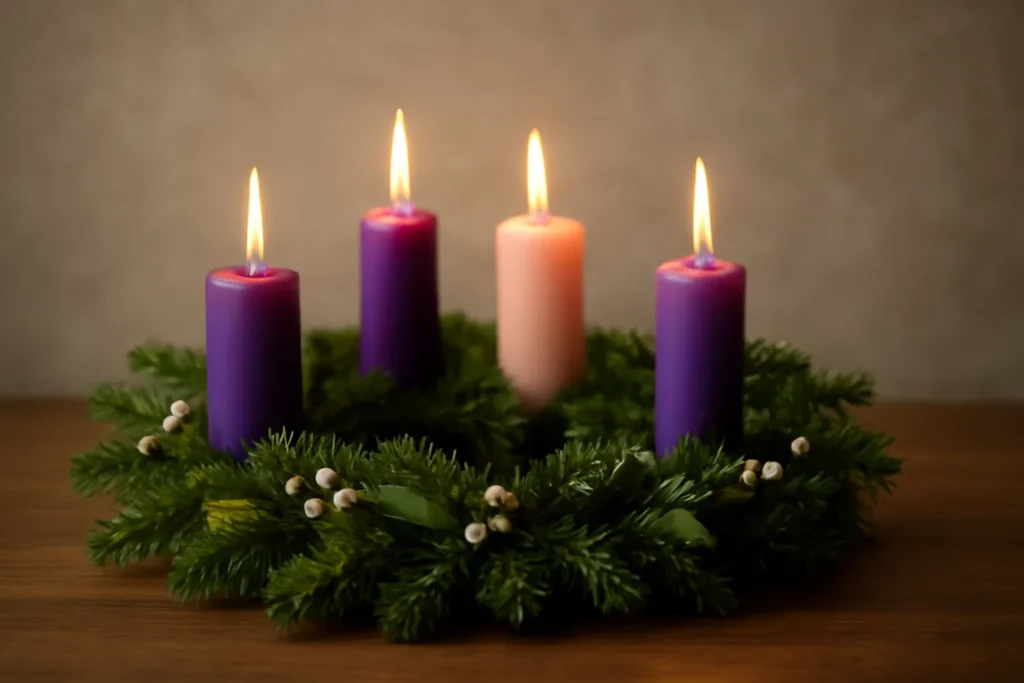
An Advent wreath Catholic practice typically consists of an evergreen circular ring adorned with candles. The evergreen material symbolizes eternal life in Christ, a hope that endures through all seasons, including the long days and cold of winter in the Northern Hemisphere. The circle has no beginning and no end, echoing the eternal nature of God. The candles, usually four, are arranged around the ring and are lit progressively over the four Sundays of Advent. In many Catholic settings, a central white candle—often called the Christ Candle—is lit on Christmas Eve or Christmas Day to celebrate the Incarnation.
Across Catholic households and communities, the exact arrangement can vary, but the core idea remains the same: to light the candles as a sign of growing light and Christ’s coming, and to accompany prayer, Scripture, and contemplation during the season of Advent.
Symbolism of the Advent Wreath
The Advent wreath conveys layered meanings that deepen as the Sundays unfold. The symbolism can be explored through several key elements:
Evergreen ring: The circular shape represents God’s eternal life and the continuity of God’s love. Evergreens have been used for centuries in Christian devotion as a reminder that faith remains green and alive even in winter.
Candles: Each candle signifies a particular theme associated with the Advent season. In Catholic practice, the four candles typically represent Hope, Peace, Joy, and Love, corresponding to the weeks leading up to Christmas.
Purple or violet candles: The purple (or violet) color denotes penitence, preparation, and expectation, inviting the faithful to repentance and spiritual readiness as Christmas approaches.
The pink (rose) candle: Lit on Gaudete Sunday, the third Sunday of Advent, the pink candle stands for joy in anticipation of the Lord’s coming. It is a sign that the faithful may rejoice even as they prepare.
The white Christ candle: Placed at the center of the wreath, the white candle is lit on Christmas Eve or Christmas Day to symbolize Christ the Light of the World and the birth of Jesus.
Lighting sequence: The gradual lighting of candles mirrors the process of awakening faith. Each Sunday a new candle is lit, often accompanied by Scripture readings, reflections, and prayers that connect the waiting of Advent with the coming of Christ.
Prayers, readings, and hymns: The Advent wreath is not merely a decorative object; it is a devotional instrument. The weekly prayers and chosen Scripture passages help worshipers focus on the mysteries of the Incarnation and the hope that God brings light into the world.
History of the Advent Wreath
The Advent wreath as a devotional practice has a history that spans several centuries and reflects the way Christian communities have sought to structure the season of preparation for Christmas.
The modern Advent wreath is most closely associated with Johann Hinrich Wichern, a 19th-century German evangelical pastor. In 1839 he created a large wooden ring with numerous small candles to help poor children count the days of Advent and keep focus on the coming of Christ. This early version, with many candles, was designed as a practical teaching aid for daily prayer and reflection during a busy season of anticipation.
From Wichern’s innovation, the concept of an Advent wreath spread across Protestant communities and eventually into Catholic life as well. Churches and families adopted the practice, adapting the number and color of candles to fit liturgical preferences and local customs. In the Catholic tradition, the wreath became a meaningful way to mark the Sundays of Advent, joining a broader Catholic devotion to Advent as a season of penance, expectation, and holy joy.
Today, the Advent wreath is a familiar feature in many Catholic homes and parish churches, often accompanied by a blessing on the first Sunday of Advent. While there is no single universal rite for blessing the wreath in Catholic practice, the act of blessing the wreath, lighting the candles, and praying together is widely encouraged as a way to draw families and communities into prayerful preparation for Christmas.
How Catholics Observe Advent with the Wreath
Observing Advent with the wreath can be integrated into household routines, parish life, and school activities. Here are practical ways to incorporate the Advent wreath into Catholic worship and family devotion:
Lighting rhythm: On the first Sunday of Advent, light the first candle and offer a short prayer. On each subsequent Sunday, light an additional candle until all four are lit. In some traditions, a fifth candle in the center is lit on Christmas Eve or Christmas Day.
Prayer and Scripture: Each lighting session can be paired with a brief prayer and a Scripture reading. Common choices include passages from the prophetic books of Isaiah (which anticipate the Messiah) and the Gospel narratives of Luke that recount the nativity.
Theme-Driven reflections: Associate each Sunday with the traditional themes of Hope, Peace, Joy, and Love. Reflect on how these virtues appear in daily life and in the life of the Church.
Family catechesis: Allow children to participate by helping place candles, reading short passages, or leading a prayer. This practice can become a gentle catechesis about preparation for Christmas.
Blessing the wreath: Some families or parishes bless the Advent wreath with a short prayer at the outset of Advent. The blessing emphasizes the wreath as a sign of Christ’s coming and the community’s readiness to welcome Him.
Social and liturgical integration: In parish life, the Advent wreath may be displayed in churches or chapels and used during weekend liturgies or catechetical sessions. Schools may use the wreath as a learning aid in religious education classes.
Reflection prompts: Offer weekly prompts for journaling or discussion. Examples include questions like: How can we grow in hope today? Where do we seek peace in our families and neighborhoods? How can we share joy with others? In what ways can we show love to those most in need?
It’s important to note that Catholic practice values reverence, modesty, and intention in Advent devotions. The wreath is a devotional aid rather than a ritual requirement. The goal is to cultivate a spirit of preparation and a sense of community as Christmas approaches.
Variations Across Cultures and Parishes
While the essential symbolism remains consistent, you will find a variety of Advent wreath practices across Catholic communities worldwide. Some of the notable variations include:
Color choices: Traditional Catholic wreaths often use purple or violet candles for penance and prep, with a single pink/rose candle for Gaudete Sunday. In some regions, blue candles or a mix of colors are used, reflecting local liturgical customs or artistic preferences.
Number of candles: The four-candle model is the most common, but some families or parishes opt for a five-candle arrangement with a central white Christ Candle. Others might use smaller wreaths with three or four equations of faith, depending on space and tradition.
Lighting practice: Some communities light all candles at once on Christmas Eve or Christmas Day, while others light one candle per Sunday. The cadence can influence the pace of prayer and reflection during the Advent season.
Blessing rituals: The blessing of the Advent wreath may occur at different moments—during a home prayer service, a parish Mass, or a school liturgy. The exact text of blessings and prayers can vary by region while maintaining the same theological intent.
Decorative styles: Wreaths range from traditional greenery with a rustic appearance to more formal arrangements with ribbons, bells, or nativity motifs. In some places, the wreath is hung on a wall or placed on a table as a centerpiece, influencing the way families gather for prayer.
Involvement with other Advent devotions: Some Catholic communities pair the Advent wreath with an Advent calendar, a Jesse Tree, or daily prayers around the same themes. This integrated approach emphasizes steady spiritual formation throughout the season.
Regardless of regional variations, the Catholic understanding of the Advent wreath remains anchored in the same theological threads: preparation for the Incarnation, the dawning of Christ’s light in darkness, and the communal witness of faith that sustains believers through winter and beyond.
If you are considering creating a home Advent wreath, here are practical guidelines to help you craft a meaningful and safe centerpiece:
Materials: Choose a sturdy ring or base (metal, wire, or a real wooden ring) and fresh or artificial evergreen foliage. Attach candles securely so they stand straight and won’t tip during prayer.
Candle choices: Use four candles for the Sundays, typically purple or violet. Include a pink candle for Gaudete Sunday if you wish, and consider a central white Christ Candle if you want to mimic the five-candle layout.
Placement: Position the wreath where it can be seen by the family during prayer time. A dining table, coffee table, or altar-like shelf is common.
Safety: Be mindful of fire safety—never leave burning candles unattended, keep hair and clothing away from flames, and use a sturdy holder. If you use real candles, trim wicks to prevent excessive smoke and soot.
Blessing: Consider asking a priest or lay leader to bless your wreath at the start of Advent, or perform a simple home blessing with a short prayer that centers the family on Christ’s coming.
Rituals: Plan a short family ritual for each Sunday—read a short prophetic passage, light the appropriate candle, and offer a concise prayer focused on Hope, Peace, Joy, and Love.
Maintenance: If you use real evergreens, replace stems as needed and dispose of the wreath after Epiphany or after Christmas. If you use artificial greenery, you may reuse the wreath in subsequent years with new candles.
Whether you build a simple evergreen ring or a richly decorated centerpiece, the most important element is intention: to slow down, to reflect, and to prepare to welcome Christ once again into the world.
Practical Tips for Families, Schools, and Parishes
The Advent wreath can be a shared practice across different settings. Here are practical tips tailored for families, Catholic schools, and parish communities:
Family tip: Make Advent lighting a faith-led family routine. Invite each family member to read a short Scripture passage or share a brief reflection on how they see God at work in their daily lives.
School tip: Use the wreath as a cross-curricular anchor. Include lessons on biblical prophecies, Catholic social teaching about waiting and hope, and art projects that explore symbolism.
Parish tip: Integrate the wreath into weekend Mass or a parish Advent devotion. Consider a simple blessing during a Sunday liturgy and invite parishioners to participate in a daily or weekly devotion booklet.
Accessibility: Ensure the worship space is accessible to people with mobility or sensory needs. Clear lighting, readable devotion texts, and opportunity for quiet reflection help everyone engage with the season.
Inclusivity: While Advent is a Catholic season, many families come from diverse Christian backgrounds. The wreath can be presented in a way that respects differences while inviting all to reflect on the themes of hope, peace, joy, and love.
Environment and sustainability: If possible, prefer sustainable wreath materials. Reusable candles and long-lasting decorations reduce waste and align with stewardship values.
By integrating the Advent wreath into Catholic parish life and domestic faith practice, communities experience a shared rhythm of prayer that helps people prepare for Christmas with reverence and joy.
Frequently Asked Questions About Advent Wreath Meaning Catholic
To help clarify common uncertainties, here are concise responses to questions that families and parishes often raise about the Advent wreath:
While the wreath originated in a Protestant context, it has become a widely adopted devotional symbol in Catholic households and churches. It is celebrated for its ability to foster prayerful anticipation during Advent and to accompany the liturgical year.
What is the significance of the colors?
Purple (violet) candles symbolize penitence and preparation; the pink candle signals joy on Gaudete Sunday; the white Christ Candle, lit in the center, represents Christ Himself. These colors connect Catholic Advent practice with the broader liturgical color symbolism of the season.
When is the Christ Candle lit?
The central white candle is typically lit on Christmas Eve or Christmas Day, completing the Advent sequence with a celebration of the Nativity of Jesus.
Is there a required Catholic rite for blessing an Advent wreath?
No single universal rite governs blessings in every diocese, but many parishes perform a blessing of the wreath at the start of Advent, accompanied by a brief prayer that invites God’s grace as the faithful prepare for Christmas.
How can families make the Advent wreath more meaningful?
Use weekly prayers, Scripture readings (especially Isaiah and Luke), and reflective questions. Encourage family members to think about concrete ways to grow in the virtues of hope, peace, joy, and love during Advent.
Connecting Advent Wreath Meaning Catholic with Everyday Faith
The Advent wreath meaning Catholic is not merely about candles and greenery. It centers on a spiritual posture: waiting with expectancy for the gift of Christ, acknowledging personal and communal sins, and choosing to live in a way that welcomes the Light into a world that often knows darkness. The weekly rhythm of lighting candles invites families to recalibrate their priorities, to slow down the pace of life in December, and to focus on acts of mercy, generosity, and reconciliation.
In this sense, the Advent wreath becomes a catechetical tool, a tangible sign of grace that invites devotion, study, and service. It also fosters a sense of continuity with the broader story of salvation history—one that stretches from the prophecies of old to the humble manger in Bethlehem and forward into the life of the Church today.
Conclusion: A Timeless Practice for Catholic Devotion
The tradition of the Advent wreath in Catholic life embodies a profound and enduring message: we await with hope the coming of Christ, we prepare our hearts with reverence, and we respond to God’s love with faith, joy, and charity. Whether observed in a family home, a parish church, or a classroom, the Advent wreath offers a simple, powerful invitation to slow down, reflect, and join the worldwide Catholic community in prayerful anticipation of Christmas.
If you are starting a new Advent practice, consider beginning with a basic four-candle wreath and a brief weekly prayer. Over time, you can add personal elements—such as a short family blessing, a gospel reading, or a charitable act—to enrich the experience. By embracing the symbolism, history, and observance of Advent, Catholics can draw closer to the mystery of the Incarnation and witness to the light that shines in the darkness.








Leave a Reply