The 4th Advent Candle Guide: An In-Depth Look at Meaning, Traditions, and How to Light It
Advent is a season of waiting, preparation, and anticipation as Christians prepare for the celebration of Christ’s coming at Christmas. The candles on the Advent wreath tell a story week by week, culminating in the final illumination on the fourth Sunday. This article explores the fourth Advent candle, its meaning, the traditions associated with it, and practical guidance on how to light it with reverence and mindfulness. Whether you call it the fourth Advent candle, the fourth candle of Advent, or the Advent candle for love, this guide will help you understand its place in worship, family life, and community observances.
What is the Fourth Advent Candle?
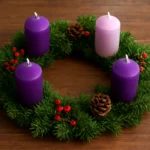
In most traditional Advent wreaths, there are four outer candles arranged around a central Christ candle. Each outer candle corresponds to one of the four Sundays in Advent, and every candle is lit in sequence as the season progresses. The fourth Advent candle is typically associated with love and the fullness of God’s love revealed in the Incarnation. In many liturgical traditions, the candles are colored violet (or blue) for the first, second, and fourth candles, with a pink candle for the third Sunday to signify joy in anticipation of Christmas. The central Christ candle, often white, is lit on Christmas Eve or Christmas Day, representing the welcome of Christ into the world.
Terminology and Variations
Fourth Advent candle: The candle that corresponds to the fourth Sunday of Advent, sometimes labeled “LOVE” in devotional guides.
Fourth candle of Advent: A common synonym, preserving the sense of sequence within the Advent wreath.
Advent wreath’s outer candle for love: Emphasizes the meaning attributed to this last ring candle in some congregations.
Angel’s candle / Christ candle: In many homes, the white central candle is referred to separately as the Christ candle, which is lit at Christmas Eve/Day.
Fourth Sunday candle: A phrase that underlines the liturgical timing rather than a theological attribute.
The Theological Meaning of the Fourth Advent Candle
The fourth candle carries the last of the season’s progressive revelations: that of love, the love of God made manifest in the coming of Jesus. This candle invites believers to reflect on how love calls us to action—toward mercy, reconciliation, generosity, and care for others. The symbolism can be understood in several layers:
Love as action: Advent is not only about waiting but also about preparing to act in ways that embody love—in forgiveness, kindness, and hospitality.
God’s faithfulness: The fourth candle testifies to God’s steadfast love and faithfulness through generations, culminating in the birth of the Savior.
Salvation and inclusion: The Advent narrative expands from personal hope to the universal reach of God’s love for all peoples and nations.
Light into darkness: As the days shorten toward Christmas, the lighting of this final candle proclaims that love penetrates darkness with a light that promises lasting peace.
In the language of liturgy and devotion, the fourth Sunday candle is a reminder that love is not merely a feeling but a way of living within family, church, and community life. It invites believers to consider how they can model Christ-like love in practical ways—reaching out to neighbors, welcoming strangers, supporting those in need, and forgiving one another.
The Role of Colors and Their Significance
Color plays a meaningful role in Advent symbolism. While traditions vary, the following color associations are common in many churches and homes:
Violet (or blue) for the first, second, and often the fourth candles; symbols of expectation, penitence, and reverent preparation.
Pink for the third candle (the candle of joy); signals a lighter, more celebratory mood within the season.
White for the Christ candle in the center; represents purity, light, and the Incarnation.
Even within this framework, some families and congregations customize colors to reflect cultural contexts or local traditions. The important thing is that the colors and candles together convey a coherent narrative of anticipation, grace, and the coming of the Light of the world.
The fourth Advent candle appears in a variety of settings, from formal worship services to intimate family rituals at home. Here are some common traditions and observances you may encounter:
In Church and Worship Settings
Liturgy and readings: The fourth candle is often introduced with a specific scripture reading about love or the invitation to live out the love of God in daily life.
Responsive prayers: Congregations may join in prayers that emphasize forgiveness, mercy, and outreach.
Processions: In some churches, a procession to the altar or sanctuary may incorporate the lighting of the final outer candle as a symbol of approaching Christmas.
Music and hymns: Special congregational hymns and carols focus on love and the incarnation, enriching the liturgy of the fourth candle lighting.
At Home and in Family Life
Family devotions: Families gather to light the fourth candle and to share reflections on love in action, perhaps using a short reading or a devotional.
Advent calendar integration: Some households align the fourth candle with an Advent calendar tradition, linking daily acts of kindness to the weekly lighting sequence.
Charity and outreach: The theme of love often translates into practical acts of service—boxing gifts for those in need, supporting a food bank, or donating to a local shelter.
Hospitality and table rituals: A table blessing or a short prayer before meals on the fourth Sunday can center hospitality as a concrete expression of love.
Regional and Cultural Variations
Across cultures, the fourth Advent candle may be framed slightly differently. Some examples include:
Eastern Christian traditions: While the Advent wreath is less common in some Eastern Orthodox contexts, the spirit of preparing for Christmas through symbolic light remains, with emphasis on love’s manifestation in the Nativity narratives.
Latin American liturgies: Communities may incorporate the theme of unidad (unity) and misericordia (mercy) as part of the final Advent candle reflections, often accompanied by processions, family prayers, and festive meals.
Frugal or improvised wreaths: In homes with limited resources, families may substitute a simple ring of greens with four candles, keeping the same sequence and symbolism while adapting to local contexts.
Lighting the fourth Advent candle can be a formal liturgy in a worship service or a warm domestic ritual. Here is a practical, respectful approach that can be adapted to your tradition:
Step-by-Step Lighting in a Typical Outer-Candles-and-Center-Candle Setup
Prepare the environment: Ensure the wreath or centerpiece is stable, placed away from drafts and flammable materials. Have a long match or a lighter handy, and consider a small tray or dish for any wax drips.
Review the sequence: If you are counting Sundays, you may have lit the first candle on the first Sunday, the second on the second, and the pink third on the third Sunday. The fourth candle is lit on the fourth Sunday. In churches, the Christ candle is typically lit later on Christmas Eve or Christmas Day.
Light the fourth outer candle: With care, light the fourth candle first. As you light it, you might say a brief affirmation such as, “We light this fourth candle to honor love—the love of God made manifest in Christmas.”
Reflect on the theme: Pause for a moment to reflect on how love has been shown to you, and how you can embody love in your daily life—toward family, friends, neighbors, and strangers alike.
Light the Christ candle (optional in some traditions): If your practice includes lighting the central Christ candle, you may wait to light it until after you have lit the four outer candles, often at Christmas Eve or Christmas Day. In some homes, the central candle is reserved for that particular celebration and is lit with a larger sense of joy and outward display of light.
Pray or read a short passage: Invite a moment of prayer or a reading that centers on love, mercy, and the incarnation. You might choose a passage such as 1 John 4:9-11 or John 3:16, depending on your tradition.
Close with a blessing or song: End the moment with a simple blessing for your household or a favorite carol that emphasizes love and welcome.
Alternative Ways to Observe the Fourth Candle
In a service with all four outer candles lit together: Some churches light all four outer candles on the fourth Sunday, symbolizing the completion of the Advent journey toward Christmas.
Donation and service focus: Pair the lighting with a charitable act—collecting gifts for a local family, supporting a community pantry, or volunteering time—that embodies love in action.
Family ritual variations: In homes with small children, you can pair the lighting with a simple craft, such as decorating the wreath with hearts or writing messages of love to loved ones.
Devotional practices around the fourth Advent candle are deeply personal and should be accessible to families of all sizes. Here are sample prayers you can adapt:
Morning reflection: “Lord of love, as we light the final candle this week, help us to live out your love in every act of kindness, every word of encouragement, and every invitation to share what we have. May our hearts be open to your presence among us.”
Evening blessing: “Grant us the wisdom to choose love over fear, to reach out in mercy, and to reflect your light in a world that needs hope and healing. Amen.”
Family gratitude: “Thank you for the loves that fill our home—the grandparents, siblings, friends, and neighbors. Teach us to extend that love beyond our walls and to welcome the stranger as Christ welcomes us.”
For those who want more structure, you can create a simple weekly devotion guide that pairs each week with a Bible reading, a short reflection, a suggested action, and a closing prayer. The forth candle devotion can be a capstone to this weekly practice, inviting families to consider how love shapes their choices in the coming year.
Observances of the fourth candle can differ across communities and nations, yet the underlying theme remains universal: love in action as part of preparing for Christmas. Here are some regional highlights and considerations:
North America: Home and church observances frequently emphasize family warmth, hospitality, and charitable giving as expressions of love during the final Advent week.
Europe: In many European churches, there is a heightened focus on social justice and community outreach, with the fourth candle sometimes linked to peace in addition to love.
Latin America: Advent celebrations often blend catechetical instruction with festive processions and community meals, highlighting the communal aspect of love and welcome toward others.
African and Asian Christian communities: Local customs may enrich the fourth candle devotion with music, storytelling, and acts of service that reflect the diverse expressions of love within the universal church.
If you are bringing the fourth Advent candle into your home, these practical tips can help you create a meaningful and sustainable practice:
Safety first: Place candles on a stable, heat-resistant surface; keep them away from curtains or paper; never leave burning candles unattended.
Anchor with a simple ritual: A short moment—light the candle, share a short reflection, and offer a simple blessing—creates consistency without becoming burdensome.
Involve all ages: Children can participate by placing the candles, reading a short verse, or sharing a note about someone they want to show love to during the coming week.
Limit wax drips and mess: Use a tray or a decorative ring to catch wax, and line your candle holders with parchment or a small plate for easy cleanup.
Connect to acts of service: Associate the fourth candle with a weekly act of kindness—visiting an elderly neighbor, donating clothes, baking for a neighbor in need, or volunteering.
Is the fourth candle always about love?
In most traditional practices, the fourth Advent candle is connected to love, often framed as God’s love made manifest in Christ and the call for believers to demonstrate that love in daily life. However, regional variations exist where the fourth candle may be tied to peace or to a combined message of love and peace as the season reaches its culmination.
Do all Advent wreaths include a center Christ candle?
Not all family or community Advent wreaths include a central Christ candle. In many churches, the central candle is included and lit on Christmas Eve or Christmas Day, signifying the nativity and the arrival of Christ into the world. In some homes, the Christ candle is kept for the final celebration and is not lit as part of the Sunday sequence.
If your wreath has fewer than four outer candles, you can adapt your practice in a meaningful way. You could light a single outer candle each week, using the same sequence of reflection and prayer, and still incorporate a final inner Christ candle in December 24/25 if available. The essential elements are intention, remembrance, and acts of love toward others.
How can I teach children about the fourth Advent candle?
Engage children with simple stories, crafts, and hands-on participation. You can:
Let children place the fourth candle on the wreath and tell a short story about love.
Encourage them to think of one act of kindness they can perform that week.
Read a brief, age-appropriate Bible passage about God’s love and discuss its meaning in everyday life.
As Advent advances toward Christmas, the fourth candle acts as a bridge between longing and fulfillment. It invites you to translate hope, peace, and joy into concrete acts of love. The final candle’s light points us toward a world where love is not merely proclaimed but practiced; where hospitality becomes a habit; where mercy becomes a daily decision. This is the heart of the season, and it is embodied in the humble light of this last candle on the wreath.
The fourth Advent candle stands at the threshold of Christmas, reminding us that love is a decisive, life-changing force. Whether you emphasize its symbolism as love, the manifestation of God’s love in the Nativity, or the call to manifest love through service and generosity, the act of lighting this candle serves as a tangible reminder that we are called to live out what we believe. By incorporating thoughtful lighting, reflective prayer, and practical acts of kindness, you can make the final Sunday of Advent a meaningful preparation for the coming of Christ.
In sum, this candle—often described as the Love Candle or the fourth Sunday candle—is not only a moment in a liturgical calendar but an invitation to live with greater compassion. If you adopt a new tradition this season, consider giving the fourth Advent candle a central place in your home’s storytelling: tell its story, light it with intention, and let its glow guide you toward acts of generous love in the days ahead.









Leave a Reply