AED Machine for Church: Practical Guide to Defibrillators
Sudden cardiac arrest can strike anyone, at any time, including during worship, concerts, or community events. For congregations and faith-based organizations, having an AED device or AED machine on site is not just a nice-to-have feature—it is a critical element of on-site safety. In this guide, we will explore the essential aspects of selecting, deploying, and maintaining an AED for church settings, as well as how to train staff and volunteers to respond confidently when minutes matter.
Throughout this article, you may encounter several variations of the phrase “aed machine for church.” You will see terms like aed device for church, defibrillator for church, automated external defibrillator for church, and aed unit for church. All of these refer to the same class of life-saving equipment, designed to analyze heart rhythms and deliver a shock if needed, to restore a normal rhythm when used promptly and correctly.
Why a Defibrillator Matters in Houses of Worship
Churches, synagogues, mosques, temples, and other houses of worship are gathering places where people of all ages come together for worship, education, and community events. A public health study consistently shows that early defibrillation, combined with high-quality CPR, significantly improves the chance of survival after a sudden cardiac arrest. An AED device for church helps bridge the critical window between collapse and professional medical care.
Public access defibrillation (PAD) is especially important in large sanctuaries or auditoriums where crowds gather.
An AED unit for church or a defibrillator for church can be deployed quickly, reducing delays caused by searching for help or awaiting paramedics.
Having an on-site device supports a culture of safety and preparedness that aligns with many faith communities’ emphasis on stewardship and care for neighbors.
When selecting an AED machine for church, consider factors that influence reliability, ease of use, and long-term cost. The best choice for a worship space should balance simplicity with dependable performance, given that responders may be volunteers with varying levels of training.
Voice prompts and visual cues: Clear step-by-step guidance helps bystanders follow the correct sequence even under stress.
Adult and pediatric capability: The device should accommodate both adults and children, typically through pediatric pads or a pediatric mode.
Pad design and placement diagrams: Pads that adhere firmly and do not require extra preparation are ideal in a church setting where responders may be wearing robes, sleeves, or jackets.
Battery life and expiration tracking: A long-life battery with an easy-to-read indicator reduces maintenance burden and ensures readiness.
Durability and environmental tolerance: Devices that tolerate room temperatures, occasional moisture, and the occasional bump from foot traffic are preferable in large sanctuaries and gymnasiums.
Maintenance and alarms: Some AEDs provide alarms for pad expiration, battery status, or device tamper events, which helps stewardship teams stay on top of readiness.
Storage and accessibility options: Choose a location that is visible, easily accessible, and clearly labeled, but secure from tampering or theft when not in use.
Warranty and service network: A solid warranty and responsive service contracts minimize downtime and ensure replacements or repairs are prompt.
Where to Place the AED: Accessibility, Visibility, and Security
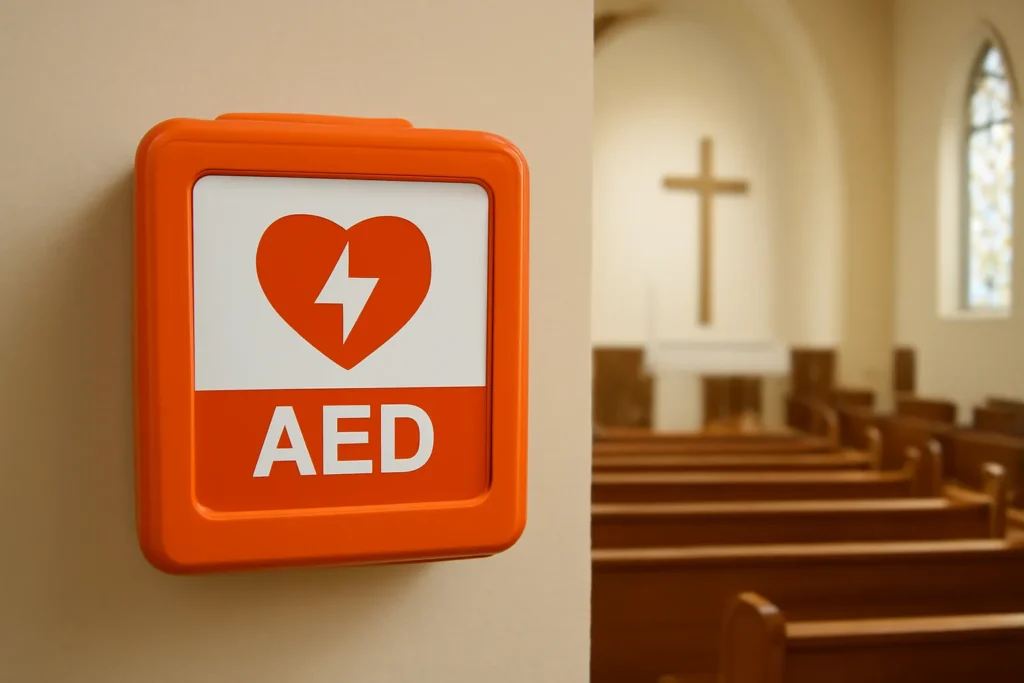
A critical aspect of implementing an AED device for church is placing it where it will be found quickly by a responder, yet protected from harsh conditions or theft. Consider a dedicated AED cabinet with a visible sign and an unobstructed path to the device.
Prominent location: Place the AED near high-traffic areas such as main entrances, fellowship halls, or near the front of the sanctuary where responders can access it rapidly.
Clear signage: Use large, high-contrast signs with the classic heart-hairbeat symbol and the word “AED” to aid recognition for visitors unfamiliar with your building.
Secure but accessible: A wall-mounted cabinet with a simple lock or tamper-evident seal can protect the device while allowing quick access in an emergency.
Distance considerations: Avoid placing the AED behind doors or in locations that require delays to reach during a crisis. If space is tight, consider multiple units for large campuses or multi-building sites.
Maintenance access: Ensure the storage spot allows for easy inspection of pads and battery without needing specialized tools.
Training and Readiness: Building a Team of Responders
A successful AED program in a faith community hinges on prepared volunteers and staff. Training creates a consistent, confident response that can save lives. The combination of CPR and AED usage is the core of the chain of survival.
Training components to prioritize
CPR certification: Encourage or require CPR training for designated responders. On-site refreshers help maintain skills in case of long gaps between events.
AED operation practice: Hands-on practice with the actual device or a trained trainer to simulate pad placement, rhythm analysis, and guidance from the device.
Team-based drills: Periodic drills that involve marshal procedures during a service or event, including calling emergency services, assigning roles, and coordinating with ushers or security teams.
Communication protocols: Clear, calm communication with emergency dispatchers, church leadership, and congregants to maintain order during an incident.
Post-event debriefs: After-action reviews help identify gaps and improve future responses.
Operational Protocols: How to Respond with an AED in a Church Setting
Having a written protocol helps ensure that when a cardiac emergency happens, responders can act quickly and consistently. The protocol should be clear, age-appropriate, and aligned with local medical guidelines.
Assess the scene: Ensure the environment is safe for both the patient and responders. If hazards are present, take steps to remove or mitigate them, and call for additional help as needed.
Call emergency services: In many regions the proper action is to dial the local emergency number immediately and provide precise location details, including the building name, room number, and any crowd information.
Turn on the AED: If the device is not already activated, power it on. The device will usually speak prompts to guide the next steps.
Expose the chest and apply pads: Remove clothing as needed to expose the chest, follow the device’s pad placement diagram, and ensure no one is touching the patient during analysis or shock delivery.
Follow prompts and deliver a shock if advised: The AED will analyze the heart rhythm and prompt you to deliver a shock if appropriate. If a shock is advised, ensure everyone clears the patient and deliver the defibrillation as instructed.
Begin CPR if directed or if the patient remains unresponsive: If the device instructs it or if you are trained and the patient is not responsive and not breathing normally, begin CPR with high-quality compressions until the device directs you to pause for analysis or shock, or until professional responders arrive.
Continue until help arrives or the device indicates otherwise: Return to ongoing CPR as directed, re-apply pads as necessary, and keep monitoring the patient’s status until professionals take over.
It is important to emphasize that the exact steps can vary by device model and local guidelines. Regardless of the specific AED machine, the fundamental sequence is to ensure safety, call for help, turn on the device, apply pads correctly, follow prompts, and perform CPR as needed.
Maintenance, Readiness, and Lifetime Care
Keeping an AED device for church ready for use requires a routine maintenance plan. A well-maintained device reduces the risk of failure during an emergency and extends the life of the equipment.
Regular checks: Establish a schedule to verify battery status, pad expiration, and general device readiness. A simple weekly or monthly check can catch issues early.
Pad expiration management: Defibrillator pads have shelf lives. Expired pads should be replaced promptly, even if the device has not been used.
Battery life monitoring: Be aware of battery life indicators. Replace batteries on schedule or when the device signals a low battery level.
Device inspection notes: Maintain a logbook or digital record documenting inspection dates, battery replacements, pad replacements, and any service events.
Environment and storage: Keep the device in a controlled environment within the recommended temperature range. Avoid areas with excessive moisture or heat that could degrade batteries or pads.
Replacement and upgrades: AED technology evolves. When the device reaches its end of life or your church expands its facilities, consider upgrading to a newer model with enhanced features and battery life.
Legal, Policy, and Ethical Considerations
Implementing an AED unit for church includes understanding the legal and policy framework that surrounds the use of life-saving devices. Laws vary by country, state, and municipality, and congregations should consult local guidance to ensure compliance.
Good Samaritan protections: In many places, bystanders who provide emergency assistance using an AED are protected from liability, provided they act in good faith and follow device prompts. This protection varies, so know the jurisdiction’s rules.
Consent and autonomy: If the patient is conscious, obtain consent when possible. In a sudden collapse, implied consent is typically assumed, but local policies may define exceptions.
Policies and signage: Documented policies about who can access the AED, how it is maintained, and how staff are trained help ensure a consistent, lawful response.
Privacy and data handling: Responder actions during an emergency may generate data or incident reports. Protect the privacy of any patient information in accordance with local regulations.
Insurance considerations: Some church organizations carry liability coverage that may include emergency equipment coverage. Review policies to ensure adequate protection in case of a claim.
Special Considerations for Children and Family-friendly Environments
Many church settings host families and children. An AED device for church should accommodate pediatric needs, especially in spaces where children are present during services and activities.
Pediatric pads or pediatric mode: Ensure the device provides appropriate protection for children and infants. Pediatric safety features may reduce the energy delivered to smaller bodies.
Clear guidance for volunteers: Train volunteers that children may be present and explain how to manage a scene to keep kids calm and safe while care is delivered.
Public education: Consider sharing information with families about the AED program in a respectful way that aligns with your community’s values.
Practical Scenarios: Real-life Uses of the AED in Medical Emergencies
While we hope never to need it, understanding practical scenarios helps a church prepare. Below are examples that illustrate how an AED machine for church can function in different contexts.
Sunday worship: During a long service, an attendee collapses. A bystander performs initial chest compressions while another person retrieves the AED, turns it on, applies pads, and follows the device prompts. Paramedics arrive while CPR continues as needed.
Midweek event: A community movie night draws a large crowd. An usher spots unresponsiveness, calls for help, and a trained volunteer uses child-friendly pads if a child is involved. The device guides the responders through the steps while staff coordinate crowd management.
Youth retreat or workshop: In a gym or hall, a participant experiences cardiac symptoms. The AED’s guidance helps responders deliver a shocked if indicated and continue CPR according to the rhythm detected by the device.
Funeral or memorial service: In solemn settings, it is important to respond calmly and discreetly, ensuring the dignity of those present while enabling rapid, lifesaving action if needed.
Frequently Asked Questions About AEDs for Churches
Q: Do we need more than one AED on a large campus?
A: Larger campuses, multiple buildings, or high-occupancy events may benefit from having more than one AED to minimize response times. Evaluate your footprint, crowd sizes, and response drill results when planning placement.
Q: What if someone refuses AED shock?
A: The device will not deliver a shock unless it detects a rhythm that requires it. If a person resists, responders should still follow the prompts, check for responsiveness, and continue CPR if appropriate while awaiting professional help.
Q: How often should we test a new AED after purchase?
A: Most manufacturers recommend a routine self-check or inspection weekly, with a full service check at least annually or after any use. Always follow the manufacturer’s maintenance schedule.
Q: Can a layperson cause harm by using an AED?
A: Modern AEDs are designed to be safe for lay rescuers. The device analyzes the heart rhythm and only advises shocks when appropriate. Training reduces hesitation and improves outcomes.
Choosing a Program and Building a Safety Culture
Implementing an AED unit for church is more than buying a device; it is about building a safety culture. This includes clear policies, ongoing training, and regular exercises that involve worship staff, ushers, security teams, and volunteers who are willing to respond in emergencies.
Leadership buy-in: Secure approval from church leadership and integrate the program into your safety or mission and outreach plans.
Funding and budgeting: Consider initial purchase costs, ongoing maintenance, pad replacements, and potential expansion across campuses.
Community partnerships: Partner with local hospitals, EMS agencies, or health organizations that can provide training, gear, or support for drills.
Documentation: Maintain a policy manual that outlines access, use, maintenance, and review procedures for the AED program.
Glossary and Quick Reference
To help readers quickly orient themselves, here are some key terms related to AED devices used in church settings.
AED
Automated External Defibrillator—the device that analyzes heart rhythm and delivers a shock if indicated.
Cardiac arrest
A condition where the heart stops effectively pumping blood, requiring immediate intervention.
Pads
Electrodes placed on the chest to deliver shock and analyze rhythm. Pediatric pads may be used for children.
CPR
Cardiopulmonary resuscitation—the combination of chest compressions and rescue breaths to maintain circulation and oxygenation.
PAD
Public Access Defibrillation—the concept of providing defibrillation access in public spaces for bystander use.










Leave a Reply