When life feels unfair, you may wonder whether God sees corruption, exploitation, and suffering—or whether judgment will ever come. The book of Micah addresses that question with unusual directness. It confronts leaders who abuse power, wealthy people who dispossess the vulnerable, religious voices who distort truth, and ordinary people who have grown comfortable with injustice.
Micah is also more than a collection of warnings. Alongside its announcements of judgment, the book offers hope for restoration, a promise of a righteous ruler, and a vivid call to practice justice, love faithful kindness, and walk humbly with God. Its message moves from accusation to grief, from judgment to renewal, and from human failure to divine mercy.
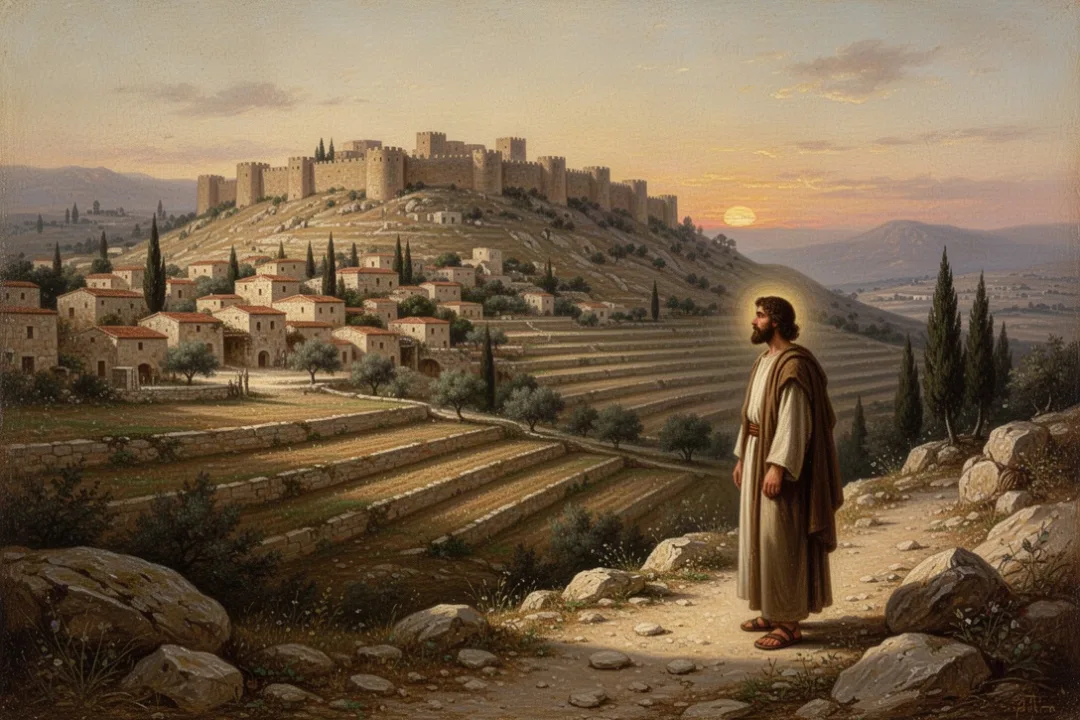
Micah was a prophet from Moresheth, a town in Judah’s southwestern region, near the Philistine border. His rural background may help explain why the book pays close attention to land, homes, fields, farms, and the treatment of ordinary families. Micah speaks as someone who understands how political decisions affect people outside the capital.
The opening identifies Micah’s prophetic ministry during the reigns of Jotham, Ahaz, and Hezekiah, kings of Judah. These kings ruled during the eighth century BCE, a period when the Assyrian Empire was expanding aggressively across the ancient Near East. Micah’s ministry therefore took place during political danger, military pressure, and major social change.
The northern kingdom of Israel, often represented by its capital Samaria, faced destruction by Assyria during this era. Judah, represented by Jerusalem, also came under threat. Micah interprets these events not merely as changes in international power but as signs of God’s response to covenant unfaithfulness, injustice, idolatry, and corrupt leadership.
Micah’s message reaches both the northern kingdom and the southern kingdom of Judah. The prophet names Samaria and Jerusalem together because both capitals have become centers of religious and political corruption. Although the northern kingdom would fall first, Judah could not assume that Jerusalem’s temple or royal status would protect it from accountability.
Historical setting: Micah speaks during the Assyrian crisis, but his concerns are not limited to ancient warfare. The book asks how communities use power, wealth, religion, and law—and whether leaders protect or exploit the people entrusted to them.
The book does not present Micah as a detached commentator. He grieves over the consequences of sin and identifies with the pain of the people. In Micah 1, he describes mourning for the coming disaster; later, he expresses anguish over the moral collapse around him. His ministry combines moral courage with genuine compassion.
How the book of Micah is organized
Micah contains seven chapters and alternates between warnings of judgment and promises of restoration. The transitions can feel abrupt, but the overall movement is coherent: God exposes wrongdoing, announces consequences, preserves hope, and calls the people to renewed faithfulness.
A useful way to read the book is to see three broad movements. Chapters 1–2 emphasize coming judgment and the abuse of land and power. Chapters 3–5 focus on corrupt leaders, future restoration, and the promise of a ruler from Bethlehem. Chapters 6–7 present a covenant lawsuit, a call to faithful living, and a final expression of confidence in God’s mercy.
Micah 1–2: Judgment against Samaria and Jerusalem, especially for idolatry, land theft, and oppression.
Micah 3–5: Condemnation of rulers and prophets, followed by visions of Zion’s future peace and a coming shepherd-ruler.
Micah 6–7: God’s case against the people, the call to justice and humility, confession of communal failure, and hope in divine forgiveness.
Micah 1–2: Judgment reaches the capital cities
Chapter 1 opens with a summons for the nations and the earth to hear God’s case against Samaria and Jerusalem. The prophet portrays God as coming from his dwelling place to confront the high places and centers of false worship. Samaria’s destruction is described as the result of its rebellion, while Jerusalem is warned that the same kind of unfaithfulness will bring devastation there.
The chapter includes a series of place names, many of which create word associations in Hebrew. These details can be difficult to reproduce in English, but they communicate a striking idea: disaster is moving through the land town by town. The prophet’s language makes national judgment feel local and personal.
Micah 2 turns from idolatry to economic exploitation. The powerful lie awake planning how to seize fields, houses, and family inheritances. At sunrise, they carry out those schemes because they have the authority and influence to do so. The sin is not abstract greed; it is the deliberate removal of people from the land that sustains them.
The chapter also criticizes false prophets who promise comfort when the people want to hear reassurance. Micah insists that religious speech must not be shaped by the audience’s appetite or by financial advantage. Yet the section ends with a small but significant promise that God will gather a remnant and lead them like a flock, preserving a future beyond judgment.
Micah 3–5: Corrupt leadership and the hope of a righteous ruler
Chapter 3 addresses the nation’s leaders, priests, and prophets. Micah uses disturbing imagery to show how rulers treat the people as sources of profit rather than neighbors deserving protection. Leaders accept bribes, priests teach for payment, and prophets offer favorable messages when they are compensated.
These leaders still claim that God is with them. Micah exposes the contradiction between religious confidence and social injustice. God’s presence cannot be used as a guarantee of safety while the powerful harm the vulnerable. Because Jerusalem has become corrupt, the prophet announces that even Zion and the temple mount will face ruin.
Micah 4 changes the tone sharply. It looks beyond immediate destruction toward a future in which the mountain of the Lord becomes a place of instruction for the nations. People learn God’s ways, and disputes are settled without the constant preparation for war. The familiar images of transforming weapons into farming tools and living securely under one’s own vine and fig tree express a world of peace, stability, and productive labor.
This vision does not erase the reality of judgment. Micah 4 also speaks of exile, pain, and the need for deliverance. Hope is presented as something God brings through suffering rather than as a denial that suffering exists. The people may be scattered, but they will not be abandoned.
Micah 5 focuses on a small and seemingly unimportant place: Bethlehem Ephrathah. From there, a ruler for Israel will arise. The passage connects this future ruler with David’s hometown and describes him as a shepherd who will stand in the Lord’s strength. The emphasis falls on humble origins, secure leadership, and the gathering of a restored people.
Christians commonly read Micah 5:2 in connection with Jesus’ birth because the Gospel of Matthew refers to Bethlehem when discussing the Messiah’s birthplace. Micah itself speaks within the hope of Israel’s restoration, while the New Testament applies that hope to Jesus. The passage should therefore be understood first in its prophetic setting and then considered within the broader Christian interpretation of Christ.
Chapter 5 also promises deliverance from enemies and the removal of objects associated with false security, including military strength and idolatry. The restored community will not depend on weapons, magic, or rival gods. Its security will come from the Lord’s presence and rule.
Micah 6–7: God’s case, faithful living, and mercy
Chapter 6 presents one of the Bible’s clearest courtroom scenes. Mountains and hills are called as witnesses while God brings a case against his people. The Lord recalls acts of rescue and protection, asking what more could have been done to show covenant faithfulness.
The people respond by asking what offerings might satisfy God. They move from ordinary sacrifices to increasingly extravagant possibilities, even imagining the sacrifice of a firstborn child. Micah rejects the idea that God can be manipulated through religious performance. The required response is not a payment but a life shaped by justice, faithful love, and humility before God.
The final chapter describes a society in which trust has collapsed. Honest and faithful people seem scarce, officials pursue personal gain, and even close relationships become unreliable. Micah does not minimize this breakdown, but he refuses to let it define the last word.
The prophet waits for God and expresses confidence that the Lord will hear him. He acknowledges sin and accepts God’s discipline while expecting eventual restoration. The book ends by praising God as one who forgives wrongdoing, shows compassion, and remains faithful to promises made to the ancestors.
“He has told you, O mortal, what is good” (Micah 6:8).
This short quotation is often separated from its setting, but Micah 6:8 is part of a larger confrontation with hollow religion and public injustice. The verse does not reduce faith to generic kindness. It calls for a life in which worship, ethics, relationships, and humility before God belong together.
What are the main themes in Micah?
God judges injustice and abuse of power
Micah repeatedly connects sin with the way people treat one another. The book condemns land theft, bribery, dishonest leadership, violent oppression, exploitation, and the use of religion to protect privilege. Its focus is especially sharp toward people who have enough power to shape laws, markets, courts, and public worship.
The prophet does not treat poverty as an unfortunate side effect of prosperity. When wealthy landowners take homes and fields from families, Micah calls it a moral offense. When officials make decisions for payment, he identifies corruption. When prophets tell people what they want to hear because they are rewarded, he exposes religious manipulation.
That emphasis challenges readers to ask more than whether they personally avoid obvious wrongdoing. Micah also asks whether institutions, leaders, and communities are organized around fairness and protection or around the advantage of those who already possess influence.
Religious ritual cannot replace obedience
Micah does not attack worship itself. Instead, he rejects worship that is separated from justice. Sacrifices, prayers, religious titles, and public claims about God cannot excuse exploitation. The book presents a sharp distinction between religious appearance and covenant faithfulness.
Micah 6:6–8 makes this point through a series of questions about offerings. The people imagine that a larger or more costly ritual might solve their problem, but God requires transformed conduct. Justice means treating people fairly; faithful love means practicing committed compassion; humility means recognizing dependence on God rather than treating religion as a way to control him.
God holds leaders to a higher responsibility
Rulers, priests, and prophets receive particularly strong criticism because their decisions affect many people. Micah expects leaders to know justice and to use authority for the good of the community. Instead, the leaders consume the people they should serve and then assume divine protection will remain available to them.
This theme does not mean that ordinary people have no responsibility. The entire community participates in the covenant and shares responsibility for faithfulness. Still, Micah gives special attention to those who can make decisions, control resources, influence public opinion, or shape religious teaching.
Judgment and hope belong together
Micah’s warnings are severe, but the book is not simply a record of destruction. A remnant survives, God gathers scattered people, Jerusalem receives a future promise, and a shepherd-ruler brings security. Hope is not based on the people’s moral achievement. It rests on God’s commitment to restore and forgive.
The relationship between judgment and hope matters. If hope ignores wrongdoing, it becomes empty reassurance. If judgment excludes mercy, it leaves no room for renewal. Micah holds both together: God confronts sin seriously, yet God’s final purpose includes healing, gathering, peace, and restored fellowship.
God’s mercy is stronger than human failure
Micah 7 ends with one of the Old Testament’s most memorable portraits of divine mercy. God is described as forgiving sin, delighting in steadfast love, and casting wrongdoing away. The prophet appeals to God’s faithfulness to Jacob and Abraham, showing that hope depends on the character and promises of God.
Mercy in Micah is not sentimental permission to continue harming others. It follows confession, accountability, and the recognition that the people have failed. Divine compassion creates the possibility of a new relationship with God and a changed community.
How Micah speaks about justice, worship, and daily life
Micah’s call to “do justice, love kindness, and walk humbly with your God” is brief, but each part carries practical weight. Doing justice suggests action rather than private agreement with good principles. It involves defending fair treatment, refusing dishonest gain, and addressing systems or habits that place burdens on the vulnerable.
Loving kindness goes beyond occasional generosity. The underlying idea includes loyal, dependable care within relationships. It describes the kind of compassion that remains present when helping others is inconvenient, costly, or unlikely to bring recognition.
Walking humbly with God describes an ongoing posture rather than a single religious experience. Humility recognizes that God’s standards—not personal status, wealth, certainty, or reputation—are the measure of faithfulness. It also prevents justice from becoming a platform for pride or self-righteousness.
Examine how money, property, and influence affect the people around you.
Refuse to treat worship as a substitute for honesty, restitution, or care for neighbors.
Pay attention to leaders whose decisions affect people with less power.
Practice dependable compassion, especially when no public credit follows.
Receive correction without assuming that religious identity makes accountability unnecessary.
Micah also speaks to the way communities respond to public failure. The book does not recommend pretending that corruption is harmless or that peace means avoiding difficult truth. At the same time, it does not encourage despair. Honest grief can coexist with patient hope, and accountability can coexist with the expectation that God restores what sin has damaged.
A helpful reading question: Whenever Micah mentions worship, ask how that worship affects treatment of neighbors. Whenever it mentions judgment, ask what kind of injustice prompted it. Whenever it promises hope, ask what kind of community God is restoring.
Why Micah matters for Christian readers
Micah matters because it joins personal faith to public responsibility. A reader cannot move through the book and treat religion as only a private matter. The prophet connects devotion to land, housing, leadership, courts, economic behavior, family trust, and national policy.
For Christians, Micah is also significant because it contributes to the biblical expectation of a coming ruler from Bethlehem. Matthew’s Gospel identifies Bethlehem as the birthplace of Jesus, inviting readers to see Jesus within the prophetic hope of a shepherd-king who gathers and protects God’s people.
That connection should not cause readers to overlook Micah’s original social message. The promised ruler is not merely a figure in a prediction about birthplace. Micah describes the kind of rule people need: leadership that brings security, gathers the scattered, ends dependence on false powers, and reflects God’s shepherding care.
The book also challenges churches and Christian organizations to examine whether their public faith is matched by the treatment of employees, neighbors, immigrants, the poor, families under pressure, and people without political influence. Micah’s standard is not satisfied by correct statements if the community’s practices depend on exploitation.
At a personal level, Micah offers a way to hold together conviction and humility. You can name injustice clearly without imagining that you are beyond correction. You can trust God’s mercy without treating sin lightly. You can grieve social breakdown while continuing to seek faithful action.
Reading Micah well means allowing its accusations to reach beyond obviously corrupt people. The book asks where you benefit from unfair arrangements, where you accept convenient religious assurances, and where your own habits may contradict your stated beliefs. It also invites you to wait for God’s restoration rather than measuring the future only by present failure.
What to remember when reading the book of Micah
Micah is a compact prophetic book with a wide range of concerns. It speaks about imperial threat, national collapse, local exploitation, corrupt religion, future peace, messianic hope, human failure, and divine forgiveness. Its message becomes clearer when these subjects are read together rather than separated into isolated inspirational sayings.
Several ideas provide a reliable guide:
God sees the vulnerable. Land theft and oppression are not hidden from divine judgment, even when powerful people control public institutions.
Leaders are accountable. Political, religious, and economic authority creates responsibility rather than immunity.
Worship must produce faithfulness. Religious activity cannot compensate for cruelty, dishonesty, or exploitation.
Judgment is real but not the final word. God confronts sin while preserving a remnant and promising renewal.
Hope centers on God’s character. Restoration depends on divine mercy and faithfulness, not on human strength alone.
If you read the book in one sitting, notice its changing voices and images: the Lord coming to judge, the prophet mourning, leaders exploiting the people, nations streaming toward peace, a ruler emerging from Bethlehem, a courtroom exposing covenant failure, and a prophet trusting God amid social collapse.
Those movements explain why Micah remains both unsettling and hopeful. It refuses to comfort people who use religion to excuse injustice, but it comforts people who fear that corruption and violence have made restoration impossible. The book’s final confidence is that God remains faithful, merciful, and capable of gathering a broken people into a just and peaceful future.
Frequently asked questions
What is the main message of the book of Micah?
Micah’s main message is that God judges injustice, corrupt leadership, empty worship, and oppression, while offering hope of restoration and mercy. The book calls people to practice justice, love faithful kindness, and walk humbly with God. It also points toward a future ruler from Bethlehem who will shepherd and secure God’s restored people.
What is the most famous verse in Micah?
Micah 6:8 is the best-known passage. It teaches that God requires people to do justice, love kindness, and walk humbly with him. The statement appears in a courtroom scene where the people wonder whether larger sacrifices could repair their relationship with God. Micah answers that religious performance cannot replace faithful conduct.
Why is Bethlehem important in the book of Micah?
Micah 5 identifies Bethlehem Ephrathah as the place from which a future ruler of Israel will come. Bethlehem was associated with David’s family, so the passage evokes hope for a renewed Davidic shepherd-king. Matthew later connects this prophecy with Jesus’ birthplace, while Micah’s original context centers on Israel’s restoration and security.
How many chapters are in Micah?
The book of Micah has seven chapters. Chapters 1 and 2 focus mainly on judgment and oppression; chapters 3 through 5 address corrupt leadership and future restoration; chapters 6 and 7 present God’s case against the people, the call to faithful living, and confidence in divine mercy.






Leave a Reply