If you have ever wondered why religious routines can continue while faith grows cold, Malachi speaks directly to that tension. The book addresses a community that has returned from exile, rebuilt its temple, and resumed worship, yet has begun asking whether serving God still matters. Its answer is both challenging and hopeful: God sees unfaithfulness, but he has not abandoned his covenant people.
Malachi is the final book in the Old Testament in the Christian Bible and the last of the Twelve Minor Prophets in the Hebrew Bible. The name may mean “my messenger”, although some readers understand it as a title rather than a personal name. The book is a short collection of prophetic disputes in which God exposes careless worship, corrupt leadership, broken marriages, injustice, and spiritual indifference.
Malachi addresses a discouraged community after the exile
Malachi speaks to the people of Judah after the Babylonian exile. Jerusalem and the temple had been restored, but the glorious future many expected had not fully appeared. The community was back in its land, yet it faced economic hardship, disappointment, and the temptation to wonder whether God still cared about them.
That background explains the book’s repeated pattern of questions and answers. God makes a charge, and the people respond with a skeptical question such as, “How have we done that?” The question does not always show honest curiosity. Often it reveals denial, spiritual numbness, or a refusal to recognize how ordinary choices have violated the covenant.
The book’s opening exchange is especially significant. God declares his love for Jacob, representing Israel, and the people ask how that love has been shown. Instead of offering an abstract explanation, the prophet points to the difference between Jacob and Esau, the ancestor of Edom. The point is that God’s continuing commitment to Israel is visible in the nation’s preservation and covenant history.
The central tension: Malachi is not mainly about people who have stopped practicing religion. It is about people who still perform religious duties while treating God as unworthy of their best devotion.
Malachi confronts careless worship and defective offerings
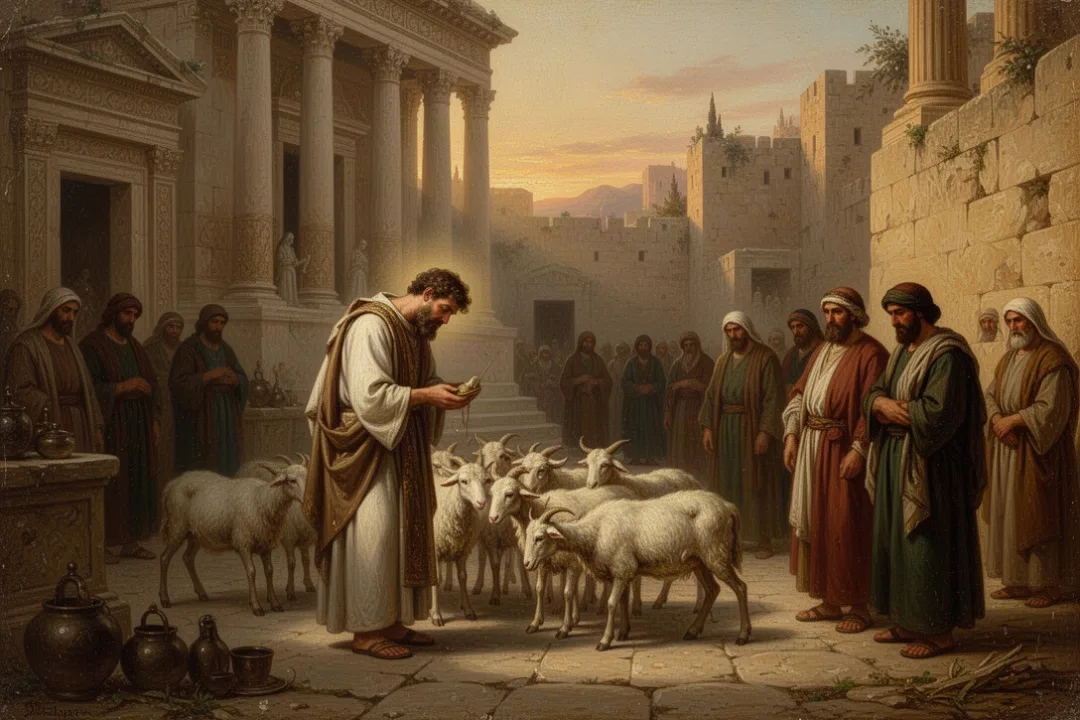
One of the book’s strongest themes is the connection between the quality of worship and the worshiper’s view of God. The priests have accepted animals that are blind, lame, or sick for sacrifice. These offerings may technically fulfill a religious obligation, but they communicate contempt: the people are willing to give God what they would not present to a respected governor or ruler.
The issue is not that God needs animals or depends on human gifts. Sacrifice was meant to express honor, repentance, thanksgiving, and covenant fellowship. When people deliberately brought inferior offerings while keeping the healthy animals for themselves, their behavior exposed a deeper conviction that worship could be handled with minimal effort.
Malachi therefore criticizes both the worshipers and the priests. The priests should have guarded the holiness of the altar and taught the people what faithful worship required. Instead, they have treated their service as an unpleasant burden. Their words and actions have made worship seem contemptible rather than worthy of reverence.
The prophet’s language also reaches beyond animal sacrifices. Worship becomes distorted whenever people give God their leftovers while protecting what they value most. A person may attend services, recite prayers, or maintain religious habits and still offer divided attention, unwilling obedience, or merely external performance.
Malachi does not present excellence as a way to earn God’s love. God’s love comes first in the book. The proper response to that love is wholehearted faithfulness, not a calculated attempt to satisfy the lowest possible requirement.
The priests are accountable for teaching truth and protecting worship
Malachi gives unusual attention to the responsibilities of religious leaders. The covenant with Levi represents a calling to teach God’s law faithfully, preserve knowledge, and help people live rightly. The priests have failed because their instruction has been unreliable and their conduct has caused people to stumble.
According to the prophet, leadership is not merely a position of honor. It carries a duty to represent God accurately. When leaders make worship casual, excuse wrongdoing, or distort moral teaching, the damage spreads through the whole community.
The warning is severe because the priests have treated sacred responsibilities as personal privileges. They want the status connected with the altar without accepting the discipline required to serve it. Malachi insists that spiritual authority brings accountability, especially when people depend on leaders for instruction.
This theme remains relevant to anyone who teaches, leads, counsels, or influences others in a faith community. Malachi does not encourage suspicion toward every leader, but it does reject blind loyalty. A leader’s title, experience, or public reputation cannot replace truthful teaching and faithful character.
Leaders must teach clearly: people should not be left to guess what obedience means.
Leaders must live consistently: private conduct and public instruction cannot be treated as separate lives.
Leaders must honor God rather than status: ministry is service, not a way to secure admiration.
Leaders must accept correction: accountability protects both the community and the integrity of worship.
Malachi connects covenant faithfulness with marriage
The book next addresses men in Judah who have been unfaithful to their wives and have pursued foreign marriages in a way that violates their covenant commitments. This passage is sometimes reduced to a slogan about divorce, but its immediate concern is treachery within marriage and the community’s disregard for covenant loyalty.
Malachi describes marriage as a relationship involving shared spiritual and moral responsibility. The people have acted violently against their spouses and then come to the altar expecting God to accept their worship. The prophet shows that religious activity cannot cancel out betrayal at home.
The well-known statement that God hates divorce appears within this larger rebuke. The emphasis is not permission to shame every divorced person or to ignore situations involving abuse and danger. The passage condemns faithless, harmful treatment and the attempt to use worship as a cover for injustice.
Malachi’s argument is direct: devotion to God cannot be separated from treatment of other people. A person who prays publicly but deceives, abandons, or harms a spouse is not demonstrating mature faith. Covenant language requires loyalty in both worship and ordinary relationships.
The reference to “the one” or “godly offspring” in this section has received different interpretations. In context, the prophet is concerned with preserving a faithful community shaped by covenant commitment. The text should therefore be read carefully, without turning it into a simplistic rule that ignores historical context, personal safety, or the complexities of marriage.
Malachi condemns injustice against vulnerable people
Malachi expands his criticism from the home to the wider community. God announces that he will come as a witness against those who practice sorcery, adultery, false testimony, and exploitation. The list includes people who oppress hired workers, widows, orphans, and immigrants rather than treating them fairly.
This is a crucial part of the book’s message. Spiritual renewal is not limited to better ceremonies or more serious religious language. It must change the way people exercise power and handle money. The vulnerable are often unable to defend themselves through social influence, so God identifies himself as their judge and defender.
The community appears to have asked where God’s justice is, yet some of its own members are contributing to injustice. Malachi exposes the contradiction: people want God to judge evil in general while refusing to confront the evil they benefit from or overlook.
Justice in Malachi includes honest wages, truthful testimony, sexual integrity, and protection from exploitation. These concerns are not side issues attached to worship. They reveal whether worship has shaped a person’s understanding of God’s character.
A practical test of worship: Ask not only what happens during a religious gathering, but also whether your decisions protect the vulnerable, keep promises, tell the truth, and treat workers and family members with dignity.
“You have wearied the Lord” reveals spiritual cynicism
Another dispute centers on the people’s claim that evildoers are good in God’s sight and that God seems pleased with them. They are frustrated by the apparent success of wrongdoers and the delay of divine judgment. Their complaint resembles a question many people ask: if God is just, why do dishonest or cruel people sometimes prosper?
Malachi does not dismiss the question, but he challenges the people’s conclusion. Their impatience has become a way of accusing God of approving evil. Rather than trusting God’s justice, they redefine good and evil according to what seems immediately successful.
The book answers by promising that God’s messenger will prepare the way for the Lord’s coming. The arrival will not be a comfortable confirmation of everyone’s religious expectations. It will be a refining and purifying event, especially for those who serve at the temple.
Malachi presents divine judgment as both purification and punishment. A refiner’s fire removes impurities from precious metal, while cleansing agents remove stains. The image suggests that God will restore genuine worship, but that restoration will expose and remove what is corrupt.
For those who have suffered injustice, this promise offers hope that evil is not invisible or permanent. For those who participate in injustice, it is a warning that outward religious identity will not shield them from examination. The coming of God means that hidden motives, dishonest practices, and neglected responsibilities will be brought into the light.
The book calls people to return to God through obedience
Malachi urges the people to return to God, and God promises to respond by drawing near to them. The call is relational, but it is not vague. The people ask how they should return, and the answer points to their failure to bring the required tithes and offerings.
The agricultural tithe supported the worship system and those who served in it, including the Levites. Because the people withheld what belonged to God, the temple storehouses lacked sufficient provision. The problem was not simply an accounting error; it represented broken trust and misplaced priorities.
Malachi challenges the community to bring the full tithe and to see whether God will provide blessing. This passage is sometimes used as a guarantee that every donor will become wealthy. That interpretation goes beyond the book’s setting and ignores the communal purpose of the tithe.
In Malachi, the promise concerns God’s care for the covenant community, including adequate provision for worship and agricultural prosperity in the land. It is not a formula for manipulating God through financial contributions. Giving is a response to God’s ownership and faithfulness, not a purchase of personal success.
Faithful giving today should likewise be practiced with integrity, generosity, and freedom from coercion. Malachi supports responsible support of worship and people in need, but it should not be used to pressure vulnerable people into donations they cannot afford.
Common mistakes when applying Malachi’s teaching
Using the book as a prosperity guarantee: Malachi’s promise is not a contract promising luxury in exchange for donations.
Reducing worship to money: Giving is one expression of faithfulness, alongside justice, truth, family loyalty, and sincere devotion.
Ignoring the historical setting: The original audience lived within Israel’s temple and agricultural system, so every detail cannot be transferred mechanically.
Blaming victims of hardship: Economic suffering is not proof that an individual has failed to tithe or obey.
Separating religious practice from ethics: Malachi repeatedly treats exploitation and dishonesty as evidence of spiritual failure.
Malachi distinguishes the proud from those who honor God
Near the end, the book contrasts people who speak against God with those who fear him. The arrogant claim that serving God is useless because the proud seem to prosper and wrongdoers appear to escape judgment. Their words reflect a practical atheism: they may acknowledge God’s existence, but they live as if his evaluation does not matter.
In contrast, those who fear God speak with one another, and the book says that God listens. A written record is associated with those who honor his name. The image communicates divine attention and remembrance: faithful people may feel overlooked, but God does not confuse their quiet obedience with insignificance.
God promises to recognize these people as his treasured possession. This does not mean they are flawless or immune from difficulty. It means their reverence and faithfulness matter to God even when public success seems to belong to the arrogant.
The contrast also shows that Malachi is not only a book of rebuke. It preserves a word of assurance for people who are trying to remain faithful in an unfaithful environment. Their worship, conversations, and choices are seen by God.
The closing promise points to judgment, healing, and restoration
Malachi ends by describing a coming “day” that will burn like a furnace for the arrogant and evildoers. The image is one of decisive judgment. Evil may appear secure for a time, but it does not have the final word.
For those who fear God’s name, the same day is associated with healing and freedom, pictured through the rising of the sun with healing in its rays. The contrast is deliberate: the day that destroys evil also brings relief to the faithful.
The book closes with a reference to Moses and to Elijah before the great and fearful day of the Lord. Moses represents the Torah, or God’s instruction, while Elijah recalls the prophetic call to turn hearts back to God. The final appeal is therefore both ethical and covenantal: remember what God has taught, and return to faithful relationship before judgment arrives.
In the Christian Bible, the reference to a coming messenger is often connected with John the Baptist, based on how the Gospels interpret the passage. Jewish and Christian readers may place different emphasis on the identity and role of the messenger, but the shared theme is clear: God prepares his people for decisive intervention by calling them to repentance.
The ending is intentionally open. Malachi does not describe every detail of what comes next. It leaves the reader waiting for God’s promised action while making the required response unmistakable: honor God, practice justice, remain faithful, and take divine judgment seriously.
What Malachi means for everyday faith
Malachi speaks to people who have grown accustomed to religious habits. Its challenge is not simply to attend more often or use more serious language. It asks whether your behavior reflects the value you claim God has in your life.
The book also refuses to let personal spirituality become an escape from social responsibility. A person cannot claim to honor God while cheating workers, exploiting outsiders, betraying a spouse, or dismissing those who need protection. Faithfulness is visible in relationships, financial decisions, leadership, speech, and the way you respond when no immediate reward appears.
Malachi offers several questions for self-examination:
Do your religious practices express gratitude and trust, or do they merely satisfy a minimum requirement?
Are you giving God your best attention, or only what remains after other priorities are protected?
Do your words about God agree with the way you treat family members, employees, neighbors, and strangers?
Are you using disappointment with God’s timing as an excuse for cynicism or disobedience?
When you receive correction, do you become defensive, or do you allow it to produce genuine change?
Do you give responsibly and generously without treating money as a way to control God?
The book’s message can be summarized in a single idea: God desires covenant faithfulness rather than empty religious performance. He confronts hypocrisy because worship matters, justice matters, and the people who bear his name matter.
At the same time, Malachi gives hope to those who feel disappointed or forgotten. God’s delay is not proof of indifference. He sees sincere worship, remembers those who honor him, and promises a future in which injustice will be judged and faithful people will experience healing.
So, what is the book of Malachi about? It is about God calling a spiritually tired community back to reverent worship, honest leadership, faithful relationships, economic integrity, and confidence in his coming justice. Its final message is demanding because it concerns the whole of life, but it is also reassuring: God has not stopped caring, and he has not stopped calling his people to return.
Frequently asked questions
Who wrote the book of Malachi?
The book identifies its message as “the word of the Lord” delivered through Malachi, but it gives little personal information about the prophet. The name may mean “my messenger,” so some scholars view it as a personal name and others as a descriptive title. The book’s exact author and date cannot be established with certainty, though its setting is clearly postexilic Judah.
Why is Malachi the last book in the Christian Old Testament?
Malachi closes the Christian Old Testament because its final promises look ahead to a coming messenger, divine judgment, and restoration. In the Hebrew Bible, Malachi is the final book of the Twelve Minor Prophets, a collection arranged together. Its position gives its call to covenant faithfulness and expectation of God’s future action a concluding role.
Does Malachi teach that Christians must give exactly ten percent?
Malachi discusses tithes within Israel’s temple and agricultural system, where offerings supported worship and the Levites. The passage should not be treated as a guaranteed wealth formula or a tool for pressuring people. Christian traditions differ on how Old Testament tithing applies today, but generosity, responsible stewardship, and care for others remain widely recognized principles.
What does “the day of the Lord” mean in Malachi?
It refers to a future time when God decisively judges evil and vindicates those who honor him. Malachi uses contrasting images: the day is destructive for the arrogant and healing for the faithful. The phrase emphasizes that present appearances do not determine the final outcome; God’s justice will ultimately expose wrongdoing and restore what is right.











Leave a Reply