Apostle Mathias: Biography, Teachings, and Legacy — The Definitive Guide
Apostle Mathias: Biography, Teachings, and Legacy — The Definitive Guide
The figure commonly called Apostle Matthias occupies a unique place in Christian history. As the intentional replacement for Judas Iscariot in the circle of the Twelve, Matthias steps into a role defined more by purpose than by abundant biographical detail. This article offers a comprehensive overview of Matthias the Apostle, addressing his biography, teachings, and legacy, while carefully separating canonical information from later traditions. Whether you encounter him in biblical studies, liturgical calendars, or historical works, Matthias embodies a thread of continuity in the early Christian witness—a witness that anchored the church in mission, repentance, and faith in the risen Christ.
Biographical material about Matthias the Apostle is sparse in the canonical New Testament. What we know with confidence comes from the Book of Acts and the earlier summaries of the apostolic narrative. Beyond that, the details of his life are shrouded in tradition, legend, and later church memory. This section lays out what the biblical record says, what the early church tradition claimed, and how scholars approach these two sources.
Early life and the selection to the Twelve
The most firmly established moment in the biography of Matthias occurs in Acts 1, shortly after the Ascension of Jesus. The apostolic company, numbering about 120 disciples, gathers in Jerusalem and realizes that Judas Iscariot, who betrayed Jesus, must be replaced so that the group can fulfill its witness “to the ends of the earth.” Two men emerge from the broader circle: Joseph called Barsabbas (also known as Justus) and Matthias.
According to the biblical account, the process for selecting the replacement was both practical and devotional. The candidates had to have been witnesses of Jesus’ ministry from the baptism of John until the Resurrection, thereby ensuring a continuity of witness to the Resurrection. The group proposed these two men, arranged them as options, and then, after prayer, cast lots. The lot fell on Matthias, and he was numbered with the Eleven as a witness of Jesus’ resurrection. This decisive moment was not merely about filling a seat but about preserving apostolic witness and continuity with the mission of Jesus.
Scholars often highlight that the name Matthias itself is linked to the Hebrew name Mattityahu, meaning “gift of Yahweh.” Within the biblical account, this selection is a canonical event that anchors Matthias within the early apostolic framework and the ongoing life of the church founded on the Resurrection.
Life after selection: missionary activity and early church presence
After his selection, the Bible provides no detailed narrative about the missionary travels or the specific communities Matthias visited. The absence of a narrative in Scripture has led to a rich tapestry of later tradition in which Matthias is associated with various regions and tasks. Early Christian writers and later hagiographies offer a spectrum of claims, often localized to particular regions or churches. This is typical for many of the lesser-documented apostles, whose memory was preserved through liturgy, legends, and local worship rather than in a single, unified biographical text.
What is widely accepted in historical discussion is that Matthias continued the apostolic witness in the wake of Judas’ betrayal and that his life was oriented toward spreading the message of Jesus in a way consistent with the rest of the apostolic generation. The available sources emphasize his role as a companion who carried forward the mission entrusted to the Twelve, rather than as a founder of a distinct theological school or a controversial figure.
Death and martyrdom: traditions and uncertainties
One of the most debated aspects of Matthias’ biography is his death. The canonical texts do not record the circumstances of his martyrdom or even his death. Consequently, a range of later traditions emerged, each with its own geographical focus and martyrdom account. These traditions should be understood as part of the broader impulse in early and medieval Christianity to locate the memory of the apostles within concrete landscapes and communities. They reflect the significance of the apostolic witness for local churches and their claim to continuity with the first followers of Christ.
Caucasus/Colchis tradition: Some medieval legends place Matthias in the Caucasus region, where he is said to have preached and suffered martyrdom. In certain versions, he is believed to have been martyred in the city of Dioscurias or in nearby lands, contributing to the Christian witness in a borderland between the Roman world and the Persians.
Eastern apostolic tradition: Other accounts associate Matthias with Syria, Armenia, or Mesopotamia, continuing the work of evangelization in cities and villages where the church was taking root in the early centuries.
Western legends: In Western medieval literature, variations suggest martyrdom by beheading, stabbing, or other forms of execution, often tied to localized hagiographies and the desire to honor the apostle with a dramatic end in a known place.
Canonical caution: It is important to note that none of these death accounts are confirmed by the New Testament or by contemporary historical records. When studying these traditions, scholars typically distinguish between early patristic testimony, later medieval legend, and the core biblical narrative to avoid conflating history with devotional memory.
What can be stated with a higher degree of confidence is that the memory of Matthias served to strengthen the sense of apostolic continuity after Judas’ betrayal and to reinforce the sense of mission among the early Christian communities. Whether in acts of worship, missionary itineraries, or the art of memory, Matthias’ presence signaled that the apostolic witness was not a static relic but a living tradition carried forward by faithful witnesses.
Teachings of the Apostle Matthias
Direct, verbatim teachings from Matthias are not preserved in canonical texts. He does not issue sustained sermons in the New Testament, and no letters are attributed to him that have survived into the canon. Nevertheless, the figure of the apostle who replaced Judas stands in the stream of apostolic preaching. The following sections draw on what can be reasonably inferred from the Acts narrative (where Matthias appears) and from the shared doctrinal core of the earliest apostolic communities.
As a member of the Twelve, Matthias would have participated in the core evangelical message that defined early Christianity: faith in Jesus as the Messiah, repentance, baptism, and the presence of the Holy Spirit. While the Book of Acts emphasizes Pentecostal empowerment for the entire church, Matthias’ role would have included:
Witness to the Resurrection: The central claim of early Christian preaching is that Jesus rose from the dead, confirming His identity as the Son of God and the source of eternal life for believers.
Baptism and initiation: In line with the early Christian pattern, Matthias would have guided new converts into the faith through baptism in the name of Jesus, signaling a new life in Christ.
Repentance and conversion: The Apostolic message consistently called people to turn from sin and to commit to a life shaped by the gospel.
Empowerment by the Spirit: Although Acts highlights the broader Pentecost experience, the apostolic circle understood that the Spirit equips believers for mission and service, a theme that would have influenced Matthias’ own ministry and the communities he touched.
In this sense, the theological profile of Matthias aligns with the wider apostolic witness: a proclamation centered on Jesus, the anticipation of God’s kingdom, and a life of obedience shaped by the Spirit. Even without a authored treatise, Matthias stands as a living symbol of the ongoing mission entrusted to the earliest church.
Writings and liturgical presence
There are no canonical writings attributed to Matthias that have survived to the present day. This absence is not unusual for many of the original apostles whose contributions were primarily oral, liturgical, and communal rather than textual in the sense of formal letters. Nevertheless, Matthias’ memory is preserved in early Christian liturgy, feast days, and iconography. The absence of a written corpus does not diminish the credibility of his role; rather, it highlights a form of apostolic authority that rests on eyewitness testimony, apostolic succession, and communal memory.
Historical and theological scholars often emphasize that the apostle’s significance lies in his function within the apostolic circle: he represents the continuity of witness after Judas and the universal reach of the gospel—an emissary who embodies the church’s fidelity to the risen Christ and to the mission entrusted to the Twelve.
Legacy of the Apostle Matthias
The legacy of Matthias the Apostle extends beyond the boundaries of any single tradition or text. He becomes a touchstone for understanding how the early church remembered and organized its mission, how it celebrated its leaders, and how it connected the generation of the Twelve to subsequent Christian history. The following sections explore his enduring impact on liturgy, art, theology, and communal identity.
Apostolic succession and witness: Matthias’ entry into the Twelve helped secure a sense of continuity with Jesus’ ministry and the first believers. This continuity contributed to the later doctrine of apostolic succession in many Christian traditions, where the authority of the church is linked back to the original witnesses of Christ.
Liturgical remembrance: Matthias is remembered in the church year through feast days and commemoration in various Christian liturgical calendars. His memory reinforces the practice of honoring the apostles and reaffirming the mission they entrusted to the church.
Patronage and local veneration: Across different Christian communities, Matthias has been revered as a patron, guide, and protector for certain locales or crafts, though the specifics vary by tradition. This reflects how local churches wove the apostolic memory into their own cultural and spiritual landscapes.
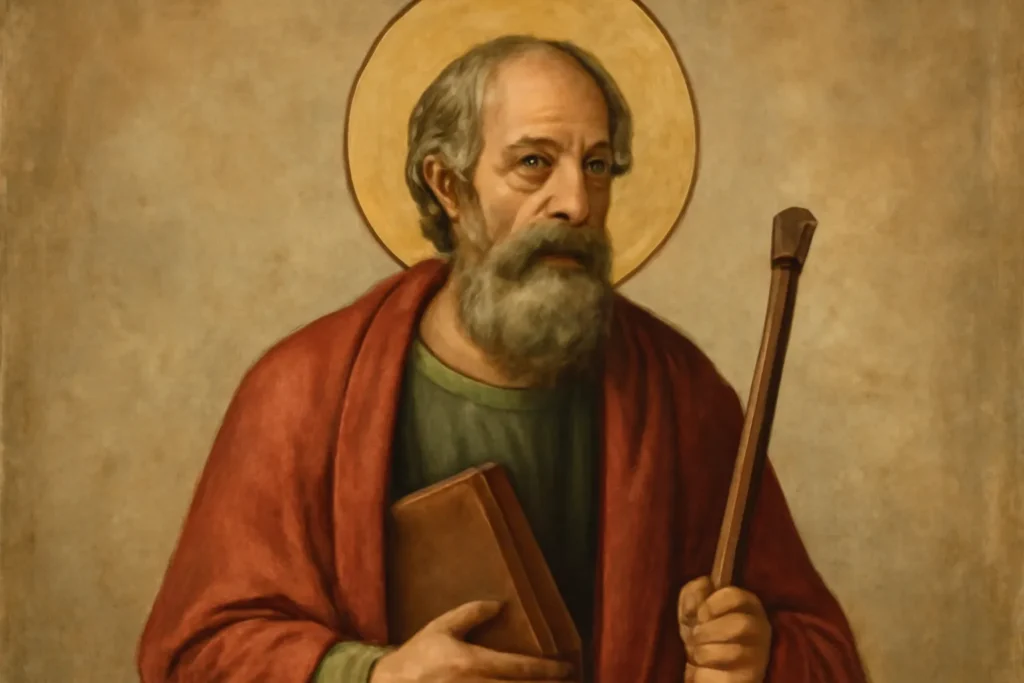
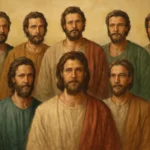
Iconography and devotional life: In Christian art, Matthias appears among the Twelve in many medieval and Renaissance depictions. While the symbolic attributes of each apostle vary by region, Matthias’ presence served to remind believers of the continuity of witness and the universality of the gospel mission.
Influence on theology and ecclesial self-understanding
The theology of Matthias—as with the other apostles—shaped how the church conceptualized its purpose: to bear witness to the crucified and risen Christ, to preach repentance and baptism, and to live under the empowerment of the Holy Spirit. Although he is not credited with a distinctive doctrinal treatise, his example contributed to the broader ecclesial self-understanding of early Christian communities: that the apostolic witness is foundational, that leadership in the church requires a shared calling, and that the mission is outward-facing, reaching both Jews and Gentiles in a prophetic, transformative message.
The Apostle Matthias in scholarly and popular contexts
Scholars frequently approach Matthias with a cautious respect for both the biblical record and the extant traditions. In academic discussions, Matthias the Apostle is often used as a case study for how early Christianity navigated memory, authority, and mission after the loss of a key apostle. In popular contexts—lectures, devotional books, and online resources—he serves as a figure that connects readers to questions about:
How does a community preserve the memory of its founders?
What counts as reliable memory vs. lore in early Christian history?
What is the relationship between apostolic witness and local church life?
In this regard, Matthias’ life invites readers to consider how faith communities remember their origins and how that memory motivates current mission. The careful historian will note the distinction between canonical material (Acts 1) and later traditions, while the devotional reader can still appreciate the apostle’s role as a model of faithfulness to Jesus and to the gospel mission.
Matthias stands as a bridge between the earliest apostolic community and the churches that followed. Though the details of his life are not exhaustively documented in Scripture, he embodies essential themes that continue to resonate in modern Christian life:
Faithful witness: Matthias represents the commitment to testify about Jesus Christ, particularly regarding the Resurrection, which lies at the heart of Christian proclamation.
Continuity of leadership: By stepping into the vacancy left by Judas, Matthias illustrates the early church’s desire for continuity, cohesion, and a shared sense of mission among the Twelve.
Global mission: Although concrete travel itineraries are uncertain, the story of Matthias sits within the broader apostolic impulse to carry the gospel “to the ends of the earth.”
Communal memory: The veneration of Matthias in liturgy, art, and local tradition shows how memory shapes community life and fosters a sense of belonging to a larger historical story.
For readers exploring the definitive guide to Apostle Matthias, the takeaway is not only a ledger of events but an invitation to reflect on how faith communities sustain witness across generations. Matthias’ life—part biblical kernel, part pious tradition—remains a living reminder that the church Endures because its members, like Matthias, remain anchored in the gospel and committed to the mission entrusted by Christ. By studying his biography, considering his implied teachings, and tracing his lasting legacy, students, clergy, and lay readers alike can gain a richer understanding of the apostolic era and its enduring influence on Christian faith and practice.
Glossary and quick reference: key terms related to Matthias
The apostle who was chosen to replace Judas Iscariot among the Twelve; central to the Acts 1 narrative.
The biblical chapter that describes the selection of Matthias by lot after prayer, establishing him as a witness of Jesus’ Resurrection.
The shared evangelistic mission and testimony of the original Twelve apostles to proclaim Jesus as the risen Christ.
The liturgical commemoration of Matthias, observed in various Christian traditions on different dates, often linked to late February in Western calendars.
The body of legends and saints’ lives that grew up around apostles like Matthias in medieval and later Christian culture.







Leave a Reply