12 Apostles and Their Characteristics: A Comprehensive Guide
12 Apostles and Their Characteristics: A Comprehensive Guide
12 Apostles and Their Characteristics: A Comprehensive Guide explores the personalities, callings, and legacies of the traditional list known as the Twelve. This guide uses variations of the phrase to broaden semantic understanding while keeping the focus on individual traits, teamwork, and the way each apostle contributed to early Christian thought and practice. Readers will encounter profiles that highlight leadership, doubt, zeal, mercy, and curiosity—qualities that appear across biblical narratives and later traditions alike.
The disciple commonly named Peter (also Simon Peter) stands out as a quintessential example of a dynamic, multi-faceted apostle. In the gospel narratives he is presented as a fisherman by trade who emerges as a natural leader among the Twelve. Peter’s arc blends bold confession, impulsive action, and heartfelt restoration, offering a case study in how a flawed yet enduring faith can shape a movement.
Role in the group: often serves as the spokesperson and de facto marshal of the apostles; his voice frequently shapes the direction of decision-making in the early church.
Personality traits: outspoken, daring, and sometimes impetuous; yet capable of deep humility and repentance (for example, his threefold denial of Jesus and subsequent restoration).
Key biblical themes: confession of faith, receiving revelation, and pivotal leadership responsibilities (e.g., the “keys of the kingdom” motif found in Matthew 16:19).
Legacy in early Christianity: central figure in Acts for organizing missionary outreach, preaching at Pentecost, and shepherding the developing church community.
Scriptural highlights
Call and commission as a fisherman called to be a “fisher of men.”
Christ’s proclamation that Peter is the rock on which the church will be built (the famous confession and commission moment).
Redeemed leadership after denial, demonstrating how forgiveness and mission can coexist in a leader’s journey.
Variations in interpretation: some traditions emphasize Peter as a proto-pope or primary leader of the Twelve, while others stress shared leadership dynamics among the disciples. Regardless of denominational nuance, Peter’s story consistently highlights courage, responsibility, and pastoral concern.
Andrew — The First Follower and Bridge Builder
Andrew, Peter’s brother, occupies a distinctive niche in the tapestry of the Twelve. He is frequently portrayed as the archetype of bridging and inviting—a figure who helps others encounter Jesus and who often functions as a connector, bringing two or more people into contact with the new teaching.
Role in the group: the apostle who catalyzes opportunities for others to meet Jesus, famously bringing Peter to the Messiah.
Personality traits: observant, relational, and patient; a natural facilitator who prioritizes connection over confrontation.
Tradition and symbolism: sometimes associated with the X-shaped cross (St. Andrew’s cross) in later Christian iconography, linking him with enduring martyrdom traditions.
Legacy in early mission: early Christian tradition emphasizes Andrew’s role in spreading the gospel to various regions and people groups.
Key themes and invitations
Invitation as a core apostolic method: urging others to “come and see” and to encounter the living Jesus.
Hospitality toward outsiders and a readiness to broaden the messianic circle beyond immediate family or circle of friends.
Variations on Andrew’s profile include depictions of him as a tireless missionary and as a patient strategist who helps others recognize the Messiah through personal testimony and communal welcome.
James the Great — Zeal, Vision, and a Martyr’s End
James, son of Zebedee, is known among the Twelve by the epithet Sons of Thunder, reflecting a zeal that appears in moments of strong national and spiritual fervor. Alongside his brother John, James is often linked with bold moments of zeal and a focus on the divine plan’s urgency.
Role in the group: one of the inner circle, frequently present at significant events with Jesus, including the Transfiguration and Gethsemane moments.
Personality traits: intense; passionate; capable of ambitious requests (famously asking Jesus for seats of honor on his right and left in Mark 10:37–40).
Martyrdom: according to Acts 12, James is among the first apostles martyred in Jerusalem, underscoring the risks faced by early messengers.
Legacy: his life underscores a blend of courageous witnessing and ultimate allegiance to the gospel, even at great personal cost.
Historical and spiritual perspectives
As part of the inner circle, James’s presence highlights the tension between ambition and humble service within the apostolic team.
The title Sons of Thunder invites readers to consider how fervor, when guided by faith, can propel the community forward—while also demanding accountability and restraint.
John — The Beloved Disciple and the Apostle of Love
John the Apostle stands out for his close relationship with Jesus and for shaping a distinctive theological voice within the New Testament tradition. Referred to in some gospel passages as the disciple whom Jesus loved, John offers a portrait of contemplative spirituality, theological depth, and lasting pastoral care.
Role in the group: often represents the gospel’s more reflective, intimate mode of knowing Jesus; a steady, compassionate presence among the Twelve.
Personality traits: gentle, perceptive, and steadfast; a thinker who emphasizes love, unity, and the presence of the divine in everyday life.
Patmos and the fourth gospel: tradition holds that John’s later years included exile on Patmos, where he received visionary revelations that informed the book of Revelation and related writings.
Legacy in scripture: traditionally credited with writing the Gospel of John, three letters (1, 2, and 3 John), and contributing to a distinct witness about Christ as the incarnate Word of God.
Theology of love emerges as a hallmark of John’s contribution. His letters explore themes of truth in love, community ethics, and divine fellowship, inviting readers to live in harmony with Christ’s commandment to love one another.
Philip — The Seeker of Truth and the Practical Apostle
Philip is often framed as a thoughtful, pragmatic apostle whose inquiries reveal a tendency toward concrete understanding and clear pathways to encounter the divine. He appears as a bridge between questions and revelation, helping others move from a sense of curiosity to a confident faith.
Role in the group: a facilitator who questions and redirects conversations toward tangible faith experiences.
Personality traits: earnest, direct, and oriented toward discernible outcomes; he is not afraid to ask for clarification when faced with mystery.
Notable moment: Philip’s request to Jesus, “Show us the Father,” which prompts a teaching about intimate knowledge of the Father through the Son (John 14:8–9).
Legacy: emphasizes the importance of clear teaching, faithful inquiry, and accessible paths to salvation for diverse audiences.
Teaching style and mission implications
Educational approach that seeks to illuminate doctrinal insight in comprehensible terms.
Evangelistic posture that invites others to encounter Jesus through credible explanation and lived example.
Bartholomew (Nathanael) — The Skeptic Turned Believer
Bartholomew—also known as Nathanael in some gospel records—illustrates a transformation from healthy skepticism to confident discipleship. The encounter in which Jesus calls Nathanael and praises him as an Israelite with no deceit (John 1:46–51) serves as a foundational moment about integrity and recognition of the sacred in ordinary life.
Role in the group: a steady, reliable witness among the Twelve; not as flamboyant as some peers, but deeply rooted in fidelity to the message.
Personality traits: thoughtful, perceptive, and initially cautious; his eventual faith demonstrates cautious discernment maturing into trust.
Scriptural significance: the Nathanael episode showcases how intimate knowledge of a person’s character can affirm divine endorsement.
Legacy: contributes to a balanced apostolic portfolio that values discernment, humility, and grounded belief.
Variations on his name include Bartholomew and Nathanael, reflecting how early Christian communities remembered him through different traditions and languages.
Thomas — The Doubter Who Becomes a Faithful Witness
Thomas, often labeled as the Twin, is one of the most discussed figures among the Twelve because his initial doubt becomes a powerful pivot toward profound proclamation. The arc from skepticism to belief culminates in a climactic confession: “My Lord and my God.”
Role in the group: a contemplative voice who seeks empirical engagement with truth, encouraging the community to examine the results of faith carefully.
Personality traits: pragmatic, earnest, and ultimately steadfast; his doubt is not a rejection but a desire for genuine assurance.
Key moment of transformation: the post-resurrection appearance in which he declares Jesus as Lord and God, reflecting a shift from inquiry to worship.
Legacy: a model for how doubt can coexist with devotion, leading to resilient witness and evangelistic clarity.
Matthew — The Tax Collector Who Wrote a Gospel
Matthew, also known as Levi, is the apostle who bridges two worlds: the world of first-century Judaism and the growing community of Jesus followers. As a former tax collector, he embodies the idea of transformation and inclusivity—someone once excluded from sacred circles who becomes an author of one of the gospel narratives.
Role in the group: a bridge-builder who demonstrates repentance, reform, and social integration through the gospel message.
Personality traits: meticulous, organized, and missionally motivated; a planner who wants to document Jesus’s teachings in a way that can be widely understood.
Literary contribution: traditionally credited with composing the Gospel of Matthew, a text that emphasizes Jesus as fulfillment of Jewish prophecy and as a teacher of ethical conduct.
Legacy: highlights the broad reach of the gospel into diverse social networks and the importance of credible proclamation in mission work.
James the Less (James, son of Alphaeus) — The Quiet Pillar
James the Less—often called James, son of Alphaeus—is among the more enigmatic members of the Twelve. In the portrait of the apostolic company, he represents humble service and reliable everyday faithfulness rather than dramatic public moments.
Role in the group: a steady presence within the circle; his contributions are often unsung but essential to the functioning of the early mission.
Personality traits: discreet, dependable, and loyal to the mission’s core aims.
Historical note: traditions vary on the exact itinerary of his ministry, but he is universally acknowledged as part of the foundational team.
Legacy: embodies the value of humble service and faithfulness that keeps a movement cohesive.
Thaddaeus (Jude) — The Apostle of Hope and Intercessor
Thaddaeus, also known as Jude, is sometimes identified with the author of the Epistle of Jude. In some traditions he is called Judas not Iscariot to distinguish him from the betrayer. The figure of Thaddaeus often carries a sense of intercessory optimism and practical care for fellow believers.
Role in the group: a mediator of encouragement and a steady companion in ministry—someone who supports the broader mission without seeking sensational recognition.
Personality traits: compassionate, hopeful, and committed to the welfare of the early church.
Tradition and symbolism: in some Christian traditions he is associated with intercession for desperate needs and urgent petitions.
Legacy: reinforces a gospel ethos that values prayerful fidelity and practical solidarity within the community.
Simon the Zealot — The Zeal of a Faithful Follower
Simon the Zealot represents a particular social-political strand in the apostolic circle. The epithet Zealot points to a background or temperament marked by strong devotion, energetic commitment, and a fervent desire to uphold what he believed to be righteousness.
Role in the group: a passionate witness whose zeal complements the more contemplative voices of other apostles.
Personality traits: determined, principled, and often steadfast in mission, while ultimately aligning with Jesus’s path of non-violent love and service.
Tradition and reach: legends place him in various missionary settings in the years after Jesus’s ministry, sometimes cited as traveling to far-flung regions.
Legacy: demonstrates that faith can embody intense commitment while choosing a path of compassionate action rather than political confrontation.
Judas Iscariot — The Betrayer and the Complex Figure
Judas Iscariot is one of the most infamous names in religious history due to the betrayal of Jesus. In the New Testament narrative, he is portrayed as the treasurer of the Twelve who is moved by motives that lead to a devastating act for the community. The phrase “thirty pieces of silver” is often cited as a concrete symbol of betrayal, highlighting the moral complexity surrounding his actions.
Role in the group: originally part of the financial administration of the apostolic circle; his later actions catalyze the sequence of events that lead to the crucifixion narrative.
Character traits: complex and contested; some traditions describe him as misled, while others emphasize a more intentional precipitating role in the betrayal.
Downfall and consequence: his decision leads to a crisis for the Twelve, prompting the need to choose a replacement in Acts 1 and shaping the community’s resolve to persevere.
Legacy in Christian thought: a cautionary exemplar about the dangers of greed, moral compromise, and the fragility of trust—yet also a catalyst for grace, forgiveness, and the expansion of the mission through new leadership.
Note on Matthias: the Replacement in Acts
In Acts 1, after the betrayal and death of Judas Iscariot, the early church seeks to restore the number of apostles by choosing a replacement. Matthias is selected by casting lots to join the Twelve, illustrating how the apostolic circle maintained its sense of continuity and governance even after a grievous disruption. This note helps readers understand why the designation “the Twelve” remains a persistent reference in Christian memory, even as the original narrative faced unpredictable human variables.
Implications for interpretation: the inclusion of Matthias in the surrounding stories shows that the apostolic community valued continuity, accountability, and the ability to adapt to unforeseen circumstances without losing sight of its core mission.
Comparative Reflections: Common Threads and Distinct Qualities
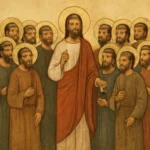
Across the profiles of the Twelve, a few overarching patterns emerge. A broad and helpful way to think about their characteristics is to recognize how each apostle contributes a unique facet to a collective witness—a mosaic rather than a single portrait.
Background diversity: fishermen, tax collectors, and other social roles converge to demonstrate that the gospel speaks to a wide range of people.
Leadership and service: many are called to lead in and beyond their own communities, showing that leadership in a spiritual movement involves listening, serving, and bearing responsibility.
Imperfect humanity: the episodes of doubt, denial, zeal, and even betrayal reveal how real faith often travels a jagged path toward maturity and grace.
Legacy through action: their lives contribute to the early church’s mission, teaching, and organizational growth, even as their stories continue to be interpreted in diverse ways.
From the gentle wisdom of John’s love-centered theology to Peter’s bold, action-oriented leadership, and from Thomas’s honest probing to Matthew’s write-with-purpose evangelism, the Twelve offer a spectrum of models for how a community can embody a shared calling. Each apostle’s distinctive traits—whether courage, doubt, humility, or mercy—function as teaching tools for readers, students, and faith communities seeking to understand how belief translates into life, community, and mission.







Leave a Reply