Baal Bible Meaning: Origins, References, and Biblical Significance
The figure commonly called Baal in biblical texts represents one of the most debated topics in the study of the ancient Near East. The phrase “Baal Bible meaning” can be interpreted on several levels: etymology, historical religious practice, textual usage, and the way later readers understood and repurposed the term. This article examines the origins of the name, the various forms and epithets associated with Baal, and the way this deity functions within biblical narratives and later traditions. By tracing the linguistic roots and the cultural context, we gain a clearer picture of why Baal stands as a central symbol of conflict between monotheistic reform in the Hebrew Bible and the religious pluralism of the ancient Near East.
Origins and Etymology: What the word Baal means
The basic sense of baʿal
The term baʿal is a Semitic word meaning “owner,” “lord,” or “master.” In older linguistic and archaeology discussions, scholars often translate it as “lord” in the sense of someone who possesses or commands something, whether a person, a place, or a domain.
In many biblical passages, baʿal functions not as a proper name in itself but as a title for deities or idols. When used with a capitalized form or within a religious context, it signals a specific deity known to the author, but its basic meaning remains the generic term for a master or owner.
Because baʿal can apply to multiple local cults, the phrase “Baal” in the Bible often signals a family of related gods rather than a single, universal figure. This nuance matters for understanding passages that refer to Baal along with other near-eastern gods or altars to different Baal figures.
Origins in the wider Near Eastern milieu
In the broader context of the ancient Near East, several communities worshiped deities that could be described with the title baʿal—a linguistic pattern that aligns with the late Bronze Age and Iron Age pantheons of Canaan, Phoenicia, and neighboring regions.
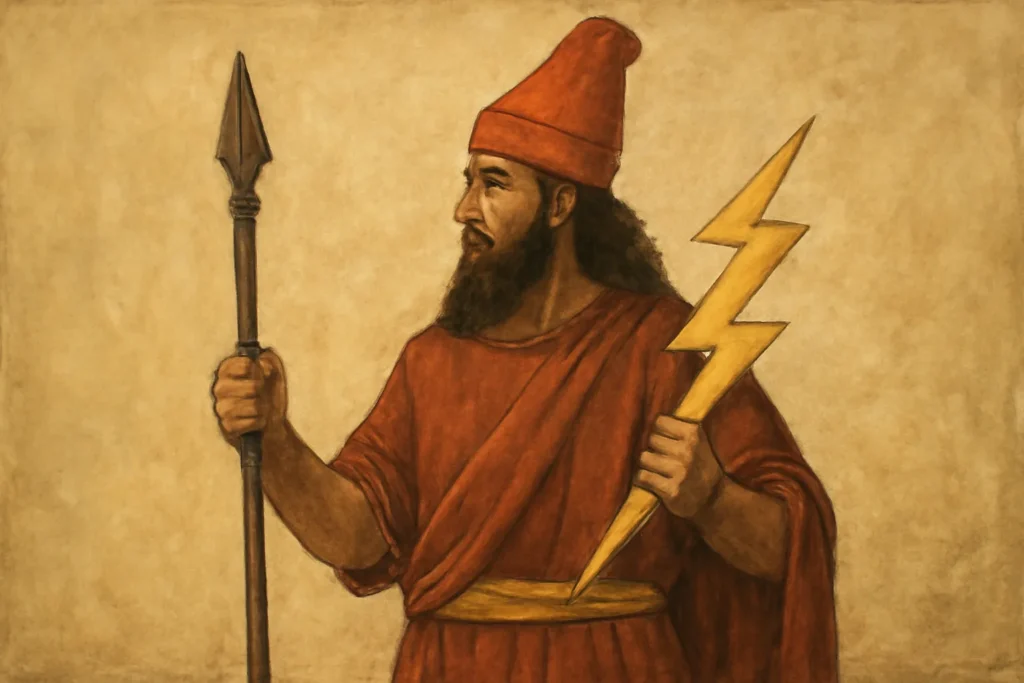
Scholars frequently connect the biblical Baal with Baal Hadad (the storm and fertility god in the Canaanite pantheon) because this pairing recurs across multiple inscriptions and mythic texts such as the Ugaritic corpus. In those sources, the name “Baal” appears as the chief god of weather, rain, and agricultural fertility, often invoked in myths about thunder, rain, and storms that sustain human life and crops.
Yet, the textual landscape is diverse. In some contexts, other deities bearing the title baʿal—like Baal-Berith and Baal-Zebub—are invoked or resisted, suggesting a semantic cluster rather than a single, uniform religious figure. This plurality helps explain why the biblical writers often treated Baal as a symbol for “idolatry” more broadly than as a single, fixed god.
Baal in the Hebrew Bible: References, contexts, and meanings
How Baal appears in the text
Across the Hebrew Bible, the term baʿal and the proper name Baal occur in various contexts, from explicit references to worship with altars and sacred prostitutes to denunciations by prophets who call for exclusive loyalty to YHWH. The biblical portrayal frequently casts Baal as a rival to the God of Israel, embodying a syncretistic challenge faced by the ancient community.
Baal Hadad and fertility rites: The biblical writers link the worship of Baal with fertility rites and seasonal storms. The association with weather phenomena—rain, harvest, and agricultural success—explains why droughts or failed crops are sometimes depicted as moral or religious problems in the text.
Baal-Zephon or Beelzebub: In later biblical and extracanonical traditions, Baal-zebub (often translated as “lord of the flies”) appears as a Philistine or Philistine-adjacent deity encountered by prophets. The name signals a polemical stance: the God of Israel is contrasted with a local, possibly grotesque cultic figure.
Baal-Berith and other epithets: Names such as Baal-Berith (“lord of the covenant”) point to local temples or cultic centers that claimed sovereignty over particular community spaces or agreements. The biblical treatment of such figures tends to emphasize the breach of covenant loyalty to YHWH.
Baal-Peor and the episode with Peor: The story in Numbers 25 depicts the Baal of Peor as a temptation that leads the Israelites to idolatry and sexual immorality, provoking severe divine anger and a ritual cleansing response from Moses and his community.
Baalim (plural) and plural worship: The plural form baʿalîm appears in prophetic and historical narratives to indicate multiple masters or local Baals rather than a single universal deity. The concept signals a broader religious landscape in which loyalty to YHWH is tested against various local cults.
Thematic roles of Baal in key biblical narratives
Several canonical stories shape the biblical understanding of Baal as a symbol of rival worship. These episodes often function liturgically, theologically, and politically to underscore the need for fidelity to YHWH.
The Elijah narrative on Mount Carmel (1 Kings 18): A dramatic contest pits the prophets of Baal against the God of Israel. The decisive moment—fire from heaven consuming the sacrificial altars—serves as a theological indictment of idolatry and a reaffirmation of the supremacy of YHWH.
Hezekiah’s reforms and later prophetic admonitions: The biblical record repeatedly frames Baal worship as a symptom of syncretism and political instability. The reform movements associate idolatry with moral decay, social injustice, and ritual impurity.
Deliberate apostasy and covenant language: The rhetoric surrounding Baal worship frequently involves terms such as idolatry (avodah zarah), treachery, and violation of the covenant (berith). These moral and theological categories shape how readers interpret historical episodes and prophetic critiques.
Variants and epithets: The many faces of Baal
Major forms of Baal in biblical and extrabiblical sources
Baal Hadad (the storm god): Often considered the principal Baal in the Canaanite pantheon, linked to rain, fertility, and agricultural abundance. In the broader Near Eastern context, this figure is among the most widely attested and mythologized.
Baal-Berith (lord of the covenant): A local cult title associated with a sanctuary in Shechem and related cultic activity in Judges. The reference emphasizes political-religious centers and the contested loyalties surrounding them.
Baal-Zebub (lord of the flies): A Philistine deity encountered by the prophet Elijah and referenced in 2 Kings. This epithet signals a polemical stance, often used to caricature a rival cult as grotesque or contemptible.
Baal-Peor (Baal of Peor): A specific cult linked to a perilous temptation that leads the people of Israel into transgression, culminating in divine judgment in Numbers 25.
Baal of Gad or Baal-Gad: A local variant mentioned in some contexts of Israelite religion, reflecting the regional character of Baal worship practices.
Baalim (plural): The biblical shorthand for the multiple local Baals worshiped across different communities. The plural usage reflects a religious landscape in which “Baal” was not a single, centralized deity but a family of cults.
Theological stakes: Baal worship vs. the worship of YHWH
What the biblical authors claim about Baal
The Bible portrays Baal as a rival to the God of Israel, not merely as a fictional character. The narratives and prophetic critiques frame the worship of Baal as:
A form of idolatry that undermines the exclusive covenant relationship between Israel and YHWH.
A practice that can involve ritual acts, fertility rites, and local sacramental systems that mimic legitimate worship but divert people from the one true God.
A symbol of political and social compromise that leads communities away from justice and mercy, as envisioned by prophetic reformers.
In this framework, the term Baal becomes a rhetorical marker for a competing religious system. The biblical polemic often uses dramatic contrasts—fire from heaven vs. drought, prophets of Baal vs. the prophet of YHWH—to teach theological lessons about fidelity, repentance, and nationwide reform.
Afterlives: Baal in post-biblical literature and scholarly interpretation
How later traditions treat the figure
In Jewish interpretation, Baal frequently serves as a case study in the dangers of idol worship and the necessity of obedience to the covenant. Rabbinic literature often uses the term as a foil for teaching moral and ritual integrity.
In Christian tradition, Beelzebub and related figures emerge in a context of demonology and classical anti-idolatry polemics. The transformation of Baal into Beelzebub in some translations reflects shifting linguistic, cultural, and theological landscapes.
From an archaeological and philological perspective, scholars examine inscriptions, altars, and cultic artifacts that attest to diverse Baal cults. These artifacts illuminate how the name Baal functioned in real religious settings, beyond the polemics of the biblical authors.
Historical and cultural implications: Why Baal matters for biblical interpretation
Understanding the role of local cults in ancient Israel and neighboring cultures
The boundary between political power and religious authority: Local sanctuaries and altars often aligned with regional rulers, creating a complex network of power, legitimacy, and ritual authority.
The texture of religious pluralism: The biblical world was not religiously monolithic. Even within the same territory, communities practiced forms of worship centered on Baal alongside fidelity to YHWH.
The interpretive lens of prophetic reform: The prophets’ critique of Baal worship reveals concerns about social ethics, ritual exclusivity, and the spiritual health of the people.
Modern scholarly approaches: Reading Baal in context
Scholarly methods for studying Baal across sources
Textual criticism and source analysis: Scholars compare passages across canonical books to understand how the term Baal is used in different redactional layers and historical moments.
Comparative linguistics and language families: The etymology of baʿal in Hebrew is connected to related Semitic languages, which helps explain variations in naming and epithets in Ugaritic, Phoenician, and Hebrew texts.
Archaeology and material culture: Inscriptions, altars, and iconography provide tangible evidence of worship practices associated with Baal, offering a complement to textual narratives.
Theology and ethics: Researchers study how the treatment of Baal reflects broader questions about power, justice, and the nature of divine authority in ancient communities.
Glossary of terms and phrases: key concepts around Baal
Baal: The general term meaning “lord” or “owner,” applied as a title to various deities in the ancient Near East and used as a proper name for certain cult figures in biblical and extra-biblical texts.
Ba'al (alternative transliterations): A common transliteration that reflects the original Hebrew vocalization and points to its semantic range as a title as well as a name.
Baalim: The plural form, indicating multiple “lords” or multiple local Baals worshiped across communities.
Epithets such as Baal-Berith, Baal-Hadad, Baal-Zebub, and Baal-Peor to designate specific local or regional manifestations of Baal worship.
Idolatry (Hebrew: avodah zarah): The category used by biblical writers to describe worship outside the exclusive devotion to YHWH, often associated with Baal worship in prophetic literature.
Practical implications for readers today
What readers can learn about religious plurality and textual interpretation
Studying Baal clarifies a number of enduring issues in religious study and biblical interpretation. It shows how:
Religious vocabulary can be flexible: A single word like baʿal can function as a generic descriptor, a title for a specific god, or a personal name, depending on context.
Religious conflict is often intertwined with politics: The biblical narratives depict a dynamic where devotion to a deity intersects with sovereignty, urban planning, and national identity.
Historical memory shapes tradition: The way later communities remember Baal worship influences theological discourse and moral teaching in both Jewish and Christian streams.
Conclusion: The enduring significance of the Baal narrative
The expression Baal Bible meaning encapsulates a multifaceted reality. It refers to a name with historical roots in the ancient near eastern practice of deifying powers of fertility and weather, a set of related cultic traditions across different regions, and a recurring biblical symbol used to challenge idolatry and to foreground the supremacy of YHWH in the narrative arc of Israelite faith. The presence of Baal in biblical and extrabiblical sources invites readers to consider how ancient societies negotiated the tensions between local cults and a central theological vision. It also reminds modern readers that the term Baal is not simply a single character but a window into a web of religious practices, political loyalties, and interpretive strategies that shaped the way people understood gods, sovereignty, and morality in the ancient world.










Leave a Reply